Published: 05 May 2026. The English Chronicle Desk. The English Chronicle Online
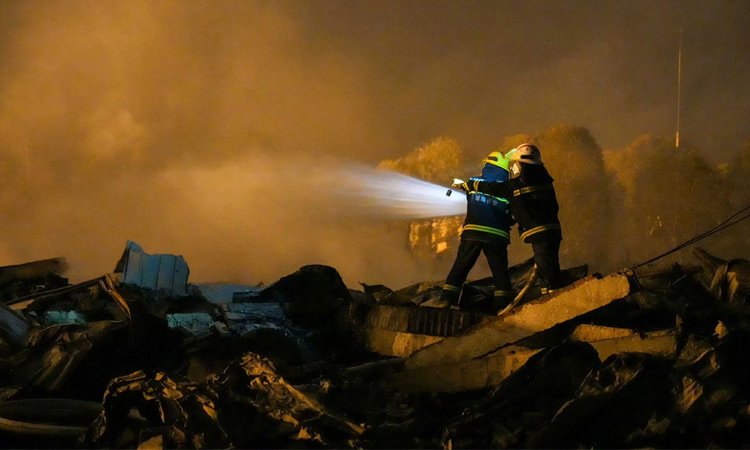
A devastating explosion at a fireworks manufacturing facility in central China has killed at least 21 people and injured 61 others, according to state media reports, prompting President Xi Jinping to order a full-scale investigation and stricter enforcement of industrial safety regulations.
The blast occurred on Monday afternoon at approximately 4:40pm local time at the Huasheng Fireworks Manufacturing and Display Company in Liuyang, a city under the jurisdiction of Changsha in Hunan province. The area is widely recognised as one of China’s most important hubs for fireworks production, supplying both domestic and international markets.
Eyewitness footage circulating on social media showed thick columns of smoke rising rapidly into the sky, visible against a backdrop of green hills. The scale of the explosion shocked residents, many of whom reported hearing a loud detonation followed by secondary blasts. Authorities later confirmed that two black powder storage warehouses within the facility contributed to the severity of the incident.

Emergency response teams quickly mobilised, with nearly 500 rescuers deployed to the site within hours. Local officials established a 1-kilometre emergency rescue zone and a wider 3-kilometre control area to prevent further casualties and manage the risk of additional explosions. Residents living nearby were evacuated as a precaution, given the presence of highly volatile materials still stored within parts of the factory compound.
Rescue operations were complicated by ongoing safety risks at the site. Emergency teams deployed specialised robots to assist in search and recovery efforts, particularly in areas deemed too dangerous for human entry. Officials warned that unstable chemical compounds and residual explosive materials continued to pose a serious threat even after the initial blast had been contained.
Chinese state broadcaster CCTV and the official Xinhua News Agency reported that President Xi Jinping issued urgent instructions calling for a thorough investigation into the cause of the explosion. He also demanded strict accountability for those responsible and emphasised the need to strengthen oversight in high-risk industries such as fireworks manufacturing, chemical processing, and storage facilities.
Xi’s statement reflected a broader national concern about industrial safety, particularly in sectors involving flammable or explosive materials. In his directive, he urged local governments and regulatory bodies to intensify risk assessments, improve emergency preparedness systems, and ensure that safety protocols are strictly enforced across all production sites.
Authorities confirmed that the person in charge of the Huasheng company has been detained as part of the ongoing investigation. While officials have not yet disclosed detailed findings, early reports suggest that regulatory compliance and storage safety practices at the facility are under close scrutiny. China Daily reported that “control measures” have been taken against individuals linked to the company’s operations.
Liuyang, where the explosion occurred, has long been at the centre of China’s fireworks industry, producing a significant portion of the country’s output. The region’s economy relies heavily on pyrotechnics manufacturing, a sector that has historically faced recurring safety challenges due to the handling of combustible materials. Despite repeated safety campaigns, accidents continue to occur, particularly in smaller or privately operated facilities.
The latest disaster has reignited debate over industrial safety standards in China’s manufacturing sector. Fireworks production, while economically important, remains one of the most hazardous industries due to the use of black powder and other volatile substances. Experts have repeatedly called for stronger regulation, improved training, and stricter enforcement of storage protocols to prevent similar tragedies.
This incident follows a series of fireworks-related accidents in China in recent years, including deadly explosions during peak production periods around major holidays such as the Lunar New Year. Those incidents have previously led to temporary factory closures and renewed government inspections, though enforcement has often varied by region.
China remains the world’s largest exporter of fireworks, accounting for more than two-thirds of global supply according to international trade data. The industry generates billions of dollars annually and supports thousands of jobs, particularly in provinces like Hunan, Jiangxi, and Guangdong. However, the economic benefits have frequently been overshadowed by safety concerns and periodic disasters.
Local residents in Liuyang described scenes of chaos following Monday’s explosion. Many reported seeing emergency vehicles rushing toward the site and hearing sirens for hours afterward. Some families living near the industrial zone were evacuated overnight as authorities continued to assess the risk of further detonations.

Medical teams in Changsha hospitals have been treating the injured, many of whom suffered burns, blast injuries, and trauma caused by flying debris. Officials have not yet released detailed information about the condition of all patients, though several remain in critical condition.
As investigations continue, attention is expected to focus on whether safety violations, poor storage practices, or equipment failures contributed to the explosion. Analysts say that while China has made significant improvements in industrial safety over the past decade, enforcement gaps remain a persistent challenge, particularly in smaller manufacturing hubs.
The tragedy has also prompted renewed calls for nationwide reforms in hazardous material management and emergency response systems. Xi’s directive signals that Beijing is likely to increase oversight in the sector, with possible nationwide inspections expected in the coming weeks.
For the families of the victims, however, the focus remains on recovery and answers. As rescue operations continue and investigators piece together the cause of the explosion, the disaster stands as another stark reminder of the risks embedded in one of China’s most globally significant yet dangerous industries.
Related News:
 Escobar’s Hippos May Be Moved to India Zoo
 Two Dead in Adelaide Airport Plane Crash Fire
 China mine blast death toll rises to 90
 Dreyfus Statue Finally Gets Permanent Paris Home
 Teen Charged After Layla Jeffery Found Dead
 Israeli Strike in Southern Lebanon Kills Seven
 Five Years of Taliban Rule Leave Afghanistan in Crisis
 Trump Speaks on Prince Andrew’s Royal Scandal Fallout
 UK University Faces Counter-Terror Probe Over China Pressure
 Just Stop Oil Protesters Convicted Amid Climate Defence Row
 British Grandmother to Return Home After Death Sentence in Bali
 BBC’s Tim Davie to Address Staff Amid Trump $1bn Threat
 Ukraine-Russia war latest: Putin’s troops exploit bad weather to force Kyiv withdrawal from multiple towns
 New Epstein Files Spark Political Clash in Washington
 Oklahoma Governor Grants Last-Minute Clemency to Death Row Inmate
 US Pushes Global Effort to Stop Arms Flow to Sudan RSF Forces
 Israel Confirms Returned Hostage as Meny Godard
 Greene Pushes Epstein Files Amid Trump Fallout
 Tragedy Strikes Indian Pilgrims in Saudi Bus Accident
 Deadly Russian Strikes Hit Western Ukraine, 20 Killed in Ternopil
 WhatsApp Messages Expose Nathan Gill’s Bribery
 Venezuela Threatens Nobel Winner Machado with Fugitive Status
 Trump Envoy to Discuss Ukraine Peace at Kremlin
 Twenty-Four Nigerian Schoolgirls Freed After Abduction
 Two National Guard Soldiers Critically Injured Near White House
 Southern Lebanon reels as Israeli strikes shatter communities
 Video shows Israeli troops kill Palestinians after surrender
 Guinea-Bissau President Flees After Military Coup
 Rare shark attack kills woman, injures man at remote NSW beach
 American Mother Extradited From UK to U.S. on Murder Charges
 Melbourne Rabbi’s Car Firebombed Amid Hanukah Celebrations
 Thousands Flee Cambodia Scam Centres Amid Global Pressure
 Hindu Man’s Stand Sparks Hope in India
 SA Police Intensify Search in Gus Lamont Case
 Taylor Swift concert attack plot shocks Austria
 NSW kidnapping mistake sparks urgent appeal
 El Mencho Killed as Mexico Faces Violence
 Kelly Wilkinson Inquest Reveals Bail Failure
 Islamic State-inspired attack shocks New York protest scene
 Michigan Synagogue Attack Leaves Suspect Dead in Tragic Incident
 North Korea Fires Missiles Amid US-South Korea Drills
 Teen Admits Filming Westfield Chair Prank
 Bondi terror attack linked to global rise in IS plots
 M&S Demands Urgent Action on Rising Violent Retail Crime
 Peretz Targets FA Cup Upset Amid War Concerns
 Melania Trump Epstein remarks spark survivor backlash
 California fireworks blast: murder charges filed in case
 Ben Roberts-Smith Denies War Crime Allegations in First Statement
 Fraudsters Target Runners Ahead of London Marathon
 Learner Driver Charged After Expo Tragedy
 OpenAI CEO Apologizes After Canada Shooting Case
 NHS Safety Fears as Nurses Cover Doctor Gaps
 Two Children Die in Wolverhampton House Fire Tragedy
 Exploring Italy’s Forgotten Dolomites Beyond Crowds
 Southeast Asia Turns to Russia Amid Energy Crisis
 Ukraine Urges UK to Seize Russian Oil Tankers
 Cartel crackdown raises fears of fresh violence
 Australia pushes Pacific security pact amid China tension
 US ‘Narco Boat’ Strikes Draw Global Outcry
 France Faces Record Presidential Crowded Race Amid Far-Right Surge
 US Awaits Iran Reply on New Ceasefire Proposal
 Hormuz Talks Near Critical Stage
 Pope Meets Families in Italy Toxic Waste Zone
 Victim says non-custodial rape sentence ‘rock in my face’
 Discontent grows around Putin amid war strain
 Gunman Killed After White House Security Shootout
 Irish Gangland Figure Fails in Dublin Election Bid
 Starmer Leadership Under Pressure After Setbacks
 Thailand Tightens Visa Rules to Curb Tourist Misbehavior
 Millions Gather for Khamenei’s Six-Day State Funeral
 Ukraine Creates Long-Range Strike Command
 Le Pen’s Popularity Holds Despite Conviction
 Bryne Backs Haaland Before England World Cup Clash
 Venezuela Quake Death Toll Surpasses 4,000
 Houthis Strike Saudi Arabia as Middle East Tensions Rise
 UK’s Largest Muslim Convention Scales Up Security Amid Rising Bigotry
 Westminster Council Threatens Charing Cross Soup Kitchen
 BBC Warned About Missing Clothes of Murder Victim
 Is America Ready for an AOC Presidential Run?
 Cambridge Professor Jason Arday Found Dead at Home