Published: 08 May 2026. The English Chronicle Desk. The English Chronicle Online.
Donald Trump has decided to soften his recent stance regarding the ongoing trade negotiations. The president previously threatened to dismantle significant portions of the current agreement with European leaders. He specifically focused on increasing the tariffs placed on automobiles imported from various European nations. This shift in rhetoric comes as a surprise to many observers in the capital. The president has now established a firm deadline for the European Union to act quickly. He expects the bloc to implement its side of the agreement by early July. This date coincides with the significant two hundred fiftieth anniversary of American independence celebrations. Trump warned that failure to comply would lead to much higher tariff rates immediately. The president expressed his frustration on social media regarding the slow pace of progress. He reminded his followers that he has been waiting patiently for the deal’s fulfillment. This agreement was originally struck during a high profile meeting in Turnberry located in Scotland. Trump frequently refers to this specific pact as the largest trade deal ever made. The timing of the new deadline adds a layer of symbolic pressure on Europe.
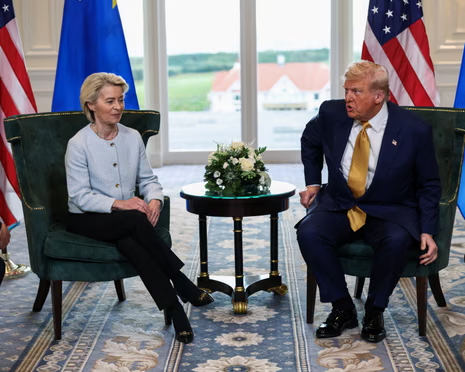
The president confirmed he spoke directly with the European Commission chief Ursula von der Leyen. During their conversation they discussed the urgent need for a final ratification of terms. Trump agreed to extend the timeline until the upcoming fourth of July national holiday. If the deadline passes without action the tariffs will jump to much higher levels. This tactical retreat occurred just after extensive formal talks took place within the city. European representatives spent six hours debating the merits of the deal earlier this week. These discussions involved members of the parliament and various European Union member state officials. The sudden change in tone follows a significant legal setback for the American administration. A federal trade court recently ruled that the latest global tariffs were entirely illegal. These ten percent levies were based on an older trade law from the seventies. The court decision has complicated the administration’s ability to enforce its protectionist economic policies. These temporary rates were already scheduled to expire by the end of this July. They were originally implemented after the supreme court struck down previous liberation day tariffs.

The White House plans to appeal the court ruling to maintain its current leverage. Existing tariffs will remain in place while the legal process moves through the system. European leaders have consistently urged the president to honor the original Scottish golf deal. They believe the agreement should stand despite the recent rulings from the supreme court. However the European parliament has twice halted the official process for ratifying the deal. These delays were caused by previous threats made by the president regarding Greenland’s status. Lawmakers in Brussels were also concerned about the prospect of rising automotive import duties. Bernd Lange serves as the influential chair of the European parliament’s trade committee today. He led the parliamentary delegation during the most recent round of intense ratification talks. Lange indicated that a final resolution between the two powers is finally within reach. He noted that his colleagues would work very quickly to ensure total compliance. The aim is to follow both the spirit and the letter of the pact. Maroš Šefčovič also remarked that considerable progress was achieved during the recent Brussels meetings.
The next round of vital talks is currently scheduled for the nineteenth of May. These sessions are known as trilogues involving three main branches of the European government. European lawmakers are currently pushing for the inclusion of steel within the trade deal. Currently steel exports to the United States are taxed at a fifty percent rate. This has been a major point of contention for negotiators since last summer. Ursula von der Leyen echoed the sentiment that progress was being made this week. She stated the bloc is moving toward ratifying the deal by early July. Both sides remain fully committed to the implementation of the historic trade agreement. The original deal was struck last July between twenty seven member states and Washington. It initially set tariffs on most European goods at a rate of fifteen percent. President Trump has grown increasingly vocal about his dissatisfaction with the implementation speed. He feels the European Union has failed to uphold its side of the bargain. Last week he vowed to raise duties on trucks to twenty five percent.
The nation of Cyprus currently holds the rotating presidency of the European Union Council. Their representatives expressed a strong desire to maintain positive momentum during the May talks. Despite receiving conditional approval from parliament the deal requires further negotiation with states. Each individual member state must sign off before the deal becomes legally binding. This complex process often leads to significant delays in international trade policy implementation. Trump seems determined to use the upcoming national anniversary as a hard turning point. The president believes that a deal should be finalized before the major fireworks begin. European officials are now racing to balance their internal requirements with American demands. The automotive industry remains particularly vulnerable to any sudden changes in the tariff structure. Manufacturers across Germany and France are watching the situation with a great deal. They hope for a stable environment that allows for long term financial planning. Economists warn that a trade war would harm both the American and European markets.
The global economy is currently in a sensitive state following years of high inflation. Any disruption to the flow of goods could trigger further price increases for consumers. Trump argues that his policies are designed to protect American jobs and domestic industries. He views the current trade imbalance as a fundamental threat to national economic security. Critics argue that his aggressive tactics alienate traditional allies and disrupt global supply chains. The fourth of July deadline represents a high stakes gamble for the current administration. If the European Union calls the bluff the trade relationship could deteriorate rapidly. Conversely a successful ratification would be a major political win for the sitting president. It would demonstrate his ability to secure favorable terms through a policy of strength. The coming weeks will be critical for diplomats on both sides of the Atlantic. They must navigate a minefield of legal hurdles and political sensitivities to find common ground. The eyes of the international business community are now fixed on the nineteenth of May. This date will likely determine the trajectory of global trade for the next decade.

Both the commission and the parliament must find a way to satisfy their constituents. Some member states are wary of opening their markets to cheap American agricultural products. Others are more focused on protecting their high tech and luxury goods manufacturing sectors. The negotiation over steel remains one of the most difficult hurdles to overcome today. European producers argue that the fifty percent tax is unfair and should be removed. The American side remains hesitant to give up protections for its own steel industry. This tug of war has defined the relationship between the two powers for years. Trump has shown a willingness to bypass traditional diplomatic channels to get his results. His use of social media to announce deadlines has become a signature move. This approach often catches foreign leaders off guard and forces them to react quickly. Von der Leyen has proven to be a steady hand during these turbulent times. She has managed to keep the twenty seven member states unified despite their differences. Maintaining this unity will be essential as the July fourth deadline quickly approaches now.
The history of the turnberry deal is one of high drama and tension. It was meant to usher in a new era of transatlantic economic cooperation. Instead it has become a symbol of the friction between two different visions. One vision prioritizes national sovereignty and protectionism while the other favors a globalist approach. The resolution of this conflict will have lasting effects on the world stage tonight. If the deal is ratified it could lead to an unprecedented economic boom. If it fails we may see a return to the era of trade wars. The stakes could not be higher for the workers and businesses involved here. Every sentence in this negotiation carries the weight of billions of dollars in trade. The president is betting that his deadline will force the hand of Europe. European leaders are betting that they can negotiate a fair deal without surrendering. Only time will tell which side has the better hand in this game. The world waits to see if the fireworks this July will be celebratory. Or if they will signal the start of a new and difficult conflict. The English Chronicle will continue to follow this developing story as it unfolds.
Related News:
 Canada-China trade gains momentum in new strategic partnership
 India-EU Free Trade Deal Marks Historic Economic Shift
 Keir Starmer meets Xi to strengthen UK-China economic relations
 UK Experts Raise Alarm Over Machinery Export to Armenian Firm
 Caffè Nero Warns Coffee Prices May Rise Again
 Abramovich Chelsea Sale Cash Faces Jersey Probe
 Stocks rise as Trump offers Iran peace plan
 US Military Weighs Perilous Moves to Reopen Hormuz
 IMF Predicts Global Economic Crisis Due to Gulf Unrest
 Manila Transport Crisis: Fuel Costs Hit Breaking Point
 Trump Slams Europe as Transatlantic Tensions Boil Over
 Trump Issues Stark Warning After Strike On Iran’s Largest Bridge
 Middle East Conflict Sparks Global Food Price Surge
 Albanese Flies to Singapore to Bolster Fuel Security
 US and Iran Agree to Two-Week Provisional Ceasefire
 Norwegian Group Eyes South Yorkshire Steel Revival
 Ian Katz to Step Down as Channel 4 Content Chief
 Middle East Conflict Risks UK Food Supply Chains This Summer
 Cost of Conflict: UN Warns of Lost Lives in Iran War
 BP Profits Surge Amidst Middle East Conflict Crisis
 Ukraine Urges UK to Seize Russian Oil Tankers
 US Calls Australia Media Law “Foreign Extortion”
 Oil Prices Surge Above $120 Amid Iran Blockade Fears
 Europe’s AI Sector Faces Sovereignty Crisis Over US Deals
 US Cities See 42% Drop in Canadian Visits Under Trump 2.0
 High Stakes in Beijing as Trump and Xi Meet Amid Global Turmoil
 Trump and Xi Convene in Beijing for Historic High-Stakes Summit
 Big Tobacco Under Fire Over Controversial New Ad Campaign
 Rubles and Resilience: How Russia-China Border Towns Thrive
 UK Urged to Build EU Rejoin Consensus, Says Miliband
 Cash Registers Stall Japan’s Promised Food Tax Relief
 Trump Floats Fresh Tariffs on 60 Nations Over Forced Labour
 The Exploding Australian Black Market For Nicotine
 Japan Suffers Plastic Shortage Due to Middle East Crisis
 Steel Tensions Rise Between United Kingdom and European Union
 New York Consumer Watchdog Tackles Corporate Lawbreaking
 Levi’s Sues Globe Over Infringing Pocket Tabs
 BYD Aims for Global Car Supremacy Within Five Years
 Trump Signs Historic Iran Peace Plan to Avert Depression
 Gas Prices Fall Below $4 Following US-Iran Peace Deal
 Remote Mine Sites Face Deep Culture Crisis
 EU Slashes Steel Quotas But Grants UK Favourable Rates
 Inflation Eases to 3.5% Amid Fragile US-Iran Tensions
 Reeves Faces Setback as Labour May Miss Homes Target
 Trump’s UK Ambassador Urges North Sea Drilling to Strengthen US Ties
 Millionaires group urge Reeves to introduce wealth tax to ‘lift kids out of poverty’
 Starmer Says Labour’s Economic Plan Needs Years to Deliver
 Starmer Faces Parliamentary Battles Over UK-EU ‘Reset’ Plan
 Friedman Uninvited From 2024 Adelaide Writers’ Week
 ScottishPower Tops List of Worst UK Energy Suppliers
 Spoof “Make America Go Away” Caps Rally Denmark Over Greenland
 Trump Fed bid heads to Supreme Court
 BT Names New Openreach Chief Amid Major Fibre Expansion
 UK Unemployment Rate Climbs to 5.2% Peak
 New Zealand Covid Response Praised Despite Lingering Scars
 Rising Costs Force Families to Rethink Days Out
 Diplomacy on the Brink: Pakistan’s Risky Peace Mission
 Teenage Titan: Sooryavanshi Smashes IPL Records
 Canadian Mother and Daughter Released From ICE Detention
 Reform UK Pledges To Halt Visas Over Reparations Demands
 Security Alert Near Israeli Embassy as Police Investigate
 US-Iran Standoff: Will Trump Deploy Ground Troops?
 Investigation Into Anti-Trump Motives After Gala Shooting
 Silent Tracks: Rail Line Without Passengers
 Aramco Surges as East-West Pipeline Counters Gulf Tensions
 Scepticism and tight security as Beijing braces for Trump
 UK Firms Freeze Spending as Iran Conflict Bites
 Reeves to Fast-Track Clean Energy Amid Iran Crisis
 Tony Abbott Returns as New Liberal Party President
 Tube Strike Brings Capital to a Standstill Over Shift Disputes
 Teaching Machines Right From Wrong in the Digital Age
 Trump Urged to Condemn UFC Fighter Over Obama Slurs
 US Military Pacific Boat Strike Kills Three People
 Sainsbury’s Boss Optimistic As Grocery Inflation Eases
 Trump’s Mount Rushmore Speech: A Divisive Anniversary
 Trump Swaps Planes Amid Iran Tensions
 Rotterdam Museum Honours Artist With Peanut Butter Floor
 Bangkok Nightclub Blaze Claims 30 Lives Amid Negligence Probe
 Yemen Accuses Iran of Violating National Sovereignty
 Houthis Strike Saudi Arabia as Middle East Tensions Rise