Published: 18 May 2026. The English Chronicle Desk. The English Chronicle Online.
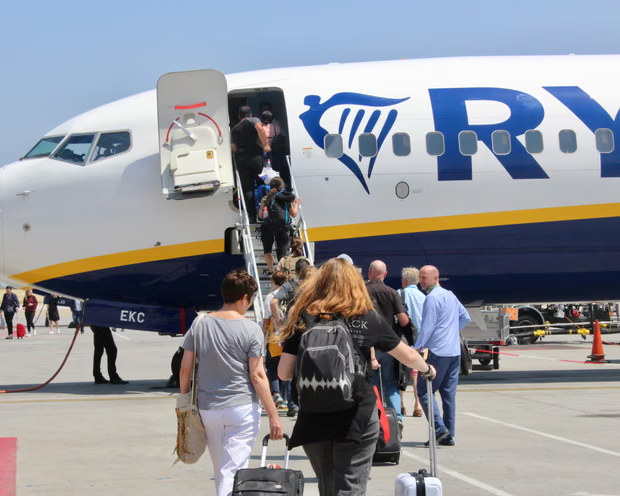
The European aviation sector is facing a complex landscape as summer approaches this year. Ryanair has stepped forward to address growing concerns regarding potential jet fuel supply disruptions. The budget carrier expressed strong confidence that it will successfully avoid any fuel shortages. This assurance arrives amidst widespread industry anxieties linked directly to the ongoing Iran war. Holidaymakers have been worried about potential flight cancellations across the entire European continent.
Chief financial officer Neil Sorahan provided a reassuring outlook on behalf of the company. He stated he is increasingly confident that supply shocks will not occur this summer. The airline has taken extensive measures to secure its necessary fuel reserves for passengers. However, the executive also paired this positive news with a clear economic warning. Customers booking their summer flights later this year could face significantly higher ticket fares.
The broader travel industry has been deeply impacted by regional conflicts in recent months. Geopolitical tensions in the Middle East have directly influenced consumer booking behavior and prices. Ryanair noted that ticket fares have actually fallen over the last few weeks. This decline is a direct result of market uncertainty surrounding the current international conflict. Prices are expected to drop by a mid-single digit percentage very soon. This specific reduction will affect the three-month period ending in June this year.
In addition to immediate price drops, the company revised its upcoming summer outlook. Ticket prices are now expected to be broadly flat compared to last summer. This represents a notable shift from previous forecasts predicting modest peak season increases. The changing dynamics highlight how quickly the aviation market adapts to global events. Passengers are currently benefiting from these lower prices during the late spring months.
Demand for air travel across the continent remains fundamentally robust and highly resilient. However, consumers are notably changing how they plan and purchase their holiday flights. People are leaving it much longer to book their trips than normal. This shift has reduced the typical operational visibility that the airline enjoys. The company usually has a much clearer picture for July through September.
Closer-in bookings remain very strong as departure dates approach for eager British holidaymakers. Yet, leaving reservations until the final moments carries a distinct financial risk for passengers. Late bookers will likely take on much higher fares as availability rapidly decreases. The airline encourages earlier planning to secure the best possible rates this season. This advice comes as the industry adapts to a brand new consumer mindset.
The global travel sector remains highly sensitive to vulnerable international supply chain routes. Jet fuel availability became a primary concern as shipping routes faced severe restrictions. Specifically, maritime transport through the critical Strait of Hormuz remains heavily restricted today. This bottleneck threatened to disrupt energy supplies to major airports across western Europe. Fortunately, alternative supply regions have stepped up to fill the potential market void.
Ryanair confirmed that Europe is currently very well stocked with vital aviation fuel. Supplies have been successfully diverted from West Africa, Norway, and the American continents. These alternative sources have effectively stabilized the market ahead of the busy season. The diverse supply chain ensures that planes will keep flying without major disruptions. This logistical success provides massive relief to millions of anxious British summer travellers.
The trend toward delayed bookings reflects a broader shift in consumer confidence today. Holidaymakers are showing an increased interest in exploring domestic British holiday destinations instead. This behavioral change stems from both geopolitical worries and ongoing domestic financial pressures. Financial experts have been analyzing these shifting patterns within the UK travel market. Dan Coatsworth, head of markets at AJ Bell, shared his professional insights.
He explained that the current market remains far too fragile for fare increases. Rising inflation continues to squeeze household budgets and limit non-essential consumer spending heavily. Airlines and holiday companies must drop prices to keep consumer demand ticking over. Keeping prices level is another strategy used to attract budget-conscious British travellers. If intense cost pressures remain, companies will eventually have no choice but to raise fares.
Fortunately, Ryanair possesses a remarkably strong balance sheet to weather these economic storms. The airline recently reported an impressive record profit after tax of two billion pounds. This financial milestone was achieved during the fiscal year that ended this March. Such robust financial health provides a significant cushion against unpredictable global market shocks. The company can absorb short-term pressures better than many smaller regional competitors.
Despite this current financial strength, the airline chose to suspend its future guidance. Management stated it is far too early to provide accurate financial forecasts now. This cautious approach applies directly to the upcoming twenty-three financial year period. Unpredictable factors include potential future increases in fuel costs and employee wage bills. Environmental taxes within the European Union also present a significant financial challenge.
The company has taken proactive steps to mitigate volatile global oil market prices. It has successfully hedged eighty percent of its fuel requirements until April next year. This substantial volume was secured at a stable rate of sixty-seven dollars a barrel. However, unit costs could still rise if market prices remain consistently elevated. The airline must manage these complex variables carefully to maintain its low-cost model.
Environmental policy changes are also expected to impact the airline’s total expenditure significantly. Ryanair expects its European Union environmental taxes to increase by three hundred million euros. This rise will bring the total environmental tax bill to about one point four billion. Management warned that these heavy taxes make European air travel much less competitive globally. The added financial burden remains a long-term concern for the aviation industry.
These combined financial pressures have influenced investor sentiment on the stock market recently. Shares in the company dropped by about four percent during early trading on Monday. This decline occurred on the Dublin stock exchange where the airline is listed. The stock has unfortunately lost more than a quarter of its value this year. Investors remain cautious about the entire aviation sector due to ongoing global uncertainties.
Despite stock market fluctuations, Ryanair remains the largest airline in Europe by passenger numbers. The company is currently looking toward its long-term future leadership and stability. Negotiations are underway with chief executive Michael O’Leary regarding a major contract extension. The proposed agreement aims to extend his current leadership term until the year thirty-two. This extension would ensure managerial continuity through a turbulent decade for aviation.
Under the new proposal, the chief executive would receive specific share purchasing options. He would be permitted to buy ten million shares at pre-war market prices. However, this lucrative option is strictly dependent on achieving very ambitious financial targets. These goals include specific profit after tax milestones and substantial share price growth. O’Leary has successfully led the business since his initial appointment back in ninety-four.
Details of this significant new executive contract will be confirmed very soon. Chief financial officer Neil Sorahan indicated information would emerge over the next few weeks. The aviation giant clearly focuses on maintaining stability while navigating immediate geopolitical headwinds. British passengers can look forward to a reliable summer of travel ahead. However, the era of ultra-cheap last-minute flights may be drawing to a close.
Related News:
 Reeves Faces Setback as Labour May Miss Homes Target
 Virgin Trains Moves Closer to Challenging Eurostar Monopoly
 Trump’s UK Ambassador Urges North Sea Drilling to Strengthen US Ties
 Ryanair Chief UK Economy ‘Doomed’ Under Labour
 M&S Profits More Than Halve After Cyber-Attack
 Earl of Yarmouth Faces £1.3m Legal Bill Over Family Estate
 Millionaires group urge Reeves to introduce wealth tax to ‘lift kids out of poverty’
 From Lego to Pokémon: How Adults Are Driving UK Toy Market Growth
 New laws to bolster UK’s defences against cyber attacks on NHS, transport and energy
 Canada Passes Carney’s First Budget in Tight Parliamentary Vote
 Starmer Says Labour’s Economic Plan Needs Years to Deliver
 Virgin Media Fined £23.8m Over Telecare Safety Failures
 Starmer Faces Parliamentary Battles Over UK-EU ‘Reset’ Plan
 Reeves Pub Business Rates U-Turn Calms Labour Revolt
 ScottishPower Tops List of Worst UK Energy Suppliers
 Markets Slide As Gold Rally Signals Risk From Trump Greenland Tariff Plan
 UK Eyes Global Investment with Visa Fee Refunds
 City & Guilds pay surge sparks backlash amid £22m cuts
 UK Inflation Hits 3.4% in December, Ending Five-Month Decline
 Trump Fed bid heads to Supreme Court
 ‘Black Tax’: Burden, Pride and Survival for African Workers
 AI job losses UK: Britain faces sharper employment shock
 India-EU Free Trade Deal Marks Historic Economic Shift
 Telstra AI jobs cuts as automation drive expands
 BT Names New Openreach Chief Amid Major Fibre Expansion
 UK Banks Plot Payment Backup Amid Trump Fears
 UK Unemployment Rate Climbs to 5.2% Peak
 UK shelves £110m border project amid trade strain
 Rachel Reeves Faces Middle East Conflict Test
 Grocery Inflation Rises Amid War Fears
 BrewDog sold Highland estate for knockdown price after abandoning reforestation plans
 Rising Costs Force Families to Rethink Days Out
 Oil Slides, Stocks Jump on Trump Peace Signals
 UK inflation held at 3% before global energy price hit
 Ticketmaster Fees Rise Despite Recent US Junk Fee Crackdown
 M&S Demands Urgent Action on Rising Violent Retail Crime
 New Era for Sick Pay as Millions Gain Critical Rights
 Oil Prices Surge as Trump Issues New Deadline to Iran
 US and Iran Agree to Two-Week Provisional Ceasefire
 Stefano Gabbana Resigns as Chair of Italian Luxury Giant
 Rolls-Royce SMR Secures £600m Boost for Nuclear Future
 Aegon Sells Historic UK Arm to Standard Life for £2bn
 Central Bank Chiefs Hold Crisis Simulation in Washington
 UK Staycations Rise as Travel Fears Grow
 Former Brexit Chief Calls for Rejoining the EU
 Albanese Rejects Gas Export Tax Push
 Oil Prices Surge Above $120 Amid Iran Blockade Fears
 Silent Tracks: Rail Line Without Passengers
 Trump approval plunges amid Iran war fears
 Tough Fiscal Realities Await Next Scottish Government
 DeepMind Staff Vote to Unionize Over US Military Contract
 Global Conflict Hits Home As Bullock Warns Of Economic Pain
 STV Election Coverage Disrupted Amid Bitter Pay Dispute
 Aramco Surges as East-West Pipeline Counters Gulf Tensions
 High Stakes in Beijing as Trump and Xi Meet Amid Global Turmoil
 Lotus Boss Pledges Future to Norfolk and Seeks State Support
 Trump and Xi Convene in Beijing for Historic High-Stakes Summit
 High Street Crisis: Fears Grow Over Post Office Closures
 UK Firms Freeze Spending as Iran Conflict Bites
 Summer Shock: British Energy Bills Set for Grim July Hike
 Reeves to Fast-Track Clean Energy Amid Iran Crisis
 Oil Markets Face ‘Red Zone’ Threat Amid Iran Crisis
 Belfast Approves Pilot Extension of Sunday Trading Hours
 Albanese Defends Tax Reforms Amid Emotional Speech
 Tube Strike Brings Capital to a Standstill Over Shift Disputes
 BP Stands Firm on Amanda Blanc Amid Boardroom Storm
 UK House Prices Drop For Third Month Due To War Fears
 Top Chefs Back Andy Burnham to Save UK Hospitality Sector
 GSK Secures Landmark $10.6bn Deal for Nuvalent
 UK Economy Suffers a Sharp Downturn as Iran Conflict Bites
 AI Scams Push UK Investment Fraud Past £220m
 Rethinking the Blueprint for Youth Employment in Britain
 Sainsbury’s Boss Optimistic As Grocery Inflation Eases
 UK Households Suffer Squeeze As Disposable Incomes Drop
 Creditors Eye Thames Water Even Under Nationalisation
 Record £28m Fine for Virgin Media Over Cancellation Woes
 Jet2 Sees Summer Surge Despite Global Tensions
 Ukraine Creates Long-Range Strike Command
 BBC Faces Real Jeopardy as Licence Fee Income Declines
 Thames Water Future Remains Uncertain Amid Funding Crunch