Published: 23 May 2026. The English Chronicle Desk. The English Chronicle Online
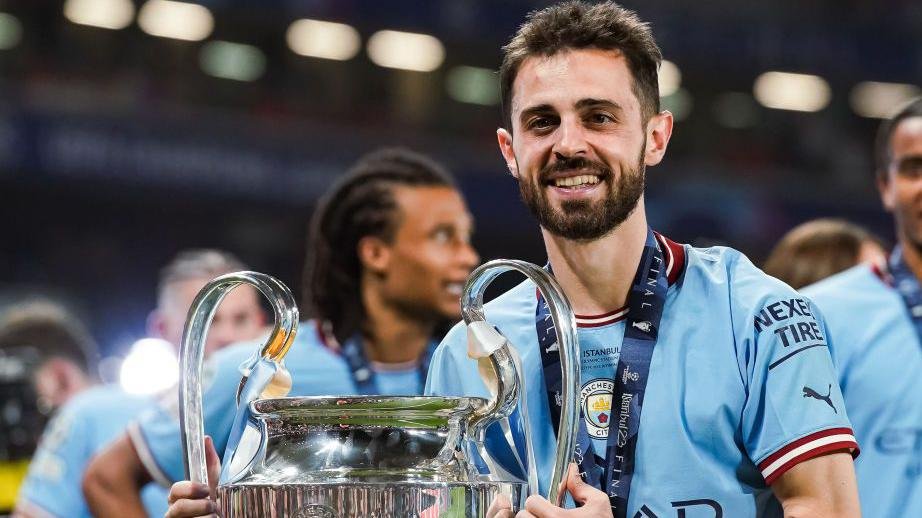
For more than a decade, Bernardo Silva has been one of the defining figures of modern English football, shaping matches with intelligence, relentless energy, and an almost invisible brilliance that often defies statistics. Now, after years of success and evolution under Pep Guardiola, the Portuguese midfielder is preparing to move on from Manchester City, closing a chapter widely regarded as one of the most influential individual careers in the club’s modern history.
Silva’s departure marks more than just the end of a contract cycle. It signals the exit of a player who, in many ways, embodied the tactical revolution that Manchester City underwent under Guardiola. Known for his versatility, discipline, and unmatched work rate, he was not merely a midfielder but a system within the system—capable of operating anywhere across the pitch and still influencing the game at the highest level.
From the moment he arrived, Silva challenged conventional ideas of positional football. While many players are defined by a single role, he blurred those lines entirely. In a single match, he could drop deep to assist build-up play, drift wide to stretch defenses, and still arrive late in the box to create or finish chances. Guardiola once described him as indispensable, a reflection of how deeply he was embedded in City’s tactical identity.

Beyond his technical brilliance, Silva’s endurance set him apart. Season after season, he consistently covered extraordinary distances, often ranking among the top players for ground covered in high-intensity matches. His stamina allowed Manchester City to maintain suffocating control over games, especially in tight contests where energy and discipline mattered more than flair alone. This physical reliability, combined with his football intelligence, made him one of Guardiola’s most trusted players.
Statistically, Silva’s numbers are solid rather than spectacular. Across more than 450 appearances, he contributed roughly 76 goals and 77 assists. Yet those figures fail to capture his true value. He was frequently the player who initiated attacks, closed down dangerous transitions, and controlled the tempo in ways that do not appear on standard match reports. Coaches and teammates often emphasized that his influence extended far beyond measurable output.
His time at Manchester City also coincided with one of the most successful periods in English football history. The club achieved multiple Premier League titles, domestic cups, and European triumphs, including their long-awaited continental success. Silva played a critical role in these achievements, not as a headline-grabbing star but as a constant, stabilizing force in midfield.
One of the defining features of his career was adaptability. He excelled not only as a central midfielder but also in wide roles and even deeper positions when required. This tactical flexibility allowed Guardiola to experiment with formations and strategies that overwhelmed opponents. Silva became the blueprint for the modern multifunctional midfielder—technically elite, tactically aware, and physically tireless.
There were also moments that revealed his competitive edge. While often admired for his elegance on the ball, Silva was never passive. He was known for his sharp pressing, intelligent fouls when necessary, and psychological presence in high-pressure matches. Opponents frequently found him frustrating to deal with—not because of aggression, but because of his ability to anticipate and disrupt their rhythm before they could settle.
Perhaps just as significant as his on-pitch contributions was his relationship with Guardiola. The Manchester City manager repeatedly praised Silva as one of his most trusted players, even referring to him in emotional terms that highlighted a rare coach-player bond. That trust was reflected in Silva’s consistent selection during the club’s most important matches, including Champions League knockout stages and title-deciding fixtures.
In the dressing room, Silva also became a quiet leader. While not always the loudest voice, his professionalism and consistency set standards for younger players. As the squad evolved and new talents arrived, he remained a central figure in maintaining the culture of discipline and excellence that defined Manchester City’s dominance.

His final seasons at the club added another layer to his legacy. As captain in his farewell campaign, he guided a transitioning squad while still delivering high-level performances in crucial matches. Even as his goal and assist numbers declined slightly, his influence arguably increased, particularly in big games where experience and composure became vital.
One of the most memorable moments of his later career came in a high-stakes European clash, where Silva produced a decisive defensive intervention against a physically dominant opponent, showcasing once again that his contribution extended far beyond attacking creativity. Such moments reinforced his reputation as a player who could alter games in multiple dimensions.
As Silva prepares to leave, Manchester City lose more than just a midfielder—they lose a tactical constant, a symbol of their most dominant era, and one of the most intelligent footballers of his generation. His departure raises questions about how the club will replace not only his skill set but also his unique understanding of Guardiola’s system.
Football history will likely remember Bernardo Silva not for flashy individual awards or record-breaking goal tallies, but for something more subtle and arguably more important: his ability to make elite football look effortless while performing tasks few others could execute at such a high level, so consistently, for so long.
Related News:
 Arteta urges Arsenal to step up in Atlético semi-final
 Arsenal blow lead as Arteta rues Wolves draw
 Bodø/Glimt stun Inter in unforgettable Champions League triumph
 Champions League Thrills as Atalanta and Galatasaray Advance
 Sunderland Stun Newcastle as Brobbey Strikes Late Winner
 The Living Heart of Manchester United: Bruno Fernandes
 Tottenham Turn to De Zerbi After Tudor Sacking
 Eddie Howe Faces Seven Game Test to Secure Newcastle Future
 Italy Faces Third Successive World Cup Absence After Loss
 Christian Pulisic Grapples With Unfamiliar Scoring Drought
 Sporting’s New Star Luis Suárez Ready to Sink Arsenal
 Maguire Commits Future to Manchester United with New Deal
 End of an Era: Andy Robertson to Leave Liverpool This Summer
 Julián Alvarez: The Silent Rise of a Global Football Icon
 Atlético Madrid Outlast Barcelona in Epic European Clash
 Can De Zerbi Restore Belief to Save Spurs From the Drop?
 Premier League Clubs Tense Over Regulator Costs
 Liam Rosenior Faces Mounting Pressure at Chelsea
 Can Arteta Finally Lead Arsenal to Glory Again?
 Scott Parker Leaves Burnley After Premier League Drop
 Frenkie de Jong on Barcelona loyalty and World Cup pain
 Alex Zanardi dies at 59, a symbol of resilience
 Premier League drama defines crucial weekend
 Infantino’s Grip Tightens as FIFA Eyes a $14bn Future in Vancouver
 North Korean Women’s Football Club to Visit Seoul in Rare Cross-Border Trip
 Chaos at Valdebebas: Florentino Pérez Calls for Elections
 Guardiola Urges Mastery Over Random Refereeing Decisions
 Arteta Reinvents Emirates Stadium Into Football Fortress
 Guardiola to Exit Man City; Maresca Lineup Nears
 Bracing for the Cherries: Guardiola Likens Vital Bournemouth Trip to the Dentist
 De Zerbi Rallies Spurs To Fight Relegation Threat
 UEFA Resists FIFA’s New Red Card Rules for Next Season
 Champions at Last: Arsenal Conquer the Premier League
 City Succession Plan Explains Maresca’s Chelsea Exit
 Carrick Takes The Wheel Permanently At Old Trafford
 Farewell to an Icon: Pep Guardiola to Exit Manchester City
 Premier League Icons: Stars of the 2025-26 Season
 How De Zerbi Pulled Tottenham Back From the Brink
 João Palhinha Eyes Permanent Tottenham Stay After Survival
 Man City Threaten Legal Action Over Haaland Real Madrid Shirt
 New Premier League Fixtures Set Stage for Thrilling Season
 England and Norway Fans Turn Miami Into World Cup Carnival
 UK and Ireland Announce Venues for Euro 2028 Tournament
 Saka Solidifies Role as Tuchel’s Key England Lieutenant
 Tiny Curacao Makes History as Smallest Nation to Reach World Cup
 Australia Face Big Changes as Cummins and Lyon Ruled Out of Ashes
 Aston Villa Remain Arsenal’s Key Obstacle in Title Pursuit
 EU launches Grok AI probe into X over explicit images
 Chelsea warn fans of danger in Naples after hospital incidents
 Liverpool Chase Champions Glory With Stunning Qarabag Victory
 Ben Stokes injury joke after brutal ball strike
 Wrestler at 60: A Powerful New Start in the Ring
 BBC World Cup Presenting Duties Shared Among Trio
 Craig Tiley Leaves Australian Open Legacy
 English Cricket Faces Moral Crisis Over Indian Investment
 Hudson-Odoi Sends Nottingham Forest Into Europa Last 16
 World Cup Drinks Breaks Could Bring ITV Ad Debate
 Spurs Coach Defends Early Kinsky Substitution at Atlético
 Teenage Titan: Sooryavanshi Smashes IPL Records
 Sam Konstas Dropped as Australia Unveils New Contract List
 The Wildest Plastico: Leverkusen and Wolfsburg Thriller
 RFU Backs Borthwick Despite England’s Poor Six Nations
 Infantino Defends Soaring World Cup 2026 Ticket Costs
 England Call Up Janse van Rensburg for Nations Campaign
 Alice Capsey Sparks England Win With Brilliant Fifty
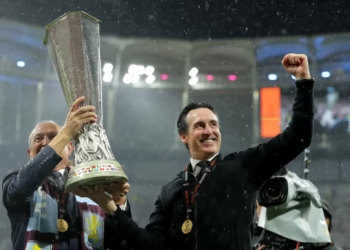 The Battle for Wembley Sparking Unprecedented Legal Warfare
 Pope Meets Families in Italy Toxic Waste Zone
 Is Ollie Robinson the Chaos English Cricket Needs Today?
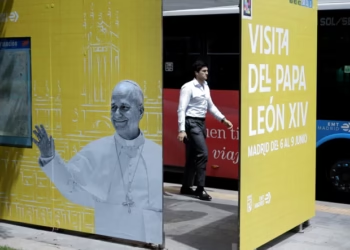 Papal Visit Offers Political Lifeline to Spanish Premier
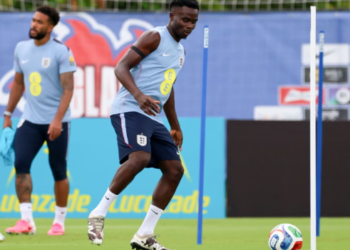 Saka Playing Through Pain As England World Cup Campaign Looms
 The Fear Gap: Why Europe Feels Less Safe Than It Is
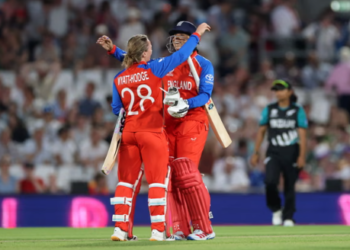 Women’s T20 World Cup Breaks Records But Gaps Remain
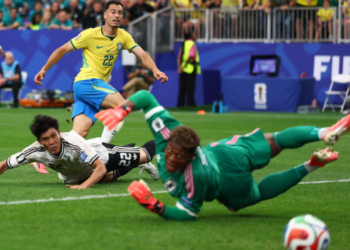 Martinelli Strikes Late as Brazil Edge Past Brave Japan
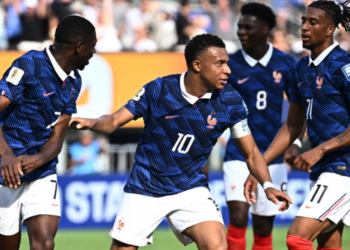 France Dominate Sweden as Deschamps’ New Era Takes Shape
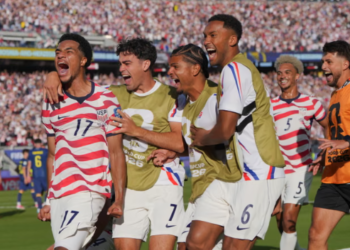 US Advance Past Bosnia in World Cup Thriller
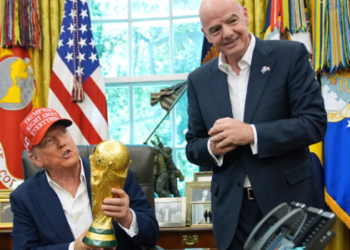 Trump’s Red-Card Intervention Hurts the US World Cup
 USA World Cup Heartbreak: Belgium Ends Their Dream
 Le Pen to Run for President Despite Embezzlement Conviction
 Mbappé Brilliance Leads France Into Semi-Finals
 Spain’s Superstar Fan: Keyne Yamal Steals the Spotlight