Published: 25 June 2026. The English Chronicle Desk. The English Chronicle Online.
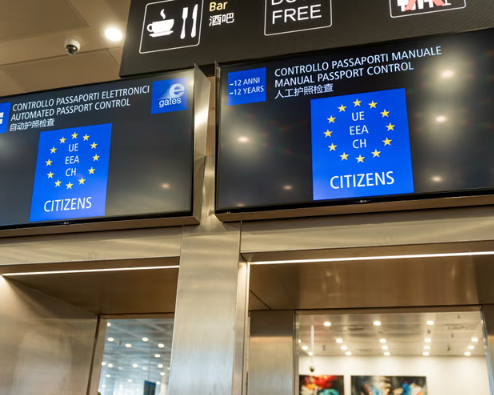
The peak holiday season is rapidly approaching across Europe with massive delays looming. Rome’s major international airports are now facing a potential summer travel disaster. Senior aviation officials have openly threatened to suspend the new European Union border checks. This drastic measure aims to prevent unprecedented chaos for millions of eager holidaymakers. The warning highlights growing friction between rigid digital immigration policies and practical tourism operations. Millions of non-EU citizens face the grim prospect of staggering airport queues. British travellers are particularly vulnerable to these new and highly controversial biometric procedures.
Marco Troncone has expressed severe anxiety regarding the immediate future of Italian aviation. As the chief executive of Aeroporti di Roma, he oversees two major hubs. These busy locations include Fiumicino Airport and the smaller, bustling Ciampino facility. Troncone recently described his current level of concern as an eight or nine. Such high anxiety from a top executive signals deep systemic flaws within implementation. He strongly believes the new digital border system is incompatible with massive summer crowds. The current infrastructure simply cannot cope with the sheer volume of arriving passengers.
The ambitious Entry-Exit System requires comprehensive biometric enrollment for all non-EU travellers. This digital mandate includes capturing facial images and fingerprints upon initial arrival. European authorities designed this massive database to secure external borders more effectively. However, faulty technology and software glitches have plagued the rollout from day one. Long queues have already formed during relatively quiet periods earlier this spring. Worried families have missed flights because processing times are currently far too slow. The aviation industry fears that peak summer traffic will cause total gridlock.
To prevent a complete operational collapse, Troncone suggests opening up the regulatory valve. This policy means selectively suspending the mandatory biometric checks during incredibly busy periods. He insists that full compliance is physically impossible during the hectic summer months. The physical space within terminal buildings cannot accommodate thousands of waiting passengers simultaneously. Forcing every single passenger through the system would create dangerous terminal overcrowding. Airport management believes that passenger safety must take priority over bureaucratic border rules.
British holidaymakers are already experiencing the frustrating reality of these new regulations. The United Kingdom’s departure from the European Union triggered these strict requirements. French police previously had to suspend extra checks at Dover earlier this year. That temporary suspension followed massive traffic gridlock along vital cross-Channel shipping routes. Meanwhile, the Greek government recently reversed its promise to delay these biometric checks. Greece will now enforce the rules immediately, catching many British tourists unprepared. These inconsistent applications across different nations are causing immense confusion for global travellers.
The digital system theoretically allows returning travellers to bypass these long biometric queues. Once a passenger is registered, subsequent trips should theoretically be much faster. However, operational reality has proved to be vastly different from the theory. Passengers who previously completed the process are regularly forced to do it again. Systems fail to recognize existing profiles, creating repetitive and unnecessary secondary checks. This technical failure doubles the workload for passport control officers at arrival gates. It also creates immense frustration for passengers who expected a seamless journey.
Aviation trade bodies are now demanding immediate honesty from European political leaders. Stefan Schulte serves as the outspoken president of the prominent ACI Europe group. He recently stated that individual governments must take responsibility for these failures. Airports do not possess the legal authority to officially suspend European Union laws. Schulte publicly urged politicians to stop pretending that the new system works well. He emphasized that the current framework is fundamentally broken and requires urgent intervention.
The European Commission has acknowledged these growing operational strains with minor concessions. Officials recently highlighted a built-in flexibility clause within the existing border legislation. This legal provision allows member states to temporarily ease checks during emergencies. However, governments remain hesitant to trigger these clauses due to political sensitivities. Relaxing border controls could invite harsh criticism regarding regional security and immigration policy. This political hesitation leaves airport operators trapped between strict laws and angry customers.
The International Air Transport Association has issued its own grim mathematical forecasts. The prominent global airline group warns that queue times could reach six hours. Waiting for six hours in a hot airport terminal is unacceptable for families. Peak periods have already produced recorded delays stretching well over three hours. Airlines are deeply worried about the financial impact of missed flight connections. Displaced passengers require expensive rebooking, complimentary meals, and overnight hotel accommodation. These unexpected operational costs could severely damage airline profitability during their most lucrative season.
Airlines believe the system is producing nothing but long lines and alarm. The aviation industry is united in its criticism of this premature digital rollout. Representatives argue that the technology should have been tested much more thoroughly. Implementing complex biometric systems simultaneously across dozens of nations was highly risky. Now, individual airlines must manage the immediate fallout of distressed and angry passengers. Flight schedules are being disrupted daily because planes cannot depart without booked passengers.
The long-term outlook offers very little comfort for anxious European holidaymakers. Uku Särekanno serves as a deputy executive director for the Frontex agency. He recently suggested that the border situation might take two years to stabilize. Two years of potential travel disruption represents a massive blow to global tourism. Businesses dependent on international visitors are watching these developments with deep concern. If traveling becomes too difficult, tourists may choose to stay at home.
The current crisis highlights a fundamental disconnect between policymakers and infrastructure reality. European officials prioritized digital security without upgrading physical space within airports. Most immigration halls were constructed decades before biometric kiosks were even invented. Adding bulky machinery into narrow corridors naturally creates severe human bottlenecks. This structural limitation cannot be solved easily by software updates or political promises. It requires significant capital investment and physical expansion of existing terminal buildings.
As summer begins, the eyes of the travel world are on Rome. Whether Italian authorities will officially trigger the emergency suspension clause remains unseen. Other European Mediterranean destinations are watching the situation in Italy very closely. If Rome successfully defies Brussels, Spain and Portugal might quickly follow suit. Tourism-dependent economies cannot afford to alienate visitors with multi-hour border queues. For now, travellers must prepare for a summer of patience and potential delays. The dream of a smooth European holiday feels more distant than ever.
Related News:
 BBC to Apologise Over Edited Trump Speech Amid Backlash
 Britain deploys RAF specialists to assist Belgium with drone threats
 Palace May Restore Hyphen to Andrew Mountbatten-Windsor’s Name
 Greene Pushes Epstein Files Amid Trump Fallout
 December Run-Off in Chile as Election Produces No Winner
 Zelenskyy Signs Fighter Jet Deal Amid Russian Drone Attacks
 Canada Passes Carney’s First Budget in Tight Parliamentary Vote
 Shadow Fleet at Sea: Europe’s Battle Against Illicit Oil Shipping
 Tiny Curacao Makes History as Smallest Nation to Reach World Cup
 Deadly Russian Strikes Hit Western Ukraine, 20 Killed in Ternopil
 Ukraine Peace Plan: Zelensky Ready for Dialogue
 Royal Navy Shadows Russian Warships Entering the Channel
 US Suspends Afghan Immigration After White House Shooting
 Georgians Defy Government Crackdown After Year of Protests
 Tokyo court rules Japan’s same-sex marriage ban constitutional
 ‘Extinct’ Antelope Returns to Sahara, Bringing Hope
 American Mother Extradited From UK to U.S. on Murder Charges
 Facebook Slow to Remove Bondi Attack Praise, Anti-Hate Group Claims
 Albanese Opens Door to Bondi Royal Commission Amid Rising Pressure
 US Clears Nvidia AI Chip Sales to China in Policy Shift
 Gulf states warn Trump Iran strikes risk wider Middle East war
 EU weighs response amid Greenland tariff crisis with Trump
 Sydney Shark Attack Surge Shocks Australia Beaches
 EU Says US Ties Have Suffered ‘Big Blow’ After Greenland Crisis
 Videos reveal earlier clash before Alex Pretti shooting
 UK New Car Discounts Near £6,000 as Prices Are Slashed
 Israel Moves to Bar MSF From Gaza Operations
 Portugal Election Delivers Socialist Win as Far Right Surges
 Australian Families Leave Syrian Camp for Home
 Andrew Arrest Sparks Republic Debate in Australia
 Farage Chagos Islands Row Sparks Fury
 Hilary Knight speaks out on Trump’s recent hockey remarks
 Has Europe truly learned from the failures of 2022?
 Trump Faces Questions Over Iran Conflict Plan
 Iran Civilian Deaths Surge Past 200 Amid Fear
 Herzog Asio meeting sparks security storm
 Trump rebukes Starmer over Iran strikes
 Iran-Iraq border airstrikes spark new tensions
 Petrol Prices Soar as Retailers Accused of Gouging Amid Global Tension
 Penny Wong silent on Australian crew in sub strike
 Australians on US Submarine in Iranian Warship Strike
 Oil Prices Surge Above $100 Amid Iran War
 India T20 World Cup Triumph Seals Historic Title Defence
 Trump Pressures Congress Over Save America Act
 Iranian Football Squad Asylum Drama Shocks Australia
 Goma Drone Attack Kills Three as Conflict Escalates
 Queensland Protest Laws Spark Free Speech Backlash
 Yvette Cooper: UK Must Follow Principles, Not US Pressure
 Iranian Captain Departs Australia Amid Asylum Tension
 Trump Nato threats expose Iran strategy vacuum
 Philippines energy emergency sparks coal power surge
 Australia Imposes Sudden Travel Ban on Iranian Visitors
 Trump Facing Backlash from Epstein Survivors Over Files
 Russia: The Unforeseen Winner of the Iran Conflict
 Report Says Pezzullo Acted ‘Recklessly’ in Dealings
 Trump’s Middle East Misstep: The Bitter Cost of Hubris
 US and Iran Pursue Extension of Ceasefire via Pakistan
 Tragedy Strikes Outside Melbourne Comic Con
 “I was fighting two wars”: Ukraine soldiers’ addiction crisis
 Ukraine Urges UK to Seize Russian Oil Tankers
 Capitalism ‘Suicidal’, Warns Petro at Climate Summit
 Ukraine strikes Tuapse as oil disaster worsens
 US to Escort Trapped Ships Through the Strait of Hormuz
 Premier League drama defines crucial weekend
 Trump Threatens UN Budget Cuts as US Pushes ‘Trade Over Aid’ Agenda
 Miami Upgrades Shake Up F1 Title Fight
 US Awaits Iran Reply on New Ceasefire Proposal
 Crisis in the Canary Islands as Cruise Ship Evacuated
 US and Mexico Face Heatwave as Floods Batter South Africa
 Putin Signals War End as Russian Momentum Stalls
 Australia Welcomes the Iconic Michelin Guide
 Philippine Senator Flees After Days Under Senate Siege
 High Street Crisis: Fears Grow Over Post Office Closures
 Oil Markets Face ‘Red Zone’ Threat Amid Iran Crisis
 Pope Meets Families in Italy Toxic Waste Zone
 Discontent grows around Putin amid war strain
 US Strikes Iranian Sites Amid Shaky Ceasefire Talks
 UN Issues Urgent Warning: Imminent Return of El Niño
 UK Economy Suffers a Sharp Downturn as Iran Conflict Bites
 Trump’s Iran Legacy Hangs on Tehran Deal