Published: 6 July 2026 | The English Chronicle Desk | The English Chronicle Online
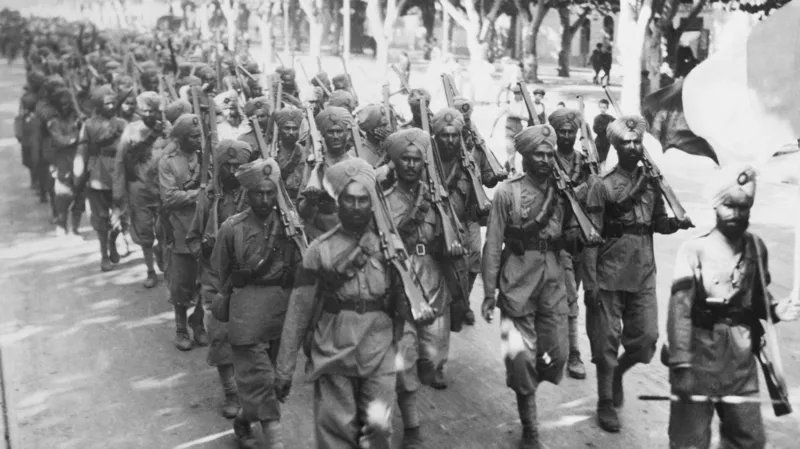
More than a century after they fought and died during the First World War, thousands of previously overlooked Punjabi soldiers have finally received official recognition in what historians are describing as a landmark moment for Britain’s understanding of its wartime history. The newly acknowledged servicemen, many of whom served under the British Indian Army, had remained absent from official records for decades despite making significant contributions to Allied military campaigns across Europe, the Middle East and Africa.
The recognition follows years of painstaking historical research that uncovered thousands of missing names from military archives, regimental documents and colonial records. Experts say the discovery not only restores dignity to soldiers whose sacrifices had long been forgotten but also highlights the immense contribution made by undivided Punjab to Britain’s war effort during one of the deadliest conflicts in modern history.
Historians believe the latest findings represent one of the most significant revisions to First World War military records in recent years. Families whose ancestors served during the conflict have welcomed the move, describing it as long-overdue recognition for generations whose stories had been overlooked by history.

During the First World War, the British Indian Army played a crucial role in supporting Allied operations after Britain entered the conflict in 1914. At the time, undivided Punjab—which now spans parts of both India and Pakistan—was one of the largest recruiting regions for the colonial army.
Hundreds of thousands of Punjabi men enlisted to fight for the British Empire. They served in some of the war’s most brutal theatres, including the Western Front in France and Belgium, the Gallipoli campaign, Mesopotamia, East Africa, Egypt and Palestine.
Many fought under extremely harsh conditions far from their homes, facing unfamiliar climates, modern industrial warfare and devastating casualty rates. Thousands never returned.
Despite their enormous contribution, historians argue that many Indian soldiers, particularly those recruited from rural communities, were inadequately documented. Administrative shortcomings, inconsistent record-keeping, language barriers and the complexities of colonial bureaucracy meant that countless names were either omitted from official memorials or incorrectly recorded.
As a result, generations of descendants grew up without formal recognition that their relatives had served in one of history’s defining conflicts.
The latest recognition seeks to correct that historical omission.
Researchers involved in the project spent years examining military service files, pension records, battlefield casualty lists, regimental diaries, cemetery archives and colonial administrative documents. By cross-referencing multiple historical sources, they identified thousands of Punjabi soldiers whose service had never been properly acknowledged.
Many names had been lost because of spelling variations caused by transliteration between Punjabi, Urdu, Hindi and English. Others disappeared due to incomplete wartime paperwork or inconsistencies in colonial record management.
Modern digital technology has also played a significant role in the research effort. Advanced archival databases and improved document digitisation enabled historians to connect fragmented records that had previously remained scattered across collections in Britain, India and other countries.
The newly recognised soldiers include infantrymen, cavalry troops, engineers, medical orderlies, transport workers and labour corps personnel who supported Allied military operations in numerous capacities.
Some died during fierce fighting on the Western Front shortly after arriving in Europe, where many Indian troops encountered freezing winters and trench warfare unlike anything they had previously experienced.
Others lost their lives in campaigns across the Middle East, where disease, extreme heat and prolonged military operations proved equally deadly.
Those who survived often returned home carrying both physical injuries and lasting psychological trauma, although the latter received little recognition at the time.
Historians say the contribution of Punjabi soldiers has frequently been overshadowed by narratives centred primarily on European armies.
While Britain has long commemorated Commonwealth participation in both World Wars, scholars argue that colonial troops have not always received equal visibility within public remembrance.
The renewed recognition forms part of broader efforts to present a more complete account of Britain’s wartime history by acknowledging the diverse backgrounds of those who served under the British flag.
Military historians note that the British Empire relied heavily on troops recruited from across its colonies during the First World War.
More than one million soldiers from British India served during the conflict, making it one of the largest volunteer military forces assembled during the war. They participated in numerous decisive battles and earned hundreds of military decorations for bravery.
Thousands paid the ultimate price.
Yet despite these achievements, many individual stories remained undocumented for decades.
Campaigners have long argued that recognising forgotten soldiers is about more than correcting historical records.
For descendants, official acknowledgement restores an important part of family history that had effectively disappeared. Many families possessed only oral traditions suggesting that grandfathers or great-grandfathers had fought in the war but lacked documentary evidence confirming their service.
The newly identified records now provide historical validation for many of those family accounts.
Community leaders have welcomed the recognition as an important contribution to preserving shared heritage across South Asia and the United Kingdom.
Britain today is home to large Punjabi communities with ancestral links to those who served during both World Wars. Many believe the recognition strengthens understanding of the longstanding historical relationship between Britain and the Indian subcontinent.
Educational organisations have also praised the initiative.
Teachers and historians increasingly emphasise the importance of presenting a broader picture of the First World War, one that reflects the truly global nature of the conflict. By incorporating the experiences of Indian, African, Caribbean and other colonial troops into educational materials, schools can offer students a more accurate understanding of Britain’s wartime history.
The recognition also highlights the evolving role of historical research.
Advances in archival preservation, digitisation and international collaboration have transformed historians’ ability to recover forgotten stories from the past. Records once considered incomplete or inaccessible can now be examined alongside documents held in archives across multiple countries.
Researchers believe additional discoveries may still lie ahead.
Many colonial military records remain dispersed across institutions worldwide, suggesting that further investigation could uncover thousands more names deserving recognition.
Commemorative organisations are expected to update memorial databases and educational resources to include the newly identified servicemen. Historians hope this process will encourage greater public awareness of the sacrifices made by soldiers from across the former British Empire.
The recognition also serves as a reminder that remembrance is an ongoing process rather than a fixed historical record.
As new evidence emerges, societies continue to reassess how wars are remembered and whose contributions receive public acknowledgement. Correcting historical omissions, experts argue, strengthens rather than weakens collective memory by ensuring that remembrance reflects the full diversity of those who served.

For many families, this recognition arrives generations too late for parents and grandparents who spent their lives without seeing their relatives officially honoured. Nevertheless, descendants say the acknowledgement carries profound emotional significance, offering long-awaited confirmation that their ancestors’ courage and sacrifice have finally been recognised.
More than a century after the guns of the First World War fell silent, the names of thousands of forgotten Punjabi soldiers are now being restored to history. Their inclusion marks not only an important historical correction but also a powerful reminder that the story of the Great War was never confined to Europe alone.
It was a global conflict fought by people from every corner of the British Empire, and the courage of those who served—regardless of nationality, language or background—forms an enduring part of that shared legacy. By finally recognising these forgotten Punjabi servicemen, historians and commemorative organisations are helping to ensure that their sacrifices will no longer remain hidden in the pages of neglected archives but will instead take their rightful place in the collective memory of one of the world’s defining conflicts.
Related News:
 ‘Significant and Poignant’: Families Gather for 35th Anniversary of IRA Musgrave Bombing
 “Walking in His Footsteps”: Son of WWII US Airman Pays Emotional Visit to IWM Duxford
 The Victorian aristocrat who became Britain’s first Muslim lord
 Police Assessing Stansted Airport Private Flights Over Epstein Ties
 Snow and Rain Warnings as Cold Snap Continues in the UK
 TfL Advert Banned for Harmful Racial Stereotype
 Break from Wintry Weather as UK Temperatures to Climb to 14 °C
 What’s Next for Andrew Mountbatten-Windsor’s Ex-Wife, Sarah Ferguson?
 Muslim Group Wants Mosques to Be Used as Polling Stations Ahead of UK Elections
 Boy, 12, Home After Being Stranded in Middle East
 Why Aren’t Our Dirtiest Roads Getting Cleaned?
 Murdered Student ‘Algasim’ Was ‘the Most Special Person’, Friends Say
 Manchester Students Mourn Ayatollah Amid Protest
 Rare Glimpse of Historic Bridge Thanks to Low Tide
 Teen Admits Filming Westfield Chair Prank
 A Slimmer Sunday: Beatrice and Eugenie to Skip Royal Easter Service Amid Family Health Focus
 Banana Bonanza: Orkney Town Flooded with 38,000 Bananas After Supermarket Blunder
 ‘Please Keep Her in Your Prayers’: Dad Describes Final Moments Before 7-Year-Old Was Swept to Sea
 ‘Something Wasn’t Right’: UK Families Devastated by Sperm Mix-Up at Northern Cyprus IVF Clinics
 From Fallout to Five-Star: Cold War Nuclear Bunker Gains Holiday Let Permission
 ‘The Final Word’: Kathleen Stock’s Polemic Against Assisted Dying Reshapes the UK Debate
 Debt Relief or Drop in the Ocean? UK Caps Student Loan Interest at 6%
 ‘Seismic Change’: How Nationalist Wins in Celtic Nations Could Reshape the UK
 The ‘Shredder’ Syndrome: Why the 2026 Job Market is Breaking Entry-Level Spirits
 Locked Away: The ‘Complete Nightmare’ Facing the Blair Mayne Archive
 Legacy of the Landscape: Vicar’s Gift Secures Future of South West Coast Path
 The Kitchen Table Crisis: How the 2026 Iran War Hits Your Wallet
 A Gentle Light Extinguished: Tributes Pour in for Sister Genevieve After Fatal Newport Collision
 The Hidden Hoard of 1692: Glencoe Massacre Coins to be Displayed at Folk Museum
 Dippy’s Sacred Sojourn: ‘Landmark’ Dinosaur Cast Arrives at Cathedral
 The Freedom Hub: Can a Former Women’s Jail Unlock This City’s Potential?
 The Sinking Heritage: The Dutch Village at Risk of Being Demolished
 A Nation in Mourning: Millions Gather for Iconic Indian Singer’s Final Journey
 Mediterranean Spirit in the Met: London’s Moroccan Jews Celebrate Mimouna
 Justice on Hold: Further Delay in Chloe Mitchell Murder Trial Sparks Local Frustration
 ‘The Last of the Greatest’: UK’s Oldest WWII Veteran Passes Away Aged 109
 ‘On Freedom’s Wings’: Final Touches for the ‘East Midlands’ Angel of the North’
 Black Forest Tragedy Remembered 90 Years On
 “A Zero-Value Home”: Seven Years of Sinkhole Stagnation Leaves Family Trapped
 “Three-Wheeled Triumph”: Mayor of Erewash Completes 2,000-Mile European Charity Run
 The “Charles Charm” Offensive: Did the Royals Find Their Mojo in D.C.?
 The Shadow of the Blitz: 1,200 Plymouth Homes Evacuated as “Very Large” WW2 Bomb Unearthed
 “A Tonic for the Nation” Reimagined: Southbank Centre Marks 75 Years of Artistic Rebellion
 Koh-i-noor Diamond Row Reignites Colonial Debate
 “The Diaper Deadline”: Inside the Baby Bank Bypassing the ‘Accountability Rot’ for Struggling Families
 “The Boy in the Bay”: German Airman to Receive Permanent Headstone 86 Years After Somerset Crash
 “The Flora Funding”: Community Aid Bypasses ‘Nasty’ Price Hikes for Helston’s Children
 “The Window-Seat Office”: Working Life on the ‘Most Scenic Railway Line in the World’
 “The Centenary of a Giant”: Sir David Attenborough Celebrates 100th Birthday with ‘Milestone’ Global Quiz
 “Priced Out of Paradise”: Guernsey’s Cost of Living Crisis Deepens as Families Face the Island’s Severe Fiscal Squeeze
 Farage and Reform UK Reshape British Politics
 Starmer Leadership Under Pressure After Setbacks
 Andrew Accused Over Royal Lodge Cottage Rentals
 Royal Navy Mourns Devastating Helicopter Loss
 MPs Warn UK Asylum System Nears Breaking Point
 Rare Copy of US Declaration of Independence Discovered in UK Archives by Volunteer
 UK Must Act with Courage and Clarity on Israel-Palestine Conflict, Says Foreign Affairs Committee Report
 Renters Furious as Decent Homes Standard Delayed Until 2035
 Motorists Could Face ‘Mandatory’ Driving Ban for Road Offences Under Tougher Laws
 Epstein Eyed Record Label Investment to Access Women, Files Suggest
 Brit ‘in Good Spirits’ Amid Dubai Missile Attacks, Stranded but Safe
 Calls Grow to Remove Billboard Following Lyra McKee Graffiti
 ‘Every Day Feels Like a Month’: Iranians Describe Life Under ‘Constant’ US‑Israeli Strikes
 UK Forces Ready to Seize Russian Shadow Fleet Vessels
 US Lawmaker Demands Testimony Over Sarah Ferguson’s ‘Close Epstein Ties’
 The Banbridge Rescue: 300 Sheep Saved from Massive Hay Shed Inferno
 The Suffocating Silhouette: Why Metal’s Mask Trend is Turning Deadly
 Moldova River Crisis Exposes War’s Hidden Cost
 The Waiting Ward: ‘Month of Worry’ as Doctor Strikes Trigger Seismic Surgery Delays
 Tragedy in the Red Centre: Outback Search Ends in Discovery of Missing Girl’s Body
 The “Dry” Life: Teens Trialing Social Media Bans Call Initial Disconnection “Boring” and “Dry”
 “An Endurance Test for the Mind”: British Couple Sentenced to 10 Years in Tehran
 “The Local Gavel”: Polls Open Across Hampshire and Isle of Wight in Delayed ‘Milestone’ Vote
 “The Blue Light Intersection”: Seventeen-Year-Old Critically Injured in ‘Nasty’ Police Pursuit Crash
 “The Fractured Frontier”: Sir John Curtice Declares the ‘Sacred’ Two-Party Era Over After ‘Milestone’ Results
 “A Historic Tumble”: Lost 1930s Film Reel Reveals the Untamed Origins of Gloucestershire’s Legendary Cheese-Rolling
 Pope Meets Families in Italy Toxic Waste Zone
 UK Faces Most Dangerous Era, Military Chief Warns
 Fans Bring Flags and Fire to World Cup Scenes
 Prince George Set to Begin Studies at Eton This September