Published: July 10, 2026 | The English Chronicle Desk | The English Chronicle Online
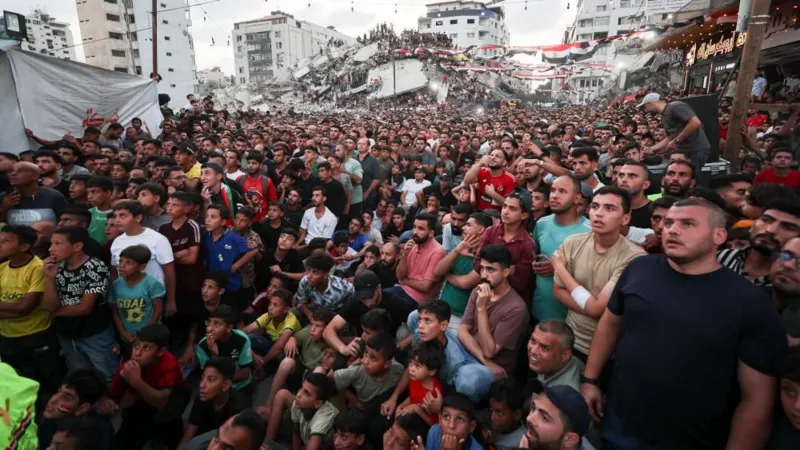
Residents across the Gaza Strip are mourning the death of a respected community organiser who became widely known for bringing families together through public FIFA World Cup screenings during the ongoing conflict. The organiser was killed in an Israeli airstrike, according to Palestinian health officials and local witnesses, leaving behind a legacy many describe as one of hope, resilience and unity amid war.
The death has sparked an outpouring of grief across Gaza, where thousands of people had attended the football gatherings he organised throughout the World Cup tournament. For many residents, the screenings provided one of the few opportunities to escape the hardships of daily life, allowing children and adults alike to experience moments of joy despite months of displacement, insecurity and destruction.
According to medical authorities in Gaza, the organiser was among several people killed when an Israeli strike hit a populated area. Emergency teams rushed to the scene to recover casualties and transport the injured to nearby hospitals, many of which continue to operate under severe pressure due to shortages of medicine, fuel and medical supplies.

Eyewitnesses described scenes of panic as rescue workers searched damaged buildings for survivors while relatives desperately sought information about loved ones caught in the blast.
The Israeli military said its operations are directed at armed militant groups operating in Gaza and stated that it takes measures intended to minimise civilian casualties. Israeli officials have repeatedly accused militant organisations of operating from within densely populated civilian areas, an allegation that has been widely disputed in various contexts by Palestinian authorities and humanitarian organisations. The precise circumstances surrounding the strike remain independently unverified.
For residents of Gaza, however, the loss was deeply personal.
Friends and neighbours remembered the organiser as someone who believed football could unite communities regardless of the surrounding conflict. Using generators, projectors and donated equipment, he coordinated public screenings in displacement camps, school courtyards and open spaces where families gathered to watch World Cup matches together.
Children wrapped themselves in the flags of their favourite national teams while parents, many coping with displacement and loss, welcomed the brief opportunity to forget the realities of war.
Community volunteers said organising each event required significant effort.
Electricity shortages meant portable generators had to be secured before every match. Projection equipment often had to be moved between different shelters, while volunteers arranged seating, lighting and security to accommodate large crowds.
Despite those challenges, attendance steadily grew throughout the tournament.
Residents said the organiser refused to cancel screenings even during periods of heightened tension, insisting that children deserved moments of happiness regardless of the circumstances surrounding them.
“He always said football reminds people they are still part of the world,” one local volunteer recalled. “For ninety minutes, children smiled instead of thinking about the war.”
Teachers who attended several screenings said the gatherings also helped restore a sense of community that had been severely disrupted by repeated displacement.
Many families who had lost their homes or become separated from relatives found opportunities to reconnect during the football events.
Mental health specialists working with humanitarian organisations have consistently stressed the importance of recreational activities for children living through armed conflict.
They argue that opportunities to play, learn and participate in community events can help reduce psychological stress and provide emotional support during prolonged crises.
Aid workers operating in Gaza noted that the organiser’s efforts extended beyond football itself.
According to volunteers, he regularly coordinated food distribution, encouraged local youth to assist elderly residents attending screenings and worked closely with neighbourhood committees to ensure women and children could participate safely.
Following news of his death, social media platforms were flooded with tributes from residents who had attended the screenings.
Photographs and videos from earlier matches showed crowds celebrating goals, children cheering beneath makeshift projection screens and families gathering despite the surrounding destruction.
Many users described those evenings as rare reminders of normal life.
Funeral prayers were held amid continuing uncertainty as relatives, neighbours and friends gathered to pay their final respects.
The procession moved through streets bearing visible signs of damage from months of fighting, with mourners carrying the deceased while offering prayers and expressing condolences to the family.
Several community leaders described his death as a loss not only for his relatives but for countless children who had benefited from his initiatives.
International humanitarian organisations continue warning about the severe humanitarian situation across Gaza.
United Nations agencies and aid groups say civilians remain exposed to repeated displacement, damaged infrastructure and shortages of food, clean water, electricity and healthcare.
Hospitals continue treating casualties while struggling with limited medical resources and increasing patient numbers.
Human rights organisations have repeatedly called on all parties to comply with international humanitarian law, protect civilians and facilitate the delivery of humanitarian assistance.
Diplomatic efforts aimed at achieving ceasefires and expanding humanitarian access have continued, although negotiations have faced repeated setbacks.
Sports organisations have increasingly recognised the role that football and other community activities can play during humanitarian emergencies.
Across conflict zones worldwide, football has frequently served as a tool for promoting social cohesion, supporting children’s mental wellbeing and helping communities recover from trauma.

Residents of Gaza said the World Cup screenings represented precisely that purpose.
For a few hours at a time, neighbourhoods gathered not around conflict but around sport, sharing celebrations and disappointment together regardless of personal circumstances.
Many who attended those events say the organiser’s greatest achievement was creating an environment where children could laugh freely despite living through one of the most difficult periods in Gaza’s recent history.
As the conflict continues with no immediate resolution in sight, his death has become another reminder of how war reaches beyond battlefields, affecting individuals whose contributions were rooted not in politics or conflict but in community service.
Those who knew him say his legacy will endure through the memories of the families he brought together and the children whose smiles briefly returned under the glow of projector screens.
In a territory where daily life has become defined by uncertainty, many believe his efforts demonstrated the enduring power of sport to provide hope, dignity and human connection—even in the darkest of times.
Related News:
 Iran, the US, and a World Cup That Starts in Three Months
 England’s Euro Odyssey: A Tale of Grit, Glory and the Lionesses’ Miraculous March to the Final
 Tottenham Takes On Newcastle
 FIFA Eyes Biennial Club World Cup from 2029, Plans Possible Expansion
 Dembélé and Bonmatí Shine as Ballon d’Or Winners in Glittering Paris Ceremony
 Liverpool Vs outhampton Set for Carabao Cup Clash at Anfield
 ICC Women’s World Cup 2025: India to Host as Pakistan Fixtures Moved to Neutral Venues
 Bournemouth Stun Fulham with Dramatic Comeback in Premier League Thriller
 Chaos at Ibrox as Martin’s Rangers Era Comes to an End
 Arsenal Showcase Depth and Flexibility as Arteta Eyes Title Challenge
 Tiny Curacao Makes History as Smallest Nation to Reach World Cup
 Haiti Qualifies for World Cup Despite Coach Never Visiting Country
 Mbappe Scores 4 as Real Madrid Edge Olympiakos
 ‘I Would Scream in My Sleep’: Alawite Women from Syria Tell of Kidnap and Rape
 Iran Says ‘Guiding Principles’ Agreed With US at Nuclear Talks
 Hilary Knight speaks out on Trump’s recent hockey remarks
 Iran’s Regime Still Intact — Coming Days Will Test Its Survival
 Allies of US in the Gulf Bear Brunt of Iran Attacks
 Australian GP Confident Amid Travel Disruption
 In Maps: Strikes Across Iran and the Middle East
 Months of Planning Behind US‑Israeli Mission to Target Iran’s Supreme Leader
 US Iran Operation: Sixth Service Member Killed
 The Third Day of the US‑Israeli War With Iran
 Limited Flights Leave UAE But Disruption Continues Amid Iran Strikes
 Why the US and Israel attacked Iran
 Israel Launches Fresh Strikes on Tehran and Beirut on Day Four
 Israel Launches Ground Invasion of Lebanon Amid Widening Middle East War
 Ski Duo Named GB’s Winter Paralympics Flagbearers
 Trump Underestimated the Iranian Regime’s Will to Survive
 Civilian Deaths in Iran Pass 700 Amid Fear of Bombs and Regime Clampdown
 Middle East attacks intensify as Trump rejects Iran talks
 Iran-Iraq border airstrikes spark new tensions
 US Senate Backs Trump War Powers Amid Iran Missile Barrage
 Alonso Fears ‘Permanent Nerve Damage’ From Aston Martin’s Disastrous Car
 Macron Finds ‘Freedom Fries’ Redemption in Iran Crisis
 ‘We Must Finish This’: Israelis Rally Behind War Effort as Iran Strikes Tel Aviv
 UK Prepares Aircraft Carrier for Middle East Crisis
 India T20 World Cup Triumph Seals Historic Title Defence
 Australia Urged to Shield Iranian Team After Anthem Protest
 Nine Days of Strikes Reshape the Middle East
 Iran’s New Leader Faces Existential Test
 Iranian Footballers Escape Team Hotel to Seek Asylum
 Trump Iran War Stance Hardens as Conflict Widens
 Iranian Captain Departs Australia Amid Asylum Tension
 Kabul hospital strike sparks deadly blame row
 Iran World Cup Move Talks Raise Global Concerns
 Israel Says Iran Security Chief Larijani ‘Killed’
 Gulf Distrust Grows Over Rumoured US-Iran Peace Talks
 Saudi Arabia Urging US to Keep Up Iran Attacks
 Trump Threatens Iran With Total Infrastructure Destruction
 Israel Launches Massive Airstrikes Across Lebanon
 US and Iran Pursue Extension of Ceasefire via Pakistan
 ‘Safe Haven’: Iranian Footballers Rebuild Lives in Australia Following Asylum Bid
 ‘Words Are Not Enough’: Quinton Byfield Urges Concrete Action as Hockey Faces New Racism Row
 Beyond the Swoosh: Anta Sports Overtakes Rivals to Become Global Top Three
 “Three-Wheeled Triumph”: Mayor of Erewash Completes 2,000-Mile European Charity Run
 $13bn World Cup Set to Break All Revenue Records
 Premier League drama defines crucial weekend
 Miami Upgrades Shake Up F1 Title Fight
 Infantino Defends Soaring World Cup 2026 Ticket Costs
 “The Trading Bonanza”: Shell Profits Soar to $6.9 Billion Amid Iran War ‘Volatility’
 “The Peace Dividend”: Oil Prices Plunge and Global Stocks Surge on Reports of Iran Ceasefire Deal
 Tensions Emerge in Netanyahu-Trump Alliance
 “The Desecrated Grave”: West Bank Settlers Force Palestinian Family to Exhume Father’s Body
 “Hold Off”: Trump Pauses ‘Scheduled’ Strike After 11th-Hour Appeal From Gulf Allies
 Chasing Glory: The Quest for a New World Cup Champion
 US Strikes Iranian Sites Amid Shaky Ceasefire Talks
 Israel Intensifies Lebanon Strikes to Crush Hezbollah
 Trump-Netanyahu Call Fuels Iran Talk Crisis
 Fans Bring Flags and Fire to World Cup Scenes
 11 EFL Stars Ready to Shine at World Cup
 Fans Invited to Share Scotland World Cup Stories
 Israel Strikes Iran After Missile Attack
 Iran Team Arrives in Mexico Amid US Visa Dispute
 US Launches Strikes on Iran After Military Helicopter Downed Near Strait of Hormuz
 Three Indian Sailors Killed in US Strike on Tanker Near Oman as US–Iran Conflict Escalates
 Lebanon Reports 18 Killed in Israeli Strikes as Israel Announces Deaths of Four Soldiers
 Canada Secure Historic Last 16 Spot with Late Goal
 Former Olympian Indicted Over Alleged Vandalism at Washington’s Reflecting Pool
 Trump Helps Clear Balogun for Belgium World Cup Clash