Published: July 10, 2026 | The English Chronicle Desk | The English Chronicle Online
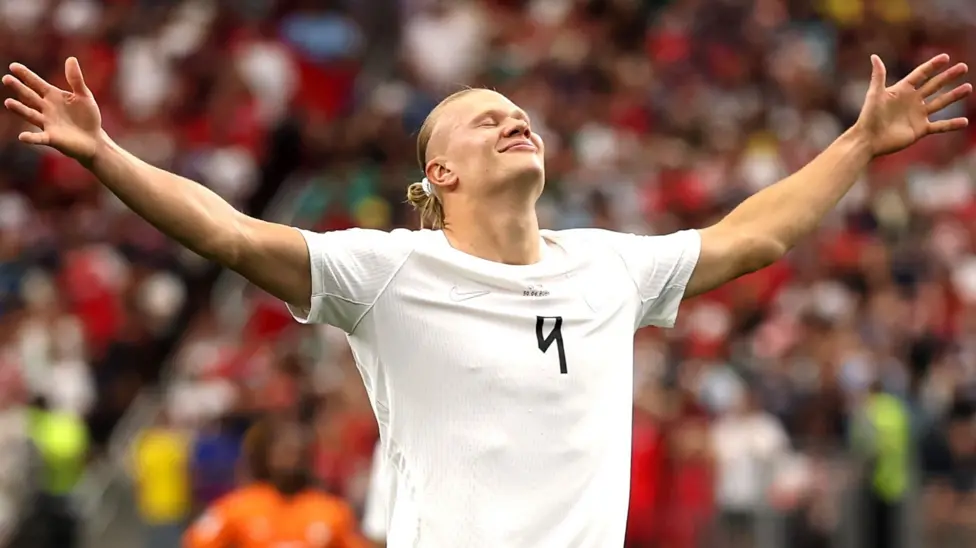
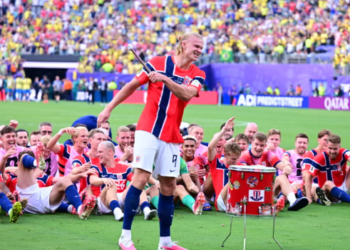
For most footballers, identity is straightforward. They grow up in one country, develop through one football culture and eventually represent a single nation on the international stage. Erling Haaland’s story is different. Born in England, shaped in Norway and transformed into one of world football’s most feared strikers, the 25-year-old now finds his personal history intersecting with sporting destiny as Norway continues its remarkable FIFA World Cup journey.
The tournament has brought renewed attention not only to Haaland’s extraordinary goal-scoring exploits but also to the unique path that made him one of football’s global superstars. As Norway aims to challenge the world’s elite, Haaland’s connection to both England and Scandinavia has become one of the competition’s most compelling narratives.
Haaland entered the world in Leeds, England, in July 2000 while his father, Alf-Inge Haaland, was playing in the Premier League. At the time, few could have imagined that the infant born in West Yorkshire would one day become one of football’s most prolific forwards.

His family’s stay in England was relatively brief. After Alf-Inge’s playing career in English football came to an end, the family returned to Norway, where Erling spent almost his entire childhood.
It was there, rather than in England, that the foundations of his football career were built.
Growing up in Bryne, a small town on Norway’s southwest coast, Haaland developed within a football environment that valued discipline, hard work and physical development. Coaches who worked with him during his youth years frequently recall a youngster who combined unusual athletic ability with an insatiable desire to improve.
Even before reaching his teenage years, Haaland displayed characteristics that separated him from many of his peers.
His pace, strength and competitive mentality quickly attracted attention, while his relentless appetite for scoring goals became a defining feature of his development.
Those qualities earned him opportunities with Bryne before progressing to Molde under former Manchester United striker Ole Gunnar Solskjaer.
The move proved transformative.
Solskjaer recognised Haaland’s exceptional potential and helped refine the technical aspects of his game without limiting the natural aggression that made him so dangerous inside the penalty area.
From there, Haaland’s rise accelerated rapidly.
Outstanding performances at Red Bull Salzburg announced him to European football, where his remarkable scoring record in the UEFA Champions League immediately captured international attention.
Borussia Dortmund soon secured his signature, providing a platform where he evolved into one of Europe’s most complete centre-forwards.
His combination of explosive speed, physical dominance and clinical finishing overwhelmed Bundesliga defenders and confirmed that his Salzburg performances had been no coincidence.
A transfer to Manchester City elevated him to another level.
Under Pep Guardiola, Haaland became the focal point of one of Europe’s strongest attacking teams, breaking scoring records while collecting major domestic and continental honours.
Despite spending much of his professional career abroad, Haaland’s loyalty to Norway has never been questioned.
Eligible to represent England because of his birthplace, he instead chose the country where he was raised, educated and developed as both a footballer and a person.
For Haaland, the decision reflected identity rather than opportunity.
Norway represented home.
His family, childhood memories, friendships and football education were all rooted in Norwegian culture, making the choice both natural and deeply personal.
That commitment has helped inspire a new generation of Norwegian footballers.
Alongside Arsenal captain Martin Ødegaard and several emerging talents, Haaland has become the face of a national team determined to establish itself among football’s traditional powers.
For years, Norway possessed talented individuals but struggled to qualify consistently for major tournaments.
The current generation has changed those expectations.
Improved youth development, stronger domestic coaching structures and increasing numbers of Norwegian players competing across Europe’s leading leagues have transformed the country’s footballing ambitions.
Haaland has played a central role in that evolution.
His goals have provided belief as much as results, convincing teammates and supporters alike that Norway can compete against the world’s strongest nations.
His influence extends beyond statistics.
Young Norwegian players increasingly view elite European football as an achievable destination rather than an impossible dream.
National coaches frequently point to Haaland’s professionalism, training habits and relentless work ethic as examples for younger generations to follow.
As Norway progresses deeper into the World Cup, Haaland’s dual connection to England and Norway has attracted renewed interest.
English supporters remember his birthplace and his father’s Premier League career, while Norwegian fans proudly celebrate one of their own leading the national team on football’s grandest stage.
Should Norway eventually meet England during the tournament, the encounter would carry additional emotional significance.
It would represent a meeting between Haaland’s birthplace and the nation that shaped his identity.
The striker himself has consistently downplayed those personal storylines.
His focus remains firmly on helping Norway achieve success rather than revisiting questions surrounding nationality.
Those close to him describe a player whose priorities rarely extend beyond football itself.
Preparation, recovery and continuous improvement dominate his daily routine, reflecting the professionalism that has defined his rapid ascent.
On the pitch, Haaland continues redefining expectations of the modern centre-forward.
Standing over six feet four inches tall while possessing sprinter-like acceleration, he combines physical qualities rarely found in a single athlete.
Yet his greatest strength may be his movement.
His ability to anticipate crosses, attack defensive spaces and arrive at precisely the right moment has repeatedly frustrated even the world’s finest defenders.
Goal-scoring remains his defining characteristic.
Whether through powerful finishes, instinctive close-range strikes, headers or composed one-on-one situations, Haaland consistently converts opportunities at extraordinary rates.
Coaches frequently describe him as a striker capable of changing matches with only a handful of touches.
His presence alone forces opposing defences to adjust their shape, creating space for teammates while constantly threatening in behind.

That influence explains why Norway’s hopes at this World Cup continue resting heavily on his shoulders.
Yet teammates insist their success depends upon collective effort rather than one individual.
Head coach and players alike emphasise defensive organisation, disciplined pressing and tactical unity as essential ingredients alongside Haaland’s finishing ability.
As the knockout stages approach, the striker’s remarkable journey—from a hospital in Leeds to football fields across Norway and eventually Europe’s biggest stadiums—has become one of the tournament’s defining human stories.
Regardless of how far Norway ultimately progresses, Haaland has already demonstrated that footballing identity is shaped not by birthplace alone but by culture, commitment and the environment in which dreams are nurtured.
Now, with the World Cup offering the biggest stage of his career, the worlds that helped create Erling Haaland are colliding in spectacular fashion, and Norway hopes their greatest footballing son can guide them toward history.
Related News:
 Football Hopes to Outshine World Cup Drama in Mexico
 Tension and Turmoil at Aston Villa v Maccabi Match
 Lando Norris Dominates Brazil GP to Strengthen F1 Title Bid
 Ronaldo Confirms Final World Cup and Plans Retirement
 England Maintain Perfect World Cup Qualifying Record with Win Over Serbia
 Irish Hero Parrott Says Goal Brought First Tears in Years
 Scotland Fans Reflect on France ’98 as World Cup Looms
 Nigeria Misses World Cup Again After Play-Off Loss
 Spain Qualify for 2026 World Cup After Dramatic Draw
 Tiny Curacao Makes History as Smallest Nation to Reach World Cup
 Haiti Qualifies for World Cup Despite Coach Never Visiting Country
 Scotland Fans Celebrate Historic World Cup Qualification
 Barcelona Returns to Camp Nou vs Athletic Bilbao
 Mbappe Scores 4 as Real Madrid Edge Olympiakos
 Man City Lose, Champions League Risk
 Trump to attend 2026 FIFA World Cup draw in Washington
 Hilary Knight speaks out on Trump’s recent hockey remarks
 India T20 World Cup Triumph Seals Historic Title Defence
 Iranian Captain Departs Australia Amid Asylum Tension
 Iran World Cup Move Talks Raise Global Concerns
 Jos Buttler Searches for Form as the IPL Returns
 Peretz Targets FA Cup Upset Amid War Concerns
 Irvine Slams Trump Fifa Peace Prize
 $13bn World Cup Set to Break All Revenue Records
 Premier League drama defines crucial weekend
 Infantino’s Grip Tightens as FIFA Eyes a $14bn Future in Vancouver
 RFU Backs Borthwick Despite England’s Poor Six Nations
 Miami Upgrades Shake Up F1 Title Fight
 Infantino Defends Soaring World Cup 2026 Ticket Costs
 FIFA Confirms Global Ban for Benfica Star Prestianni
Chasing Glory: The Quest for a New World Cup Champion
FIFA Confirms Global Ban for Benfica Star Prestianni
Chasing Glory: The Quest for a New World Cup Champion
 Tuchel Boldly Reshapes England Squad for World Cup Glory
 Drama in New Zealand as Surf Final Halted by Marine Attack
 Rivalry That Changed Modern Football Forever
 Fans Bring Flags and Fire to World Cup Scenes
 11 EFL Stars Ready to Shine at World Cup
 Arsenal Trio Named on Player of the Year List
 Fans Invited to Share Scotland World Cup Stories
 Iran Team Arrives in Mexico Amid US Visa Dispute
 Nike Charges Fans Most for World Cup Replica Shirts
 Safeguarding Probe Limits West Ham Owner’s Role
 Saka Playing Through Pain As England World Cup Campaign Looms
 England Cruise Past Costa Rica as World Cup Warm-Up Sharpens Tuchel’s Vision
 Tension Grips Mexico City Ahead of World Cup Opener
 Inside the Three Lions: Bellingham Reveals Euro 2024 Flaws
 Chaos and Celebration at the Historic Azteca Stadium
 ‘We all love him’: Henderson backs Bellingham for England success
 Real Madrid Sign Marc Cucurella From Chelsea
 Why Bringing Back Jordan Henderson Is Thomas Tuchel’s Masterstroke
 Can France Escape the Ghosts of their 2002 World Cup Nightmare?
 Messi Equals World Cup Record In Masterclass Victory
 Tuchel’s England Mission Goes Beyond Football Success
 Historic Victory for Canada as They Defeat Nine-Man Qatar
 Heartbreak for Canada as Koné Suffers Horrific Injury
 New Premier League Fixtures Set Stage for Thrilling Season
 Declan Rice Facing Burnout as Tuchel Confronts Midfield Crisis
 Cape Verde Hold Uruguay in Dramatic World Cup Clash
 World Cup 2026: Reclaiming the American Dream
 Canada Secure Historic Last 16 Spot with Late Goal
 Paraguay Shock Germany in Historic Penalty Shootout
 Morocco Beat Dutch in Wild World Cup Penalty Drama
 Haaland Heroics Send Norway Into Historic Last 16 Knockout
 Kane Saves Tuchel as England Survive Dramatic Exit
 Ramos Sends Portugal into the Last 16
 Spain Dominates Austria to Reach Quarter-Finals
 Taylor Swift and Travis Kelce Marry at Madison Square Garden
 Paul Seixas: French Cycling’s Teenage Hope at the Tour
 Norway’s Stunning World Cup Victory Over Brazil
 England Triumph in Azteca World Cup Thriller
 Trump’s Red-Card Intervention Hurts the US World Cup
 Police Probe Claim of Missing £1.5m in Yes Scotland Campaign
 Trump Helps Clear Balogun for Belgium World Cup Clash
 England’s 10 Men Hold Firm in World Cup Thriller
 Belgium Thrashes USA After Red Card Controversy
 Ronaldo Says Farewell to the World Cup Stage
 Messi’s Tears and Triumph in Epic World Cup Escape
 Switzerland Advance in Penalty Thriller
 Egyptian Fury After Argentina World Cup Heartbreak
 Mbappé Brilliance Leads France Into Semi-Finals
 Kane vs Haaland: Which Striker Would You Choose?