Published: 17 July 2026 | The English Chronicle Desk | The English Chronicle Online
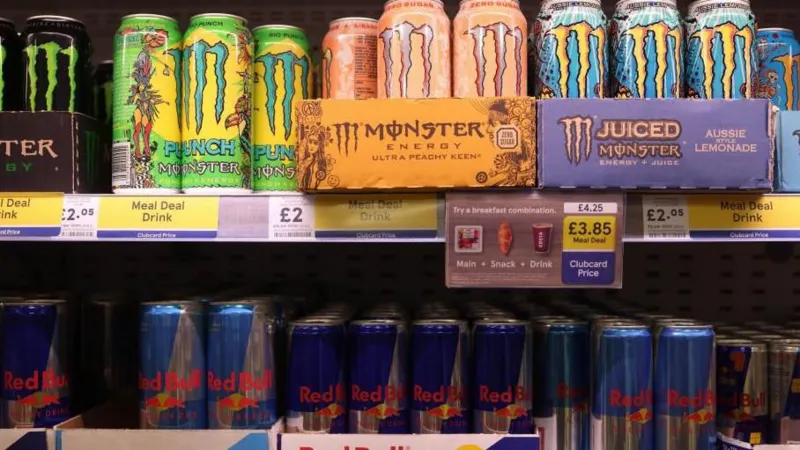
The sale of high-caffeine energy drinks to children under the age of 16 will be banned across England from April under new government measures aimed at protecting young people’s health and wellbeing.
The policy is intended to reduce children’s consumption of drinks containing high levels of caffeine and sugar, which health experts have linked to sleep problems, anxiety, behavioural difficulties and poor concentration. Ministers say the restriction forms part of a broader strategy to improve child health, encourage healthier dietary habits and tackle rising concerns over excessive caffeine intake among young people.
Retailers will be required to verify customers’ ages before selling qualifying energy drinks, bringing the products under similar purchasing restrictions already applied voluntarily by many supermarkets.
Announcing the new measure, ministers said the ban reflects growing scientific evidence regarding the impact of high-caffeine drinks on children and adolescents.

The legislation will prohibit the sale of specified energy drinks to anyone under 16 years of age in England beginning in April.
Retailers that fail to comply with the rules could face enforcement action, including financial penalties or other regulatory sanctions depending on the circumstances.
Government officials said the policy aims to create a consistent national standard rather than relying on voluntary action by individual retailers.
Energy drinks often contain significantly higher amounts of caffeine than traditional soft drinks, alongside large quantities of sugar or artificial sweeteners.
Some products may also include ingredients such as taurine, guarana and B vitamins marketed as performance-enhancing or energy-boosting supplements.
Health professionals have long expressed concern that excessive caffeine consumption in children can interfere with sleep patterns, increase heart rate and contribute to feelings of nervousness or anxiety.
Research has also suggested links between frequent energy drink consumption and reduced classroom performance, headaches and behavioural issues in some young people.
Experts stress that children are generally more sensitive to caffeine than adults because of their lower body weight and developing nervous systems.
Medical organisations and public health campaigners have broadly welcomed the government’s decision.
Paediatricians have argued for several years that restricting access to energy drinks could help reduce unnecessary caffeine consumption among school-age children.
Health charities say the move is particularly important because many young people consume multiple caffeinated drinks throughout the day without fully understanding their potential effects.
Campaigners also hope the policy will encourage healthier beverage choices such as water and milk.
Several experts emphasise that improving children’s sleep quality alone could deliver meaningful benefits for learning, emotional wellbeing and physical health.
Many major supermarket chains already operate voluntary policies refusing to sell energy drinks to younger teenagers.
The new legislation will extend similar requirements across all retailers, including convenience stores, independent shops and other outlets.
Businesses are expected to introduce age-verification procedures similar to those already used for products with legal age restrictions.
Retail staff will likely receive updated training to ensure consistent enforcement once the law takes effect.
Industry representatives say clear guidance from the government will help businesses prepare for implementation.
Many parents have supported the introduction of mandatory age restrictions.
Some families have expressed concern that children can easily purchase highly caffeinated drinks before or after school despite existing voluntary retailer policies.
Parents also hope the new rules will make it easier to discourage excessive caffeine consumption without relying solely on household restrictions.
Education organisations have similarly noted that reducing energy drink use could contribute to improved classroom behaviour and student wellbeing.
Manufacturers of energy drinks have acknowledged the government’s decision while emphasising that their products are intended for adults.
Some companies already label their drinks as unsuitable for children or pregnant women.
Industry representatives have also pointed out that responsible marketing and clear product labelling remain important parts of consumer education.
Manufacturers are expected to work with retailers to ensure compliance once the new regulations come into force.
Several companies have previously introduced lower-sugar or sugar-free alternatives in response to changing consumer preferences.
The energy drink restriction forms part of broader government efforts to improve children’s health.
Recent public health initiatives have included measures targeting childhood obesity, healthier school meals, advertising of less nutritious foods and improved nutritional education.
Officials argue that reducing children’s exposure to excessive sugar and caffeine complements these wider health objectives.
The government also hopes the policy will encourage healthier long-term dietary habits that continue into adulthood.
Although widely welcomed, the new policy raises practical questions regarding enforcement.
Retailers will need clear guidance on which products fall within the legislation and how age verification should be conducted.
Consumer groups have also called for public awareness campaigns to ensure parents, schools and young people understand the reasons behind the new rules.
Experts note that successful implementation will depend not only on legal enforcement but also on education about healthy caffeine consumption.

The ban on energy drink sales to under-16s represents one of England’s most significant public health measures targeting children’s nutrition in recent years.
Health professionals hope it will reduce excessive caffeine intake while promoting healthier lifestyle choices among young people.
Researchers are expected to monitor the policy’s impact after implementation, examining whether it leads to measurable improvements in children’s sleep, concentration, behaviour and overall wellbeing.
If successful, the restriction could influence similar policies elsewhere as governments continue exploring ways to address health risks associated with highly caffeinated beverages.
For families, schools and healthcare providers, the new rules represent another step toward creating healthier environments for children—placing greater emphasis on prevention rather than treatment in protecting the next generation’s physical and mental health.
Related News:
 Hospice Cuts Raise Alarm Across England Amid Funding Crisis
 Celebrities and Charities Demand UK Government Act on Child Poverty
 Experts Warn on Home Birth Risks, Call for Skilled Midwives
 Experts Urge Legal Right to Timely Cancer Care
 Patients to Test Health at Home to Ease NHS Winter Pressure
 London’s Childlessness Crisis: Schools Closing as Families Shrink
 North Sea oil workers must lose weight or face job loss
 Crisis charity to become landlord amid UK housing emergency
 No link found between paracetamol in pregnancy and autism
 Shouting Works Best to Deter Gulls, UK Study Finds
 Reeves rejects £1bn plea for NHS redundancy payouts
 Leading doctors issue warning amid ‘bad’ flu season
 Stroke Patient Mistaken for Drunk, Care Delayed
 ‘Traumatic Wait’: Northern Ireland Women Face Breast Cancer Delays
 Welsh Government Christmas 2020 Lockdown Criticised
 Coffins Now Too Large to Cremate Amid Rising Obesity Crisis
 NHS paediatric leave parents waiting months for answers
 Catherine urges end to stigma around addiction
 Five-Year-Old Dies After Rare Tonsil Surgery Complication
 Fibromyalgia Patients Struggle as NHS Fails to Provide Care
 More Patients Now Contacting GPs Online, Data Shows
 Streeting launches review into mental health and ADHD diagnoses
 People in England’s Poorest Areas Face Higher Lung Health Emergencies
 Minor A&E Visits Surge Across England as Hospitals Face Pressure
 Children to Receive Home Vaccines as England Acts
 UK children to get chickenpox jab with MMRV vaccine
 Salt Intake England: Crisps Comparison Sparks Health Alarm
 Weight Loss Jabs Linked to Rapid Weight Regain, New Study Shows
 Offenders to Receive Health Support During Probation Appointments
 NHS Violence Crisis: Staff Face Daily Assaults
 Celebrity Campaign Highlights SMA Screening Failures
 UK Glaucoma Rise Signals Looming Eye Health Crisis by 2060
 UK ADHD medication use triples over 13 years, landmark study finds
 Reform UK Health Plan ‘Would Cost £1.7bn’, Streeting Says
 NHS boosts bowel screening accuracy with FIT reform
 UK loses measles-free status amid deaths and jab decline
 Nottingham survivor warns of repeat attacks without mental health reform
 UK vets face reforms to tackle high pet care costs
 Study Finds One in Seven England Takeaways Are Dark Kitchens
 Deadly Cancer Postcode Lottery Limits NHS Care
 Pneumonia Surge Pushes England Emergency Cases Higher
 Children of Close-Relative Parents Face Higher Mortality Risk in England
 UK MPs Demand Ban on Brazilian Butt Lifts
 NHS Negligence Ruling Raises Payout Costs
 Half of Britons Avoid GP When Ill, Survey Reveals Growing Concern
 NHS Maternity Units Cover Up Harmful Childbirth Errors
 Vegetarian Cancer Risk Study Reveals Lower Rates
 Drop in Overseas Workers Sparks ‘Car Crash’ for UK Hospitals
 Weight-loss drugs may transform heart attack recovery
 Weight Loss Drugs Could Curb Addiction Risk
 ‘We can’t go back’: mother of six-year-old cancer survivor fears UK visa changes
 Palantir NHS Contract Sparks Fears Over Data Power
 NHS Safety Crisis as Thousands Face Violence and Racism
 UK Patients Face Long Journeys as Pharmacies Cut Hours
 Kent Meningitis Outbreak Claims Two Young Lives as Cases Rise
 Charity Watchdog Takes Control of Learning Disability Care Home
 NHS Staff Shortages Stifling Recovery for Stroke Survivors
 Wes Streeting Accuses Doctors of Torpedoing Pay Deal
 Policy Stand-Off: Streeting Denies Any ‘System Update’ to Resident Doctor Pay Deal
 Crisis in NHS Surgery Scheduling Hits Patients Hard
 NHS Safety Fears as Nurses Cover Doctor Gaps
 New Scan Offers Hope for Faster Endometriosis Diagnosis
 NHS Drug Deal Faces Legal Threat Over US Trade Agreement
 NHS Staffing Crisis Reaches Dangerous Levels
 Crisis in Care: Children Stuck in A&E for Days
 Empowering the Elderly or Shifting the Blame to Individuals?
 England Faces Rising Lyme Disease Cases Amid New Vaccine Hopes
 Record Spending Highlights Growing Crisis In National Health Service
 NHS Approves Landmark Ovarian Cancer Drug
 The Race for Radical Change in Westminster
 Swimming Champion Demands Urgent Action on Brain Cancer
 Nursing Workforce Crisis Leaves Disabled Patients at Risk
 Labour MP Revives Blocked Assisted Dying Bill in Commons
 Mortuary Crisis Exposed at Scandal-Hit NHS Trust
 England Faces Unprecedented Youth Mental Health Crisis
 The Hidden Revival of a Fatal Infection on British Soil
 NHS Urges Investigation For Irregular Periods
 Trump Immigration Cuts Threaten US Caregiver Stability
 Stricter Rules Proposed to Shield Children from Vaping
 London Tube Heat Reaches Dangerous Levels