Published: 11 August 2026 | The English Chronicle Desk | The English Chronicle Online
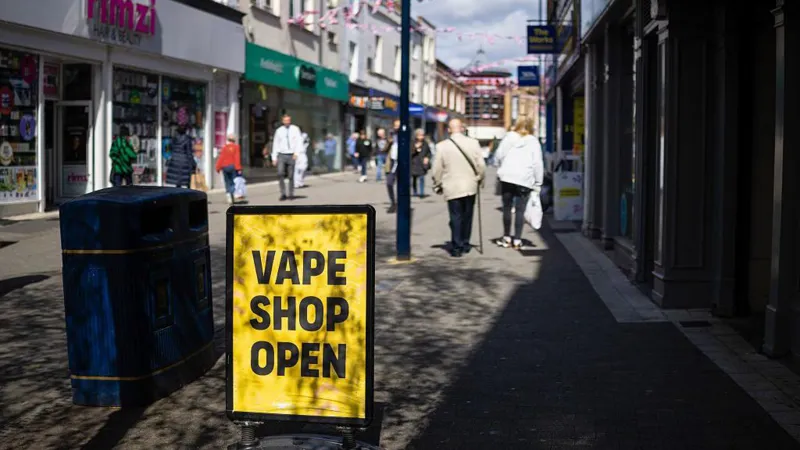
Councils across England are set to receive greater powers to control what businesses open on their high streets, under a government package targeting the rapid growth of vape shops, gambling outlets and businesses suspected of being linked to organised crime.
Prime Minister Andy Burnham said new vape shops would have to obtain planning permission before opening, while councils across Great Britain would gain greater freedom to refuse applications for new betting shops and certain 24-hour gambling venues.
The government says the measures are intended to give communities greater control over the future of their town centres after years of decline.
Burnham said many British high streets had been “hollowed out” over decades, leaving communities with town centres that no longer resemble the places people remember from their childhood.
He argued that vape shops, betting outlets and rogue businesses had increasingly taken the place of traditional shops, community services and other facilities that residents want to see in their local areas.
The proposals form part of a wider government programme intended to revive Britain’s high streets and give local authorities a stronger role in determining how town centres develop.
Under the proposed planning changes, every new shop primarily selling e-cigarettes or vapes in England would need to apply to its local council for permission.

The government also plans to tighten the legal definition of a vape shop. Ministers say some businesses have attempted to avoid planning restrictions by describing themselves as general convenience stores or other types of retailers despite operating primarily as vape outlets.
The changes would make it harder for businesses to circumvent the new planning requirements.
A further proposal would remove the so-called “aim to permit” principle, which currently restricts councils’ ability to reject applications for new betting shops and 24-hour adult gaming centres.
Removing that restriction would give local authorities more discretion over where gambling businesses can operate.
In England, new adult gaming centres, which provide access to gambling machines, would also require planning permission under the proposed reforms.
The government says these changes are particularly important in areas where residents believe gambling and vaping outlets have become concentrated around schools, residential areas and other community facilities.
Housing Secretary Angela Rayner said many people were frustrated by vape and gambling businesses appearing in their neighbourhoods, particularly where some outlets were suspected of having connections to criminal activity.
The government’s plans come after extensive reporting by BBC News into organised crime operating through high street businesses.
Over the past 18 months, investigations have highlighted allegations involving illegal tobacco and vape sales, money laundering, illegal working, drug supply and other forms of criminal activity connected to some high street premises.
The National Crime Agency estimates that at least £1bn of criminal money is laundered through UK high street businesses each year.
Authorities say criminal groups can use legitimate-looking shops to conceal illegal activity, move cash and disguise the origins of criminal proceeds.
The government has therefore linked its high street strategy not only to planning reform but also to stronger enforcement.
Under the proposals, closure orders for mini-marts and vape shops found to be selling illegal tobacco could be extended for up to 12 months in England and Wales.
The measure would provide authorities with a longer period in which to disrupt businesses suspected of persistent illegal activity.
The government has already launched a £30m enforcement operation targeting high street businesses suspected of involvement in money laundering, tax evasion and illegal working.
Police, HM Revenue and Customs, Trading Standards and Immigration Enforcement have taken part in raids and investigations across the country.
The government’s latest proposals build on that enforcement programme by attempting to give councils more control over the businesses that can open in the first place.
Burnham said the objective was to put local communities “back in control” of their high streets.
He argued that residents should have a greater say over the types of businesses operating in their town centres rather than allowing commercial pressures alone to determine what replaces traditional shops.
However, opposition parties have warned that additional planning restrictions could make already struggling high streets even more difficult places for legitimate businesses to operate.
Conservative shadow communities secretary Sir James Cleverly said traditional shops had been replaced in some areas by a small number of businesses that contribute little to the wider community.
But he also argued that Labour’s business-rate increases had contributed to the problem by putting additional financial pressure on businesses.
Cleverly warned that new planning requirements could result in more empty and boarded-up premises if the government failed to provide wider support for small businesses.
The Liberal Democrats also welcomed the focus on rogue operators but argued that the government needed stronger enforcement powers.
Home affairs spokesman Max Wilkinson said the proposals would be insufficient if they did not allow authorities to properly target businesses operating outside the law.
The party has also called for wider reform of the business-rates system.
Reform UK criticised the government’s approach from a different perspective, arguing that high business rates and employment taxes were already placing excessive pressure on high street businesses.
Its economy spokesman Robert Jenrick said restrictions on new businesses would not solve the fundamental economic problems facing town centres.
The Green Party similarly described the proposals as inadequate and called for more radical measures, including allowing councils to introduce rent controls for small businesses.
The debate illustrates the difficulty of reviving Britain’s high streets.
Traditional retail has faced significant pressure from online shopping, changing consumer behaviour, rising property costs and higher operating expenses.
At the same time, empty premises can become attractive to businesses that require relatively little floor space or rely on different forms of consumer spending, including vaping and gambling.
For councils, the challenge is to balance local preferences with the economic need to keep commercial premises occupied.
The Betting and Gaming Council, which represents the gambling industry, said it supported strong action against criminal operators and agreed that communities should have a meaningful say over their high streets.
However, the organisation rejected suggestions that betting shops were spreading unchecked.
It pointed out that around 3,000 betting shops had closed since 2019, arguing that the number of outlets had actually declined significantly.
The industry’s response highlights another aspect of the government’s plans: the need to distinguish between lawful businesses and premises genuinely connected to criminal activity.
A betting shop or vape retailer operating legally is not necessarily evidence of a wider crime problem.
The government’s challenge will be to ensure that new planning powers are used proportionately and do not unfairly penalise legitimate businesses.
Local Government Association chairman Councillor Eamonn O’Brien welcomed the proposals, saying it was positive that councils and communities would have a greater say over the services and businesses found on their high streets.
For local authorities, greater control could allow town-centre strategies to reflect local needs more closely.
The issue of organised crime adds urgency to the debate.
BBC investigations have previously reported allegations of illegal cigarettes and vapes being sold through mini-marts, as well as suspected money laundering and illegal working.
Authorities have also investigated allegations involving drug sales and other criminal activity.
In one investigation, illegal tobacco was reportedly being supplied through underground tunnels in Hull.
Freedom of Information requests subsequently identified thousands of premises across the UK that had been investigated or identified as illegal shops.
Other investigations have examined allegations that individuals involved in organised crime were using high street businesses to facilitate illegal activity.
The government responded by launching an investigation involving the National Crime Agency, Immigration Enforcement, HMRC and police forces.
Ministers said the evidence demonstrated weaknesses in the existing system and required a coordinated response.
Enforcement operations have since led to the closure of businesses in some communities.
In Cradley Heath in the West Midlands, several mini-marts and vape shops were forced to close following investigations involving police and Trading Standards.
The government now wants to combine that enforcement activity with planning reform.
The broader ambition is to reshape town centres so that they provide a wider range of services and businesses rather than becoming dominated by particular types of outlets.
For Burnham, the policy forms part of a longer-term effort to restore confidence in Britain’s high streets.
Downing Street has described his current UK tour as a period of “listening mode”, as the prime minister works on a wider 10-year programme intended to address public concerns and rebuild confidence in local communities.
Whether the proposed planning changes can achieve that ambition remains uncertain.
Giving councils greater control could allow communities to reject developments they believe are unsuitable. But without addressing rents, business rates, consumer demand and the wider financial pressures facing independent retailers, restrictions alone may not fill empty premises.

The success of the policy will therefore depend on what happens alongside the new powers.
If councils can use them to prevent criminal operators from exploiting vulnerable high streets while supporting legitimate businesses and encouraging a broader mix of services, the reforms could become an important part of town-centre regeneration.
If they simply create additional bureaucracy without improving the economic conditions for businesses, critics may prove correct that the result will be more empty shops.
For communities that have watched familiar high streets decline over years, the central question is ultimately not how many vape or betting shops can be stopped from opening.
It is whether local people can once again have high streets that provide the shops, services, employment and community spaces they actually need.
Related News:
 Burnham Considers Inquiry Into Epstein UK Connections
 Harper Widow Fights Early Release of Killer’s
 Last‑ditch Call to Save Police Front Counters in London
 Undercover officer deceived women with ‘grotesque and cruel’ lies, spycops inquiry told
 ‘An Evil Man is Dead’: Australian Fugitive Dezi Freeman Shot Dead After 216 Days
 Barrister Criticises Trial After Suicide Case Verdict
 Man Arrested 22 Years After Leeds Teen Murder
 Teen Among Arrests at Nowak Protest as Three Charged
 Six More to Appear in Court Over Henry Nowak Protest Arrests
 Watchdog Says MI5 Knew Agent’s Violent Misogynistic Views
 Murder Probe Continues After Arrest Release
 Uncle of Man Arrested in Ann Widdecombe Investigation Says Family Was Left ‘Shocked’ by News
 Suzy Lamplugh Mystery Still Haunts Detectives
 Man Admits Taking Ambulance With Patient Inside
 PC Harper Family Angered by Early Release Policy
 Man Jailed After Noise Dispute Ends in Fish Killing
 UK Charity Watchdog Probes Settlement Donations
 Families Furious After Jailed Funeral Boss Apologises
 PC Harper’s Mother Finds Hope After No 10 Call
 Tasers Introduced in UK Prisons to Combat Rising Violence and Protect Staff
 Police Advised to Disclose Ethnicity of Suspects in High-Profile Cases
 Jailed Georgian Opposition Leaders Warn UK of Iranian Links to Ruling Party
 French Taxi Driver Cleared in David Lammy Theft Case After Fare Dispute
 Police Probe Mandelson Over Alleged Epstein Leak
 Disability and LGBT Hate Crimes Set to Become Aggravated Offences
 How Much Could Andrew’s Arrest Hurt the Royal Family?
 Sadistic Pair Jailed for Blowing Up Sheep
 Grave of Murdered Toddler James Bulger Vandalised
 Calls Grow to Remove Billboard Following Lyra McKee Graffiti
 Man on Trial for Rape That Led to Andrew Malkinson’s Wrongful Jailing
 Labour MP’s Partner Arrested on Suspicion of Spying for China
 Police Scotland Pays £8m Compensation to Staff
 Gran Vows to Shield Huntley’s Daughter From Soham Killer’s Funeral
 Jobless Man on £15k Benefits Accused of Hurling Abuse at Anti-Migrant Demo
 Rapist Caught After Victim Calls Police Mid-Attack

 Ram-Raid Gang Hit Livingston Store in Arson Escape
 Mandelson’s Phone Messages Requested in Files Release
 Families Tortured by Authorities During Investigations Inquiry Told
 Watchdog Probes Police Handling of Andrew Tate Abuse Claims
 Fire Crews Battle Major Blaze at Coventry Car Dealership
 Dawn Raids in Scotland and Spain: Eight Arrested in Major Organised Crime Sting
 US Lawmaker Demands Testimony Over Sarah Ferguson’s ‘Close Epstein Ties’
 The Last of the Lords: Two Hereditary Peers to Retain Ceremonial Roles Amid Historic Ousting
 ‘My Daughter is Under the Rubble’: The Human Cost of the Tehran Strikes
 ‘Eye in the Sky’ Blinded: Photos Reveal Destroyed US Radar Jet at Saudi Base
 ‘Full and Immediate Access’: Netanyahu Reverses Palm Sunday Ban on Latin Patriarch
 ‘Ghost Offences’: Data Reveals No Children Charged with New ‘Adult Crime’ Laws in 11 Years
 The $100 Billion Peace: Trump’s ‘Grand Bargain’ Ends Iran Conflict at a Staggering Cost
 Heartbreak in Bournemouth: The Tragic Death of James Blanch
 Rebranded or Reclaimed? Seized Tate Assets to Fund Domestic Abuse Support
 The Victim-Blame Loop: When Protection Orders Backfire
 Mass Arrests at London Palestine Protest Spark Debate
 MoD Has Lost Track of Veteran Recall List, Says Adviser
 ‘A Sacred Space Shattered’: Two Found Guilty in London Church Drive-By Murder Trial
 The ‘Axiom of Fraud’: £39.5m Hole Discovered in Second Major Law Firm Collapse
 “Jobs Will Go”: Rishi Sunak Warns AI is Already Eroding Entry-Level Opportunities
 NHS Safety Fears as Nurses Cover Doctor Gaps
 Two Children Die in Wolverhampton House Fire Tragedy
 “Significant” Fire at Pink Punters: 51-Year-Old Man Arrested Following LGBT+ Club Blaze
 The “Invisible” Tape: Leaked Video Contradicts Police Denial in Brutal Arrest Case
 Reality Check on Reform: Minister Says Outright Abolition of Leasehold “Impossible”
 A “Breaking Point” for Britain: Terror Adviser Warns Antisemitism is Now a National Security Emergency
 Cartel crackdown raises fears of fresh violence
 500 Officers, 10 Arrests: Crewe Religious Group at Centre of Modern Slavery and Sex Crimes Probe
 “A Trail of Blood and Debt”: County Lines Kingpin Handed Life Sentence for “Senseless” Gangland Murder
 “Not a Game Show”: Sir John Major Slams the “Projected Career” Culture of Modern No. 10
 UK may ban protests amid rising antisemitism fears
 Immigration Judges Fear Pressure in Trump Era
 US Condemns Alleged ‘Two-Tier’ UK Policing
 Widow Distressed by Nine-Month Delay to Husband’s Pension Payment
 Democrats Urge Maine Senate Candidate to Leave Race
 Police Rule Out Political Motive in Widdecombe Killing
 Technical Subjects to Be Expanded for Pupils Aged 14
 Reform UK Reports Polanski to Police Over T-Shirt Post
 Two Held After Woman Found Dead in Liverpool Hotel
 Badenoch Defends Tory Candidate Over Antisemitism Case
 Cooper Vows Maternity Reform After Birth Care Failures
 Thai School Shooting Leaves Nation Demanding Answers
 Can Schools Really Predict Which Children Will Become NEETs?