Published: ২৭ October 2025. The English Chronicle Desk. The English Chronicle Online.
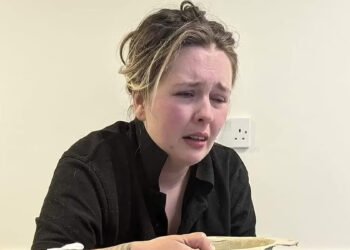
Milli Tanner, a 23-year-old from Evesham, Worcestershire, has revealed the harrowing ordeal she faced after her persistent health complaints were repeatedly dismissed by medical professionals. Over a span of more than two years, Tanner visited her GP thirteen times, sought help at A&E, and even consulted NHS 111, only to be told that she was “too young” to have bowel cancer. Her experience has shed light on the growing concern over delayed cancer diagnoses among young adults in the UK, prompting calls for urgent reforms in early detection and patient advocacy.
Tanner’s troubles began in June 2021 when she was just 19. She started experiencing severe stomach pain, lower back discomfort, and alarming traces of blood in her stool. At her first appointment with a GP, her symptoms were largely attributed to lifestyle factors. Doctors suggested that her stomach pain could be the result of late-night shifts at a pub, where she worked long hours, or perhaps the effects of alcohol during nights out. When she pointed out the persistent bleeding, the response was dismissive, with explanations ranging from irritable bowel syndrome (IBS) to piles or menstrual irregularities.

Despite her insistence that her symptoms were serious and not related to menstruation, Tanner’s concerns were repeatedly minimised. She remembers being questioned whether she was imagining the severity of her pain or exaggerating the bleeding. On several occasions, she even presented visual evidence, showing the extent of blood in the toilet bowl, but still felt unheard. “It’s not a little bit of blood on the tissue,” she said. “These were clots filling the toilet bowl. I kept telling them something was wrong.”
Frustrated, Tanner visited A&E multiple times, only to be sent back to her GP. On one occasion, a doctor told her bluntly, “You’re too young. Are you happy?” Such statements left her feeling ignored and powerless. It was not until she decided to take her health into her own hands that the truth began to emerge. Tanner ordered a faecal immunochemical test (FIT) online, which is designed to detect tiny traces of blood in stool—a potential early indicator of bowel cancer. The test came back positive, confirming her worst fears.
When Tanner presented her results to her GP, the official NHS testing process was still slow. She was referred for a colonoscopy, but a phone call later revealed that the wait time would be a staggering 60 weeks. Because she was under a certain age, the referral could not be processed urgently without an NHS-administered FIT test confirming the result. This bureaucratic delay added another layer of anxiety and uncertainty for Tanner, who had already endured two years of repeated dismissals.
In November 2023, Tanner underwent her colonoscopy, where she was diagnosed with stage three bowel cancer. By this time, the disease had spread to her lymph nodes, necessitating immediate treatment. Tanner underwent chemotherapy, radiotherapy, and surgery, and her eggs were collected in preparation for potential infertility caused by cancer treatment. She has since been fitted with a permanent stoma, and while she now faces perimenopause, her latest scans and colonoscopies show no signs of active cancer.
Tanner’s story has resonated widely, highlighting the systemic challenges that young people often face when presenting with serious health concerns. According to experts from the Teenage Cancer Trust, Tanner’s experience, though extreme, is not isolated. Many young patients encounter significant delays in diagnosis, often being told that their age makes serious conditions unlikely. These delays can be traumatic, prolonging suffering and complicating treatment outcomes.
Healthcare professionals point out that bowel cancer has traditionally been considered a disease affecting older adults, but recent trends show an increase in cases among younger populations. This shift underscores the importance of vigilance and responsiveness in primary care, as early detection dramatically improves treatment outcomes. Tanner’s persistence in advocating for her own health was crucial to saving her life.
Beyond the clinical challenges, Tanner’s ordeal has taken a personal toll. She describes the emotional strain of feeling dismissed repeatedly and the fear that her health concerns were being trivialized. Yet, despite these hardships, she has emerged as an advocate for greater awareness of bowel cancer in young people. Tanner now encourages others not to ignore persistent symptoms and to seek multiple opinions if necessary. Her message is clear: early intervention can save lives, and patients must be heard.
The broader implications of Tanner’s experience have drawn attention from both medical professionals and policymakers. Calls for improved education among GPs about the signs of serious conditions in younger adults, streamlined testing procedures, and patient advocacy measures are growing louder. Experts stress that age should not be a barrier to investigating symptoms that may indicate serious diseases such as bowel cancer.

Milli Tanner’s courage in speaking publicly about her journey has also inspired many young people who may be struggling silently. By sharing her story, she hopes to prevent others from enduring the same delays and uncertainty. “I felt like I was going crazy,” she recalls, reflecting on the prolonged dismissal of her symptoms. “I knew deep down it was going to be bowel cancer. I just had to find a way to prove it.”
Her experience also highlights the importance of patient-led initiatives in healthcare. By taking proactive steps—ordering her own test and persisting with her GP—Tanner was able to circumvent the system’s delays. While her outcome is now positive, her journey serves as a stark reminder of the gaps in awareness, responsiveness, and timely intervention in the healthcare system.
As Tanner continues her recovery, she remains committed to raising awareness about bowel cancer and advocating for young patients. Her story underscores the critical need for medical professionals to listen, investigate thoroughly, and consider serious diagnoses even in younger individuals. For the medical community, her experience serves as a call to action to improve diagnostic processes and ensure that no patient feels ignored, regardless of age.
Related News:
 Mother dies after black market weight loss injection
 Experts Warn on Home Birth Risks, Call for Skilled Midwives
 Leading doctors issue warning amid ‘bad’ flu season
 Alarming rise in abusive teen relationships in the UK sparks urgent warnings
 UK Doctors Guilty of Sexual Misconduct Continue Practising Amid Weak Sanctions, Research Finds
 Majority of UK Men Would Opt for Prostate Cancer Screening, Survey Finds
 Ambulance Worker Fired After Flinging Amputee from Wheelchair and Offering Bribe
 Peterborough Mosques Tighten Security After Attack
 Hospice Cuts Raise Alarm Across England Amid Funding Crisis
 Nearly 48,000 Zombie Knives Removed from UK Streets in a Year
 Prince Andrew Stripped of Title: Giuffre Family Hails Historic Moment
 Metal Detectors at Stations ‘Would Make Life Impossible,’ Says Minister
 Experts Urge Legal Right to Timely Cancer Care
 British Grandmother to Return Home After Death Sentence in Bali
 NHS Takes Over Nuffield Hospital in ‘Windfall’ for London Care
 Jailed UK climate protesters face extremist-style restrictions
 Boris Johnson accused of undermining BBC leadership
 North Sea oil workers must lose weight or face job loss
 Crisis charity to become landlord amid UK housing emergency
 No link found between paracetamol in pregnancy and autism
 Bar Council urges legal aid for all domestic abuse family cases
 Second world war veterans honoured as King leads Remembrance Sunday
 How to get help when a child goes missing – call 999 urgently
 ‘Reckless’ cuts to victims’ services will cost more than they save
 UK Disability Pay Gap Means Millions Work for Free From Today
 Judges to Decide Fate of Chief Constable Guilty of Contempt
 Shouting Works Best to Deter Gulls, UK Study Finds
 Reeves rejects £1bn plea for NHS redundancy payouts
 NHS trust fined after woman takes life in mental health unit
 How age progression images help trace missing people
 UK Centres Used Risky Heart Pump Despite Safety Fears
 New Campaign Trains Vets to Spot Farmers’ Health Risks
 Mum Calls for New Licence Rules After Teen Road Death
 Mother Watches in Horror as Teen Daughter Dies on Tracks
 ‘Traumatic Wait’: Northern Ireland Women Face Breast Cancer Delays
 Podcaster Faces Abuse Charges Over Controlling Behaviour
 Coffins Now Too Large to Cremate Amid Rising Obesity Crisis
 David Cameron Reveals Prostate Cancer Diagnosis, Advocates Screening
 Inside the Helpline Protecting Missing Children in the UK
 DWP to Reassess Hundreds of Thousands in Carer Allowance Scandal
 Inquiry Opens Into Disgraced Surgeon Eljamel Scandal
 Sudanese Family Vows to Stay After Racist Graffiti
 Five-Year-Old Dies After Rare Tonsil Surgery Complication
 Fibromyalgia Patients Struggle as NHS Fails to Provide Care
 More Patients Now Contacting GPs Online, Data Shows
 The Ketamine Crisis in the UK is a Silent Epidemic Leaving Users with Lifelong Pain
 Why E-Bikes and E-Scooters Are Making Streets a ‘Nightmare’ for Blind People
 Systemic Racism in Maternity Care Continues to Endanger Black Women in England, MPs Warn
 One in Three GPs in England Do Not Work in NHS, Raising Concerns Over Access to Care
 Northern Ireland Faces Fears of Prolonged Race Riot “Permacrisis”
 Zarah Sultana Seeks Legal Action After Bitter Clash with Jeremy Corbyn Over Party Membership Funds
 Massive London Poundland Fire Engulfs High Street
 One in 12 Secondary Pupils Sent to Isolation Weekly
 M&S and Morrisons Lead Christmas Supermarket Taste Test
 UK Health Leaders Push for Urgent Tobacco & Vape Bill
 UK Woman Loses Child Benefit After Booking Flight She Never Took
 Celebrities and Charities Demand UK Government Act on Child Poverty
 Mass Stabbing on Doncaster to London Train Leaves Ten Injured
 Children to Learn Local History in Major Curriculum Overhaul
 FBI Director Kash Patel Defends Girlfriend Amid Government Jet Claims
 The Lowry Hotel: Manchester’s Iconic Five-Star Retreat
 Prince William Plants Trees with Brazil’s Nature Heroes
 Just Stop Oil Protesters Convicted Amid Climate Defence Row
 Greta Thunberg Backs Student Facing UK Visa Revocation
 London’s Childlessness Crisis: Schools Closing as Families Shrink
 Politics latest: Starmer ‘will fight any leadership coup’ as Streeting denies attempt to oust Labour PM
 Son Reveals UK Couple in Iran Resort to Hunger Strike for Help
 Working-Class Men with Prostate Cancer Left Behind by NHS
 Agency Workers Vote to Join Picket Lines Amid Dispute
 Commuters warned as yellow snow and ice alert hits Northern Ireland
 Healthy Habits in Your 30s That Boost Life in Your 70s
 Serial Rapist and Former Cop Found Guilty Again
 Most Tories Expect to Support a Farage-Led Government
 Labour MP claims devolution bill is ‘blatant discrimination’ against Cornwall
 Vicki Fears Losing Motability Car
 Delhi’s Toxic Air Crisis Leaves Children Sick and Vulnerable
 Search underway for British man overboard off Tenerife
 Virgin Media Fined £23.8m Over Telecare Safety Failures
 Ministers to back regulation of England’s funeral industry
 Prince George Helps Father at London Homelessness Charity