The English chronicle desk. The English chronicle online
Published: 29 October 2025
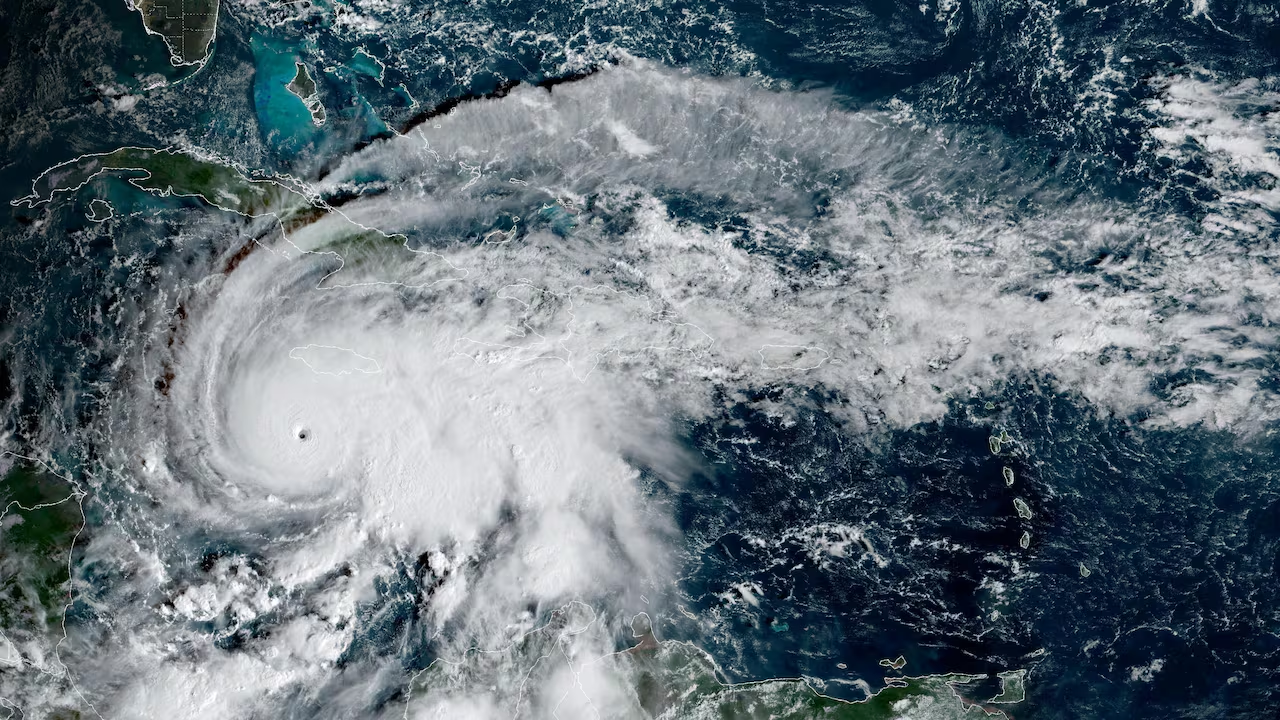
Jamaica is reeling in the aftermath of Hurricane Melissa, as the full extent of the devastation gradually emerges. Stripped of power and phone coverage, much of the country remains isolated, with information slowly trickling in about the damage caused by the catastrophic storm.
Authorities report that nearly three-quarters of the country lost electricity overnight, while the numbers of injured or missing residents remain uncertain. Many areas, particularly on the western side of the island, are submerged under water, and homes have been severely damaged or destroyed by powerful winds that swept across Jamaica with unprecedented force.
One local official described the scene as resembling “the set of an apocalypse movie,” a stark testament to the intensity of the hurricane. With communication channels crippled, the true scale of the disaster is still unknown.
Prime Minister Andrew Holness declared the island a “disaster area” on Tuesday, warning of “devastating impacts” and “significant damage” to hospitals, homes, and businesses. While no fatalities have yet been officially confirmed, Montego Bay Mayor Richard Vernon emphasized that his immediate priority was “to check if everybody is alive” as daylight revealed the full scope of flooding and damage.

In the southwestern parish of St Elizabeth, often called Jamaica’s breadbasket for its agricultural output, floodwaters have inundated large areas. Local government minister Desmond Mckenzie reported that at least three families remain trapped in their homes in the community of Black River. “Rescue teams are struggling to reach them because of the dangerous conditions,” he said during a news briefing.
For residents like 73-year-old vegetable farmer Verna Genus, the storm was a personal catastrophe. Sheltering with her sons and a baby grandchild in Carlisle, St Elizabeth, she watched in horror as Hurricane Melissa ripped the zinc roof off her four-bedroom home. With power lines down, she has lost all communications, though her UK-based sister June Powell shared the harrowing account with the BBC. “You are huddled up inside, and then you look up — the roof is gone,” June said. “I have never heard her like that — she was wailing, ‘we are all finished.’”
The hurricane has left agricultural fields submerged, threatening the livelihoods of countless farmers across the parish. The financial recovery for many families dependent on crop production is expected to be slow and challenging.
Montego Bay, the hub of Jamaica’s tourism industry and home to its main airport, has also been heavily affected. Mayor Vernon reported that floodwaters split the city in two, cutting off access between neighborhoods and leaving residents isolated. “Once the wind subsided, we started to get heavy rain, which led to massive floods across the city,” he said.
Rural areas of the island are equally impacted. Tamisha Lee, president of the Jamaica Network of Rural Women Producers, described widespread destruction. “Right now, what I’m seeing is heavy rain, powerful wind, a lot of things flying all over the place, and uprooted trees. There is no electricity. I am feeling anxious and tense. The damage will be enormous,” she said.
Meteorologists have noted that Hurricane Melissa intensified at an exceptionally rapid rate, fueled by unusually warm Caribbean waters — a phenomenon increasingly linked to climate change. By the time it struck Jamaica, the hurricane had reached Category 5 strength, with winds strong enough to tear roofs from concrete homes, uproot trees, and snap power poles. Health officials also issued warnings about crocodiles, cautioning that rising floodwaters could drive them into residential areas.
Tourists caught on the island faced terrifying conditions. Pia Chevallier from Cambridge, visiting Jamaica with her teenage son, described the chaos from her darkened hotel room. “The glass in the windows and patio doors was all vibrating. The doors sounded like they were slamming, even though they were closed. It was horrendous,” she said. Debris, including uprooted palm trees and fallen coconuts, littered streets, she added.
Others, including British tourists Wayne Gibson and his family in Ocho Rios and Kyle Holmes in Lucea, sought refuge in communal shelters or damaged hotels, unsure of when they could return home.
By early Wednesday, Hurricane Melissa had moved on to Cuba, weakening to Category 3 but still packing wind speeds exceeding 200 km/h (124 mph). Jamaica, meanwhile, remains paralysed and silent, grappling with the immediate consequences of the storm.

The government has a catastrophe bond, a specialized form of insurance designed to aid in post-disaster recovery, which may help residents rebuild in the long term. Yet, the urgent challenge lies in the short-term response: restoring communications, reaching stranded residents, and providing food, water, and medical care in the affected areas.
As the island slowly emerges from the storm, the coming days will reveal the true extent of Hurricane Melissa’s impact on communities, agriculture, infrastructure, and the Jamaican economy at large.
Related News:
 India and US Collaborate to Launch Groundbreaking Satellite for Earth Observation
 One Dead and Hundreds Evacuated as Wildfires Ravage France and Spain Amid Southern Europe Heatwave
 Europe Swelters Under Historic Heatwave as Wildfires Rage Across the Continent
 Search Underway for Missing After Pakistan Flash Floods Kill Over 330
 History Will Remember Who Showed Up: Pressure Mounts on Keir Starmer to Attend Cop30 Summit
 US Super-Rich Are Draining Planet’s Safe Climate Space
 UK Charters Emergency Flights to Evacuate Britons from Jamaica
 Hurricane Melissa Leaves Devastation Across Jamaica as Death Toll Rises
 Turkey to Host COP31 After Breakthrough Deal with Australia
 Vietnam Battles Deadly Floods as Rains Continue
 Historic Floods Devastate Thailand and Southeast Asia
 Trump EPA Moves to Roll Back Soot Pollution Limits
 Australia Launches Major Environmental Law Reforms
 Sri Lanka Floods Leave 56 Dead, Dozens Missing
 Carney’s Alberta Pipeline Deal Sparks Immediate Pushback
 Kinnock’s Rebuke Echoes Loudly as Corbyn Allies Launch Left-Wing Breakaway: “A Gift to Farage”
 Trump Administration Dismisses 17 Immigration Judges, Sparking Debate Over Judicial Independence
 England’s Euro Odyssey: A Tale of Grit, Glory and the Lionesses’ Miraculous March to the Final
 Whether You Win or Lose, Some Fights Are Worth Fighting’: The Unlikely Origins of the Largest-Ever Climate Case
 UK Must Act with Courage and Clarity on Israel-Palestine Conflict, Says Foreign Affairs Committee Report
 Northern Ireland Family of Three Shot Dead in Maguiresbridge Home Incident
 Seventeen Dead as Russia Targets Ukrainian Prison in Devastating Airstrike
 Tottenham Takes On Newcastle
 Gen Z Embraces the Big, Bold ‘Fake’ Indian Wedding Party Trend
 Trump Threatens 100% Tariff on Nations Importing Russian Oil Amid India Standoff Over Ukraine War
 Radioactive Leak at UK’s Nuclear Warhead Base Sparks Outcry Over Safety and Secrecy
 Mutual Inconvenience: Why Alaska Was Chosen for the Trump-Putin Summit on Ukraine
 China’s crackdown on civil servant perks sparks economic concerns
 Terence Stamp, ’60s British Film Legend and Star of Superman, Dies at 87
 Hong Kong Summons UK and Australian Envoys Following Asylum Grants to Democracy Activists
 Is the UK Ready to Put Boots on the Ground in Ukraine? Assessing Military Capacity and Challenges
 Costa Blanca Holiday Horror as Food Poisoning Outbreak Hits Four-Star Hotel
 Shein UK Faces Allegations of Shifting Majority of Profits to Singapore to Reduce UK Tax
 Millions in the UK at Higher Risk of Heart Failure and Stroke Due to Air Pollution, Study Warns
 Conservative Influencer Charlie Kirk Fatally Shot During University Debate
 Channel Crossings Surge: Over 1,000 People Arrive in the UK in Small Boats in a Single Day
 Widow of Charlie Kirk Forgives Killer at Emotional Memorial Service
 Las Vegas Faces Decline as Rising Costs Drive Tourists Away
 Public Executions in Gaza City Captured on Video Amid Ongoing Conflict
 Scottish Teenager’s Petition on Single-Use Plastics Gains Parliamentary Support
 Macron Phones Trump Over Traffic Jam in New York
 Comey Indictment Deepens Fears of Political Retribution Under Trump
 Google at 27: The Untold Story of Ruth Kedar, the Woman Behind the Iconic Logo
 Yvette Cooper Signals Global Momentum Towards Gaza Peace Deal Amid Humanitarian Crisis
 “It Was Very Tough, But I Love Life”: Former Israeli Hostage Rebuilds Life After Family Killed by Hamas
 Chaos at Ibrox as Martin’s Rangers Era Comes to an End
 Arsenal Showcase Depth and Flexibility as Arteta Eyes Title Challenge
 Nobel Prize Honours Pioneers Behind Materials That Could Heal the Planet
 Public Trust in SNP Hits Historic Low Amid NHS Concerns
 Johnson Suggests Mandelson Linked to China Spy Controversy
 Trump Claims Modi Has Agreed to Halt Russian Oil Imports Amid Heightened US Pressure
 Rachel Reeves signals welfare reform ahead of key budget
 King urges faster action on climate change initiatives
 UK Campaigners Launch Bill to Grant Legal Rights to Nature
 Ireland Votes as Two Women Compete for Presidency
 Russia’s Latest Push to Win US Favors Shows Deep Desperation
 WW2 Pilot’s Long-Lost Crash Site Unearthed in Essex
 Experts Warn Russia’s Burevestnik Missile Could Destabilise Arms Control
 Tragedy on Lizard Island: Cruise Passenger Dies
 Fed Cuts US Interest Rates Again Amid Labour Market Uncertainty
 Prince William Plants Trees with Brazil’s Nature Heroes
 Top Christmas Books Reads: Classics to Cozy Romcoms
 Just Stop Oil Protesters Convicted Amid Climate Defence Row
 US Senate Passes Funding Bill to End Historic Shutdown
 UK Faces Arctic Blast as Polar Vortex Disruption Brings Heavy Snow
 New weather warning issued with risk of flooding
 Japan Deploys Police to Curb Deadly Bear Attacks
 US Justice Department Files Lawsuit Against California Over Partisan Voting Maps
 Pokémon to open world’s first theme park in Japan next year
 Trump Deploys DHS to Charlotte in Major Arrest Operation
 Orban Says Ukraine Has ‘No Chance’ as EU Support Continues
 Israeli Strike Kills 13 Near Palestinian Camp in Lebanon
 Haiti Qualifies for World Cup Despite Coach Never Visiting Country
 Pentagon Officials in Ukraine to Discuss War End
 Venezuela Threatens Nobel Winner Machado with Fugitive Status
 At Least Three Dead in Bangladesh Earthquake
 Israel Confirms Hamas Returned Dror Or’s Body
 Two National Guard Soldiers Critically Injured Near White House
 Delhi’s Toxic Air Crisis Leaves Children Sick and Vulnerable
 Southern Lebanon reels as Israeli strikes shatter communities