Published: 13 November 2025. The English Chronicle Desk. The English Chronicle Online.
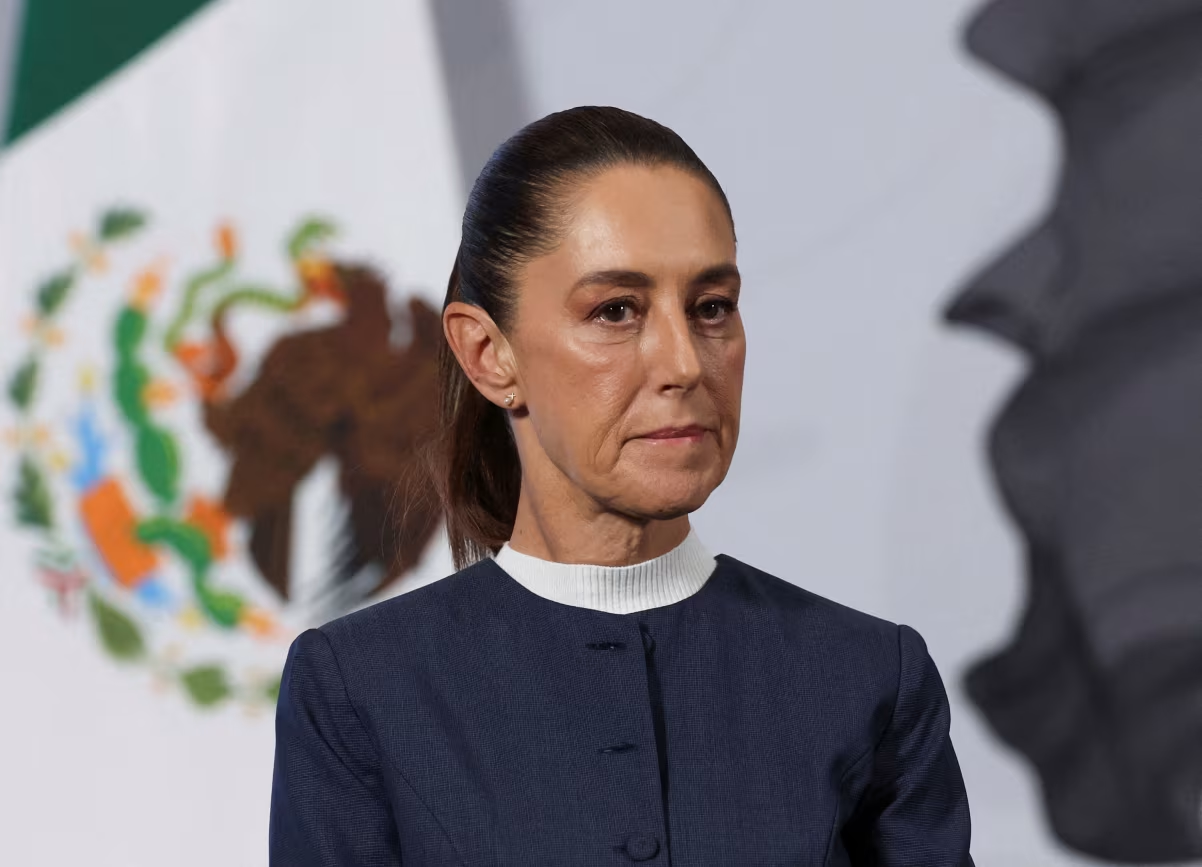
The shocking public groping of Mexico’s President, Claudia Sheinbaum, has sparked swift political action to combat sexual abuse, while also igniting a broader debate on how best to address a problem that affects millions of women across the country.
In response to the incident, Mexico’s Secretary for Women, Citlalli Hernández, unveiled a presidential plan aimed at tackling sexual violence nationwide. The initiative includes measures such as ensuring prison sentences for sexual abuse across all states, encouraging women to report incidents, and training prosecutors and officials on handling such cases.
The plan also envisions a wide-reaching public awareness campaign targeting schools, workplaces, public spaces, and transport networks, with the goal of preventing violence against women. “We want to tell all Mexican women, girls, and young women that you are not alone, that when you experience any type of violence, it is important to report it,” Hernández said last week. “Know that today there is a president who protects you.”

The policy announcement follows a disturbing incident in Mexico City, where a man—apparently intoxicated—attempted to kiss Sheinbaum and groped her while she was walking in public. Video footage of the assault quickly circulated online, provoking outrage across the nation.
The incident highlighted the widespread nature of sexual harassment in Mexico, where even the country’s leader is not immune. According to the national statistics agency, seven out of 10 women and girls aged 15 and older have experienced at least one form of violence in their lifetime, including psychological or sexual abuse. In 2025 alone, 25,000 sexual harassment complaints have already been filed nationwide.
Such abuses often escalate into more severe violence. On average, 10 women are murdered in Mexico each day, and in the first six months of this year, more than 500 women were killed in gender-motivated crimes, known as femicides.
“What happened to the president is what has happened to many of us,” said Congresswoman Rocio Abreu, from Sheinbaum’s Morena party. “The president is just another one of us who have experienced harassment, political violence, physical violence, sexual violence, economic violence. There is a whole range of violence against women … And none of us are exempt.”

A central component of the plan is the harmonisation of laws across Mexico’s 32 states to ensure sexual assault is universally classified as a criminal offense, aligning state legislation with federal law, which mandates six to ten years in prison for violent sexual abuse against vulnerable populations or minors.
Senator Martha Lucía Mícher, also from Morena, emphasized the broader scope of the challenge. “We need to review who has legislated on issues related to the agenda of non-violence against women,” she said, noting that state penal codes will be scrutinized. “It’s a crime committed against the daughters of judges, their sisters, their wives.”
However, Mícher stressed that legal reform alone is insufficient. “You have to classify the crime as a serious offense. You also work with men. You also empower women. You also conduct awareness campaigns. You also train public officials, police officers, government officials, and judges. And you also do great work with the community.”
Despite the new initiative, some women expressed scepticism about the government’s ability to achieve meaningful change. “It’s been too many years of fighting and too many years of this movement and there hasn’t been a difference,” said Itzayana Brito, a 20-year-old nursing student. “There have been small changes, but there’s never been a concrete difference.”
Feminist activists also questioned the emphasis on criminal penalties as the primary solution to widespread abuse. “What worries me is that the president’s focus is exclusively on criminal law and she is neglecting other avenues that could be strengthened,” said Estefania Vela, legal expert and executive director of feminist group Intersecta. “It’s an easy response to change criminal codes but there’s little change in real life.”
Oriana López, another activist, echoed these concerns. “There’s a theory that if we include it in the penal code and increase the penalties—making it a harsher punishment, more years in prison—then it will prevent people from doing it,” she said. “That’s the theory, but there’s no evidence to support it. It hasn’t been proven that this is a realistic or long-term measure.”
Instead, activists argued, the government should focus on educational campaigns to drive a societal shift where sexual abuse is no longer tolerated or normalized. “There has to be cultural change in masculinity,” López said. “What are we doing so that men have a masculinity that isn’t toxic, that isn’t violent, that isn’t invasive – so that they’re not abusive?”
The groping of President Sheinbaum, while shocking, has thrust the issue of gender-based violence into the national spotlight, creating both momentum and pressure for meaningful reforms. The coming months will test whether Mexico can translate the outrage and political will into lasting change for the millions of women affected by abuse each day.

Related News:
 Tragedy in County Fermanagh: Woman and Two Children Named as Victims in Northern Ireland Shooting
 Tasers Introduced in UK Prisons to Combat Rising Violence and Protect Staff
 Northern Ireland Family of Three Shot Dead in Maguiresbridge Home Incident
 Seventeen Dead as Russia Targets Ukrainian Prison in Devastating Airstrike
 West End Exposed as London’s Knife Crime Epicentre Amid Alarming Surge in Violence
 Tragedy in the Skies: Inquest Reveals Devastating Cause of Death in Southend Plane Crash
 Targeted Attack in Bury Sparks Murder Investigation as Community Awaits Justice
 Man Remanded After Children Fall Ill at Leicestershire Summer Camp in Shocking Child Cruelty Case
 Two Decades Without Justice: The Lingering Shadow of Lucy Hargreaves’ Murder and the Hunt for Kevin Parle
 AI Revolutionises Grooming Gang Investigations as Police Target Cold Cases Across England and Wales
 Mass Arrests in London as Protest Defies Ban on Palestine Action
 Alarming rise in abusive teen relationships in the UK sparks urgent warnings
 Mother of Olivia Pratt-Korbel Issues Powerful Gun Crime Plea
 Merseyside Police Helicopter Crew Cleared After Low-Altitude Pursuit of Suspect
 Akinwale Arobieke Found Dead at Liverpool Home
 Urgent Action Needed on Windrush Compensation as Survivors Speak of “Waiting to Die”
 UK Mobile Retailers Lock Doors Amid Surge in Organised Phone Thefts
 UK Launches Major Crackdown on Networks Profiting from Online Child Sexual Abuse
 Prime Suspect in Madeleine McCann Case Declines Metropolitan Police Interview Ahead of German Prison Release
 Rivers in English and Welsh National Parks Suffer Sewage Pollution at Twice the National Rate
 Systemic Racism in Maternity Care Continues to Endanger Black Women in England, MPs Warn
 UK Doctors Guilty of Sexual Misconduct Continue Practising Amid Weak Sanctions, Research Finds
 Northern Ireland Faces Fears of Prolonged Race Riot “Permacrisis”
 Zarah Sultana Seeks Legal Action After Bitter Clash with Jeremy Corbyn Over Party Membership Funds
 Channel Crossings Surge: Over 1,000 People Arrive in the UK in Small Boats in a Single Day
 Teenager in Critical Condition Following Shooting Outside Wembley Stadium
 No Evidence Found to Substantiate Alleged Rape in Oxfordshire Churchyard, Police Confirm
 Majority of UK Men Would Opt for Prostate Cancer Screening, Survey Finds
 Massive London Poundland Fire Engulfs High Street
 Cooper Unveils £4m Cyber Plan Against Russian Hackers
 Ambulance Worker Fired After Flinging Amputee from Wheelchair and Offering Bribe
 Paedophile Singer Ian Watkins Dies After Prison Attack
 Ian Watkins Killed in Prison; Ex-Girlfriend Speaks Out
 DNA Test Confirms Alleged Stalker Is Not Madeleine McCann
 Kosovo agrees to host Britain’s refused asylum seekers
 Sex offenders to lose parental rights for children born of rape
 WW2 Pilot’s Long-Lost Crash Site Unearthed in Essex
 Peterborough Mosques Tighten Security After Attack
 Badenoch Warns Farage’s Grooming Gangs Plan Could Backfire
 Ex-Army Sergeant Jailed for Assault on Soldier Who Later Died
 Mass Stabbing on Doncaster to London Train Leaves Ten Injured
 FBI Director Kash Patel Defends Girlfriend Amid Government Jet Claims
 Police Probe Four Knife Incidents Linked to Cambridgeshire Train Attack
 Experts Warn on Home Birth Risks, Call for Skilled Midwives
 French Taxi Driver Cleared in David Lammy Theft Case After Fare Dispute
 UK Bans Fake Numbers: Scammers Lose Their Trick
 Just Stop Oil Protesters Convicted Amid Climate Defence Row
 Jailed UK climate protesters face extremist-style restrictions
 How to get help when a child goes missing – call 999 urgently
 ‘Reckless’ cuts to victims’ services will cost more than they save
 Met Police Clarifies Scale of Grooming Gang Cases
 Oklahoma Governor Grants Last-Minute Clemency to Death Row Inmate
 US Pushes Global Effort to Stop Arms Flow to Sudan RSF Forces
 Rio Raid’s Death Toll Raises Questions About Gang Impact
 Israel Confirms Returned Hostage as Meny Godard
 Navy cuts scrap key landing upgrade for UK F-35B jets
 Delhi Car Bomb Arrest: Suspect Linked to Deadly Attack
 New Evidence Emerges in Haditha Family Killings
 Mum Calls for New Licence Rules After Teen Road Death
 UK Candidate Moved to Safe House After Election Threats
 Mother Watches in Horror as Teen Daughter Dies on Tracks
 Agency Workers Vote to Join Picket Lines Amid Dispute
 Charlotte Raids: 130 Arrested in Major Immigration Sweep
 South African Detained After Neo-Nazi Rally in Australia
 The Lasting Legacy of Seven: Crime, Morality, and Urban Decay
 Serial Rapist and Former Cop Found Guilty Again
 Man Charged Over Attempted Murder of Senior Officer
 Two Officers Injured After Van Deliberately Rams Patrol Car
 Ex-Harvard President Pauses Teaching Over Epstein Emails
 Ex-Olympian Snowboarder Now Drug Kingpin Charged with Murder
 Venezuela Threatens Nobel Winner Machado with Fugitive Status
 Most Tories Expect to Support a Farage-Led Government
 Trump Envoy to Discuss Ukraine Peace at Kremlin
 Two National Guard Soldiers Critically Injured Near White House
 Southern Lebanon reels as Israeli strikes shatter communities
 Video shows Israeli troops kill Palestinians after surrender
 Jordan Bardella: France’s Young Presidential Contender
 UK Ends Haven Status for Dirty Money in Bold New Crackdown
 Undercover officer’s deception exposed as inquiry hears chilling account
 Online Child Sexual Abuse Soars 26% as Police Demand Tech Action