Published: 14 November 2025. The English Chronicle Desk. The English Chronicle Online
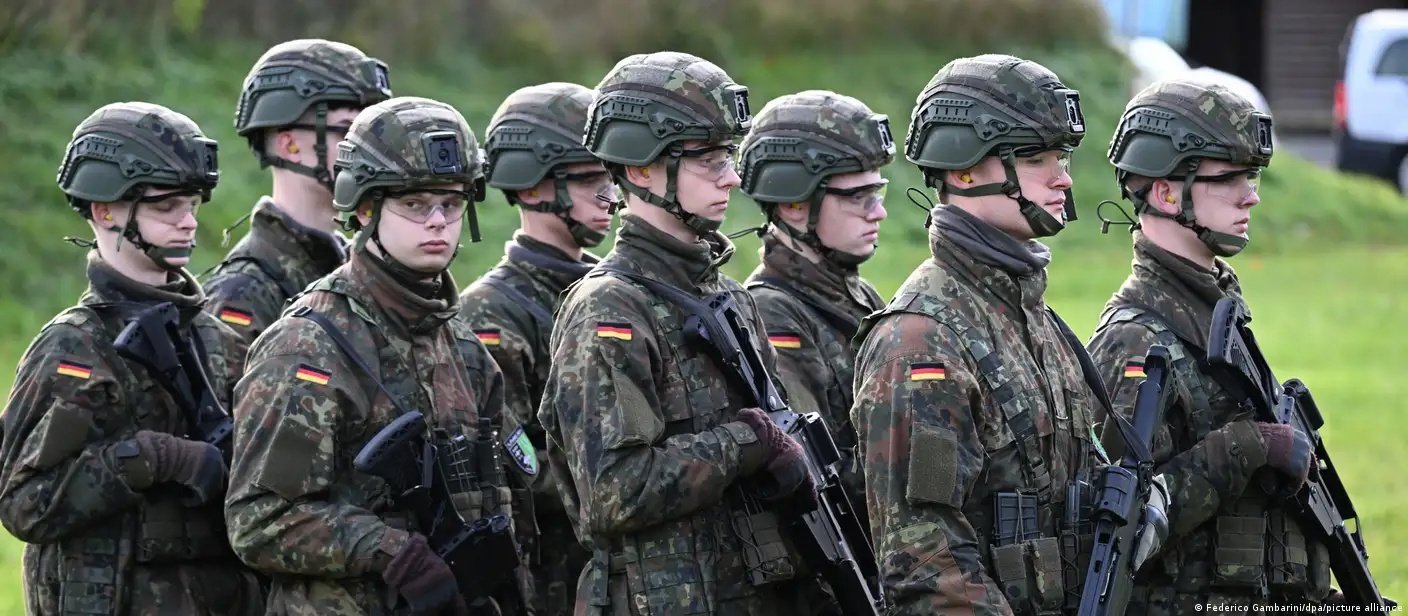
Germany’s coalition government has reached a landmark agreement to implement a new military service plan aimed at increasing the country’s troop numbers, a decision that follows months of intense debate and negotiation among political parties. The plan, which reintroduces aspects of military service after years of voluntary enlistment, will require all 18-year-old men to fill out a questionnaire assessing their suitability and interest in serving. Beginning in 2027, these young men will also undergo a mandatory medical examination to determine their fitness for military duty.
The decision forms part of Berlin’s broader ambition to establish the Bundeswehr as Europe’s strongest conventional army, a goal that has gathered urgency in light of growing regional security concerns. Armin Papperger, chief executive of Germany’s largest defense contractor, Rheinmetall, told the BBC that the government’s target could realistically be achieved within five years. He emphasized that the coalition, led by Chancellor Friedrich Merz, is making “clear decisions” to strengthen the armed forces and enhance the country’s deterrence capabilities.
Lawmakers are expected to vote on the military service plan by the end of 2025. Earlier this year, German defense chief General Carsten Breuer warned that NATO should prepare for the possibility of a Russian attack within the next four years. Papperger noted that while no one can predict the future, Germany must be “ready in 2029” to respond to any potential threats, highlighting the strategic rationale behind the plan.
When the CDU/CSU and Social Democrat (SPD) coalition formed earlier this year, they agreed to reintroduce military service on a voluntary basis initially, reflecting a compromise between political factions. The Bundeswehr currently has approximately 182,000 troops, but the new model seeks to increase personnel by 20,000 within the next year. Over the next decade, the plan aims to expand the military to between 255,000 and 260,000 active soldiers, supplemented by roughly 200,000 reservists.

Under the proposed system, all 18-year-old men and women will receive a questionnaire assessing their willingness to serve, although it will remain mandatory only for men. Starting in July 2027, all men will also be required to undergo medical examinations to ensure their suitability for military duties. The collected data could later be used for recruitment in the event of a national crisis or war, allowing the Bundeswehr to identify potential candidates efficiently. Should the government’s targets not be met, lawmakers may consider introducing a form of compulsory enlistment to achieve necessary troop levels.
Despite these plans, the initiative has encountered resistance, particularly from Germany’s political left and among younger generations. Many young Germans express strong reservations about mandatory service, fearing exposure to conflict and questioning the need for such measures. A recent Forsa survey conducted for Stern magazine revealed that while just over half of respondents favored compulsory service, opposition was especially high among 18- to 29-year-olds, reaching 63%.
Seventeen-year-old Jimi, a student from Berlin, voiced the concerns shared by many of his peers at a recent anti-conscription protest outside the Bundestag. “I don’t want to go to war because I don’t want to die or be shot at. I also don’t want to shoot people,” he said. He described the government’s plans as an “unlikely and abstract scenario” used to justify infringing upon the personal freedom of young citizens.
Yet not all reactions have been negative. Jason, a 21-year-old recruit who joined the Bundeswehr earlier this year, expressed support for the military service plan, citing the current security environment. “I wanted to contribute to defending peace, to defend democracy if the worst happens,” he explained. He also emphasized the deterrent effect of a strong military, noting that a capable defense force discourages potential aggressors from considering hostile actions against Germany.
Defence Minister Boris Pistorius has sought to assuage public concerns, emphasizing that the new plan does not signal imminent military conflict. “There is no cause for concern… no reason for fear,” he told reporters. Pistorius stressed that the more capable Germany’s armed forces become through modernized equipment, training, and personnel recruitment, the less likely the nation will be drawn into war.
Historically, Germany has approached military strength cautiously, particularly given its role in two world wars and subsequent post-war restrictions. Defence spending declined sharply after the Cold War, and compulsory conscription was suspended in 2011. The renewed focus on bolstering the military reflects a shift in policy following Russia’s full-scale invasion of Ukraine, which prompted Chancellor Merz to declare that Germany must “do whatever it takes” to secure its national defense.
Germany’s rearmament has also been influenced by pressure from the United States, with successive Washington administrations urging NATO members to increase defense spending to bolster the alliance’s collective security. European nations, including Germany, have responded with a combination of procurement programs, modernization initiatives, and personnel expansion, benefiting defense firms like Rheinmetall.

Armin Papperger, whose company supplies both the Bundeswehr and Ukrainian forces, highlighted the economic dimension of the initiative. “We make a lot of money because there is a huge demand,” he said. He detailed Rheinmetall’s investments in vehicles, ammunition, electronics, artificial intelligence, and satellite technologies, emphasizing that the company is significantly expanding its capabilities in line with Europe’s broader defense requirements.
Security concerns have also been personal for Papperger. A U.S. report last year suggested that he may have been the target of a Russian assassination plot. While there has been no confirmation, Papperger dismissed the claims, stating simply, “I feel good, I feel safe.” He added that Europe’s current geopolitical climate, characterized by hybrid threats and strategic rivalry, underscores the importance of having robust and well-equipped armed forces.
Political debate within Germany remains contentious. Many critics argue that compulsory service infringes upon personal freedoms, while supporters assert that the plan is a necessary response to emerging security threats. Surveys indicate that the younger population, in particular, remains skeptical, fearing the imposition of mandatory military obligations without sufficient justification.
At the same time, proponents argue that the program can provide societal benefits beyond military preparedness. Compulsory or structured voluntary service can instill discipline, civic responsibility, and practical skills among young citizens. Advocates also stress the importance of a strong national defense in deterring potential adversaries and maintaining stability within NATO’s European framework.
The questionnaire and medical examination system has been designed to serve dual purposes. In peacetime, it helps identify individuals suitable for voluntary service, while in a crisis, it allows the government to rapidly mobilize qualified recruits. By gradually introducing these measures, Berlin hopes to strike a balance between individual rights and collective security needs, easing the transition toward increased troop numbers.
As lawmakers prepare to vote on the proposal, Germany faces a delicate balancing act. It must navigate public skepticism, political opposition, and historical sensitivities surrounding military service, all while preparing for a potentially volatile international security environment. Analysts warn that the success of the program will depend not only on legislation but also on effective implementation, clear communication with the public, and adequate support for recruits throughout their service.
The new military service plan marks a significant turning point in Germany’s defense policy. After decades of cautious posture and reliance on professional volunteers, the nation is now embracing a more proactive strategy to ensure that its armed forces are capable, modernized, and sufficiently staffed. The move also signals Germany’s broader commitment to NATO and the security of Europe, highlighting the strategic importance of maintaining credible defense capabilities in an era of heightened geopolitical tension.
While the program will initially emphasize voluntary participation, mandatory elements for men and medical evaluations underscore the government’s determination to build a robust, prepared, and resilient military. The coming years will reveal whether Germany can achieve its ambitious targets while maintaining public support and addressing the concerns of its young population.
Related News:
 British Woman in Iran ‘Losing Hope’ Amid Ongoing Detention
 BBC Journalist Held and Interrogated in Vietnam
 UK University Suspends Human Rights Research Following Pressure from China
 UK University Faces Counter-Terror Probe Over China Pressure
 Zohran Mamdani becomes New York City’s first Muslim mayor
 Abigail Spanberger Elected Virginia’s First Female Governor
 Mikie Sherrill Elected New Jersey’s Governor in Key Win
Zohran Mamdani names all-female transition team for NYC mayoralty
China-critical UK academics face ‘extremely heavy’ pressure from Beijing
Mikie Sherrill Elected New Jersey’s Governor in Key Win
Zohran Mamdani names all-female transition team for NYC mayoralty
China-critical UK academics face ‘extremely heavy’ pressure from Beijing
 British military receives first Ajax armoured vehicles – eight years late
 BBC to Apologise Over Edited Trump Speech Amid Backlash
 Second world war veterans honoured as King leads Remembrance Sunday
 Britain deploys RAF specialists to assist Belgium with drone threats
 BBC director-general and news chief resign amid bias row
 Night after night, Belgium is on high alert.
 Ukraine-Russia war latest: Putin’s troops exploit bad weather to force Kyiv withdrawal from multiple towns
 Trump Claims Victory as Longest Shutdown Ends
 New Epstein Files Spark Political Clash in Washington
 Trump Ends Record Shutdown by Signing Temporary Funding Bill
 Hamas Fighters in Gaza Tunnels Stall Ceasefire Progress
 Ukraine Energy Corruption Scandal Hits Zelensky’s Inner Circle
 Early Trends Suggest Modi’s Alliance Leading in Key Bihar Election
 US Justice Department Files Lawsuit Against California Over Partisan Voting Maps
 Greene Pushes Epstein Files Amid Trump Fallout
 Trump Deploys DHS to Charlotte in Major Arrest Operation
 Former President Backs Public Release of Epstein Records
 December Run-Off in Chile as Election Produces No Winner
 UN Security Council Approves Trump’s Gaza Peace Plan
 Ukraine to Get 100 French Rafale Jets in Historic Deal
 Canada Passes Carney’s First Budget in Tight Parliamentary Vote
 Why Russian Liberals Push Strongly Pro-Israel Narratives
 Congress Approves Release of Epstein Files, Trump Expected to Sign
 Trump Says Crown Prince Knew Nothing About Khashoggi Death
 Shadow Fleet at Sea: Europe’s Battle Against Illicit Oil Shipping
 Rama Rebukes Mahmood for Targeting Albanian Families
 Russian Vessel Used Lasers on RAF Pilots, UK Claims
 Pentagon Officials in Ukraine to Discuss War End
 Turkey to Host COP31 After Breakthrough Deal with Australia
 US Military Team Visits Kyiv Amid War Talks
 WhatsApp Messages Expose Nathan Gill’s Bribery
 Venezuela Threatens Nobel Winner Machado with Fugitive Status
 Texas Governor Faces Lawsuit From CAIR
 Mamdani’s Vision: Affordable, Democratic Socialism
 Trump Envoy to Discuss Ukraine Peace at Kremlin
 Pope Leo XIV Begins Historic Trip to Turkey and Lebanon
 Georgians Defy Government Crackdown After Year of Protests
 Putin Intensifies Territorial Demands Before US Talks
 India’s Labour Law Overhaul Sparks Fierce Debate
 Video shows Israeli troops kill Palestinians after surrender
 Trump to Recheck Green Cards from 19 Nations After DC Attack
 Carney’s Alberta Pipeline Deal Sparks Immediate Pushback
 Chinese & Japanese Boats Clash Near Disputed Islands
 Putin Meets US Envoy Amid Key Ukraine Peace Talks
 Ireland Boosts Ukraine Aid as Zelensky Visits Dublin
 Kremlin Talks With US Yield No Ukraine Peace Breakthrough
 UK Must Act with Courage and Clarity on Israel-Palestine Conflict, Says Foreign Affairs Committee Report
 Radioactive Leak at UK’s Nuclear Warhead Base Sparks Outcry Over Safety and Secrecy
 Hong Kong Summons UK and Australian Envoys Following Asylum Grants to Democracy Activists
 Is the UK Ready to Put Boots on the Ground in Ukraine? Assessing Military Capacity and Challenges
 Channel Crossings Surge: Over 1,000 People Arrive in the UK in Small Boats in a Single Day
 Widow of Charlie Kirk Forgives Killer at Emotional Memorial Service
 Yvette Cooper Signals Global Momentum Towards Gaza Peace Deal Amid Humanitarian Crisis
 Russia’s Latest Push to Win US Favors Shows Deep Desperation
 Army Officers Orders to Cut Ties with Men-Only Clubs
Trump’s UK Ambassador Urges North Sea Drilling to Strengthen US Ties
Army Officers Orders to Cut Ties with Men-Only Clubs
Trump’s UK Ambassador Urges North Sea Drilling to Strengthen US Ties
 French Taxi Driver Cleared in David Lammy Theft Case After Fare Dispute
 Palace May Restore Hyphen to Andrew Mountbatten-Windsor’s Name
 Millionaires group urge Reeves to introduce wealth tax to ‘lift kids out of poverty’
 Reeves rejects £1bn plea for NHS redundancy payouts
 PM Condemns Leaks, Vows Loyalty to Ministers and Stability
 Trump Urges Herzog to Grant Netanyahu Full Pardon
 Major Rent Reform Ends No-Fault Evictions in England
 Senator John Fetterman Hospitalized After Fall from Heart Flare-Up, Keeps Sense of Humor
 Orban Says Ukraine Has ‘No Chance’ as EU Support Continues
 Israeli Strike Kills 13 Near Palestinian Camp in Lebanon
 Haiti Qualifies for World Cup Despite Coach Never Visiting Country
 Most Tories Expect to Support a Farage-Led Government
 Two National Guard Soldiers Critically Injured Near White House
 Southern Lebanon reels as Israeli strikes shatter communities
 Jordan Bardella: France’s Young Presidential Contender