Published: 1 December 2025. The English Chronicle Desk. The English Chronicle Online.
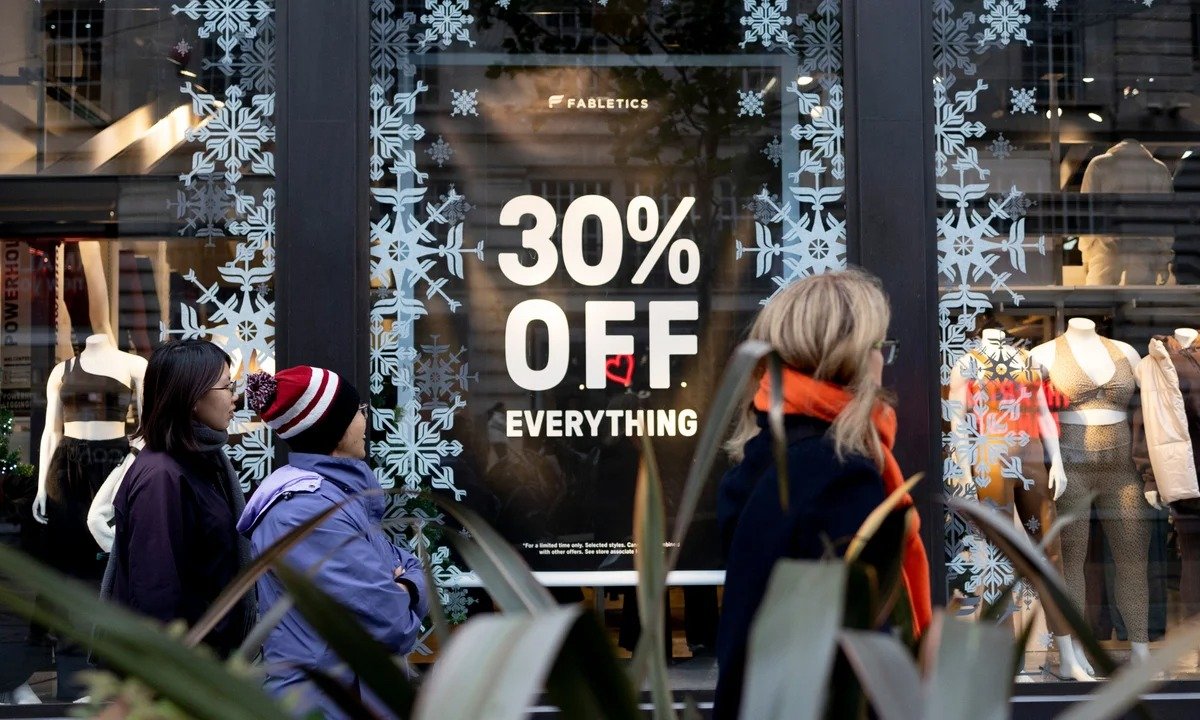
High streets across the United Kingdom experienced noticeably lower footfall during this year’s Black Friday period, highlighting the growing caution among consumers as concerns continue to mount over the direction of the national economy in 2026. Newly released data suggested that shoppers were reluctant to visit traditional retail destinations, underscoring the strain created by persistent living costs, rising unemployment forecasts and a subdued economic outlook that analysts believe will continue well into next year.
The monitoring company MRI Software reported a two percent fall in visitors across all UK shopping destinations on Black Friday compared with the previous week. The decline deepened to 7.2 percent when measured against the same day last year. Retail zones near central London offices appeared to be among the few locations that recorded even a modest surge in activity, largely due to weekday workers taking advantage of promotional deals close to their workplaces. The overall national picture, however, remained quiet, and retailers felt the absence of eager bargain hunters who traditionally drive one of the busiest weekends of the year.
Black Friday has shifted heavily towards online platforms in recent years, yet analysts noted a similarly mixed landscape for digital retail. According to the online retail association IMRG, online sales dropped sharply on Thursday but rose significantly on Tuesday, producing an inconsistent pattern that left many retailers uncertain about consumer sentiment. The inconsistent spending activity pointed to heightened price sensitivity among households, as many balanced the desire to secure seasonal deals with concerns about tightening budgets.

Jenni Matthews, an analyst for MRI Software, remarked that the prolonged cost of living crisis appeared to be weighing heavily on overall economic activity. She said the reduced enthusiasm for in-store shopping showed the lingering financial caution that households were carrying into the winter season. Matthews noted that while shoppers remained interested in discounts, they were more selective and more hesitant than in previous years, contributing to the softer figures seen across the high street.
The muted response coincided with a new analysis released by the consultancy KPMG, which warned that subdued consumer spending could act as a significant brake on economic growth in 2026. KPMG’s assessment highlighted the combined effects of rising unemployment, weakened household confidence and concerns about future financial stability. Despite the fact that most of the significant tax increases outlined in Rachel Reeves’s recent budget would not be experienced until later, analysts suggested that households were already preparing for tighter months ahead.
KPMG’s chief economist, Yael Selfin, observed that the outlook for 2026 remained subdued because the labour market had begun to cool at a noticeable pace. She said many households were reducing discretionary spending, contributing to a slower retail environment and prompting businesses to adopt more cautious financial strategies. Selfin added that the wider economic environment contained some positive elements, particularly within the green energy sector, which continued to show strong potential. Planning reforms had the opportunity to boost housing delivery, but their impact would depend on how effectively investors regained confidence after months of uncertainty.
Two additional reports released on Monday expanded on this theme of growing business pessimism. Both studies pointed to similar trends across the commercial landscape, revealing that many business leaders were bracing for slower trading conditions, reduced investment and the possibility of continued pressure on operating costs. The findings aligned closely with the noticeable decline in shopper activity observed during the Black Friday weekend.
The Confederation of British Industry published its latest services sector survey, conducted shortly before the autumn budget. The survey recorded the sharpest fall in optimism regarding the general business environment in three years. Many companies described increasing pressure from rising costs, uncertainty surrounding future customer demand and hesitation over hiring plans. Charlotte Dendy from the CBI noted that businesses anticipated little short-term relief, forecasting that persistent financial concerns would continue to influence decisions related to investment and recruitment.
In a separate assessment, the Institute of Directors reported that its economic confidence index had fallen to a near-record low of minus seventy-three in the days leading up to Reeves’s budget announcement. The index rose only marginally to minus seventy-two once the budget had been delivered, suggesting that the government’s fiscal decisions had done little to reassure business leaders. Anna Leach, the IoD’s chief economist, explained that widespread speculation about potential tax rises had suppressed confidence for weeks. She said the organisation’s snap poll indicated that four out of five business leaders viewed the budget negatively, leaving little room for optimism about short-term economic improvement.
Retailers, meanwhile, were absorbing the latest data and assessing its implications for the crucial weeks ahead of Christmas. Many had expected a more deliberate shift in buying habits rather than an overall decline, but the weaker turnout raised questions about the long-term sustainability of major shopping events such as Black Friday. Some analysts suggested that consumers were increasingly prioritising essential purchases while delaying or avoiding non-essential spending altogether, a trend that could continue well into the new year.
The holiday season typically serves as a vital financial anchor for many retailers, yet the early signals from Black Friday hinted that the final quarter might be challenging for businesses already struggling with narrower margins, rising operational costs and unpredictable consumer behaviour. Retailers were expected to increase promotional activity and introduce frequent flash sales to encourage more spending in the days leading up to Christmas.
The Department for Education also weighed in with comments relating to earlier concerns about the labour market, although their broader context still reflected the economic unease shaping national attitudes. A spokesperson acknowledged that while teaching retention had improved slightly compared with previous years, the government remained cautious about recruitment challenges across multiple sectors. The spokesperson emphasised that the government continued to support professional flexibility where possible, while ensuring that essential public services remained stable.

The confluence of weaker retail figures, declining economic confidence and shifting consumer habits created a sobering national picture. Economic analysts warned that unless household confidence improved and businesses regained certainty over future demand, the UK’s economic momentum could continue slowing through 2026. Many emphasised that the financial fragility observed across high streets was only one part of a broader pattern affecting nearly every sector of the economy.
Retailers were cautiously hopeful that December might still bring a late upturn, although few expected a dramatic transformation. For many, the focus remained on adapting to the changing expectations of consumers who had become more vigilant about spending and more sensitive to price fluctuations. As the country moved deeper into the winter season, the subdued Black Friday turnout stood as a significant indicator of the careful and uncertain mood defining the current economic climate.
Related News:
 Troubled drinks giant Diageo names former Tesco boss to lead turnaround push
 Global markets drop amid tech sell-off and China slowdown
 Business Rates Hike Could Threaten Hundreds of UK Retailers, Putting 100,000 Jobs at Risk
 Aston Martin cuts £300m investment as Trump tariffs and weak China demand hit profits.
 UK Small Business Owner to Challenge L’Oréal in Tribunal
 Court Hears Challenge Over Water Bills Funding Sewage Fixes
 Thinktanks Urge Rachel Reeves to Reform UK Tax System
 M&S Profits More Than Halve After Cyber-Attack
 Tony Blair think tank warns Rachel Reeves must cut taxes if manifesto broken
MPs Press Rachel Reeves to Hike Gambling Taxes
Tony Blair think tank warns Rachel Reeves must cut taxes if manifesto broken
MPs Press Rachel Reeves to Hike Gambling Taxes
 Warning as Britons prepare to spend £4 billion this Black Friday
 Taylor Wimpey Sales Drop Amid Budget Uncertainty
 UK Government Borrowing Higher Than Expected
 Minister Denies Budget Leaks Have Harmed UK Economy
 Budget 2025: Reeves Drops Economic Growth Reference
 Expanded Version – Black Friday Shoppers Warned Over ‘Dud Deals’
 Rising Water Bills Lift Troubled Thames Back to Profit
 Bank of England Poised to Cut Interest Rates Amid Rising Unemployment and Global Trade Pressures
 Non-Dom Tax Crackdown Risks Backfiring as Exodus Threatens UK Revenue and Investment
 Inflation Latest: Cost of Living Expected to Rise Again in Key Figures Released Today
 Energy Users Could Save £5bn Annually if Gas Power Plants Are Removed from Market
Retail Sales See Uptick Amid Errors and Delays as ONS Faces Scrutiny
Energy Users Could Save £5bn Annually if Gas Power Plants Are Removed from Market
Retail Sales See Uptick Amid Errors and Delays as ONS Faces Scrutiny
 UK House Prices Hit Record £299,331 as Market Shows Steady Growth
Shein UK Faces Allegations of Shifting Majority of Profits to Singapore to Reduce UK Tax
UK House Prices Hit Record £299,331 as Market Shows Steady Growth
Shein UK Faces Allegations of Shifting Majority of Profits to Singapore to Reduce UK Tax
 UK Retail Sales Rise in August, but Tax Concerns Loom Over Festive Period
 Vodafone Faces Fourth Probe into Franchising Division Amid £120m Legal Battle
 John Lewis Partnership Posts £88m Loss as Costs and Restructuring Bite
 UK Economy Flatlines in July, Raising Pressure on Rachel Reeves Ahead of Autumn Budget
 Rachel Reeves Hosts Top UK and US Financial Executives as Trump’s State Visit Begins
 UK Labour Market Shows Signs of Cooling as Wage Growth Slows and Redundancies Rise
 UK Wage Growth Remains High, But Cost of Living Pressures Bite
UK Inflation Holds Steady at 3.8% as Rising Fuel Costs Offset Falling Air Fares
UK Wage Growth Remains High, But Cost of Living Pressures Bite
UK Inflation Holds Steady at 3.8% as Rising Fuel Costs Offset Falling Air Fares
 Ben & Jerry’s Co-Founder Resigns, Accusing Unilever of Silencing Brand’s Social Mission
 UK Borrowing Surges to £18bn in August, Exceeding Forecasts
 Farage’s Reform UK Receives £100,000 from Design Firm with Past Tax Issues
Rachel Reeves Faces Criticism Over Appearance at Gambling Industry Event Amid Tax Review
Farage’s Reform UK Receives £100,000 from Design Firm with Past Tax Issues
Rachel Reeves Faces Criticism Over Appearance at Gambling Industry Event Amid Tax Review
 Dagenham Left in Limbo After Smithfield and Billingsgate Market Relocation Cancelled
 Gatwick Secures Approval for £2.2bn Second Runway Expansion
 Retailers Warn Tax Rises Could Prolong Inflation as Shop Prices Climb
UK Housing Market Returns to Growth Amid Signs of Stability and Regional Variation
Retailers Warn Tax Rises Could Prolong Inflation as Shop Prices Climb
UK Housing Market Returns to Growth Amid Signs of Stability and Regional Variation
 Richard Desmond Begins High Court Battle Over National Lottery Licence
 Delivery Apps Could Double the Cost of Your Groceries, Warns Consumer Watchdog
 Jaguar Land Rover to Resume Production After Cyber-Attack, Launches Supplier Support Scheme
 Kemi Badenoch Unveils ‘Golden Rule’ to Halve Spending Cuts for Deficit Reduction at Tory Conference
 Gold Hits Historic $4,000 Amid Global Uncertainty
 UK GDP edges up 0.1% in August as Reeves faces budget pressure
 Rachel Reeves urged to consider welfare cuts to boost fiscal credibility
 UK inflation update: New rate expected as Budget approaches
 Real living wage set to rise nearly 7% for UK workers in 2026
 Co-op Urged Staff to Promote Vapes After Cyber-Attack Hit Sales
 Rachel Reeves to lead UK trade push in Saudi Arabia amid rights debate
 Trump’s UK Ambassador Urges North Sea Drilling to Strengthen US Ties
 Millions of Brits Adjust Lifestyle to Afford Essentials
 ABF May Split Primark from Food Division Amid Tough Market
Rachel Reeves Set to Break Labour Pledge and Raise Income Tax
ABF May Split Primark from Food Division Amid Tough Market
Rachel Reeves Set to Break Labour Pledge and Raise Income Tax
 Gopichand Hinduja, UK’s Wealthiest Business Leader, Dies
 Labour Urged to Honour Tax Pledges Ahead of Budget
 Cuts to home insulation funding threaten UK climate goals
 US private equity set to acquire UK online retailer Very Group
 Millionaires group urge Reeves to introduce wealth tax to ‘lift kids out of poverty’
 Skims Eyes Global Expansion After Reaching $5 Billion Value
 US Strikes Last Penny After 230 Years of Production
 Reeves’s Tax U-Turn Triggers Fresh Jitters in UK Markets
 PM Highlights UK Business at G20 in South Africa
 Eurotunnel Investment Halted as UK Rates Soar
 Mossmorran Plant Closure Hits Cowdenbeath Hard
 UK Energy Bills to Rise Slightly in January
 Netherlands Suspends Nexperia Takeover Amid China Talks
 Steel billionaire Lakshmi Mittal reportedly leaves UK
 Starmer Says Labour’s Economic Plan Needs Years to Deliver
 Prada buys Versace for $1.38bn, expanding luxury fashion empire
 China’s crackdown on civil servant perks sparks economic concerns
 UK Government Backs Return of International Rail Travel to Kent Stations
 GSK Chief Executive Emma Walmsley to Step Down After Eight Years at the Helm
 UK households brace for October benefit payments and rising energy costs amid cost-of-living pressures
Reeves Faces Setback as Labour May Miss Homes Target
UK households brace for October benefit payments and rising energy costs amid cost-of-living pressures
Reeves Faces Setback as Labour May Miss Homes Target
 Virgin Trains Moves Closer to Challenging Eurostar Monopoly
 Green Party Surges Past Labour in Latest UK Poll
 Ryanair Chief UK Economy ‘Doomed’ Under Labour
 Virgin Media Fined £23.8m Over Telecare Safety Failures