Published: 21st July 2025 | The English Chronicle Desk | The English Chronicle Online
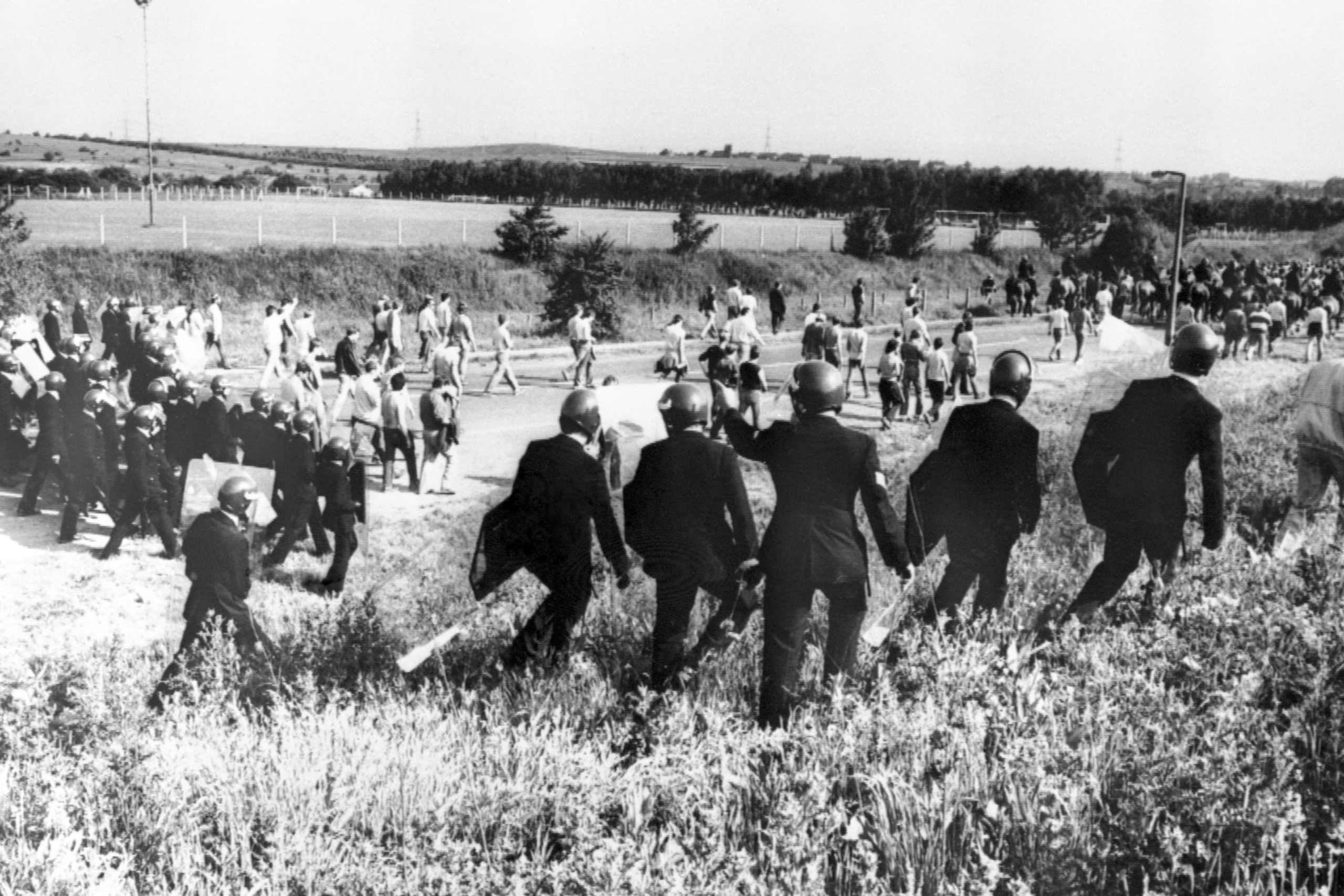
More than forty years after the infamous clashes between striking miners and police officers at the Orgreave Coking Plant in South Yorkshire, the UK government has formally announced a full statutory inquiry into the events of 18 June 1984. The long-awaited investigation marks a significant moment in Britain’s reckoning with its industrial and political past, as campaigners, trade unionists, and families of those involved finally edge closer to answers that have eluded them for decades.
The Home Office has confirmed that the inquiry will be launched in the autumn of this year. Crucially, it will be statutory in nature—meaning it will possess full legal authority to compel witnesses to testify and require disclosure of official documents. This elevates the process beyond previous reviews and statements of concern, offering campaigners renewed hope that long-buried truths may finally emerge.

The confrontation at Orgreave occurred during one of the most volatile periods in modern British industrial history—the 1984–85 miners’ strike. On that fateful summer day in June, thousands of striking miners assembled outside the British Steel Corporation coking plant in Orgreave. What followed became one of the most violent episodes of the strike. More than one hundred people sustained injuries, including both miners and police officers, as the picketing turned into pitched battles.
A total of ninety-five picketers were arrested and charged, many with the serious offence of riot—an offence that at the time carried the possibility of life imprisonment. However, every single case collapsed in court after it was revealed that police statements had been largely identical and evidence had been seriously compromised, if not fabricated. The collapse of the prosecutions ignited widespread allegations of police misconduct, collusion, and political manipulation, but despite repeated calls for justice, successive governments resisted opening a formal investigation.
This latest decision by the current administration represents a substantial shift. It comes after more than a decade of tireless activism by the Orgreave Truth and Justice Campaign (OTJC), a group formed in 2012 by those directly affected by the events of that day. Their aim has always been singular: to expose the truth about what happened at Orgreave, who authorized the police tactics used, and why no one was ever held accountable.
Joe Rollin, a key figure in the OTJC, responded to the government’s announcement with measured optimism. “We are cautiously elated,” he said. “We’ve fought so long, against indifference and silence, to make sure that the truth is not erased from history. The pain and injustice suffered by those men and their families has lived on for forty years. This is the first real step toward closure.”
The government’s announcement also speaks to wider issues of accountability and trust in policing and governance. While many argue that this inquiry is long overdue, its arrival signals a possible new chapter in public willingness to confront the past, particularly moments where state power may have been misused.
Critics of past governments have pointed to the political atmosphere of the 1980s, particularly the stance of then-Prime Minister Margaret Thatcher’s administration, as contributing to what they argue was a deliberate strategy to crush union power. The events at Orgreave, viewed through this lens, have often been seen as emblematic of a broader campaign against organised labour. With the inquiry now imminent, these questions may finally be examined in public view, with cross-examination and documentation replacing speculation and silence.
 The inquiry’s terms of reference have not yet been made public, but early indications suggest it will explore police planning, use of force, handling of arrests, the preparation of legal cases, and the broader political context. Campaigners are urging that the scope be wide-ranging and not limited to the events of a single day, arguing that understanding the full picture requires examining the entire machinery of command and strategy that allowed the confrontation to escalate in such a violent and consequential manner.
As Britain stands at a crossroads—seeking to redefine public trust in institutions, ensure justice, and learn from historical failures—the Orgreave inquiry has the potential to become not only an investigation of the past, but a guidepost for future accountability. For those who have waited forty years, the promise is clear: no matter how much time passes, truth remains worth pursuing. And for the nation, the lesson is profound—that democracy’s strength is measured not by its silence over past wrongs, but by its courage to confront them.
Related News:
 Kinnock’s Rebuke Echoes Loudly as Corbyn Allies Launch Left-Wing Breakaway: “A Gift to Farage”
 Two Decades Since 7/7: King Charles III Leads Nation in Honouring Victims of London’s Deadliest Terror Attack
 Tories in Turmoil as Sir Jake Berry’s Defection to Reform Sparks Fears of Further Exodus
 Ed Miliband Faces Setback as Government Quietly Shelves Divisive ‘Zonal Pricing’ Energy Policy
 Starmer Seeks to Regain Momentum with Summer ‘Refresh’ Amid Political Pressures and Party Fractures
 “I Feel English”: Young Migrant’s Dream of Britain Amid Political Pressure Over Channel Crossings
 Concerns Mount Over Potential 27% Council Tax Hike in London Under Angela Rayner’s Redistribution Plan
 UK and Norway Forge Stronger Ties Through Joint Sanctions and Enhanced Defence Cooperation
 Runcorn and Helsby By-Election Emerges as Crucial Test of Political Winds
 Trump Administration Dismisses 17 Immigration Judges, Sparking Debate Over Judicial Independence
 Lammy Condemns Israel’s Targeting of Starving Palestinians: Sanctions Threatened Amid Global Outrage
 Netanyahu Announces Plan to Take Over Gaza City, Escalating Conflict Further
 Prominent Al Jazeera Journalist Anas al-Sharif Among Five Reporters Killed in Israeli Airstrike on Gaza
 Rayner Warns Farage’s Reform UK Could ‘Fail a Generation of Young Women’ in Online Safety Row
 British Council in Kyiv ‘Severely Damaged’ by Russian Missile Strike
 Commons Speaker Warns UK Parliament Vulnerable to Foreign Espionage After China-Linked Case Dropped
 “Social Housing Crisis in England: Tenant Complaints Soar Amid Dangerous Living Conditions”
 Nigel Farage Under Fire for Refusing to Dismiss Donald Trump’s Paracetamol Claims
 Denmark Investigates Professional Drone Incursions Across Multiple Airports, No Evidence of Russian Involvement
 Sir Sadiq Khan Accuses Trump of Racism and Islamophobia Following UN Remarks
 Tony Blair Considered for Leadership Role in Transitional Gaza Authority
 Trump Seeks Breakthrough in Israel-Gaza Peace Talks
 Japan’s First Female Governing-Party Leader Emerges Amid Ultra-Conservative Politics
 Misinformation and Political Pressure Force Weston-super-Mare to Abandon Refugee Sanctuary Plan
 UK Police to Gain New Powers to Manage Repeated Protests, Home Office Announces
 Trump Hails Gaza War’s End, Pushes for Middle East Peace
 Prince Andrew Hosted Epstein Days Before Arrest
 Out of reach: stalled newbuilds leave Labour’s social housing targets in tatters
 Zarah Sultana Launches Party to Change Politics
 Mikie Sherrill Elected New Jersey’s Governor in Key Win
 Who is Rama Duwaji? What Zohran Mamdani’s wife has said about Gaza and ICE as he’s elected NYC mayor
 Hannibal Gaddafi Freed After Nearly a Decade in Lebanon
 Pressure Mounts on Starmer to Sack Chief of Staff Over Briefing Row
 US Justice Department Files Lawsuit Against California Over Partisan Voting Maps
 South Sudan President Removes Vice-President Amid Political Uncertainty
 UK Asylum Reforms: Temporary Refugee Status and Faster Deportations
 UN Security Council Approves Trump’s Gaza Peace Plan
 South African Detained After Neo-Nazi Rally in Australia
 Minister Defends Tough New Asylum Reform Plan
 UK Net Migration Falls Sharply After ONS Revisions
 Only One Republican Opposes Mass Release of Epstein Files
 Congress Approves Release of Epstein Files, Trump Expected to Sign
 UK Vulnerable to Attack, Defence Committee Finds
 Rapper Nicki Minaj Highlights Threats to Christians in Nigeria
 Paramilitary Murals and Memorials Persist on Public Housing Land
 Bangladesh Families Call for Hasina’s Return and Execution
 Philippines Flood Fund Scandal: Top Ministers Step Down
 Rama Rebukes Mahmood for Targeting Albanian Families
 Russian Vessel Used Lasers on RAF Pilots, UK Claims
 MP Offers Seat to Help Burnham Challenge Starmer
 Senedd Suspends Politician Over Offensive Racial Slur
 Pentagon Officials in Ukraine to Discuss War End
 Trump Slams Democrats With ‘Seditious’ Death Claim
 WhatsApp Messages Expose Nathan Gill’s Bribery
 Venezuela Threatens Nobel Winner Machado with Fugitive Status
 Texas Governor Faces Lawsuit From CAIR
 English Mayors Set to Introduce Tourist Taxes
 Ex-Classmate Accuses Farage of Dishonesty on Racism Claims
 Trump Envoy to Discuss Ukraine Peace at Kremlin
 Millions Face Higher Taxes Under Reeves New Budget
 Peers Get Extra Time to Debate Assisted Dying Bill
 Planned Palestinian Flag Raising at Belfast City Hall Faces Delay Amid Legal Concerns
 Pope Leo XIV Begins Historic Trip to Turkey and Lebanon
 Zambia’s President Faces Stone-Throwing Anger Amid Challenges
 UK Military Chiefs Warn Funding Gap Threatens Defence
 India’s Labour Law Overhaul Sparks Fierce Debate
 Video shows Israeli troops kill Palestinians after surrender
 Trump to Recheck Green Cards from 19 Nations After DC Attack
 Ex-Brexit MEP Rejects Claim of Pro-Russia Payments
 Labour U-turn: Unfair Dismissal Rights Delayed Six Months
 Government righting decades-old injustice for miners
 Guinea-Bissau President Flees After Military Coup
 Ukraine Anti-Corruption Agents Search Zelensky Adviser
 Jordan Bardella: France’s Young Presidential Contender
 Chinese & Japanese Boats Clash Near Disputed Islands
 Putin Meets US Envoy Amid Key Ukraine Peace Talks
 Kremlin Talks With US Yield No Ukraine Peace Breakthrough
 Farage Predicts Reform-Tories Deal Before Next Election
 Republicans Hold Tennessee Seat Despite Democratic Surge
 Franklin Turtle, Sabrina Carpenter Slam US Social Media Use