Published: 09 January 2026. The English Chronicle Desk. The English Chronicle Online.
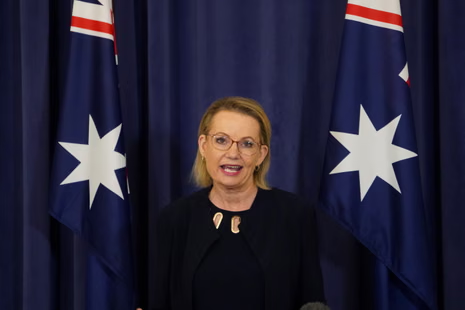
Sussan Ley has achieved a significant political victory in the royal commission debate, highlighting her leadership and the need for national unity. Despite forcing Prime Minister Anthony Albanese to reverse course on the inquiry, Ley continues to challenge the government, questioning its handling of the Bondi terror attack and rejecting the terms of reference. The new focus keyword, political unity, captures the potential for collaboration if leaders temper their rhetoric and prioritise shared national goals.
Ley’s advocacy on antisemitism has been a defining feature of her recent weeks, demonstrating both personal commitment and public empathy for affected communities. Her approach has combined passion with strategy, yet some analysts warn that ongoing attacks may weaken efforts to foster political unity across party lines. Strengthening the inquiry’s credibility requires that all stakeholders focus on constructive engagement rather than partisan conflict, making political unity a crucial component of the process.

Prime Minister Albanese defended the delay in establishing the royal commission, emphasising careful planning and consultation with NSW authorities. He highlighted that selecting the right commissioner and framing precise terms of reference were necessary steps to ensure effective outcomes. The government’s stance is intended to give the inquiry the best chance to build public confidence while addressing antisemitism.
Ley’s reaction remained sharply critical, framing the prime minister’s decision as “weak” and arguing that leadership had faltered. In communications to Liberal supporters, she described the delay as an admission of incompetence, reinforcing partisan divides. Some colleagues, however, urged a focus on cooperation, highlighting that prioritising collaboration could strengthen both the commission’s work and the broader national discourse.
The appointment of former High Court judge Virginia Bell as commissioner received widespread support. Antisemitism envoy Jillian Segal called on Australians to accept the decision and support the inquiry fully, emphasising that political unity is essential for the commission’s success. Segal warned that continued public criticism might compromise the inquiry’s effectiveness and hinder efforts to foster social cohesion.

Observers note that while Ley’s insistence on accountability is valid, her framing of ministers “in the dock” risks undermining the principle of political unity. Analysts suggest that by balancing scrutiny with constructive dialogue, the opposition could enhance its credibility while helping the inquiry fulfill its objectives. Public commentary increasingly stresses that prioritising political unity ensures that investigations are seen as fair, transparent, and representative of societal interests.
As the royal commission progresses, the spotlight will shift to how hearings are conducted and documents published. Political leaders, civic groups, and communities must emphasise political unity to ensure the inquiry achieves its purpose without unnecessary conflict. Constructive engagement, rather than adversarial rhetoric, is likely to enhance public trust and the commission’s legitimacy.
In conclusion, Sussan Ley’s success in securing a royal commission presents a moment for reflection on shared responsibilities and the importance of political unity. Both government and opposition must focus on collaboration and accountability, ensuring that the inquiry strengthens social cohesion and effectively addresses antisemitism. If leaders embrace this approach, the royal commission can serve as a model of bipartisan engagement, underpinned by the guiding principle of political unity.
Related News:
 Army Officers Orders to Cut Ties with Men-Only Clubs
 Trump’s UK Ambassador Urges North Sea Drilling to Strengthen US Ties
BBC to Apologise Over Edited Trump Speech Amid Backlash
Trump’s UK Ambassador Urges North Sea Drilling to Strengthen US Ties
BBC to Apologise Over Edited Trump Speech Amid Backlash
 Britain deploys RAF specialists to assist Belgium with drone threats
 Millionaires group urge Reeves to introduce wealth tax to ‘lift kids out of poverty’
 Reeves rejects £1bn plea for NHS redundancy payouts
 PM Condemns Leaks, Vows Loyalty to Ministers and Stability
 Major Rent Reform Ends No-Fault Evictions in England
 Greene Pushes Epstein Files Amid Trump Fallout
 December Run-Off in Chile as Election Produces No Winner
 Canada Passes Carney’s First Budget in Tight Parliamentary Vote
 Shadow Fleet at Sea: Europe’s Battle Against Illicit Oil Shipping
 Georgians Defy Government Crackdown After Year of Protests
 US National Guard Member Killed in DC Shooting
 ICC to Rule on Duterte’s Provisional Release
 Starmer Says Labour’s Economic Plan Needs Years to Deliver
 Liberal Turmoil Threatens Victorian Election Hopes
 Police Chief Faces Calls Amid Guildford Resignation Controversy
 Trump Policies Boost China’s Global Rise, Survey Finds
 Kyrsten Sinema Faces High-Profile Lawsuit Over Marriage Interference
 Iran unrest slows under brutal crackdown and global tensions
 Starmer Resists Matching Trump Amid Greenland Tensions
 Huge mistake: Labour blocks Burnham from byelection bid
 Labour targets Greens on drugs in Gorton Denton byelection
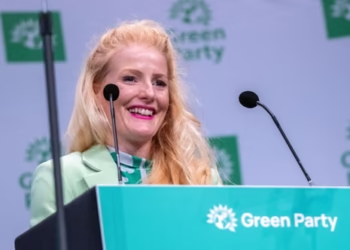 Greens nominate Hannah Spencer for Gorton and Denton byelection
 Thousands Protest ICE Operations in Nationwide US Day of Action
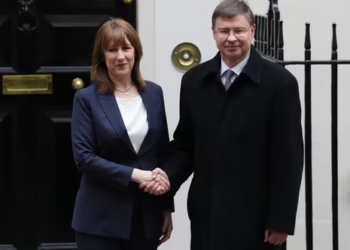 EU Signals Open Mind on UK Customs Union Talks
 Labour Thinktank Row Deepens Over Journalist Probe Claims
 Cabinet Secretary Shake-Up Triggers Due Diligence Warning
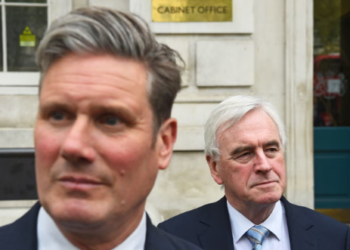 Starmer Faces Inquiry Calls Over Thinktank Probe
 Royal Mail Delivery Crisis Deepens Amid Weather Chaos
 UK shelves £110m border project amid trade strain
 AFP Reviews Pauline Hanson Comments
 California Democrats Vow Trump Reckoning
 Trump Tariffs Threat Spark UK and EU Alarm
 Trump’s Surgeon General Pick Evades Vaccine Questions
 The Dangerous Rise of Remigration Across Modern Europe
 US to offer passport services in West Bank settlements
 Green Party Stuns Labour in Gorton and Denton Byelection
 Labour Together scandal sparks clean break vow
 Iran Defiance Grows Amid US-Israel War Pressure
 Starmer Praised for Stance on Trump and Iran Conflict
 NHS Plans to Cut Overseas Workers Labeled Overambitious
 Danish Election Deadlock Shakes Frederiksen’s Grip
 Pope Rebukes Leaders for War as Middle East Tensions Rise
 Army Probes Apache Flyover at Kid Rock’s Nashville Estate
 Farage Shuns Truss as US Right-Wing Roadshow Hits London
 Chancellor Meets Supermarket Chiefs Over Living Costs
 Italian Town Buys Mussolini Villa to Keep Away Fascist Fans
 Report Says Pezzullo Acted ‘Recklessly’ in Dealings
 Suspected Plot Targets Pipeline Before Hungary Vote
 Trump Defiant After Washington Hotel Shooting
 Starmer Survives Mandelson Rebellion
 Trump approval plunges amid Iran war fears
 Tough Fiscal Realities Await Next Scottish Government
 US ‘Narco Boat’ Strikes Draw Global Outcry
 One Nation Candidate’s Surprising Ties to Independents
 Labour Members Doubt Starmer Future as Burnham Leads Poll
 Reform UK Faces Crisis as Newly Elected Councillors Resign
 Farage Faces New Questions Over Private Helicopter Use
 Green Party Makerfield Candidate Resigns Over Posts
 Tony Abbott Returns as New Liberal Party President
 US green card applicants must apply from abroad, DHS says
 Discontent grows around Putin amid war strain
 DeSantis’s ‘Alligator Alcatraz’ Faces Final Shutdown
 Secret Role of UK Security Services in Troubles Amnesty Law
 Starmer Leadership Under Pressure After Setbacks
 The Hidden Crisis Eroding Trust in British Communities
 Deepfake Abuse on X Sparks Safety Concerns for Dissidents
 UK Ministers Lobby Trump Over Under-16s Social Media Ban
 Starmer Resolves to Fight Burnham in Leadership Battle
 US Courts Back Trump on Park Signage Removals
 Hollie Ridley to Step Down as Labour General Secretary
 Trump’s Mount Rushmore Speech: A Divisive Anniversary
 Jarvis Urges Burnham to Secure 3.5% Defence Spending
 Trump’s Red-Card Intervention Hurts the US World Cup
 Farage Warns Sky News Following Financial Inquiry
 Trump Swaps Planes Amid Iran Tensions
 Ann Widdecombe, Formidable Political Figure, Dies at 78
 Houthis Strike Saudi Arabia as Middle East Tensions Rise