Published: 29 April 2026. The English Chronicle Desk. The English Chronicle Online.
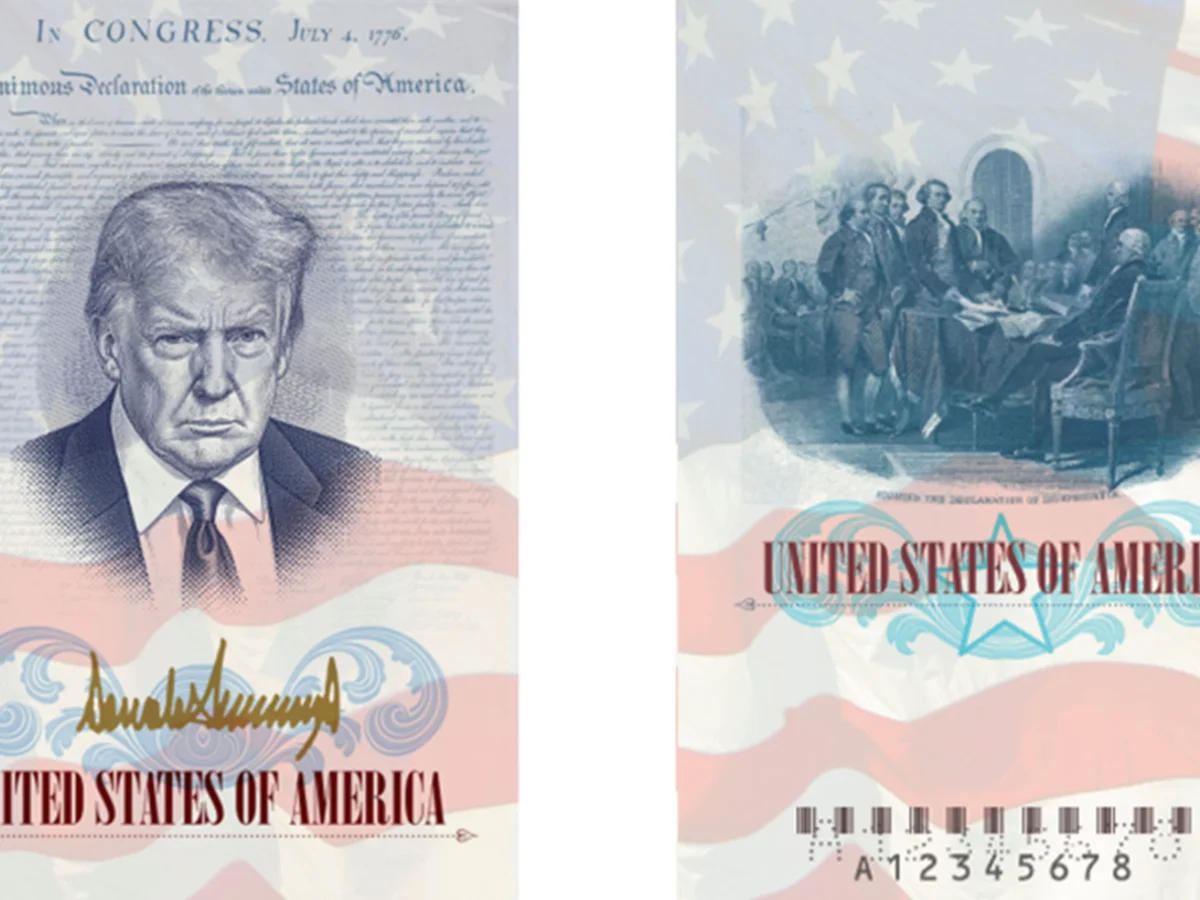
The United States government is preparing to celebrate two hundred and fifty years of independence this summer. This momentous occasion commemorates the historic separation from British monarchy and the birth of a nation. To mark this milestone, the administration is launching an extensive series of celebratory events and symbolic gestures. Perhaps the most striking initiative involves a significant update to the official United States passport document design. Starting this summer, authorities will issue a limited edition version featuring a large photograph of Donald Trump. The portrait will be placed prominently on the inside cover of the new passport document. It will be artistically surrounded by the original text of the historic Declaration of Independence. The American flag will also frame the image alongside the president’s signature in gold leaf.
These documents form a central part of the broader administrative program known as the America250 celebrations. This ambitious project aims to highlight American heritage while showcasing the current leadership’s specific vision for the country. State department spokesperson Tommy Pigott described the new design as containing customized artwork and enhanced imagery. He assured the public that the passports will retain all existing, rigorous international security features. The state department maintains that the American passport remains one of the most secure travel documents. While the government plans to release a limited number of these passports, officials remain silent. They have declined to confirm the exact quantity of documents that will be produced for circulation.

The decision to integrate the president’s image into official government documentation has sparked significant public interest. Critics and supporters alike are debating the implications of blending current political identity with national symbols. This move is certainly not an isolated incident in the current administration’s approach to public messaging. The president’s face has increasingly become a fixture across various federal institutions and government documents. One prominent example involves large banners of the president’s face displayed on major federal buildings. These banners currently grace the Department of Justice, the Department of Labor, and the Department of Agriculture. At the agricultural department, the president’s image is placed directly alongside the historic portrait of Abraham Lincoln. They sit beneath the phrase declaring the promotion of growth in America since eighteen sixty-two.
Similar strategies have been applied to the national parks pass program for the year twenty-six. These specific passes feature the current president alongside the image of the first president, George Washington. The artistic design includes the famous phrase commemorating the beauty of the American landscape for all citizens. Many visitors initially responded to this design change by covering the president’s image with protest stickers. In response to this trend, the National Park Service updated its official policy regarding the passes. The new guidelines warn that altering the pass in any way could render the document invalid. This policy adjustment highlights the intense public reactions surrounding the use of the leader’s personal image.
Economic and commemorative items are also undergoing significant design changes to reflect this current administration’s aesthetic preferences. The United States Mint has recently published several draft designs for a new one-dollar coin. These proposed designs feature the likeness of President Trump as the primary element on the currency. Furthermore, the commission of fine arts has officially approved a design for a new commemorative coin. This particular piece will be minted in twenty-four-karat gold for interested collectors and enthusiasts. The design depicts a stern-faced version of the president leaning intently over a wooden desk. These initiatives demonstrate a concentrated effort to reshape the visual identity of national symbols and currency.
The physical landscape of the nation’s capital is also slated for a very dramatic, permanent transformation. A massive project involving a two-hundred-and-fifty-foot golden victory arch has received preliminary approval this month. The project is already being internally referred to by critics as the Arc de Trump moniker. This approval process moved forward despite reports of overwhelmingly negative public feedback during the consultation period. A panel consisting of presidential allies voted to proceed with the controversial architectural project. If construction is completed, the arch will stand taller than both the US Capitol and the Lincoln Memorial. The structure would also feature a large golden statue reminiscent of the iconic Statue of Liberty.
To understand the broader context of these developments, one can categorize these efforts into primary groups. The first category involves the personalization of official government travel and identification documents for citizens. The passports and national park passes represent this significant shift in how the state presents itself. The second category focuses on the transformation of federal building aesthetics and public architecture projects. The banners on agency buildings and the proposed golden arch fall squarely into this specific group. The third category encompasses the systematic redesign of national currency and commemorative precious metal objects. The dollar coins and gold commemorative tokens illustrate this persistent trend in current federal design.

These combined efforts represent a comprehensive strategy to weave the president’s identity into the fabric of daily life. Proponents argue that these changes provide a sense of strong leadership during a landmark anniversary celebration. They view the iconography as a way to honor the current era alongside the nation’s historical figures. Conversely, detractors express concern that these changes politicize the institutions meant to serve all Americans equally. They worry that replacing or joining historic figures with current politicians diminishes the non-partisan nature of government. As the summer celebrations approach, the public debate regarding these symbolic changes will likely continue unabated. The implementation of the America250 passport will serve as a lightning rod for these ongoing national discussions.
Ultimately, this initiative highlights the complex intersection of history, patriotism, and modern political branding in America. Every citizen will have to navigate their personal feelings about these changes when applying for new documents. The government continues to move forward with its plans despite the active and vocal public dissent. The upcoming weeks will reveal more about the implementation of these high-profile, commemorative document changes. Whether these symbols will be viewed as historic marks of this era remains to be determined later. For now, the administration remains firmly committed to its vision for the America250 anniversary celebration. The world watches as the United States navigates this unique period of visual and political transformation.
Related News:
 Two National Guard Soldiers Critically Injured Near White House
 US National Guard Member Killed in DC Shooting
 American Mother Extradited From UK to U.S. on Murder Charges
 US Cities Erupt in Protests Against Trump’s Venezuela Military Action
 Federal Immigration Shift: Officers Leave Louisiana for Minneapolis
 Trump Says US Must ‘Own’ Greenland to Block Russia, China
 Government Unveils Northern Powerhouse Rail Plans
 Trump press secretary attacks reporter over ICE question
 Kyrsten Sinema Faces High-Profile Lawsuit Over Marriage Interference
 ICE detainee death may be investigated as homicide in Texas camp
 ‘He Believed Help Was Coming’: Why Iran’s Protesters Feel Betrayed
 Trump Fed bid heads to Supreme Court
 Trump officials continue false claims after Alex Pretti shooting
 Partial US Government Shutdown Hits Homeland Security Funding
 Thousands Protest ICE Operations in Nationwide US Day of Action
 Epstein Files Reveal Trump Officials’ Emails with Financier
 Thousands Protest ICE in New York Against Trump Deportation Campaign
 Sinema payment row deepens after $9,000 transfer claim
 US-Cuba Negotiations Shift as Oil Blockade Looms
 Portland Mayor Demands ICE Leave After Protest Violence
 Nurses’ families fear breakup under UK immigration crackdown
 California Democrats Vow Trump Reckoning
 Trump’s Surgeon General Pick Evades Vaccine Questions
 Buffalo Refugee Tragedy: Border Patrol Neglect Leads to Death
 Minnesota Medicaid Funding Blocked Amid New ‘Fraud’ Crackdown
 New Poll Reveals Reform UK Stance on British Citizenship
 Adelaide University Faces Backlash Over Event Cancellation
 Ukraine war briefing: Zelenskyy offers help to Saudi Crown prince on combatting Iranian drones
 Utah Woman Found Guilty of Poisoning Husband for Inheritance
 Can King Charles Calm Trump on Key US Visit?
 US Airman Rescued in Daring Mission After F-15 Shot Down in Iran
 Melania Trump Epstein remarks spark survivor backlash
 Trump Signals Hope for New Iran Talks as Ceasefire Fades
 Trump’s Presidency: A House of Cards Collapsing?
 Brennan Investigation Faces Major Prosecutor Shift
 US Catholics Caught Between President and the Pope
 Louisiana Tragedy: Eight Children Die in Mass Shooting
 GOP Senator Criticizes Trump’s Feud With Pope Leo XIV
 Trump Starts $166bn Tariff Refund Process
 UK Stands Firm on Falklands Amid US Rift
 Investigation Into Anti-Trump Motives After Gala Shooting
 Trump Defiant After Washington Hotel Shooting
 Identity Revealed: Suspected Washington Gunman Named
 US Court Weighs Fate of TPS for Migrants
 The Long Crusade to Silence the Voting Rights Act
 Judge halts deportation of Yemeni refugees in US
 White House Security Case Sparks Political Firestorm
 Trump approval plunges amid Iran war fears
 Ohio’s Battle for Trust: Democrats Vying to Flip the Buckeye State
 Trump warns Iran as Middle East tensions surge again
 US ‘Narco Boat’ Strikes Draw Global Outcry
 Ohio Primaries Set Stage for Crucial Midterms
 Afghan Families Left in Limbo Face Risk of Deportation
 Miami Upgrades Shake Up F1 Title Fight
 Florida Surgeon ‘Devastated’ Over Fatal Surgery Error
 Tensions Emerge in Netanyahu-Trump Alliance
 US Awaits Iran Reply on New Ceasefire Proposal
 Immigration Judges Fear Pressure in Trump Era
 Nancy Pelosi Endorses Connie Chan For Congress
 Trump Tightens Grip on GOP with Primary Victory
 Democrats release 2024 election report amid fierce backlash
 US green card applicants must apply from abroad, DHS says
 Tulsi Gabbard exits after turbulent intelligence tenure
 Hormuz Talks Near Critical Stage
 Former ICC prosecutor condemns US sanctions
 DeSantis’s ‘Alligator Alcatraz’ Faces Final Shutdown
 Prosecutor Proposes Law to Combat Election Deceit
 House Curbs Trump’s War Powers in Rare Rebellion
 Trump Urged to Condemn UFC Fighter Over Obama Slurs
 US Military Pacific Boat Strike Kills Three People
 US Loan Caps Threaten Future of Physician Assistants
 US Courts Back Trump on Park Signage Removals
 Trump’s Mount Rushmore Speech: A Divisive Anniversary
 Trump Intervenes in Fifa World Cup Balogun Ban
 NCAA Rules Unchanged After Supreme Court Transgender Ruling
 Conservative Groups Challenge ABC Broadcast Licenses
 US Airman Avoids British Court in Indecent Exposure Case
 Trump Refuses to Sign Housing Bill, But Law Takes Effect
 Florida Executes One of Its Oldest Death Row Prisoners
 Houthis Strike Saudi Arabia as Middle East Tensions Rise