Published: 07 May 2026. The English Chronicle Desk. The English Chronicle Online.
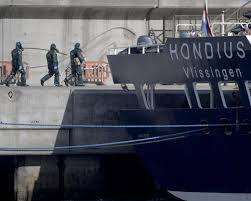
The British government is preparing for the return of citizens who were travelling on a cruise ship. This vessel has been the site of a tragic and very rare outbreak of the hantavirus recently. Officials have suggested that these passengers will be asked to isolate for a total of forty-five days. This long period of isolation is designed to ensure that no further transmission occurs within the country. The ship is currently known as the MV Hondius and it is sailing toward the Spanish coast. Health experts are monitoring the situation very closely to protect the safety of the general public.
Two British passengers who left the ship earlier have already started their period of self-isolation at home. These individuals disembarked at Saint Helena in late April before the full scale of the outbreak began. They are currently not showing any symptoms of the virus according to the UK Health Security Agency. This agency is working hard to trace every person who may have been in contact with cases. Dr Meera Chand has reassured the public that the risk of a widespread outbreak remains extremely low. The government is taking these firm steps as a precaution to keep the local population safe today.

A charter flight is being arranged by the Foreign Office for the remaining Britons still on board. These passengers will be allowed to fly home once the ship reaches the port of Tenerife soon. Only those who are not displaying any symptoms of the illness will be permitted to board flights. The British crew members on the ship are also being supported during this difficult and stressful time. One crew member has already been flown to the Netherlands to receive expert medical care from specialists. He was evacuated after falling ill and is currently undergoing a series of important medical tests.
The MV Hondius has sadly seen three deaths since the middle of April during this long voyage. There have been eight suspected cases of the virus reported among the passengers and the crew members. Three of these cases have been confirmed as hantavirus by professional laboratory testing in recent days. The World Health Organization is providing guidance on how to manage this rare family of rodent-borne viruses. The outbreak appears to be linked to a birdwatching trip that took place in rural Argentina. Two passengers joined this excursion before they boarded the cruise ship to start their long journey.
Argentine officials are now working quickly to confirm if their country was the source of the infection. Argentina has reported over one hundred cases of hantavirus since the middle of the last year. The World Health Organization ranks the country as having a high incidence of this rare viral disease. It is a very serious condition that often requires intensive medical care for those who are infected. Health teams in South America are investigating the specific locations where the passengers spent their time lately. They want to prevent any further cases from appearing in the local community or among tourists.
There were nineteen British nationals and four British crew members on the ship during this specific trip. The cruise was originally sailing from the coast of Argentina toward the islands of Cape Verde. The UK Health Security Agency stated that passengers will be repatriated if they remain healthy and well. None of the Britons still on the ship are currently reporting any symptoms of the viral illness. They are being monitored every day by medical staff to check for any signs of fever. Spain’s health minister confirmed that passengers would be sent back to their home countries very soon.
Fourteen Spanish citizens who were on the ship will be taken to a hospital in Madrid. They will undergo a period of quarantine there to ensure they do not carry the virus home. Meanwhile a British man is reported to be in a critical condition in a South African hospital. He is receiving private care in Johannesburg after being diagnosed with the virus earlier this week. About forty passengers chose to leave the ship when it stopped at the island of Saint Helena. Seven of those who disembarked at that remote location are confirmed to be British national citizens.
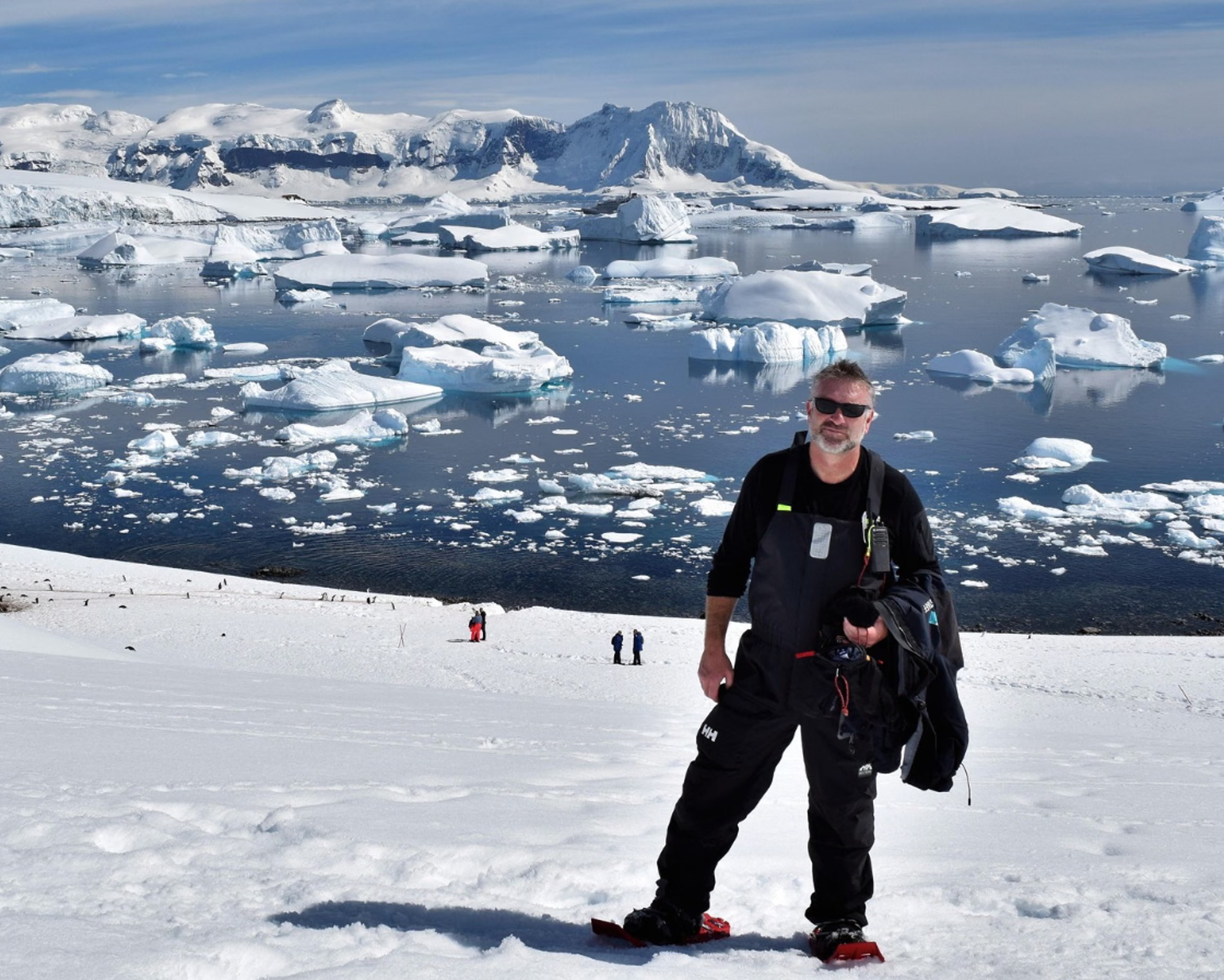
A flight attendant from a Dutch airline is also being tested for the virus in Amsterdam now. She is showing mild symptoms and has been admitted to a hospital for further clinical observation today. Martin Anstee is the British crew member who was evacuated to the Netherlands for his medical care. He is an expedition guide and a former police officer who is now feeling slightly better. Mr Anstee spoke from his hospital bed to say that he is doing okay for now. He noted that there are still many more tests that the doctors need to perform soon.
Professor Robin May from the UK Health Security Agency said it was a good sign he spoke. He explained that the patient would remain under investigation for a significant amount of time for safety. Professor May told the media that the two Britons who returned early are cooperating with the health authorities. They have agreed to stay at home to protect others from any potential risk of viral spread. This same process of long isolation will likely apply to all the other British nationals returning. The period of forty-five days is necessary because of the long incubation period of this virus.

Hantaviruses are found in many parts of the world and are usually carried by various wild rodents. People can become infected through contact with the waste or the saliva of these small animals. The specific strain being studied in this case is known as the Andes hantavirus from South America. This particular strain is notable because it can sometimes spread between humans in very close contact. It can cause a severe lung disease that is often fatal if not treated very quickly. Scientists are currently working on global efforts to develop new vaccines against this dangerous viral strain.
The virus does not spread easily between people like the common cold or the seasonal flu does. However the ability for human-to-human transmission means that contact tracing is a vital part of the response. The government will continue to support the families of those who must stay in isolation at home. The exact mechanism for isolation will depend on the individual circumstances of each person and their family. Factors such as where they live and who they live with will be taken into account. This careful approach ensures that the return of these travellers does not endanger the wider public.
The news has caused some concern among regular cruise travellers who plan to visit South America soon. Travel experts suggest that tourists should follow health advice regarding contact with wildlife in rural areas. Most people will never encounter this virus during their normal lives or even during typical foreign holidays. The situation on the MV Hondius is considered an isolated and highly unusual event by health experts. The British government remains committed to bringing its citizens home safely while managing any potential health risks. Updates will be provided as the ship reaches port and the repatriation flights are confirmed.
Related News:
 UK, US Medics Barred from Gaza Amid Rising Aid Concerns
 US Accused of Exploitation Over Zambia Health Aid
 New Zealand Covid Response Praised Despite Lingering Scars
 Bangladesh Launches National Drive as Measles Deaths Rise
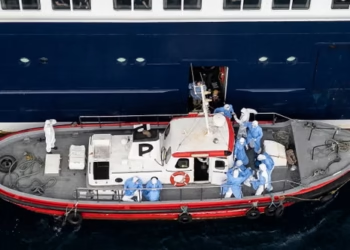 Hantavirus Cruise Crisis: Three Evacuated as Ship Docks
 Mission to the World’s Edge: A Heroic Rescue in Tristan
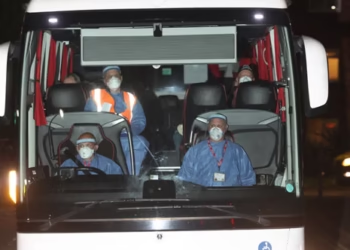 Cruise Chaos as UK Passengers Enter Viral Quarantine
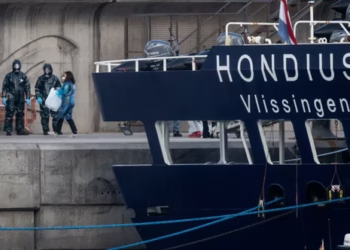 French Patient Told Hantavirus Was Just Anxiety
 WHO Issues Global Warning Over Rising Hantavirus Cases
 Tragedy in Cooma: Inquest Revisit Clare Nowland Case
 Patients to Test Health at Home to Ease NHS Winter Pressure
 Shouting Works Best to Deter Gulls, UK Study Finds
 Reeves rejects £1bn plea for NHS redundancy payouts
 Senator John Fetterman Hospitalized After Fall from Heart Flare-Up, Keeps Sense of Humor
 New AI tool could cut wasted efforts in organ transplants
 Stroke Patient Mistaken for Drunk, Care Delayed
 Five-Year-Old Dies After Rare Tonsil Surgery Complication
 More Patients Now Contacting GPs Online, Data Shows
 UK Enforces Junk Food Ad Ban Before 9pm
 Google Removes Some AI Health Summaries Over Safety Concerns
 Friedman Uninvited From 2024 Adelaide Writers’ Week
 Spoof “Make America Go Away” Caps Rally Denmark Over Greenland
 Streeting moves on doctor pay to end strike dispute
 UK reports baby formula toxin poisoning cases across the country
 Placenta Accreta Warning as Hunt Urges Action
 ‘Drinking from a Fetid Pond’: Superbug Genes in Lough Neagh
 Diplomacy on the Brink: Pakistan’s Risky Peace Mission
 Teenage Titan: Sooryavanshi Smashes IPL Records
 Palantir Boss Defends NHS Deal Amid Government Break Clause
 Canadian Mother and Daughter Released From ICE Detention
 Unions Raise Concerns Over Doctors’ Pay Dispute
 Reform UK Pledges To Halt Visas Over Reparations Demands
 US and Iran Agree to Two-Week Provisional Ceasefire
 Israel Defies Ceasefire as Lebanon Operations Persist
 Pakistan Brokers Historic Peace Deal Amid Rising Tensions
 Islamabad Hosts Historic Peace Talks Between Iran and USA
 Trump Signals Hope for New Iran Talks as Ceasefire Fades
 Security Alert Near Israeli Embassy as Police Investigate
 Machado Rallies in Madrid as Venezuela Stays Frozen Out
 US-Iran Standoff: Will Trump Deploy Ground Troops?
 Crisis in NHS Surgery Scheduling Hits Patients Hard
 Investigation Into Anti-Trump Motives After Gala Shooting
 Britain’s Health Decline: A Growing National Concern
 Oil Prices Surge Above $120 Amid Iran Blockade Fears
 Trump orders US troop pullout from Germany
 Japan Protests Erupt Over Plans to Revise Constitution
 FIFA Confirms Global Ban for Benfica Star Prestianni
 Tensions Surge in the Gulf as Ceasefire Wobbles
 One Nation Candidate’s Surprising Ties to Independents
 UK Experts Urge Four-Day Week to Combat National Obesity
 US and Mexico Face Heatwave as Floods Batter South Africa
 Putin Signals War End as Russian Momentum Stalls
 Romania’s Judicial Crisis: A System Under Siege
 Scepticism and tight security as Beijing braces for Trump
 Philippine Senator Flees After Days Under Senate Siege
 Court Upholds Landmark Win for Transgender Rights
 Fragile Truce Shattered as Violence Escapes Diplomatic Control
 Secrecy Down Under: Albanese Faces FoI Scandal
 Tony Abbott Returns as New Liberal Party President
 Pope Meets Families in Italy Toxic Waste Zone
 Discontent grows around Putin amid war strain
 Record Spending Highlights Growing Crisis In National Health Service
 Teaching Machines Right From Wrong in the Digital Age
 Oman Defies US Pressure Over Strategic Strait of Hormuz
 Ex-CIA Agent Accused of $40m Gold Theft and Fake Spy Unit
 Aukus Deal Facing Fierce Backing and Historic Criticism
 Thai Princess Bajrakitiyabha Passes Away at 47
 Clean Air Initiatives Spark Major Fall in London Hospital Admissions
 Tragic Loss of Australian Sprinter Jemma Stapleton
 Trump Urged to Condemn UFC Fighter Over Obama Slurs
 Russian Tanker Captain Remanded in UK Court After Channel Seizure
 US Military Pacific Boat Strike Kills Three People
 NHS Urges Investigation For Irregular Periods
 Trump’s Mount Rushmore Speech: A Divisive Anniversary
 Trump Swaps Planes Amid Iran Tensions
 Rotterdam Museum Honours Artist With Peanut Butter Floor
 UK Schools Struggle as Classrooms Top 40C
 Bangkok Nightclub Blaze Claims 30 Lives Amid Negligence Probe
 Yemen Accuses Iran of Violating National Sovereignty
 Houthis Strike Saudi Arabia as Middle East Tensions Rise