Published: 07 May 2026. The English Chronicle Desk. The English Chronicle Online.
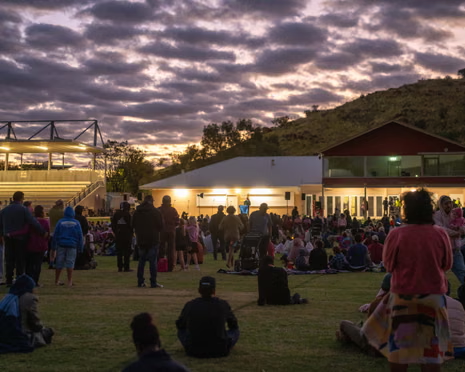
The quiet evening air across Australia was filled with the scent of eucalyptus smoke and the soft glow of candlelight this Thursday as a grieving nation gathered to honour the memory of Kumanjayi Little Baby. In cities and small towns alike, hundreds of people came together in a collective display of sorrow and solidarity for the five-year-old Warlpiri girl whose life was tragically cut short. The atmosphere at these vigils was one of profound respect and solemnity, reflecting a community deeply shaken by a loss that feels both personal and symbolic. From the heart of Melbourne to the capital in Canberra, the sea of pink clothing and ribbons served as a moving tribute to a child who was known for her love of the bright and cheerful colour.
At the Aborigines Advancement League in Melbourne, a crowd of approximately four00 mourners assembled to pay their respects in a ceremony marked by deep cultural significance. The Aboriginal and Torres Strait Islander flags flew at half-mast, casting long shadows over the many floral tributes that had been placed carefully at their base. Participants were welcomed with a traditional smoking ceremony, an ancient practice intended to cleanse the space and provide spiritual protection for those in attendance. A minute of silence followed, a heavy and poignant moment where the only sound was the rustling of trees and the distant hum of the city. For many present, the vigil was not just about mourning a single life but about standing with a family facing unimaginable pain.

Uncle Graham “Boots” Cooper, a respected Yorta Yorta Elder who delivered the welcome to country in Melbourne, spoke with a voice heavy with emotion about the necessity of communal healing. He expressed a sincere hope that the visible support from across the country would provide some measure of strength to the young girl’s family in Alice Springs. Uncle Graham emphasised that the gathering was a way to ensure the family remains strong through the presence and shared spirit of the community. His words touched on the universal instinct to protect the vulnerable, urging all parents to remain vigilant and watchful over their children. While acknowledging that such advice is easy to give but difficult to maintain, his message resonated deeply with the many parents and grandparents in the crowd.
In the nation’s capital, the Aboriginal tent embassy became a site of quiet reflection as about a hundred people gathered near the steps of Old Parliament House. The vigil was a sombre affair, with many participants dressed in various shades of pink to mirror the preferences of the precious little girl they were there to remember. Candles flickered against the biting Canberra cold, and the silence was broken only by the occasional sound of soft weeping from those moved by the tragedy. Organisers stressed that the evening was dedicated to holding space for the grieving community in Alice Springs, rather than serving as a platform for political discourse. Flowers and handmade wreaths were laid alongside a simple cross adorned with pink fairy wings, creating a makeshift shrine that glowed under the darkening sky.
The Ngunnawal traditional owners welcomed the Canberra mourners with a smoking ceremony as the sun began to set, painting the clouds with streaks of orange and violet. Leah House, a prominent voice at the embassy, noted that the gathering was a beautiful way to farewell the little girl into the dreamtime. With very few speeches and a focus on quiet contemplation, the event allowed attendees to process their grief without the distraction of external pressures. A second vigil held at the National Carillon further illustrated the breadth of the public’s response, as more wreaths were added to the growing mountain of tributes. These acts of remembrance highlight a widespread desire to provide a peaceful departure for a child whose final days were marked by such immense fear.
The circumstances surrounding the disappearance of Kumanjayi Little Baby have left a lasting scar on the public consciousness since she was first reported missing in late April. She was last seen by her mother at 11.30pm on a Saturday night, safely tucked into her bed at their home in the Alice Springs area. When her mother checked on her again two hours later, the child was gone, prompting an immediate and desperate search that lasted for five long days. The scale of the search was unprecedented, involving more than two hundred police officers, emergency service workers, and hundreds of local volunteers who combed the rugged terrain. Tragically, the search ended when her body was discovered five kilometres away from the camp where she had last been seen alive.
Following the discovery, a forty-seven-year-old man named Jefferson Lewis was arrested and charged with murder, along with other serious offences that remain suppressed for legal reasons. Authorities have confirmed that Lewis was not related to the child or her family, adding a layer of predatory horror to an already devastating situation. In accordance with cultural protocols, the family has requested that her given name no longer be used, referring to her instead by the name Kumanjayi. Her mother, supported by Northern Territory police, released a brief but heartbreaking statement expressing the deep love she and her son hold for the girl. The family has asked for privacy and silence as they engage in the traditional and sacred process known as sorry business.
Despite the family’s explicit request that the death of their child not be turned into a political tool, the tragedy has sparked intense debate. Catherine Liddle, the CEO of the First Nations child advocacy body SNAICC, has voiced strong concerns over the rapid politicisation of the case by various public figures. Former political leaders and current opposition members have used the incident to call for increased scrutiny of the living conditions within town camps and Indigenous communities. Some have even suggested that cultural practices are an impediment to addressing disadvantage, a claim that has been met with sharp criticism from advocacy groups. Liddle argued that such rhetoric is a form of political opportunism that ignores the systemic failures actually responsible for such tragedies.
Liddle pointed out that the death of Kumanjayi Little Baby was not a failure of her family or her community, both of which loved her dearly. Instead, she described the event as the direct result of multiple system-level failures that continue to plague the support networks intended to protect children. The recent standing down of three child protection workers pending an investigation into handled notifications has only added weight to the argument for systemic reform. These notifications represent concerns that were raised but not sufficiently acted upon, suggesting a breakdown in the very mechanisms designed to prevent harm. Advocacy sectors are now calling for unity and a renewed focus on the connection to culture and family as the primary means of keeping children safe.
The vigils held this week were a clear testament to the fact that the public heart remains focused on the human element of this tragedy. Organisers in various cities encouraged people to leave political flags and banners at home, asking them instead to bring only their shared sorrow and respect. This request was largely honoured, resulting in gatherings that felt more like family wakes than public demonstrations or protests. The sight of hundreds of candles burning in the night served as a reminder that, beyond the headlines and policy debates, a small child is being missed. The community’s commitment to mourning in a way that respects the family’s wishes demonstrates a deep-seated empathy that transcends political divides or social differences.

As the legal proceedings against the accused continue, the focus for many remains on the long road to healing for the Warlpiri community and the girl’s immediate relatives. The outpouring of support from major Australian cities suggests a shift in how the nation responds to tragedies involving First Nations children. There is a growing recognition that these losses are national losses, requiring a response that is grounded in compassion rather than blame or political gain. The pink ribbons that remain tied to fences and gates across the country are small but powerful symbols of a promise to remember. They represent a collective hope that the memory of Kumanjayi Little Baby will eventually lead to a safer and more supportive environment for all children.
In the coming weeks, the results of the internal investigations into child protection services will likely provide more clarity on the systemic gaps that failed this five-year-old. For now, however, the focus remains on the “sorry business” and the cultural rites that allow a community to process its grief and find a way forward. The dignity displayed by the mourners this Thursday stands as a rebuttal to those who sought to use the tragedy for divisive purposes. By choosing silence, candles, and the colour pink, the people of Australia sent a clear message that some moments are too sacred for politics. The memory of a friendly little girl who loved her family remains at the heart of this story, shining brighter than any legislative debate.
Related News:
 UK Banks Granted Reprieve as BoE Delays Basel III Capital Rules Until 2028
 Singapore Corruption Scandal: Details Emerge on Iswaran’s Luxury Flight and Ties to Tycoon Ong Beng Seng
 Corfu Beyond the Crowds: Discovering Serenity in Southern Villages and Hidden Taverns
 Peter Andre Praises Son Junior’s ‘Quiet Season’ Amid Ongoing Family Dispute
 Massive 641-Mile Storm Set to Batter UK with 15 Hours of Rain and Strong Winds
 Jeremy Clarkson’s Pub: A Sunday Lunch Like No Other
 Scottish Government Mandates Single-Sex Toilets and Changing Facilities in Schools
 Reeves Faces Setback as Labour May Miss Homes Target
 Kate Winslet to Narrate Film Highlighting King’s Environmental Mission
 Trump’s UK Ambassador Urges North Sea Drilling to Strengthen US Ties
 Federal Immigration Shift: Officers Leave Louisiana for Minneapolis
 Fatal Bolton Taxi Crash Claims Three Teens and Driver
 Australia grants Asio powers to designate hate groups under new laws
 Friedman Uninvited From 2024 Adelaide Writers’ Week
 ScottishPower Tops List of Worst UK Energy Suppliers
 Judi Dench Champions Fight to Save London’s Green Spaces
 Crowborough Camp Welcomes First Asylum Seekers
 BBC Funding Crisis: Tim Davie Warns of Jeopardy Ahead
 ABC Facebook Page Briefly Hacked, Adult Photos Posted
 Artificial intelligence will cost jobs, admits Liz Kendall
 Older Women Vanish from BBC Screens, Review Confirms Bias
 Meta trial over child exploitation claims begins
 Streeting moves on doctor pay to end strike dispute
 Ben Stokes injury joke after brutal ball strike
 UK and US Drop in Global Corruption Index Rankings
 Send spending gap leaves deprived areas behind
 Hidden Crisis: Domestic Abuse Suicide Toll in UK
 UK Unemployment Rate Climbs to 5.2% Peak
 Canberra Poster Seizure Sparks Free Speech Row
 BBC World Cup Presenting Duties Shared Among Trio
 Wales Approves Assisted Dying Bill Consent
 CPS Updates Guidance on Honour-Based and Dowry Abuse
 Stewart Brand on Musk, Bezos and a Life of Long Thinking
 English Cricket Faces Moral Crisis Over Indian Investment
 Jacinda Ardern Move Sparks Kiwi Reflection
 Middle East Airspace Crisis Strands Thousands
 Kelly Wilkinson Inquest Reveals Bail Failure
 Asylum Seekers to Work After Year-Long Wait
 Princess Eugenie steps down as patron of anti-slavery charity
 New Zealand Covid Response Praised Despite Lingering Scars
 Injured Mojtaba Khamenei Elevated as Iran Leader
 The Kill Line: A Shifting Vision of the American Dream
 Inquiry into HMRC child benefit errors launched by NAO
 Family of Alleged Bondi Gunman Seeks Name Suppression
 Rising Costs Force Families to Rethink Days Out
 Air Canada CEO Faces Outcry Over Recent Language Misstep
 Extreme Weather: Europe Shivers as Cyclone Narelle Hits
 Scott Mills Sacked by BBC Over Personal Conduct Claims
 Palantir Boss Defends NHS Deal Amid Government Break Clause
 Asia Turns Back to Coal Amid Middle East Energy Crisis
 Relationship with Trump may be beyond repair, Starmer warned
 Trump’s Six-Week Iranian War: The High Cost of Ignorance
 US and Iran Agree to Two-Week Provisional Ceasefire
 Battle of Britain Tower to House Tourists and Bats
 The Challenger: Will Péter Magyar End the Orbán Era?
 UK Government Poised to Revive Stalled Hillsborough Law
 Democrats Move to Impeach Defense Secretary Pete Hegseth
 Security Alert Near Israeli Embassy as Police Investigate
 Ben Roberts-Smith Denies War Crime Allegations in First Statement
 Home Office Faces Legal Risks Over Asylum Hotel Living
 US-Iran Standoff: Will Trump Deploy Ground Troops?
 Crisis in NHS Surgery Scheduling Hits Patients Hard
 Investigation Into Anti-Trump Motives After Gala Shooting
 Dubai Assets Linked to Sudan’s RSF Militia Exposed
 Blue Badge Abuse: The Rising Tide of Public Hostility
 The Fear Gap: Why Europe Feels Less Safe Than It Is
 US Military Pacific Boat Strike Kills Three People
 Dettol Apologises for ‘Toxic Men’ Advert Backlash in China
 UK Care Crisis: Row Explodes Over New Visa Settlement Rules
 Sainsbury’s Boss Optimistic As Grocery Inflation Eases
 US Advance Past Bosnia in World Cup Thriller
 Trump’s Mount Rushmore Speech: A Divisive Anniversary
 Trump’s Red-Card Intervention Hurts the US World Cup
 US Airman Avoids British Court in Indecent Exposure Case
 Britain’s Mini Fan Craze Sparks Major Waste Crisis
 Trump Swaps Planes Amid Iran Tensions
 Ann Widdecombe, Formidable Political Figure, Dies at 78
 UK Schools Struggle as Classrooms Top 40C
 Yemen Accuses Iran of Violating National Sovereignty
 Houthis Strike Saudi Arabia as Middle East Tensions Rise