Published: 13 May 2026. The English Chronicle Desk. The English Chronicle Online.
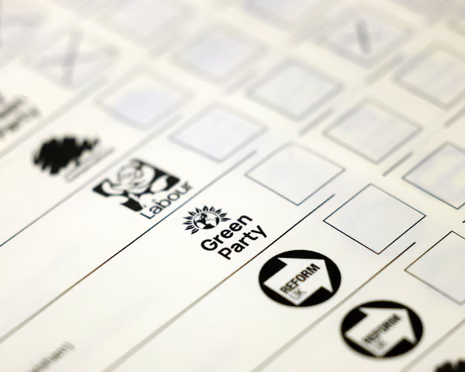
The quiet act of voting often feels like a purely rational decision. Voters enter the polling station with a clear mind and a set plan. They intend to support a specific party or a local community champion. However, recent data suggests that a hidden bias might be influencing the results. This phenomenon is known as the alphabet effect in British local elections. It appears that having a surname starting with A is very beneficial. Candidates with names like Aaron Aaronson often find themselves at the top. This trend was remarkably visible during the most recent English local elections. Figures compiled by the Democracy Club have sparked a brand new debate. Experts are now questioning the fairness of our current ballot paper system.
The analysis looked at wards where parties fielded three different candidates together. In these specific cases, the order on the ballot paper mattered immensely. Candidates listed at the very top finished ahead of their own colleagues. This happened in roughly sixty-five percent of the cases analyzed by experts. Statistically, this represents over two thousand individual instances of alphabetical success. If the system were truly neutral, the distribution would be much flatter. We would expect each candidate to have a roughly equal chance. Instead, those at the bottom of the list faced a struggle. Candidates listed third managed to top the poll only eleven percent. This significant gap suggests that ballot position is a powerful silent force. It could be the deciding factor in very close local council races.
Different political parties seem to experience this effect in varying degrees. The Reform party showed the strongest link between names and final results. Nearly seventy-four percent of their top-listed candidates won the most votes. This suggests their supporters might be more prone to top-down voting patterns. By contrast, those at the bottom of the Reform list struggled hard. Fewer than eight percent of their bottom-listed candidates reached the top spot. The Green party followed closely with the second strongest surname effect recorded. Labour candidates also experienced a noticeable shift based on their initial letters. These findings suggest that the alphabet is a quiet kingmaker in Britain. It operates beneath the surface of traditional campaigning and political party loyalty.
Personal accounts from the front lines of politics confirm these statistical trends. Juliet Zhong stood for the Reform party in Kensington and Chelsea recently. She campaigned alongside her colleagues, Ms. Noble and the local Mr. Walker. Their leaflets featured all three names in a very prominent shared display. Despite this unified effort, the final vote tallies told a different story. Ms. Noble received one hundred and twenty votes from the local residents. Mr. Walker followed closely behind her with a total of one hundred and fifteen. Ms. Zhong trailed further behind them with only one hundred and two. This represents a drop of nearly eighteen percent for the third candidate. She expressed deep frustration that the results made absolutely no logical sense. All campaign materials were designed to present the trio as one unit.
The experience of Juliet Zhong is not an isolated incident in London. She noted that her colleague Henry Woodruff saw the same strange patterns. Mr. Woodruff secured two hundred and eighty-eight votes in his local ward. However, his wardmates managed to secure three hundred and forty-five votes instead. The top scorer in that race was a man named Andrew Barclays. It is surely no coincidence that his name sat at the summit. Ms. Zhong believes the current system creates a very uneven playing field. She argues that candidates should be grouped by their political party instead. This would prevent voters from playing a game of find the surname. It would ensure that every candidate has an equal chance of success. Logic dictates that the party should be the primary focus for voters.
On the other side of the fence, some winners remain quite skeptical. Those with surnames near the top often attribute success to their hard work. Nick Abear is a Green party candidate who recently won his seat. He was elected to the Redhill West and Meadvale ward in Surrey. Mr. Abear stated that he had never really considered the alphabet effect. He believes most people know exactly who they will vote for early. The idea of someone choosing the top line randomly seems quite unlikely. Yet, the final numbers in his ward tell a very familiar story. Mr. Abear did receive more votes than his colleague Elly Heaton. While he credits his campaign, the alphabetical trend remains visible there too. This illustrates the subtle nature of the bias in modern British voting.
Liberal Democrat winner Andy Adams has a very different perspective on things. He has won a seat in Winchester after many years of trying. Mr. Adams admitted that he has known about this effect for decades. He often jokes with polling station staff about his very lucky surname. He tells them he is living proof that the theory is true. Before this victory, he stood for the city council eleven times. He also ran for a seat in Parliament without any initial success. He believes that the effect is most prominent in very large lists. In a close election, even a few votes can change the outcome. He expressed his support for randomising the order of names on ballots. This would remove any unfair advantage provided by a lucky birth name.
The impact of the alphabet effect can be seen across the country. Different councils use different systems for electing their local political representatives. Most urban areas elect three councillors for each individual ward every cycle. This creates long lists of names that can confuse the average voter. Last week, over eight hundred wards had parties fielding three candidates each. This provided a massive dataset for analysts to study the alphabetical trend. When looking at average vote shares, the pattern is remarkably consistent everywhere. Candidates with surnames near the start of the alphabet consistently outperform others. Meanwhile, those with names ending in W or Z tend to underperform. This suggests that the bias is widespread and not limited to regions.
There are many theories as to why this alphabetical bias actually exists. Some experts suggest that voter fatigue plays a very significant role here. When faced with a long list, the human eye focuses naturally. It often settles on the first few names it sees on paper. Other researchers point to the way we process information in lists. We are trained from childhood to read from the top down. This psychological conditioning may follow us into the voting booth as well. In local elections, voters may not know every individual candidate personally. They may recognise the party but not the three specific people listed. In such cases, the person at the top feels like the leader. This subconscious shortcut can lead to a significant boost in total votes.
The call for reform is growing louder among many political activists today. They suggest that the United Kingdom should look at other democratic models. Some countries already use a system where name order is fully randomised. This ensures that no single candidate gets an unfair alphabetical head start. Others propose grouping candidates by party blocks to help clarify the choices. This would make the ballot paper much easier for voters to navigate. It would also remove the pressure to change surnames for political gain. As it stands, the system rewards those born with an A name. This seems like an archaic way to decide our local government leaders. Fairness should be the cornerstone of every single democratic election process.
For now, the advice for aspiring politicians remains somewhat cynical and grim. If your name is Zebedee Zurcher, you might face an uphill battle. You would need to work twice as hard as an Andrew Adams. The data suggests that your position on the ballot is a hurdle. Perhaps a career outside of elective politics would be much more rewarding. Or, as Andy Adams joked, you could consider a very strategic marriage. Changing a surname might be the easiest way to win a seat. Until the laws change, the alphabet will continue to rule the polls. Voters may think they are being objective, but the data disagrees. Our choices are often shaped by the simple order of the list. The English Chronicle will continue to monitor this fascinating political trend.
Related News:
 Green Party Surges Past Labour in Latest UK Poll
 Trump’s UK Ambassador Urges North Sea Drilling to Strengthen US Ties
 French Taxi Driver Cleared in David Lammy Theft Case After Fare Dispute
 Millionaires group urge Reeves to introduce wealth tax to ‘lift kids out of poverty’
 Starmer Faces Growing Dissent as Labour MPs Weigh Leadership Challenge
 Reeves rejects £1bn plea for NHS redundancy payouts
 PM Condemns Leaks, Vows Loyalty to Ministers and Stability
 Major Rent Reform Ends No-Fault Evictions in England
 Peers Flood Assisted Dying Bill with 942 Amendments
 Most Tories Expect to Support a Farage-Led Government
 Labour MP claims devolution bill is ‘blatant discrimination’ against Cornwall
 Millions Face Higher Taxes Under Reeves New Budget
 Starmer Says Labour’s Economic Plan Needs Years to Deliver
 Culture secretary to review Telegraph takeover by Daily Mail owner
 UK Government Borrowing Drops to £11.6bn in December
 Labour Blocks Burnham as Party Rift Deepens Ahead of Polls
 Andy Burnham and the Labour Rift Over Power and Leadership
 Huge mistake: Labour blocks Burnham from byelection bid
 Artificial intelligence will cost jobs, admits Liz Kendall
 Labour targets Greens on drugs in Gorton Denton byelection
 Greens nominate Hannah Spencer for Gorton and Denton byelection
 Mandelson Faces Police Inquiry Over Epstein Leak
 Starmer Condemns ‘Depraved’ Russian Strikes on Ukraine
 Labour Thinktank Row Deepens Over Journalist Probe Claims
 Morgan McSweeney downfall shocks Labour leadership
 Cabinet Secretary Shake-Up Triggers Due Diligence Warning
 Starmer Faces Inquiry Calls Over Thinktank Probe
 Royal Mail Delivery Crisis Deepens Amid Weather Chaos
 UK shelves £110m border project amid trade strain
 Farage Unveils Reform UK Frontbench Team
 California Democrats Vow Trump Reckoning
 Trump Tariffs Threat Spark UK and EU Alarm
 Wales Approves Assisted Dying Bill Consent
 UK EU Trade Reset Gains Public Backing
 Green Party Stuns Labour in Gorton and Denton Byelection
 Corbyn Leads Your Party in Coordinated Left-Flank Strategy
 Labour Together scandal sparks clean break vow
 Asylum Seekers to Work After Year-Long Wait
 Starmer Row as Greens Demand Apology
 Proposed Law Leaves Gap for Children of Convicted Paedophiles
 Gordon Brown urges court for crimes against children
 Starmer Praised for Stance on Trump and Iran Conflict
 Inquiry into HMRC child benefit errors launched by NAO
 NHS Plans to Cut Overseas Workers Labeled Overambitious
 Farage Faces Backlash Over Crypto Cameo Endorsements
 Family Court Reform Promises New Era for UK Families
 Army Probes Apache Flyover at Kid Rock’s Nashville Estate
 Relationship with Trump may be beyond repair, Starmer warned
 Unions Raise Concerns Over Doctors’ Pay Dispute
 UK Government Poised to Revive Stalled Hillsborough Law
 Starmer Faces Commons Test Over Mandelson Scandal
 UK Stands Firm on Falklands Amid US Rift
 Crackdown Backfires on UK Climate Protesters
 Welsh Labour Faces Potential Historic Election Defeat
 Starmer Survives Mandelson Rebellion
 Silent Tracks: Rail Line Without Passengers
 Major test for Labour as polls open in Great Britain
 Labour Members Doubt Starmer Future as Burnham Leads Poll
 Reform UK Faces Crisis as Newly Elected Councillors Resign
 Farage Faces New Questions Over Private Helicopter Use
 Keir Starmer Struggles to Secure His Grip on Downing Street
 NHS Drug Deal Faces Legal Threat Over US Trade Agreement
 Green Party Makerfield Candidate Resigns Over Posts
 UK Welfare: Focus on Jobs Over Benefit Cuts, Says JRF
 Secret Role of UK Security Services in Troubles Amnesty Law
 Starmer Leadership Under Pressure After Setbacks
 The Hidden Crisis Eroding Trust in British Communities
 Deepfake Abuse on X Sparks Safety Concerns for Dissidents
 Modernising the Military: Carns Demands Urgent Procurement Reform
 UK Ministers Lobby Trump Over Under-16s Social Media Ban
 Starmer Resolves to Fight Burnham in Leadership Battle
 Starmer Resigns as Prime Minister Amid Internal Pressure
 MP Warning: Northern Rail Risks Repeating HS2 Failures
 Hollie Ridley to Step Down as Labour General Secretary
 New South Wales Premier Chris Minns Signals Tough Road Ahead for Labor
 Jarvis Urges Burnham to Secure 3.5% Defence Spending
 Farage Warns Sky News Following Financial Inquiry
 Reform UK Finances Face Deep NCA Probe
 Ann Widdecombe, Formidable Political Figure, Dies at 78
 Treasury Reform Urged After Tragic Loss