Published: 13 May 2026. The English Chronicle Desk. The English Chronicle Online.
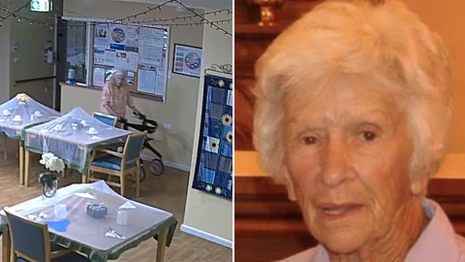
The quiet town of Cooma became the focus of a deeply moving coronial inquest today. This legal proceeding centers on the tragic death of a ninety-five-year-old great-grandmother named Clare Nowland. The court heard emotional testimony from those who witnessed the final moments of her long life. Intensive care paramedic Anna Hofner shared her harrowing memories of the morning in May 2023. She described feeling a sense of absolute shock when a police officer deployed his weapon. The incident occurred at the Yallambee Lodge nursing home located in southern New South Wales. At the time, the elderly resident was struggling with the confusing symptoms of advanced dementia. Police were called to the scene after she took two steak knives from the kitchen. The subsequent use of force has raised many questions about safety for the most vulnerable.
Anna Hofner recounted the specific details of that early morning shift with great clarity today. She told the Queanbeyan coroner’s court that the police response felt entirely out of proportion. The paramedic expected a much more cautious approach to the situation involving the frail woman. She believed the use of a Taser was excessive given the physical state of Nowland. The elderly woman weighed only forty-eight kilograms and moved very slowly with a walking frame. Hofner felt disbelief as the senior constable decided to fire his stun gun that morning. She watched as the barbs struck the chest of the tiny woman in the corridor. The impact caused the grandmother to fall backward and strike her head on the floor. This fall resulted in a serious brain bleed that proved fatal one week later.
The inquest aims to explore why a more peaceful resolution was not achieved that day. Counsel assisting the coroner Sophie Callan SC suggested several alternatives were available to the officers. First responders could have simply waited for the situation to de-escalate on its own terms. They might have closed the door to the room and monitored her through glass. This strategy would have allowed the elderly woman to calm down without any direct physical confrontation. Instead, the situation moved toward a violent conclusion within less than three minutes of arrival. Hofner suggested that a pause point should have been utilized by the emergency services present. A pause point allows responders to discuss a unified plan before taking any drastic actions. This lack of communication may have contributed to the tragic outcome for the Nowland family.
Clare Nowland was remembered in court as an incredibly generous and active member of society. She spent many years performing charitable work and stayed active well into her late eighties. Her interests included playing golf and traveling across the world with her many close friends. Her death has deeply affected the local community and people across the entire Australian nation. The loss of such a vibrant soul in these circumstances caused widespread public outrage recently. Family members sat in the courtroom today to hear the evidence about her final struggle. They seek answers about how a nursing home resident could meet such a violent end. The coroner will now look closely at the training provided to all frontline emergency workers. There is a clear need to improve how authorities interact with patients suffering from dementia.
The court heard that dementia rates are expected to rise significantly over the next two decades. Approximately one in four people over eighty years old currently live with this difficult condition. As the population ages, these types of interactions will likely become much more common for police. Despite this reality, specific training for dementia was not available to officers back in 2023. Neither the police nor the ambulance service had protocols for dealing with cognitive decline cases. Changes were only introduced in 2024 to help responders handle similar incidents in care facilities. These new modules teach workers how to manage patients who may be holding household items. However, for Clare Nowland, these systemic improvements have sadly come far too late to help. This inquest serves as a vital tool for preventing future tragedies in aged care.
The former officer involved in the shooting was identified as Kristian James Samuel White. He was found guilty of manslaughter by a Supreme Court jury in late 2024. The court previously heard a recording of him saying a flippant remark before firing his weapon. He pointed the Taser at the woman for sixty seconds before deciding to discharge it. The thirty-six-year-old was subsequently removed from the police force following his criminal conviction in court. He received a two-year good behaviour bond as part of his sentencing last year. This decision was upheld on appeal despite the gravity of the incident that occurred earlier. White recently abandoned his legal bid to regain his job within the New South Wales police. The focus now shifts from criminal punishment to broader systemic reforms and public safety.
Coroner Teresa O’Sullivan will continue to examine the protocols used by Yallambee Lodge staff members. The inquest will look at how the knives were accessed by a resident with dementia. It is important to understand why the nursing home staff could not manage the situation. The role of the police as primary responders to medical incidents is also under review. Experts believe that mental health or medical teams might be better suited for such calls. A heavy police presence can often escalate the fear felt by a confused elderly patient. The barbs of a Taser are designed to incapacitate strong and often very violent suspects. Applying such force to a ninety-five-year-old woman is seen by many as a failure. The testimony of the paramedic highlights a significant gap in current emergency response tactics.
The community in Cooma continues to mourn the loss of a woman they loved. Her life was defined by service and kindness rather than the way she died. This inquest provides a platform for her story to be told with dignity and respect. It highlights the urgent need for empathy when dealing with those who have lost memory. The legal system must now determine how to better protect the elderly in our care. Every piece of evidence presented this week will help shape new national safety guidelines. Paramedic Anna Hofner finished her testimony by expressing her deep regret over the entire incident. She hopes that her words will lead to lasting change within the Australian police force. The world is watching as this important case reaches its final legal conclusions today. This tragedy must serve as a catalyst for a more compassionate society for everyone.
The coming days will feature more witnesses from the police and the nursing home facility. They will be asked to explain their decisions during those critical two minutes of action. The evidence suggests a series of small mistakes led to a very large catastrophe. Every person in the room that morning had a duty of care to Nowland. The inquest will decide if that duty was breached by the actions of individuals. Public trust in the police depends on the fair and safe use of power. When a grandmother dies in her own home, that trust is naturally shaken quite deeply. The English Chronicle will continue to provide updates as the coroner delivers her findings. For now, the focus remains on the brave testimony of those who spoke up. Their honesty is the first step toward healing for a grieving family and town.
Related News:
 UK, US Medics Barred from Gaza Amid Rising Aid Concerns
 US Accused of Exploitation Over Zambia Health Aid
 New Zealand Covid Response Praised Despite Lingering Scars
 Bangladesh Launches National Drive as Measles Deaths Rise
 Hantavirus Cruise Crisis: Three Evacuated as Ship Docks
 Britons from Hantavirus Ship Face 45-Day Isolation
 Mission to the World’s Edge: A Heroic Rescue in Tristan
 Cruise Chaos as UK Passengers Enter Viral Quarantine
 French Patient Told Hantavirus Was Just Anxiety
 WHO Issues Global Warning Over Rising Hantavirus Cases
 Patients to Test Health at Home to Ease NHS Winter Pressure
 Shouting Works Best to Deter Gulls, UK Study Finds
 Reeves rejects £1bn plea for NHS redundancy payouts
 Senator John Fetterman Hospitalized After Fall from Heart Flare-Up, Keeps Sense of Humor
 New AI tool could cut wasted efforts in organ transplants
 Stroke Patient Mistaken for Drunk, Care Delayed
 Five-Year-Old Dies After Rare Tonsil Surgery Complication
 More Patients Now Contacting GPs Online, Data Shows
 UK Enforces Junk Food Ad Ban Before 9pm
 Google Removes Some AI Health Summaries Over Safety Concerns
 Mandelson apologises over Epstein ties after public scrutiny
 Friedman Uninvited From 2024 Adelaide Writers’ Week
 Spoof “Make America Go Away” Caps Rally Denmark Over Greenland
 Streeting moves on doctor pay to end strike dispute
 UK reports baby formula toxin poisoning cases across the country
 Placenta Accreta Warning as Hunt Urges Action
 ‘Drinking from a Fetid Pond’: Superbug Genes in Lough Neagh
 Diplomacy on the Brink: Pakistan’s Risky Peace Mission
 Teenage Titan: Sooryavanshi Smashes IPL Records
 Palantir Boss Defends NHS Deal Amid Government Break Clause
 Canadian Mother and Daughter Released From ICE Detention
 Unions Raise Concerns Over Doctors’ Pay Dispute
 Reform UK Pledges To Halt Visas Over Reparations Demands
 US and Iran Agree to Two-Week Provisional Ceasefire
 Israel Defies Ceasefire as Lebanon Operations Persist
 Pakistan Brokers Historic Peace Deal Amid Rising Tensions
 Islamabad Hosts Historic Peace Talks Between Iran and USA
 Trump Signals Hope for New Iran Talks as Ceasefire Fades
 Security Alert Near Israeli Embassy as Police Investigate
 Machado Rallies in Madrid as Venezuela Stays Frozen Out
 US-Iran Standoff: Will Trump Deploy Ground Troops?
 Crisis in NHS Surgery Scheduling Hits Patients Hard
 Investigation Into Anti-Trump Motives After Gala Shooting
 Britain’s Health Decline: A Growing National Concern
 Oil Prices Surge Above $120 Amid Iran Blockade Fears
 Trump orders US troop pullout from Germany
 Japan Protests Erupt Over Plans to Revise Constitution
 Barrister Criticises Trial After Suicide Case Verdict
 Cruisers Face Perth Quarantine After Hantavirus Outbreak
 Wes Streeting faces narrow road to Labour members’ favour
 High Stakes in Beijing as Trump and Xi Meet Amid Global Turmoil
 Fear and Betrayal: The Chilling Case of Kouri Richins
 Scepticism and tight security as Beijing braces for Trump
 Philippine Senator Flees After Days Under Senate Siege
 Court Upholds Landmark Win for Transgender Rights
 Fragile Truce Shattered as Violence Escapes Diplomatic Control
 Secrecy Down Under: Albanese Faces FoI Scandal
 Tony Abbott Returns as New Liberal Party President
 Pope Meets Families in Italy Toxic Waste Zone
 Discontent grows around Putin amid war strain
 Record Spending Highlights Growing Crisis In National Health Service
 Teaching Machines Right From Wrong in the Digital Age
 Oman Defies US Pressure Over Strategic Strait of Hormuz
 Ex-CIA Agent Accused of $40m Gold Theft and Fake Spy Unit
 Aukus Deal Facing Fierce Backing and Historic Criticism
 Thai Princess Bajrakitiyabha Passes Away at 47
 Clean Air Initiatives Spark Major Fall in London Hospital Admissions
 Tragic Loss of Australian Sprinter Jemma Stapleton
 Trump Urged to Condemn UFC Fighter Over Obama Slurs
 Russian Tanker Captain Remanded in UK Court After Channel Seizure
 US Military Pacific Boat Strike Kills Three People
 US Battles Auction of Titanic Artifacts
 NHS Urges Investigation For Irregular Periods
 Trump’s Mount Rushmore Speech: A Divisive Anniversary
 Trump Swaps Planes Amid Iran Tensions
 Rotterdam Museum Honours Artist With Peanut Butter Floor
 UK Schools Struggle as Classrooms Top 40C
 Bangkok Nightclub Blaze Claims 30 Lives Amid Negligence Probe
 Yemen Accuses Iran of Violating National Sovereignty
 Houthis Strike Saudi Arabia as Middle East Tensions Rise