Published: July 10, 2026 | The English Chronicle Desk | The English Chronicle Online
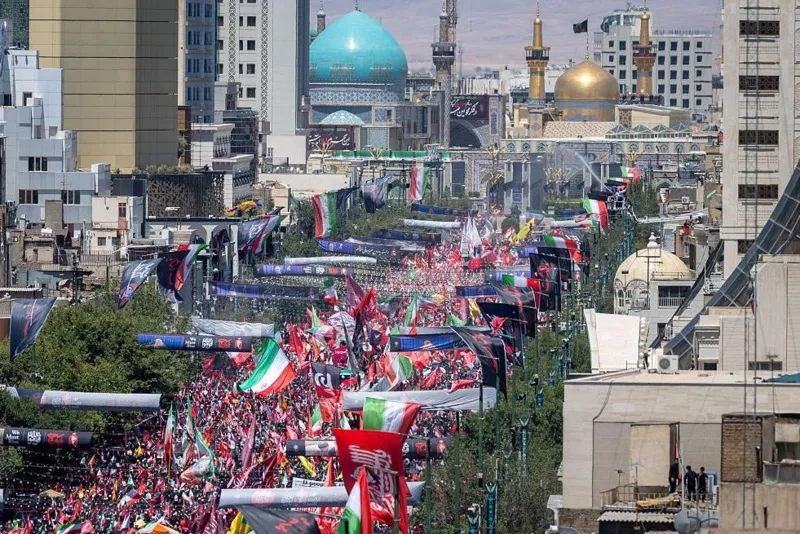
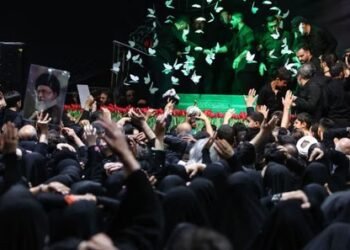
Hundreds of thousands of mourners gathered in the northeastern Iranian city of Mashhad as the country’s late Supreme Leader was laid to rest in one of the largest public funerals in Iran’s modern history. The burial marked the culmination of several days of nationwide mourning, drawing political leaders, religious scholars, military officials and ordinary citizens from across the country.
The funeral ceremony, held under extensive security arrangements, reflected both the political significance of the late leader and the profound influence he held over Iran’s religious and state institutions. Streets surrounding the burial site filled long before the ceremony began, with mourners carrying Iranian flags, religious banners and portraits of the deceased while chanting prayers and paying their final respects.
Authorities had declared a period of national mourning following the leader’s death, with government offices, schools and many businesses either closing or operating on reduced schedules. State television provided continuous live coverage of the funeral procession, broadcasting scenes of vast crowds lining major roads and gathering around key religious sites throughout Mashhad.

The city holds special importance in Iranian religious life because it is home to the Imam Reza shrine, one of the holiest sites in Shia Islam. Many supporters regarded the decision to bury the country’s highest-ranking religious authority there as deeply symbolic, linking the leader’s legacy with one of the nation’s most revered pilgrimage destinations.
The funeral procession moved slowly through densely packed streets as security personnel coordinated crowd control efforts. Thousands of volunteers assisted emergency services by distributing drinking water, providing medical assistance and helping direct pilgrims toward designated gathering areas.
Officials estimated that mourners had travelled from every province of Iran, with additional delegations arriving from neighbouring countries and other parts of the Middle East. Roads leading into Mashhad experienced heavy congestion as buses, private vehicles and organised convoys transported people wishing to attend the final farewell.
Senior government figures, cabinet ministers, members of parliament and commanders from Iran’s armed forces participated in the official funeral ceremonies. Representatives from various religious institutions joined prayers before the burial, while foreign delegations from several allied countries also attended to offer condolences on behalf of their governments.
In speeches delivered during the ceremonies, senior officials praised the late Supreme Leader’s decades of public service and described him as a central figure in shaping Iran’s political and religious direction. Speakers highlighted his role in overseeing major domestic policies, regional diplomacy and national security during a period marked by significant geopolitical tensions and economic challenges.
Religious scholars participating in the funeral emphasised themes of unity, perseverance and national solidarity, encouraging citizens to remain committed to the country’s constitutional and religious institutions during the transition period.
The funeral comes at a politically significant moment for Iran as constitutional procedures continue to determine the country’s future leadership. Attention has increasingly shifted toward the institutions responsible for selecting the next Supreme Leader, a process expected to have lasting implications for Iran’s domestic governance and international relations.
Political analysts note that the office of Supreme Leader occupies a unique position within Iran’s constitutional system, exercising broad authority over strategic policy, defence, the judiciary and major state institutions. As a result, the leadership transition is being closely monitored both within Iran and internationally.
Security remained exceptionally tight throughout the funeral events.
Police, military personnel and emergency responders maintained a visible presence across Mashhad, while authorities implemented traffic restrictions and additional screening measures around key religious and government sites. Officials said the enhanced security arrangements were designed to ensure public safety given the unprecedented number of attendees.
Despite the enormous crowds, state authorities reported that the ceremonies proceeded largely without major incidents. Medical teams remained on standby throughout the day to assist mourners affected by heat, exhaustion or overcrowding.
Outside Iran, governments around the world continued issuing statements reflecting differing assessments of the late leader’s legacy.
Several regional allies praised his leadership and expressed condolences to the Iranian people, describing him as an influential figure in Middle Eastern affairs. Other governments acknowledged his passing while reiterating their commitment to maintaining diplomatic engagement with Iran during the leadership transition.
International observers say the coming weeks will be closely watched as Tehran manages both the constitutional succession process and ongoing regional challenges. Iran remains an important actor in Middle Eastern politics, with its leadership decisions expected to influence issues ranging from regional security to diplomatic negotiations and economic policy.
Economists also point to the importance of political continuity for domestic markets. Investors and businesses will be monitoring signals from Iranian authorities regarding economic management, sanctions policy and international trade as the transition unfolds.
Within Iran, many mourners interviewed by domestic media described the funeral as a historic occasion.
Some travelled hundreds of kilometres to attend, saying they wished to personally honour a leader they believed had guided the country through decades of political change and international pressure. Others viewed their presence as an expression of national unity during a period of uncertainty.

Religious ceremonies are expected to continue across Iran in the coming days, with mosques and community centres hosting memorial gatherings and prayers in memory of the late Supreme Leader.
The government has indicated that commemorative events will be held in multiple cities before the official mourning period concludes.
As the burial in Mashhad brings one chapter of Iran’s political history to a close, attention now turns toward the country’s next phase of leadership. The transition will not only determine the future direction of Iran’s highest political and religious office but may also shape the nation’s domestic priorities and international engagement for years to come.
For many Iranians gathered in Mashhad, however, the day was devoted less to political speculation than to remembrance. The vast crowds, solemn prayers and carefully choreographed ceremonies underscored the significance of the moment, marking the end of an era that has left a lasting imprint on the Islamic Republic.
Related News:
 US Urges Iran to Make Deal as Military Presence Rises
 Trump’s Foreign Policy Dilemma Laid Bare by Iran Tensions
 Hamas Holds Vote to Choose New Interim Leader, Source Tells BBC
 US Partially Evacuates Beirut Embassy Amid Rising Iran Tensions
 Middle East Flights Halted After Iran Strikes
 Israel and Hezbollah Exchange Fire as Conflict Worsens
 Iran’s Regime Still Intact — Coming Days Will Test Its Survival
 Allies of US in the Gulf Bear Brunt of Iran Attacks
 Hopes and Fears as US Iranians Take to Streets After Toppling of Supreme Leader
 Retaliations Continue on Day Two of US-Israel Attacks on Iran
 At Least 153 Dead After Reported Strike on School, Iran Says
 At Least 153 Dead After Reported Strike on School, Iran Says
 ‘It’s Eerie’ – Dubai on Edge as City Comes Under Attack
 BBC Reports from Beit Shemesh After Deadly Iranian Missile Strike
 Iran, the US, and a World Cup That Starts in Three Months
 Cooper: Joining US Strikes on Iran ‘Not in Britain’s Interest’
 Trump’s Iran Endgame Unclear After Mixed Messaging on War Aims
 Melania Trump Chairs UN Security Council Meeting on Children in Conflict Amid Iran Strikes
 Rubio Responds to Reported Strike on Iranian School
 Scots Caught Up in Middle East Crisis ‘Just Waiting for the Next Explosion’
 Why the US and Israel attacked Iran
 Israel Launches Fresh Strikes on Tehran & Beirut; US Warns “Hardest Hits” Ahead
 Three Days In, This War’s End Is Still Unclear
 US Has ‘Enough Weapons for Forever War,’ Trump Says
 Israel Strikes Lebanon After Hezbollah Rocket Fire as Iran Conflict Widens
 Israel’s New Airstrikes on Tehran & Beirut After US Embassy in Riyadh Is Hit
 Israel Launches Ground Invasion of Lebanon Amid Widening Middle East War
 Iranian Rockets Are Testing the Resolve of Dubai’s Instagram Stars
 US Embassy in Riyadh Hit by Iranian Drones as Israeli Troops Enter Southern Lebanon
 US Senate Backs Trump War Powers Amid Iran Missile Barrage
 Macron Finds ‘Freedom Fries’ Redemption in Iran Crisis
 UK Prepares Aircraft Carrier for Middle East Crisis
 Mojtaba Khamenei Chosen as Iran’s New Supreme Leader
 Tehran Oil Depot Strikes Darken City With Toxic Smoke
 Who Is Mojtaba Khamenei, Iran’s New Supreme Leader?
 Nine Days of Strikes Reshape the Middle East
 Putin Orders Evacuation at Iran Nuclear Plant Amid ‘Catastrophe’ Fears
 Mojtaba Khamenei Supporters Rally as Iranians Fear Repression
 Iran’s New Leader Faces Existential Test
 Video Analysis Suggests US Missile Hit Base Near Iran School
 Iran Rejects Ceasefire, Warns Trump With Chilling Message
 Iran Defiance Grows Amid US-Israel War Pressure
 Hormuz Crisis Sparks Global Oil Market Fears
 Iranian Exile Factions Seek US Backing for Iran’s Future
 Injured Mojtaba Khamenei Elevated as Iran Leader
 Trump Iran War Stance Hardens as Conflict Widens
 Israel Says Iran Security Chief Larijani ‘Killed’
 Ghalibaf Iran: Survivor Emerges in Shifting Power Game
 Pope Leo Urges Peace in First Easter Mass Address
 Archbishop Prays for Middle East Peace in First Easter Sermon
 Iran Says Intelligence Chief Killed in US-Israeli Strike as Trump Threatens ‘Hell’ Without Deal
 Iran Crisis Tests Trump’s Global Leadership
 Pontifical Poise: Pope Francis ‘Has No Fear’ of Trump Following Scathing Rhetorical Exchange
 Italian PM Condemns Ally Trump Over ‘Unacceptable’ Pope Criticism
 Weekly Quiz: When the White House Met the Vatican
 ‘Hands Off Africa!’: Pope Leo XIV Delivers Scathing Indictment of ‘New Colonialism’
 The Cost of a Classroom: The Boy Who Lost a Hand for a Pen
 Sacred Site Desecration: Global Outrage as IDF Confirms Soldier Smashed Jesus Statue
 Trump likens US Navy actions to ‘pirates’
 Global order shifts amid Trump-era turmoil
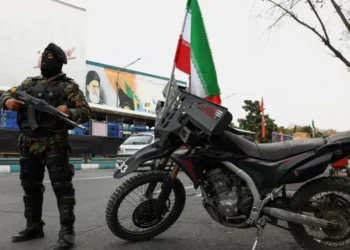 “The Silence of the Victor”: Why Iranians Fear a More Ruthless, Entrenched Regime Post-War
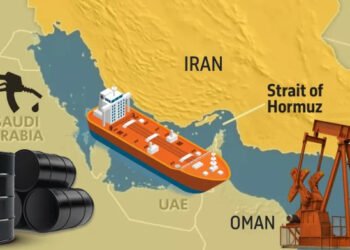 Middle East Crisis Escalates as Oil Routes Shake Markets
 “A Crisis for Us All”: Starmer Summons National Leaders to Confront ‘Poison’ of Antisemitism
 “Shadows of the State”: Counter-Terrorism Probe Launched into Tower Hamlets Synagogue Arson
 “The Pakistan Paradox”: Trump’s Peace Hopes Clouded by Blockades and ‘Red Line’ Caveats
 “The 14-Point Ultimatum”: Iran Reviews US Peace Proposal as Trump Predicts War Will Be ‘Over Quickly’
 Tensions Emerge in Netanyahu-Trump Alliance
 Former ICC prosecutor condemns US sanctions
 Trump Claims Iran Peace Deal Near Completion
 Trump-Netanyahu Call Fuels Iran Talk Crisis
 Israeli Strikes Kill 11 in Gaza City
 Ex-Wife of Dubai Royal Relative Held in Custody
 Israel Strikes Iran After Missile Attack
 Huge Crowds Gather for Pope’s Open-Air Mass
 Millions Gather for Khamenei’s Six-Day State Funeral
 Punjab’s Anti-Sacrilege Law Triggers Political Debate
 Australian Families Leave Syrian Camp for Home
 ‘I Would Scream in My Sleep’: Alawite Women from Syria Tell of Kidnap and Rape
 “An Endurance Test for the Mind”: British Couple Sentenced to 10 Years in Tehran
 “The Pivot to Pakistan”: Trump Pauses ‘Project Freedom’ in Hormuz Amid Iran Deal Hopes