Published: 15 July 2026 | The English Chronicle Desk | The English Chronicle Online
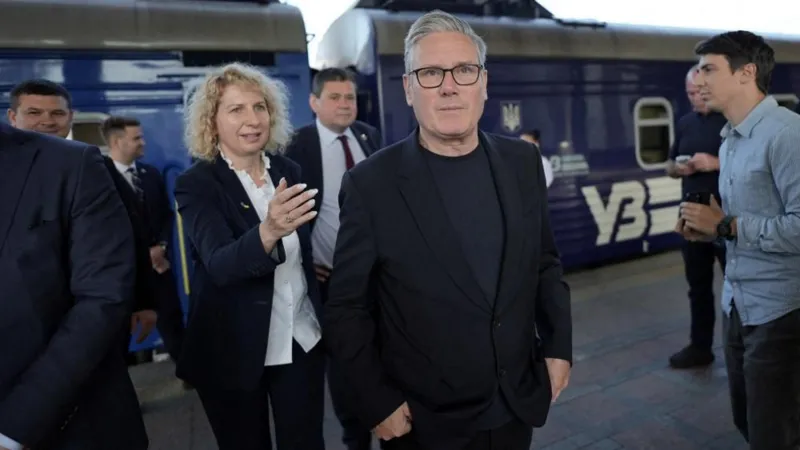
British Prime Minister Sir Keir Starmer has reaffirmed the United Kingdom’s unwavering commitment to Ukraine, pledging what he described as “cast-iron support” during his final overseas visit before leaving office.
Speaking alongside Ukrainian leaders, Starmer stressed that Britain’s backing for Ukraine would remain steadfast despite political changes at home, underscoring the UK’s continued commitment to helping Kyiv defend its sovereignty and rebuild after years of conflict.
The visit, widely viewed as a symbolic conclusion to his tenure as prime minister, focused on military cooperation, humanitarian assistance, economic recovery and long-term security partnerships between the two countries.
Starmer’s visit to Ukraine carries significant political and diplomatic symbolism.
As his last official foreign engagement before stepping down, the trip was intended to reinforce Britain’s long-standing position that support for Ukraine should remain consistent regardless of changes in government.
Addressing officials and military personnel, Starmer praised the resilience of the Ukrainian people and acknowledged the sacrifices made since Russia’s full-scale invasion.

He said Britain would continue standing with Ukraine “for as long as it takes” to achieve a secure and lasting peace.
The prime minister added that defending Ukraine also meant defending the broader principles of international law, national sovereignty and European security.
A central focus of the visit was Britain’s continued military assistance.
Since the outbreak of the war, the UK has supplied advanced weaponry, military training, intelligence support and financial assistance to Ukraine.
British officials indicated that existing defence cooperation programmes would continue under previously agreed arrangements, including the training of Ukrainian troops and support for defence capability development.
Starmer reiterated that helping Ukraine strengthen its ability to defend itself remained essential to regional stability.
He also praised British armed forces personnel involved in training missions and logistical support.
Beyond military cooperation, the prime minister highlighted Britain’s contribution to humanitarian relief and reconstruction efforts.
The UK has provided funding for emergency medical services, infrastructure repairs, education, housing and humanitarian aid aimed at communities affected by the conflict.
During meetings with Ukrainian officials, discussions also focused on rebuilding damaged infrastructure and encouraging future investment once security conditions improve.
British businesses are expected to play an important role in reconstruction projects, particularly in engineering, energy and financial services.
Starmer used the visit to encourage continued international unity in supporting Ukraine.
He stressed that sustained cooperation among European partners, NATO allies and other international supporters remains vital to ensuring long-term security across the continent.
The prime minister warned that reducing assistance prematurely could undermine progress achieved on the battlefield and weaken broader international efforts to deter aggression.
He called for continued diplomatic coordination alongside military and economic support.
Ukrainian leaders welcomed Starmer’s visit, describing Britain’s support as one of the country’s most consistent international partnerships.
Officials expressed gratitude for British military assistance, humanitarian aid and diplomatic backing throughout the conflict.
They also emphasised the importance of maintaining close cooperation with future British governments regardless of domestic political developments.
The meetings reaffirmed ongoing collaboration across defence, intelligence, economic recovery and reconstruction planning.
The United Kingdom has remained among Ukraine’s strongest international supporters since Russia launched its full-scale invasion.
Successive aid packages have included air defence systems, long-range missiles, armoured vehicles, ammunition, humanitarian funding and economic assistance.
Thousands of Ukrainian soldiers have also received military training under programmes led by the British armed forces.
In addition to defence support, Britain has imposed sanctions targeting Russian individuals, financial institutions and key sectors of the Russian economy.
British officials argue these measures have formed part of a coordinated international effort to increase pressure on Moscow.
Analysts believe support for Ukraine will remain one of the defining aspects of Starmer’s foreign policy record.
Throughout his time in office, the government consistently argued that European security depended on resisting Russian aggression and supporting Ukraine’s independence.
Political observers note that Britain’s leadership role helped strengthen cooperation among NATO allies and other international partners.
The final visit therefore serves not only as a diplomatic engagement but also as a reflection on one of the central themes of Starmer’s premiership.
Despite continued international backing, Ukraine continues to face major military, economic and humanitarian challenges.
Large areas of infrastructure have suffered extensive damage, while millions of people remain displaced by the conflict.
International financial institutions estimate that reconstruction will require hundreds of billions of dollars over many years.
Western governments continue discussing how long-term assistance can be coordinated to support Ukraine’s recovery while maintaining regional security.

Although Starmer’s tenure as prime minister is drawing to a close, officials from both countries expressed confidence that the UK-Ukraine partnership will continue under future leadership.
Existing agreements covering defence cooperation, economic support and humanitarian assistance are expected to remain in place.
Diplomatic experts say Britain’s relationship with Ukraine has evolved into a long-term strategic partnership extending well beyond the immediate conflict.
As Sir Keir Starmer concluded his final overseas mission as prime minister, his message remained clear: Britain’s support for Ukraine, he insisted, is not tied to one leader or one government but to a broader commitment to defending democracy, sovereignty and international stability.
Whether through military assistance, humanitarian aid or diplomatic engagement, the United Kingdom signalled that it intends to remain one of Ukraine’s closest partners as the country continues navigating one of the most challenging periods in its modern history.
Related News:
 UK Will Allow US to Use Bases to Strike Iranian Missile Sites, PM Says
 Cooper: Joining US Strikes on Iran ‘Not in Britain’s Interest’
 UK and France Agree Troop Deployment Plan for Ukraine
 Emails Show Epstein Funded Mandelson’s Husband After Jail
 Sydney Protest Pepper Spray Clash During Herzog Visit
 Russia Rages “Now Is the Time to Strike” as UK Faces Fresh WW3 Nuclear Threats
 Starmer Weighs Fast-Tracking Defence Boost
 US Says It “Supports” UK Chagos Islands Deal
 Britain’s Reliance on China Makes Us ‘Weak Link in the West’, Warn MPs
 UK Has Not Given US Permission to Use RAF Bases for Iran Strikes
 Queen says speechless after meeting Gisèle Pelicot over powerful memoir
 RAF Responding to Suspected Drone Strike at UK Cyprus Base
 Trump’s Iran Endgame Unclear After Mixed Messaging on War Aims
 Minister Meets Crews Who Will ‘Take Out’ Iranian Drones
 UK Prepares Aircraft Carrier for Middle East Crisis
 UK–US Tensions Ease as Starmer and Trump Hold First Call Since Iran Row
 Yvette Cooper: UK Must Follow Principles, Not US Pressure
 ‘Blue Helmets’ in the Crossfire: Initial Probe Points to Roadside Bomb in Killing of UN Peacekeepers
 Trump orders US troop pullout from Germany
 Ukraine strikes Tuapse as oil disaster worsens
 “The Boy in the Bay”: German Airman to Receive Permanent Headstone 86 Years After Somerset Crash
 “The Anchors Up”: Hull’s Affiliated Frigate HMS Iron Duke ‘Quietly Withdrawn’ From Service
 Putin Declares Russia Victory at Scaled Victory Day Parade
 Fear and Betrayal: The Chilling Case of Kouri Richins
 Tragedy in the Maldives: Inside the Deep Sea Rescue
 US Ebola Case Sparks Urgent Global Screening Measures
 “A Diplomatic Vacuum”: Sudden Resignation of Deputy British Ambassador to the US Rocks Whitehall
 Zelenskyy warns over Oreshnik threat as Kyiv hit
 Discontent grows around Putin amid war strain
 UK Faces Most Dangerous Era, Military Chief Warns
 Royal Navy Mourns Devastating Helicopter Loss
 UK Faces Pressure Over Red Arrows Future
 Israel-Iran Escalation May Strengthen Tehran’s Position in Future Negotiations
 Collapse of Franco-German Fighter Jet Project Raises Questions Over Europe’s Defence Future
 Russian Frigate Fires Warning Shots Near British Yacht
 UK Fighter Jets Intercept Russian Aircraft Over Norwegian Sea
 UK Must Act with Courage and Clarity on Israel-Palestine Conflict, Says Foreign Affairs Committee Report
 Radioactive Leak at UK’s Nuclear Warhead Base Sparks Outcry Over Safety and Secrecy
 Terence Stamp, ’60s British Film Legend and Star of Superman, Dies at 87
 Is the UK Ready to Put Boots on the Ground in Ukraine? Assessing Military Capacity and Challenges
 I’m a Celebrity 2025 line-up revealed: Osbourne joins
 Palace May Restore Hyphen to Andrew Mountbatten-Windsor’s Name
 Royal Navy Shadows Russian Warships Entering the Channel
 Gulf states warn Trump Iran strikes risk wider Middle East war
 Shinzo Abe’s killer receives life sentence in Japan
 UK New Car Discounts Near £6,000 as Prices Are Slashed
 Snow and Rain Warnings as Cold Snap Continues in the UK
 Indian University Kicked Out of AI Summit for Claiming Chinese Robot Dog as Its Own Invention
 Australian PM Says Former Prince Andrew Has Suffered ‘Extraordinary Fall’ but That Won’t Prompt Republic Referendum
 Farage Chagos Islands Row Sparks Fury
 Storm Hernando: Edinburgh Airport Flights Cancelled in US Travel Chaos
 Drugs, Denial, Stigma: Fiji’s HIV Crisis Hits Children
 ‘We’ve been paying for happy endings for Andrew for years’: inside the royal disgrace, biographer says
 Brit ‘in Good Spirits’ Amid Dubai Missile Attacks, Stranded but Safe
 Trump rebukes Starmer over Iran strikes
 Australia Imposes Sudden Travel Ban on Iranian Visitors
 UK Forces Ready to Seize Russian Shadow Fleet Vessels
 Net Closes on Lyons Clan: Partner Arrested in Dubai as Crime Boss Snared in Bali
 Chain of Fire: US Bunker Busters Strike Major Iranian Ammo Depot in Isfahan
 ‘The Cost of Living’: Asia’s Migrant Workers Debate if Gulf Jobs are Worth the Risk of War
 Open Justice Prevails as Court Rejects Bondi Gunman’s Family Anonymity Bid
 The Banbridge Rescue: 300 Sheep Saved from Massive Hay Shed Inferno
 Is Britain Ready? Experts Warn of ‘Bizarre’ Military Delay
 Prominent Voices Challenge Palestine Action Ban
 “Three-Wheeled Triumph”: Mayor of Erewash Completes 2,000-Mile European Charity Run
 “An Endurance Test for the Mind”: British Couple Sentenced to 10 Years in Tehran
 Premier League drama defines crucial weekend
 “The Pivot to Pakistan”: Trump Pauses ‘Project Freedom’ in Hormuz Amid Iran Deal Hopes
 “The New Silk Road”: India and Vietnam Forge Strategic Maritime Alliance to Counter Regional Volatility
 “The Local Gavel”: Polls Open Across Hampshire and Isle of Wight in Delayed ‘Milestone’ Vote
 “The Blue Light Intersection”: Seventeen-Year-Old Critically Injured in ‘Nasty’ Police Pursuit Crash
 “The Fractured Frontier”: Sir John Curtice Declares the ‘Sacred’ Two-Party Era Over After ‘Milestone’ Results
 US and Mexico Face Heatwave as Floods Batter South Africa
 Putin Signals War End as Russian Momentum Stalls
 Philippine Senator Flees After Days Under Senate Siege
 “A Historic Tumble”: Lost 1930s Film Reel Reveals the Untamed Origins of Gloucestershire’s Legendary Cheese-Rolling
 Son Urges Iran Prisoner Exchange for Jailed British Pair
 US Launches Strikes on Iran After Military Helicopter Downed Near Strait of Hormuz
 Trump’s Iran Legacy Hangs on Tehran Deal
 What Burnham in Number 10 Means for the Future of Britain