Published: 6 July 2026 | The English Chronicle Desk | The English Chronicle Online
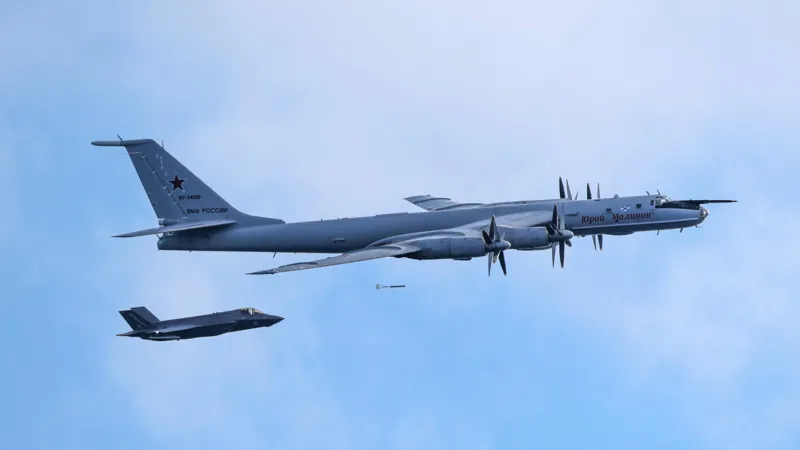
Royal Air Force fighter jets were scrambled to intercept a Russian military aircraft flying over the Norwegian Sea, in the latest demonstration of NATO’s air policing operations as tensions between Russia and the Western alliance remain elevated.
The interception, carried out by UK aircraft operating as part of NATO’s collective air defence mission, did not involve any hostile engagement. Instead, it formed part of routine procedures designed to identify, monitor and escort military aircraft approaching alliance-monitored airspace.
The incident highlights the increasingly frequent encounters between NATO air forces and Russian military aircraft since the outbreak of the war in Ukraine, with allied nations maintaining heightened readiness across Europe’s northern and eastern regions.
According to defence officials, the RAF aircraft were launched after radar systems detected a Russian military plane operating over the Norwegian Sea. While the aircraft remained in international airspace, it was flying close enough to NATO-monitored areas to require visual identification and continued observation.

Military officials explained that aircraft involved in such missions are typically intercepted to establish their identity, determine their flight path and ensure they do not pose a threat to allied territory or civilian air traffic.
The Royal Air Force confirmed that the mission was completed safely and professionally, with the British fighter jets escorting the Russian aircraft until it moved away from the area of operational interest.
No weapons were fired during the encounter, and there were no reports of unsafe manoeuvres by either side.
Defence analysts note that such interceptions have become a routine feature of NATO’s air policing mission.
Russian military aircraft frequently conduct long-range patrols over international waters in the North Atlantic, Arctic and Baltic regions. Although these flights are permitted under international law, NATO members routinely respond whenever unidentified or military aircraft approach areas where alliance air forces maintain responsibility for monitoring airspace.
The Norwegian Sea occupies a strategically important position between the United Kingdom, Norway and the Arctic, making it a key region for military aviation and naval operations.
The area serves as a gateway between the North Atlantic and the Arctic Ocean and is regularly used by both NATO and Russian forces conducting surveillance, training and strategic patrols.
Since Russia’s full-scale invasion of Ukraine in 2022, military activity in northern Europe has increased significantly.
NATO has expanded air policing operations, strengthened surveillance capabilities and increased the presence of allied aircraft across several member states, particularly those bordering Russia or located near strategically important maritime routes.
The United Kingdom has played a prominent role in these efforts.
RAF fighter squadrons regularly participate in NATO’s Quick Reaction Alert system, maintaining aircraft and crews at high readiness to respond rapidly whenever unidentified or potentially concerning aircraft are detected.
These aircraft can be airborne within minutes of receiving an alert, allowing them to identify approaching military planes before they enter or closely approach NATO-controlled airspace.
The mission over the Norwegian Sea demonstrates the alliance’s emphasis on readiness rather than confrontation.
Military officials stress that interceptions are defensive operations intended to maintain situational awareness rather than provoke conflict.
Pilots are trained to operate professionally during such encounters, following internationally recognised aviation procedures designed to reduce the risk of misunderstanding or accidental escalation.
Experts in international security note that Russian military aircraft often fly without transmitting certain civilian identification signals while operating in international airspace.
Although this does not necessarily violate international aviation rules for military flights, it prompts NATO to launch identification missions to ensure civilian air traffic remains protected and military activity is properly monitored.
The interception also reflects the growing strategic importance of the Arctic and High North.
Climate change, evolving shipping routes and increased military activity have elevated the geopolitical significance of northern waters, encouraging both NATO and Russia to strengthen their presence in the region.
Norway, a founding NATO member sharing a border with Russia, has become an increasingly important location for alliance surveillance and defence planning.
The United Kingdom has similarly expanded defence cooperation with Nordic allies, participating in joint exercises and strengthening operational coordination across northern Europe.
Military cooperation between Britain, Norway, Sweden and Finland has grown considerably following Finland’s accession to NATO and Sweden’s subsequent membership of the alliance.
Defence planners argue that integrated operations enhance regional security while improving the ability of allied forces to respond quickly to emerging threats.
The latest interception comes amid continuing tensions between Russia and Western governments over the conflict in Ukraine.
Although direct military confrontation between NATO and Russia has been avoided, both sides have significantly increased military patrols, exercises and surveillance operations across Europe.
As a result, encounters between military aircraft have become more frequent than at any time since the end of the Cold War.
Security experts emphasise that such interactions require disciplined communication and strict adherence to professional aviation standards.
Maintaining safe distances, avoiding provocative manoeuvres and following established operational procedures help minimise the risk of accidents or unintended escalation.
NATO officials have repeatedly stated that the alliance remains committed to protecting member states while avoiding unnecessary confrontation.
The organisation describes its air policing missions as defensive, transparent and fully consistent with international law.
Similarly, defence authorities stress that Russian aircraft operating in international airspace retain the legal right to do so, provided they comply with applicable international regulations.
The role of NATO aircraft is therefore to monitor rather than interfere with lawful military activity.
Defence analysts believe air interceptions will likely remain a regular occurrence for the foreseeable future.
The ongoing conflict in Ukraine, combined with heightened geopolitical rivalry and increased military deployments, has created an environment in which aerial monitoring has become an essential component of European security.
Modern fighter aircraft are equipped with advanced radar systems, electronic sensors and secure communications, allowing pilots to identify and track aircraft at considerable distances.
These technological capabilities enable rapid responses while reducing uncertainty during military encounters.
For the Royal Air Force, participation in NATO’s air policing mission also provides valuable operational experience.
Regular deployments strengthen interoperability with allied air forces and ensure crews remain prepared for a wide range of security scenarios.
The mission over the Norwegian Sea underscores Britain’s continuing commitment to collective defence under NATO’s framework.

As regional security challenges continue to evolve, the alliance is expected to maintain a strong air presence across northern Europe, combining surveillance, rapid response capabilities and close coordination among member states.
While the latest interception ended without incident, it serves as another reminder of the heightened military activity surrounding Europe’s northern frontier.
With strategic competition showing little sign of easing, NATO air policing missions are likely to remain a central element of the alliance’s efforts to safeguard allied airspace, reassure member states and preserve stability in one of the world’s most strategically significant regions.
Related News:
 Starmer Weighs Fast-Tracking Defence Boost
 Macron Rebuked in Franco-German Defence Row
 UK Will Allow US to Use Bases to Strike Iranian Missile Sites, PM Says
 Cooper: Joining US Strikes on Iran ‘Not in Britain’s Interest’
 Minister Meets Crews Who Will ‘Take Out’ Iranian Drones
 UK Prepares Aircraft Carrier for Middle East Crisis
 UK–US Tensions Ease as Starmer and Trump Hold First Call Since Iran Row
 Ceasefire Standoff Deepens in Ukraine War
 Putin Declares Russia Victory at Scaled Victory Day Parade
 Zelenskyy warns over Oreshnik threat as Kyiv hit
 Deadly Russian Air Raids Strike Across Ukraine
 UK Faces Most Dangerous Era, Military Chief Warns
 Royal Navy Mourns Devastating Helicopter Loss
 UK Faces Pressure Over Red Arrows Future
 UK Must Act with Courage and Clarity on Israel-Palestine Conflict, Says Foreign Affairs Committee Report
 Radioactive Leak at UK’s Nuclear Warhead Base Sparks Outcry Over Safety and Secrecy
 Mutual Inconvenience: Why Alaska Was Chosen for the Trump-Putin Summit on Ukraine
 Is the UK Ready to Put Boots on the Ground in Ukraine? Assessing Military Capacity and Challenges
 Protests Expected as Israeli Arms Firms Join Global Defence Trade Fair in London
 Thousands Gather in London to Protest Donald Trump’s Second UK State Visit
 Trump Urges UK to “Call Out the Military” to Secure Borders Amid State Visit
 UK Fighter Jet Purchase Could Breach Nuclear Treaty, Warns CND
 A Third of EU Citizens in UK Report Discrimination by Public Bodies Post-Brexit
 Public Trust in SNP Hits Historic Low Amid NHS Concerns
 Johnson Suggests Mandelson Linked to China Spy Controversy
 Witness statements reveal the CPS China spy row collapse in the UK
 Rachel Reeves signals welfare reform ahead of key budget
 Kosovo agrees to host Britain’s refused asylum seekers
 British Woman in Iran ‘Losing Hope’ Amid Ongoing Detention
 Johnson Approved China’s London ‘Super-Embassy’ in 2018
 BBC Journalist Held and Interrogated in Vietnam
 EU weighs response amid Greenland tariff crisis with Trump
 EU Says US Ties Have Suffered ‘Big Blow’ After Greenland Crisis
 Starmer China visit raises human rights pressure on Beijing
 Facing a Demographic Catastrophe, Ukraine Is Paying for Troops to Freeze Their Sperm
 Trump and Chagos Deal Rift Over Iran Strikes
 How Much Could Andrew’s Arrest Hurt the Royal Family?
 Australian PM Says Former Prince Andrew Has Suffered ‘Extraordinary Fall’ but That Won’t Prompt Republic Referendum
 Musk Cuts Starlink Access for Russian Forces – Giving Ukraine an Edge at the Front
 Farage Chagos Islands Row Sparks Fury
 Trump Tariffs Threat Spark UK and EU Alarm
 Spain Declassifies Files on 1981 Attempted Coup in Effort to Dispel Conspiracy Theories
 RAF Responding to Suspected Drone Strike at UK Cyprus Base
 Sarwar Rejects Father’s Tribute to Iran’s Supreme Leader
 Trump Rebukes Starmer Over Iran Strikes Row
 Macron Finds ‘Freedom Fries’ Redemption in Iran Crisis
 Finland Plans to Lift Decades‑Old Ban on Hosting Nuclear Weapons
 Labour Faces Backlash Over Conscription Warning
 Ukraine War Becomes Flashpoint in Hungarian Election
 Yvette Cooper: UK Must Follow Principles, Not US Pressure
 UK Forces Ready to Seize Russian Shadow Fleet Vessels
 ‘The Soul of Spain’: Politicians Clash Over Renewed Push to Move Picasso’s Guernica
 Is Britain Ready? Experts Warn of ‘Bizarre’ Military Delay
 MoD Has Lost Track of Veteran Recall List, Says Adviser
 Border Breakthrough: UK and France Finalize New £662m Small Boats Deal
 The “Charles Charm” Offensive: Did the Royals Find Their Mojo in D.C.?
 The $126 Spike: Oil Hits Four-Year High as Trump Weighs “Powerful” New Iran Strikes
 “An Endurance Test for the Mind”: British Couple Sentenced to 10 Years in Tehran
 Ukraine strikes Tuapse as oil disaster worsens
 Asylum deal sparks fears over Syria deportations
 “The Pivot to Pakistan”: Trump Pauses ‘Project Freedom’ in Hormuz Amid Iran Deal Hopes
 “The Strait Scramble”: Inside Trump’s ‘Project Freedom’ and the Hormuz Naval Escort
 “The New Silk Road”: India and Vietnam Forge Strategic Maritime Alliance to Counter Regional Volatility
 “Community Shield”: Met Police Deploy Specialist 100-Officer Team to Guard London’s Jewish Postcodes
 “The Cost of Conviction”: Palestine Action Activists Found Guilty Over ‘Clinical’ Factory Damage
 “The Local Gavel”: Polls Open Across Hampshire and Isle of Wight in Delayed ‘Milestone’ Vote
 France Faces Record Presidential Crowded Race Amid Far-Right Surge
 Discontent grows around Putin amid war strain
 Farage and Reform UK Reshape British Politics
 Starmer Leadership Under Pressure After Setbacks
 Zelensky Invites Putin to Direct Peace Talks
 European Allies Set Peace Terms for Ukraine
 Drone Attacks Overshadow Russia Economic Forum
 Son Urges Iran Prisoner Exchange for Jailed British Pair

 Russian Artist and Kremlin Critic Shot Dead in Poland
 EU and UK Set July Date for Critical Post-Brexit Summit
 UK Government Cancels Higher Education Programme for Women and Girls
 Le Pen Appeal Verdict Could Reshape France’s Political Future
 Healey Says Treasury Undervalues Defence Spending