Published: 20 September — The English Chronicle Desk | The English Chronicle Online
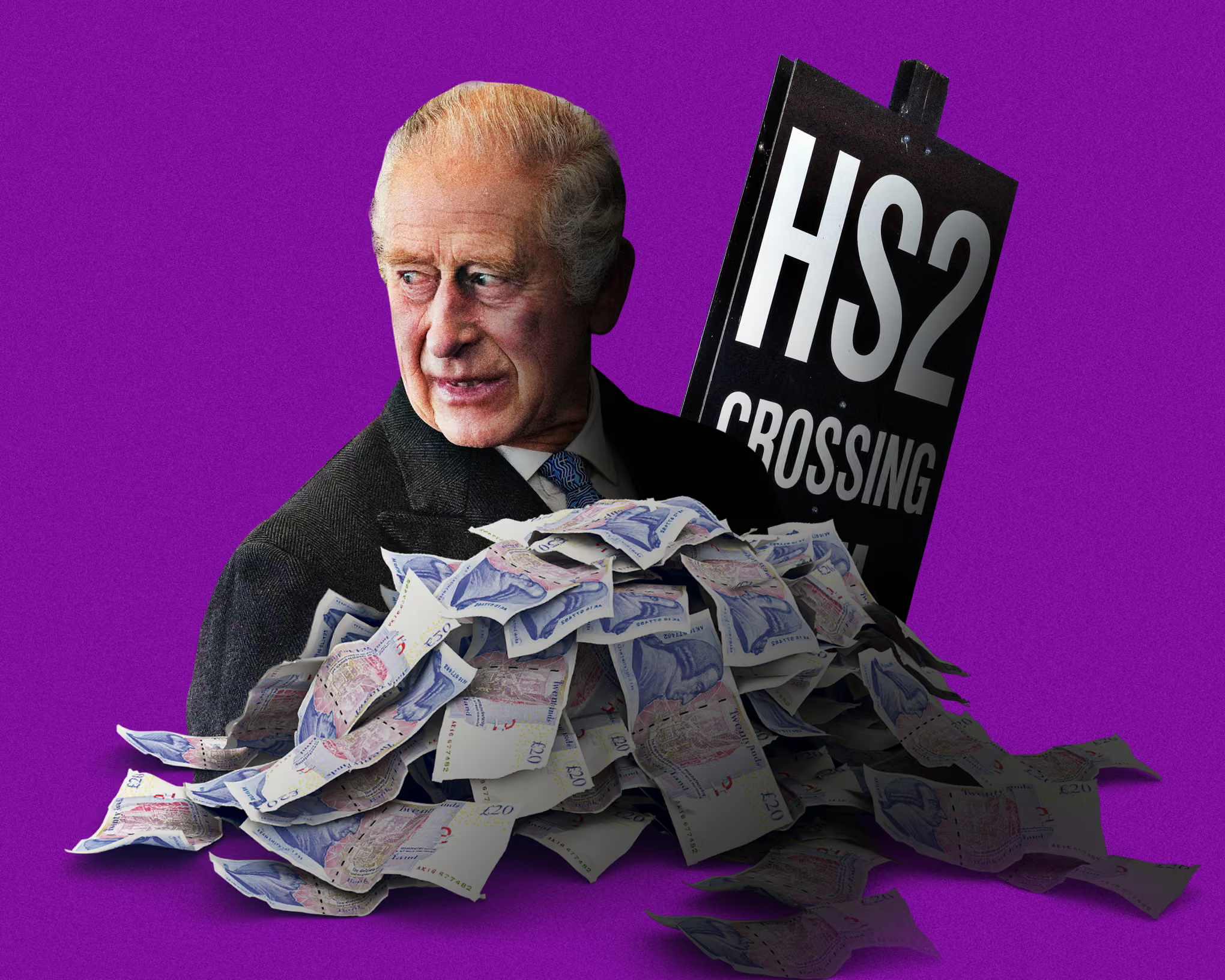
King Charles’s private property holdings have reportedly earned more than £1 million from the sale of land intended for infrastructure linked to the northern leg of HS2, the high-speed rail project that has since been cancelled, the Guardian has revealed.
The Duchy of Lancaster, which manages the monarch’s private estate, received a total of £1,132,400 from sales of land earmarked for road works near a proposed hub station in Crewe, Cheshire. The deal highlights how the Duchy, while claiming to be “completely self-financing” and independent of taxpayer support, has profited from transactions associated with publicly funded infrastructure projects.

The Duchy, a historic estate providing the reigning monarch with private income since medieval times, owns extensive land surrounding Crewe Hall, a Jacobean mansion, which it acquired in 1936. Over the years, portions of this estate have been sold to accommodate roads, housing developments, and other projects. Thanks to its special status, the Duchy is largely exempt from business taxes, allowing it to maximise profits on such sales.
HS2, first proposed by the Labour government in 2009 and formally announced by the coalition government in 2012, was designed to connect Crewe to London in under an hour and provide high-speed services to Birmingham and Manchester. It was expected to boost the local economy by £750 million annually and bring an estimated 6.3 million additional passengers to the town by 2036.
Preparatory plans included significant upgrades to local infrastructure, which required acquiring land from the Duchy. Unlike other landowners, the Duchy could negotiate freely, as it is largely exempt from compulsory purchase laws. Payments for the plots were made between 2012 and 2017 under the late Queen Elizabeth II, and the proceeds from these sales are considered part of the Duchy’s private income.
The Duchy’s profits grew significantly during Queen Elizabeth II’s reign, though much of its landholdings were kept confidential even from Parliament. Upon inheriting the estate in 2022, King Charles did not pay inheritance tax, benefiting from the Duchy’s special crown status. The Duchy is also exempt from corporation and capital gains taxes, though the King voluntarily pays income tax on some earnings. Last year, the Duchy reported £26.5 million in income.
HS2’s cancellation of the northern leg in 2023, following escalating costs projected to reach £71 billion, has drawn criticism. Cheshire East Council described the decision as a “devastating blow,” noting the financial strain it placed on the authority, which later accepted a £25.3 million funding package from central government to alleviate pressures.
Documents from the Land Registry show that in 2012 the Department for Transport purchased several plots of Duchy land near the A500, a major local road, to accommodate planned rail works. One plot was acquired for £318,000, later transferred to the local council. In 2014, the council purchased additional Duchy land for £800,000 to facilitate road upgrades intended to link the town to the proposed HS2 hub. Subsequent improvements included widening roundabouts, adding cycle paths, and enhancing footways, all aimed at improving access prior to HS2’s arrival.
In response to scrutiny over Duchy dealings with public organisations, the estate announced in July it would “actively review” its policies. This followed investigations by Channel 4 Dispatches and the Sunday Times, which revealed contracts with taxpayer-funded bodies, including a 15-year agreement worth £11.4 million with an NHS trust for ambulance parking facilities on Duchy land in South London.

A spokesperson for the Duchy of Lancaster stated: “As with any landowner, the acquisition and disposal of property assets forms part of routine activities. Any such payments are invested back into the Duchy estate rather than as distributable income to the Monarch. The Duchy of Lancaster estate is not incorporated and therefore not subject to corporation tax. However, The King voluntarily pays income tax on income from the Duchy of Lancaster. Decisions on charity rents will be announced in due course.”
The revelations raise questions about the intersection of private royal finances and public infrastructure projects, highlighting how historic Crown estates continue to generate substantial revenue even amid large-scale government project cancellations.
Related News:
 Rachel Reeves Hosts Top UK and US Financial Executives as Trump’s State Visit Begins
 Farage’s Reform UK Receives £100,000 from Design Firm with Past Tax Issues
 Rachel Reeves Faces Criticism Over Appearance at Gambling Industry Event Amid Tax Review
 Gatwick Secures Approval for £2.2bn Second Runway Expansion
 Labour to Unveil Ambitious Plan for 12 New Towns to Tackle England’s Housing Crisis
 Kemi Badenoch Unveils ‘Golden Rule’ to Halve Spending Cuts for Deficit Reduction at Tory Conference
 Rachel Reeves urged to consider welfare cuts to boost fiscal credibility
 Rachel Reeves to lead UK trade push in Saudi Arabia amid rights debate
 Trump’s UK Ambassador Urges North Sea Drilling to Strengthen US Ties
 Rachel Reeves Set to Break Labour Pledge and Raise Income Tax
 Thinktanks Urge Rachel Reeves to Reform UK Tax System
MPs Press Rachel Reeves to Hike Gambling Taxes
Thinktanks Urge Rachel Reeves to Reform UK Tax System
MPs Press Rachel Reeves to Hike Gambling Taxes
 Cuts to home insulation funding threaten UK climate goals
 PM Highlights UK Business at G20 in South Africa
 Starmer Says Labour’s Economic Plan Needs Years to Deliver
 Modi’s London Visit Seals Historic UK-India Trade Pact Amid Global Tensions
 MPs Warn Thousands Still Face Poverty Despite Labour’s Welfare Reform Retreat
 Chancellor Faces Mounting Pressure Amid “Impossible Trilemma” Over Tax Rises
 Non-Dom Tax Crackdown Risks Backfiring as Exodus Threatens UK Revenue and Investment
 UK Jobs Market Faces Strain as Employers Cut Bonuses and Hiring Amid Economic Slowdown
 David Lammy Faces Possible Legal Challenge Over Foreign Office Secondment Scheme
 Labour Members Push for Wealth Tax as Public Finance Crisis Deepens
 Grant Shapps Cleared to Join Defence Startup Despite Ethical Concerns
 Chancellor Rachel Reeves Pushes for Sweeping Changes to Environmental Protections to Accelerate Development
 Larger Families Could Gain Thousands if Labour Ends Two-Child Benefit Cap
Reeves Weighs New Property Tax on Homes Worth Over £500,000
Larger Families Could Gain Thousands if Labour Ends Two-Child Benefit Cap
Reeves Weighs New Property Tax on Homes Worth Over £500,000
 Inflation Latest: Cost of Living Expected to Rise Again in Key Figures Released Today
 Retail Sales See Uptick Amid Errors and Delays as ONS Faces Scrutiny
 UK House Prices Hit Record £299,331 as Market Shows Steady Growth
Shein UK Faces Allegations of Shifting Majority of Profits to Singapore to Reduce UK Tax
UK House Prices Hit Record £299,331 as Market Shows Steady Growth
Shein UK Faces Allegations of Shifting Majority of Profits to Singapore to Reduce UK Tax
 UK Retail Sales Rise in August, but Tax Concerns Loom Over Festive Period
 Vodafone Faces Fourth Probe into Franchising Division Amid £120m Legal Battle
 UK Economy Flatlines in July, Raising Pressure on Rachel Reeves Ahead of Autumn Budget
Business Rates Hike Could Threaten Hundreds of UK Retailers, Putting 100,000 Jobs at Risk
UK Economy Flatlines in July, Raising Pressure on Rachel Reeves Ahead of Autumn Budget
Business Rates Hike Could Threaten Hundreds of UK Retailers, Putting 100,000 Jobs at Risk
 Starmer Urged to Champion Workers’ Rights Amid Low Public Awareness
 UK Labour Market Shows Signs of Cooling as Wage Growth Slows and Redundancies Rise
 UK Wage Growth Remains High, But Cost of Living Pressures Bite
 Privatisation of UK Industries Exacerbates Cost of Living Crisis, Warns Green Party Leader
 Next Shares Slide Amid Warning on Weak UK Growth and Jobs
 Resolution Foundation Chief Urges Chancellor Reeves to Rethink Budget Before November
UK Borrowing Surges to £18bn in August, Exceeding Forecasts
Resolution Foundation Chief Urges Chancellor Reeves to Rethink Budget Before November
UK Borrowing Surges to £18bn in August, Exceeding Forecasts
 Dagenham Left in Limbo After Smithfield and Billingsgate Market Relocation Cancelled
 Vodafone Franchisees Sound Alarm: Mental Health Toll of Commission Cuts Revealed Years Before £120m Court Battle
 UK Government Backs Return of International Rail Travel to Kent Stations
 UK Employment Bill Set to Grant Millions Greater Job Security, Thinktank Analysis Finds
 AstraZeneca to List on New York Stock Exchange While Retaining London Ties
 Retailers Warn Tax Rises Could Prolong Inflation as Shop Prices Climb
 Marks & Spencer Staff to Work on Boxing Day for First Time in Five Years Amid Cost-Cutting Measures
UK Housing Market Returns to Growth Amid Signs of Stability and Regional Variation
Marks & Spencer Staff to Work on Boxing Day for First Time in Five Years Amid Cost-Cutting Measures
UK Housing Market Returns to Growth Amid Signs of Stability and Regional Variation
 UK Government Secures £122m Win Against Michelle Mone-Linked Firm Over Defective PPE
 Senior Tories Condemn Badenoch’s Vow to Repeal Climate Change Act as Catastrophic
 Delivery Apps Could Double the Cost of Your Groceries, Warns Consumer Watchdog
 Jaguar Land Rover to Resume Production After Cyber-Attack, Launches Supplier Support Scheme
 Gold Hits Historic $4,000 Amid Global Uncertainty
 Richard Tice’s Business Record Contrasts with His ‘Net Stupid Zero’ Criticism
 Massive Vodafone Outage Disrupts Internet and Mobile Services Across the UK
Rachel Reeves to Confirm Changes to Britain’s Planning System
Massive Vodafone Outage Disrupts Internet and Mobile Services Across the UK
Rachel Reeves to Confirm Changes to Britain’s Planning System
 UK Labour Market Shows Signs of Stabilising After Job Losses
Rachel Reeves Signals Tax Rises, Spending Cuts Ahead
UK Labour Market Shows Signs of Stabilising After Job Losses
Rachel Reeves Signals Tax Rises, Spending Cuts Ahead
 UK inflation update: New rate expected as Budget approaches
 Lucy Powell urged ministers to reconsider costly legal case for Labour donor’s firm
 Miliband Promises New Nuclear Stations if SNP Ousted
 Lotto result jackpot draw halted due to technical glitch
 Green Party Surges Past Labour in Latest UK Poll
 Celebrities and Charities Demand UK Government Act on Child Poverty
 UK Small Business Owner to Challenge L’Oréal in Tribunal
Rachel Reeves Eyes 20% Tax on Assets for UK Departures
UK Small Business Owner to Challenge L’Oréal in Tribunal
Rachel Reeves Eyes 20% Tax on Assets for UK Departures
 Court Hears Challenge Over Water Bills Funding Sewage Fixes
 Tony Blair think tank warns Rachel Reeves must cut taxes if manifesto broken
 Labour Falls to Fourth in Poll, Faces Historic Election Loss
 Warning as Britons prepare to spend £4 billion this Black Friday
 Reeves’s Tax U-Turn Triggers Fresh Jitters in UK Markets
 Global markets drop amid tech sell-off and China slowdown
 Mossmorran Plant Closure Hits Cowdenbeath Hard
Reeves to Crack Down on Benefit Fraud While Lifting Two-Child Limit
Mossmorran Plant Closure Hits Cowdenbeath Hard
Reeves to Crack Down on Benefit Fraud While Lifting Two-Child Limit
 Minister Denies Budget Leaks Have Harmed UK Economy
 English Mayors Set to Introduce Tourist Taxes
 India’s Labour Law Overhaul Sparks Fierce Debate
 Carney’s Alberta Pipeline Deal Sparks Immediate Pushback
 Rising Water Bills Lift Troubled Thames Back to Profit