Published: 26 September 2025. The English Chronicle Desk
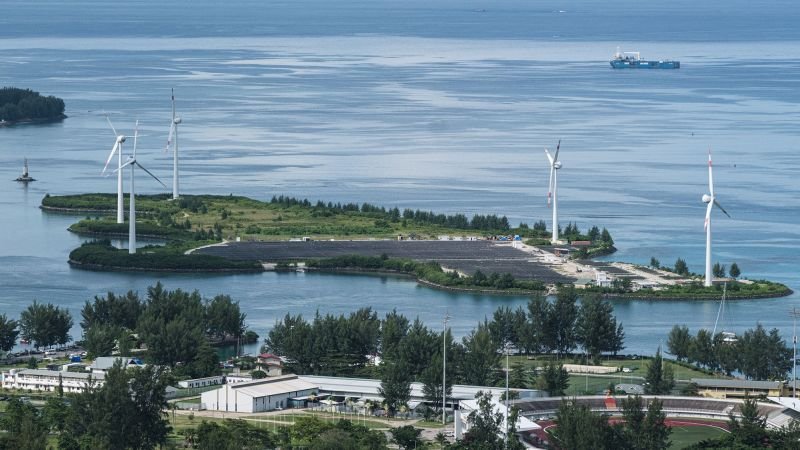
A remote, almost barren island in the Indian Ocean has unexpectedly become the defining issue in this weekend’s presidential and parliamentary elections in Seychelles. Assumption Island, a sun-scorched and sparsely populated coralline outcrop located more than 1,100 kilometres from the nation’s main island of Mahé, has sparked controversy that extends well beyond its shores. Once stripped of its guano deposits and long forgotten by agriculture, the island is now at the centre of a storm combining geopolitics, environmental preservation, and domestic politics.
Despite its austere appearance, Assumption holds strategic significance. It lies on shipping routes vital to global trade between Asia, Africa and beyond, making it a point of interest for major powers. India once sought to build a military base there but was forced to back away after public opposition in Seychelles. In recent years, however, the island has drawn renewed attention, not for military development but for tourism investment. A deal signed by President Wavel Ramkalawan last year allowed the Qatari royal family, through a Middle Eastern investment vehicle, to begin developing a luxury resort with 40 exclusive villas, an expanded airstrip, and other infrastructure.
The move has proved deeply divisive. Ramkalawan, an ordained Anglican priest who came to power five years ago on an anti-corruption wave, defends the lease as a necessity for a small island nation dependent on outside investment. The 70-year agreement included an upfront payment of $20 million, which he argues will bolster national finances. He insists the project is no different from other international hotel investments, noting that it will be managed by Rosewood Hotels, a luxury operator. “We’ve got to look for investment in order for us to survive,” he said in recent interviews.

Yet environmental campaigners are alarmed. Assumption’s long beaches are a critical nesting ground for endangered green turtles, and its proximity to the UNESCO-listed Aldabra Atoll makes it a fragile ecological frontier. Aldabra, described by Sir David Attenborough as one of the world’s greatest natural treasures, is home to hundreds of species found nowhere else. Critics warn that development on Assumption could disrupt the delicate balance of this ecosystem.
Lucie Harter, a leading conservation activist, has voiced grave concerns about the construction, citing photographs of giant tortoises injured by heavy machinery and accusing authorities of secrecy and negligence. “Where is the oversight? There’s no transparency. The way these decisions are taken is quite under the table,” she said. Earlier this year, Seychelles’ planning authority issued a stop-work notice against the resort, but construction has continued regardless.
Two campaign groups, Friends of Aldabra and Seychelles at Heart, have now lodged an injunction in the Constitutional Court demanding a suspension of work until a thorough and independent environmental impact study is completed. They are also calling for international observers to monitor the process.
The controversy has quickly become a potent political weapon for Ramkalawan’s rivals. His main challenger, Dr Patrick Herminie of the United Seychelles (US) party, has accused the president of betraying national interests and ignoring the will of the Seychellois people. Herminie, a former speaker of parliament and physician by training, has sought to frame the election as a referendum on good governance. He argues that while the government points to economic recovery—IMF forecasts of 5.8% growth this year, rebuilt reserves of $800 million, low unemployment at 3.5%—many citizens are still struggling to afford basic needs. “We’re getting poorer. People can’t afford two meals per day,” he told reporters.
Herminie also draws on his own controversial past, including his 2023 arrest on allegations of using witchcraft for political gain—charges he dismisses as absurd and politically motivated. He pledges a return to stronger social protections, promising lower bus fares, higher social security benefits, and a reduced retirement age. While his party remains a rebranded version of the once-repressive SPPF of former President France-Albert René, Herminie insists there will be no return to past abuses.
The Assumption deal has not only galvanised opposition parties but also divided Ramkalawan’s own camp. Key strategists from his victorious campaign five years ago have switched sides, accusing him of delivering only a fraction of his promises. Independent candidates have seized on the dispute too. Firebrand publisher Ralph Volcere has branded Ramkalawan an autocrat and railed against corruption in every sector. His campaign also highlights the island’s role in the heroin trade that continues to plague Seychelles, with drugs siphoned from passing shipping lanes.
Volcere, however, is himself a polarising figure, criticised for his ties to Mukesh Valabhji, a businessman currently facing corruption and arms possession trials. Still, his proposals, such as decriminalising cannabis to undercut criminal syndicates, have found some resonance.
The election field remains crowded. Out of 11 initial presidential hopefuls, eight are still in the race. With Seychelles’ electorate numbering fewer than 100,000, a second-round runoff is possible if no candidate secures an outright majority. Alongside the presidency, voters will choose representatives for the 26-seat National Assembly, adding further weight to the outcome.
For many Seychellois, the contest is as much about national identity as it is about economics. Ramkalawan insists he will not allow foreign military bases on Seychellois soil and rejects any alignment in global geopolitical rivalries. Yet his decision to lease Assumption to wealthy investors has left voters questioning whether sovereignty and environmental heritage have been compromised for short-term financial relief.

The fate of Assumption Island now looms larger than the island itself. What was once a little-known coral outpost has become a symbol of competing visions for Seychelles’ future—whether as a pristine ecological treasure, a haven for luxury tourism, or a pawn in the great power games of the Indian Ocean.
This weekend’s ballots may ultimately decide not only who governs Seychelles but also whether Assumption remains a sanctuary for turtles and tortoises or transforms into an enclave for the global elite. For many, the question is clear: the island’s fate could determine the course of the nation itself.
Related News:
 US Super-Rich Are Draining Planet’s Safe Climate Space
 Fed Cuts US Interest Rates Again Amid Labour Market Uncertainty
 China Gained Military-Tech Access Through UK Investments
 India’s Labour Law Overhaul Sparks Fierce Debate
 Kinnock’s Rebuke Echoes Loudly as Corbyn Allies Launch Left-Wing Breakaway: “A Gift to Farage”
 UK and Norway Forge Stronger Ties Through Joint Sanctions and Enhanced Defence Cooperation
 Market Jitters Send Stocks Lower as Trade Tensions and Earnings Anxiety Weigh on Investors
 UK Banks Granted Reprieve as BoE Delays Basel III Capital Rules Until 2028
 Trump Administration Dismisses 17 Immigration Judges, Sparking Debate Over Judicial Independence
 UK Inflation Climbs to 3.6% as Food and Fuel Prices Squeeze Households
 Lammy Condemns Israel’s Targeting of Starving Palestinians: Sanctions Threatened Amid Global Outrage
 Modi’s London Visit Seals Historic UK-India Trade Pact Amid Global Tensions
 Northern Ireland Family of Three Shot Dead in Maguiresbridge Home Incident
 Global Trade Earthquake: Trump Slaps 35% Tariff on Canada and Expands Tariff Blitz to Over 90 Nations
 Netanyahu Announces Plan to Take Over Gaza City, Escalating Conflict Further
 Prominent Al Jazeera Journalist Anas al-Sharif Among Five Reporters Killed in Israeli Airstrike on Gaza
 China’s crackdown on civil servant perks sparks economic concerns
 High-Stakes Diplomacy: Trump and Putin Head to Alaska for Historic Peace Talks
 Where Is Prince William and Kate Middleton’s New House? Inside the Historic Lodge Set to Become Their ‘Forever Home’
 Los Angeles’ Alleged ‘Ketamine Queen’ Agrees to Plead Guilty in Connection with Matthew Perry’s Death
 Costa Blanca Holiday Horror as Food Poisoning Outbreak Hits Four-Star Hotel
 Lisbon’s Historic Funicular Turns to Tragedy: The Elevador da Glória Derailment
 Shein UK Faces Allegations of Shifting Majority of Profits to Singapore to Reduce UK Tax
 UK Imposes 100 New Sanctions Targeting Russia’s Revenues and Military Supplies
 France Recognises Palestinian State as Trump Prepares to Address UN General Assembly
 Public Executions in Gaza City Captured on Video Amid Ongoing Conflict
 Macron Phones Trump Over Traffic Jam in New York
 Denmark Investigates Professional Drone Incursions Across Multiple Airports, No Evidence of Russian Involvement
 Nicolas Sarkozy Sentenced to Five Years in Jail in Libya Campaign Financing Case
 Sir Sadiq Khan Accuses Trump of Racism and Islamophobia Following UN Remarks
 Comey Indictment Deepens Fears of Political Retribution Under Trump
 Trump Imposes Sweeping Tariffs on Pharmaceuticals, Trucks and Furniture Imports
 Tony Blair Considered for Leadership Role in Transitional Gaza Authority
 Trump Unveils Gaza Peace Plan Amidst Deep-Seated Challenges
 Bournemouth Stun Fulham with Dramatic Comeback in Premier League Thriller
 Japan’s First Female Governing-Party Leader Emerges Amid Ultra-Conservative Politics
 Misinformation and Political Pressure Force Weston-super-Mare to Abandon Refugee Sanctuary Plan
 Arsenal Showcase Depth and Flexibility as Arteta Eyes Title Challenge
Trump Presses for Urgent Progress as Cairo Talks Aim to Halt Gaza War
Arsenal Showcase Depth and Flexibility as Arteta Eyes Title Challenge
Trump Presses for Urgent Progress as Cairo Talks Aim to Halt Gaza War
 French Prime Minister Lecornu Resigns After Just 26 Days in Office, Deepening Political Crisis
 Nobel Peace Prize Officials Probe Suspicious Online Bets
 Hope Amid Heartbreak: The Stories Behind the Freed Israeli Hostages
 Zelensky to Urge Missile Aid as Trump and Putin Plan Summit
 Barnes Inspires Newcastle to Champions League Triumph Over Benfica
 Fabio Wardley stuns Joseph Parker to earn Usyk title shot
 Lotto result jackpot draw halted due to technical glitch
 Rachel Reeves to lead UK trade push in Saudi Arabia amid rights debate
 Tragedy on Lizard Island: Cruise Passenger Dies
 UK Charters Emergency Flights to Evacuate Britons from Jamaica
 Hurricane Melissa Leaves Devastation Across Jamaica as Death Toll Rises
 Millions of Brits Adjust Lifestyle to Afford Essentials
 US Senate Passes Funding Bill to End Historic Shutdown
 BBC’s Tim Davie to Address Staff Amid Trump $1bn Threat
 Thailand Suspends Cambodia Border Peace Deal Amid Tensions
 Hitler’s DNA Confirms He Truly Had Only One Testicle
 Victoria Signs Historic Treaty with Indigenous Peoples
 US Justice Department Files Lawsuit Against California Over Partisan Voting Maps
 Israel Confirms Returned Hostage as Meny Godard
 Orban Says Ukraine Has ‘No Chance’ as EU Support Continues
 Israeli Strike Kills 13 Near Palestinian Camp in Lebanon
 Zelensky Meets US Envoy in Turkey to Push Ukraine Peace Talks
 Haiti Qualifies for World Cup Despite Coach Never Visiting Country
 Rama Rebukes Mahmood for Targeting Albanian Families
 Russian Vessel Used Lasers on RAF Pilots, UK Claims
 Pentagon Officials in Ukraine to Discuss War End
 Vietnam Battles Deadly Floods as Rains Continue
 Venezuela Threatens Nobel Winner Machado with Fugitive Status
 At Least Three Dead in Bangladesh Earthquake
 Texas Governor Faces Lawsuit From CAIR
 Israel Confirms Hamas Returned Dror Or’s Body
 Trump Envoy to Discuss Ukraine Peace at Kremlin
 Twenty-Four Nigerian Schoolgirls Freed After Abduction
 Two National Guard Soldiers Critically Injured Near White House
 Pope Leo XIV Begins Historic Trip to Turkey and Lebanon
 Mbappe Scores 4 as Real Madrid Edge Olympiakos
 Man City Lose, Champions League Risk
 Sri Lanka Floods Leave 56 Dead, Dozens Missing
 Video shows Israeli troops kill Palestinians after surrender
 Chinese & Japanese Boats Clash Near Disputed Islands
 Indonesia to Repatriate Two Dutch Drug Convicts