Published: 06 September 2025. The English Chronicle Desk
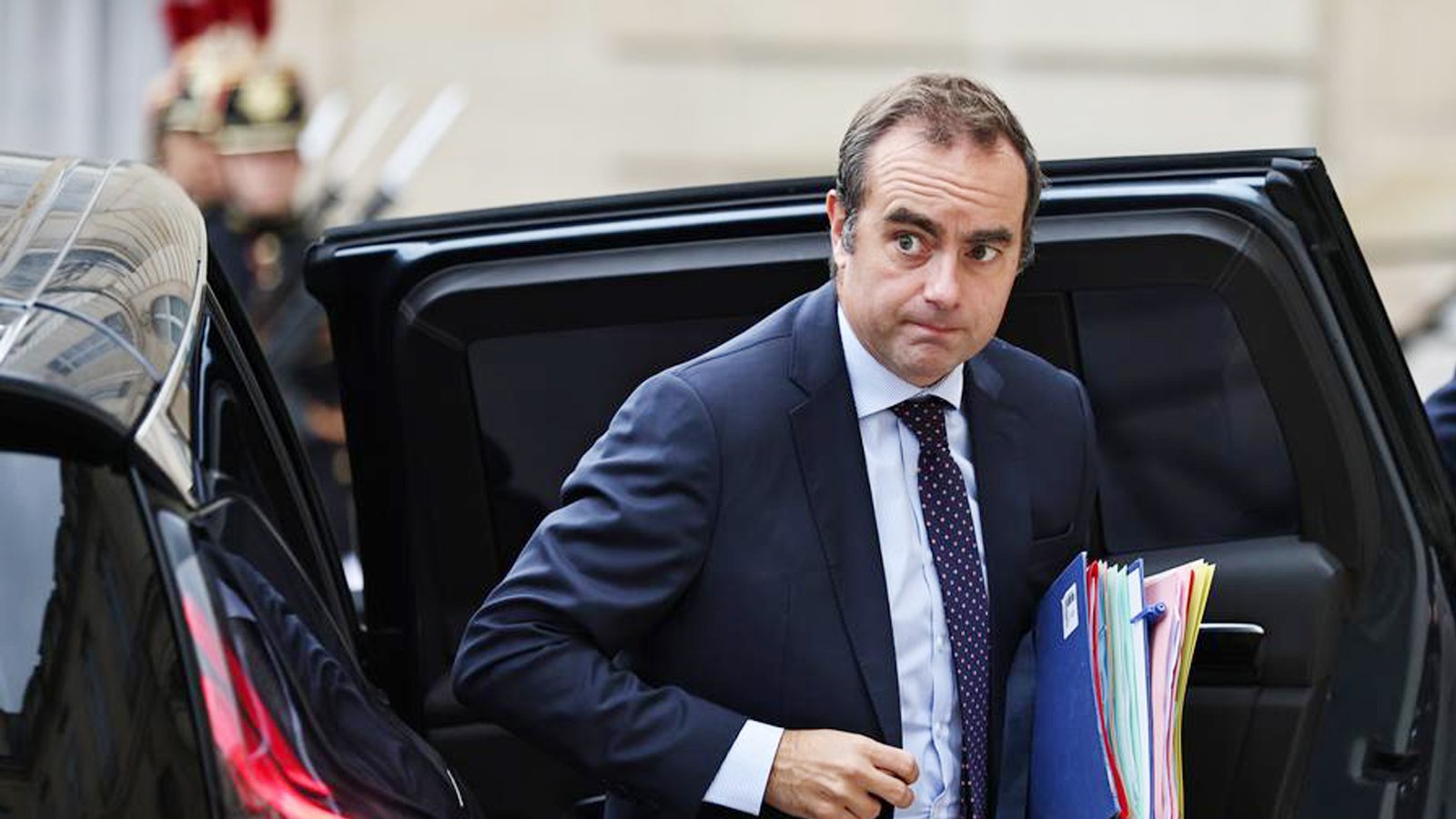
France has been plunged into renewed political turmoil after Prime Minister Sébastien Lecornu announced his resignation less than a month into his tenure. The dramatic development comes just 26 days after Lecornu, a close ally of President Emmanuel Macron, was appointed to lead the government following the collapse of François Bayrou’s administration.
In a brief but pointed statement outside the Hôtel de Matignon, the prime minister’s official residence, Lecornu said the “conditions were not fulfilled” for him to carry on in his role. He accused political parties of being unwilling to compromise, charging that they were “behaving as if they had absolute majorities” despite the country’s fractured parliament. “I was ready for compromise, but all parties demanded that their entire programmes be adopted in full,” Lecornu said, adding that the French political class needed humility and a willingness to “cast egos aside” if the nation were to move forward.
The announcement came on Monday morning after Lecornu held a one-hour meeting with President Macron at the Elysée Palace. Within hours, the presidential office confirmed his departure, sending shockwaves through a political system already weakened by instability. This resignation marks the fifth time in less than two years that France has seen a prime minister leave office, underscoring the depth of the current crisis.

Lecornu’s exit has immediately sparked calls for fresh elections, with opposition parties sensing an opportunity to capitalize on Macron’s dwindling authority. Marine Le Pen, leader of the far-right National Rally (RN), declared that “the only wise thing to do now is to hold elections,” arguing that the French people are “fed up” and that Macron has placed the country in “an extremely difficult position.” Other parties across the political spectrum echoed her sentiment, with some even demanding that Macron himself step aside. However, the president has consistently ruled out resigning before his term ends in 2027.
Macron now faces three unenviable choices. He can appoint yet another prime minister, risking another swift collapse. He can dissolve the National Assembly and call for fresh legislative elections. Or, in the most unlikely scenario, he could resign. Given Lecornu’s reputation as one of Macron’s most loyal allies, his failure is seen by many as leaving the president with few viable options. Analysts suggest that while Macron may attempt to name a Socialist figure to broaden his appeal, such a government would likely not last long under the current parliamentary deadlock.
The roots of the crisis stretch back to July 2024, when Macron called snap parliamentary elections in the hope of securing a stable majority after a humiliating defeat for his centrist alliance in the European Parliament vote. Instead, the elections resulted in a hung parliament, split among ideologically opposed blocs that have refused to cooperate. Since then, successive governments have fallen victim to the gridlock. Michel Barnier’s short-lived premiership ended in three months, while François Bayrou’s administration collapsed nine months later after parliament refused to back his austerity budget aimed at cutting €44 billion from public spending.
The economic backdrop makes the political paralysis even more dangerous. France’s deficit reached 5.8 percent of GDP in 2024, while its national debt has ballooned to 114 percent of GDP — the third highest in the eurozone after Greece and Italy. The scale of the debt, equivalent to nearly €50,000 per citizen, has placed immense pressure on policymakers to rein in spending. Yet any attempt to push through austerity measures has met fierce resistance in parliament, leaving France unable to pursue meaningful reforms.
Financial markets reacted sharply to the news of Lecornu’s resignation. Stocks on the Paris exchange fell steeply on Monday morning as investors grappled with the growing uncertainty. Analysts warn that prolonged instability could undermine France’s ability to borrow affordably, further damaging Europe’s second-largest economy.
For Macron, the resignation of Lecornu represents a bitter personal setback. The former armed forces minister was regarded as a last resort choice, the ultimate loyalist who could hold the fragile government together while the president sought a longer-term solution. Instead, his departure after less than a month has reinforced the impression of a presidency besieged from all sides, with no clear pathway out of the crisis.
Observers now widely expect Macron to call new legislative elections, even though polls suggest such a move could prove disastrous for his centrist alliance. Current forecasts point to heavy losses for the president’s camp and major gains for Marine Le Pen’s far-right movement, a scenario that could transform the French political landscape. But with options dwindling, Macron may find himself forced to gamble on elections rather than face the continued humiliation of governments that cannot survive even a matter of weeks.

The Lecornu episode may prove to be a defining moment in France’s Fifth Republic, highlighting not just the fragility of its institutions but also the widening gulf between its political class and an electorate growing increasingly restless. Whether fresh elections bring clarity or deepen the division remains to be seen, but what is clear is that France has entered a period of acute uncertainty, with consequences that will reverberate well beyond Paris.
Related News:
 Kinnock’s Rebuke Echoes Loudly as Corbyn Allies Launch Left-Wing Breakaway: “A Gift to Farage”
 Tories in Turmoil as Sir Jake Berry’s Defection to Reform Sparks Fears of Further Exodus
 UK and Norway Forge Stronger Ties Through Joint Sanctions and Enhanced Defence Cooperation
 Trump Administration Dismisses 17 Immigration Judges, Sparking Debate Over Judicial Independence
 Lammy Condemns Israel’s Targeting of Starving Palestinians: Sanctions Threatened Amid Global Outrage
 Northern Ireland Family of Three Shot Dead in Maguiresbridge Home Incident
 Netanyahu Announces Plan to Take Over Gaza City, Escalating Conflict Further
 Prominent Al Jazeera Journalist Anas al-Sharif Among Five Reporters Killed in Israeli Airstrike on Gaza
 High-Stakes Diplomacy: Trump and Putin Head to Alaska for Historic Peace Talks
 Manchester City Announce Their Return in Style with Haaland Double and Debut Goals at Wolves
 Where Is Prince William and Kate Middleton’s New House? Inside the Historic Lodge Set to Become Their ‘Forever Home’
 Los Angeles’ Alleged ‘Ketamine Queen’ Agrees to Plead Guilty in Connection with Matthew Perry’s Death
 Costa Blanca Holiday Horror as Food Poisoning Outbreak Hits Four-Star Hotel
 Lisbon’s Historic Funicular Turns to Tragedy: The Elevador da Glória Derailment
 Lisbon Funicular Disaster Claims 17 Lives in Shocking Crash
 France Recognises Palestinian State as Trump Prepares to Address UN General Assembly
 Public Executions in Gaza City Captured on Video Amid Ongoing Conflict
 Macron Phones Trump Over Traffic Jam in New York
 Denmark Investigates Professional Drone Incursions Across Multiple Airports, No Evidence of Russian Involvement
 Nicolas Sarkozy Sentenced to Five Years in Jail in Libya Campaign Financing Case
 Sir Sadiq Khan Accuses Trump of Racism and Islamophobia Following UN Remarks
 Comey Indictment Deepens Fears of Political Retribution Under Trump
 Trump Imposes Sweeping Tariffs on Pharmaceuticals, Trucks and Furniture Imports
 Assumption Island Dispute Dominates Seychelles Election as Environment, Economy and Geopolitics Collide
 Trump Unveils Gaza Peace Plan Amidst Deep-Seated Challenges
 “It Was Very Tough, But I Love Life”: Former Israeli Hostage Rebuilds Life After Family Killed by Hamas
 Bournemouth Stun Fulham with Dramatic Comeback in Premier League Thriller
 Misinformation and Political Pressure Force Weston-super-Mare to Abandon Refugee Sanctuary Plan
 Chaos at Ibrox as Martin’s Rangers Era Comes to an End
 Arsenal Showcase Depth and Flexibility as Arteta Eyes Title Challenge
Trump Presses for Urgent Progress as Cairo Talks Aim to Halt Gaza War
Arsenal Showcase Depth and Flexibility as Arteta Eyes Title Challenge
Trump Presses for Urgent Progress as Cairo Talks Aim to Halt Gaza War
 Nobel Peace Prize Officials Probe Suspicious Online Bets
 Hope Amid Heartbreak: The Stories Behind the Freed Israeli Hostages
 Zelensky to Urge Missile Aid as Trump and Putin Plan Summit
 Barnes Inspires Newcastle to Champions League Triumph Over Benfica
City shine with PlayStation-style football to overwhelm Villarreal
Barnes Inspires Newcastle to Champions League Triumph Over Benfica
City shine with PlayStation-style football to overwhelm Villarreal
 Fabio Wardley stuns Joseph Parker to earn Usyk title shot
 US Super-Rich Are Draining Planet’s Safe Climate Space
 Tragedy on Lizard Island: Cruise Passenger Dies
 Fed Cuts US Interest Rates Again Amid Labour Market Uncertainty
 UK Charters Emergency Flights to Evacuate Britons from Jamaica
 Hurricane Melissa Leaves Devastation Across Jamaica as Death Toll Rises
 Mikie Sherrill Elected New Jersey’s Governor in Key Win
 US Senate Passes Funding Bill to End Historic Shutdown
 BBC’s Tim Davie to Address Staff Amid Trump $1bn Threat
 Thailand Suspends Cambodia Border Peace Deal Amid Tensions
 Hannibal Gaddafi Freed After Nearly a Decade in Lebanon
 Fog Aids Russian Forces in Deep Push into Pokrovsk
 Hitler’s DNA Confirms He Truly Had Only One Testicle
 Victoria Signs Historic Treaty with Indigenous Peoples
 US Justice Department Files Lawsuit Against California Over Partisan Voting Maps
 Israel Confirms Returned Hostage as Meny Godard
 Orban Says Ukraine Has ‘No Chance’ as EU Support Continues
 Israeli Strike Kills 13 Near Palestinian Camp in Lebanon
 Zelensky Meets US Envoy in Turkey to Push Ukraine Peace Talks
 Congress Approves Release of Epstein Files, Trump Expected to Sign
 Haiti Qualifies for World Cup Despite Coach Never Visiting Country
 Rama Rebukes Mahmood for Targeting Albanian Families
 Russian Vessel Used Lasers on RAF Pilots, UK Claims
 Scotland Fans Celebrate Historic World Cup Qualification
 Pentagon Officials in Ukraine to Discuss War End
 Vietnam Battles Deadly Floods as Rains Continue
 WhatsApp Messages Expose Nathan Gill’s Bribery
 Venezuela Threatens Nobel Winner Machado with Fugitive Status
 At Least Three Dead in Bangladesh Earthquake
 Texas Governor Faces Lawsuit From CAIR
 Israel Confirms Hamas Returned Dror Or’s Body
 Trump Envoy to Discuss Ukraine Peace at Kremlin
 Twenty-Four Nigerian Schoolgirls Freed After Abduction
 Two National Guard Soldiers Critically Injured Near White House
 Pope Leo XIV Begins Historic Trip to Turkey and Lebanon
 Mbappe Scores 4 as Real Madrid Edge Olympiakos
 Man City Lose, Champions League Risk
 Sri Lanka Floods Leave 56 Dead, Dozens Missing
 India’s Labour Law Overhaul Sparks Fierce Debate
 Video shows Israeli troops kill Palestinians after surrender
 Trump to Recheck Green Cards from 19 Nations After DC Attack
 Chinese & Japanese Boats Clash Near Disputed Islands
 Putin Meets US Envoy Amid Key Ukraine Peace Talks
 Indonesia to Repatriate Two Dutch Drug Convicts