Published: 04 March 2026. The English Chronicle Desk. The English Chronicle Online.
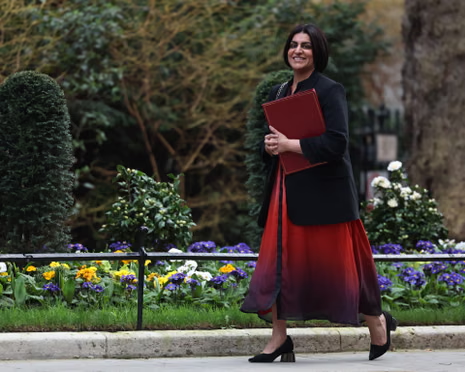
The British government has officially triggered an emergency brake on the national visa system this week. This unprecedented move marks a significant shift in how the Home Office manages international migration applications. Home Secretary Shabana Mahmood announced the immediate suspension of study visas for citizens of four specific countries. Nationals from Afghanistan, Sudan, Cameroon, and Myanmar are now facing these strict new entry restrictions. This decision follows growing concerns regarding the integrity of the current legal migration pathways available. Government ministers believe that the existing system has been increasingly exploited by those seeking asylum. The Home Secretary stated that Britain remains a place of refuge for the truly persecuted. However, she argued that the generous nature of the British people is currently being misused. This specific policy aims to restore order and control over the nation’s borders immediately.
Official Home Office data reveals a sharp rise in asylum claims from these four nations. Statistics from the previous year show that nearly forty percent of claimants arrived legally. Many individuals entered the United Kingdom using a study visa before applying for permanent protection. This trend has created a significant backlog within the national immigration and asylum processing systems. Government officials noted that these specific countries represent the largest increase in such asylum applications. The Home Office tracked this rising pattern from late 2021 through to September 2025. Consequently, the government felt compelled to act to protect the legal route for genuine students. The emergency brake is designed to close what Mahmood described as a migration back door. Security and border integrity have become the primary focus for the current administration this month.

The new regulations will be formally introduced through an immigration rules change this coming Thursday. This legislative update will effectively halt all new student applications from the targeted four countries. In addition to study restrictions, Afghan nationals will also face a ban on work visas. This broader restriction reflects the unique challenges currently associated with migration from the South Asian region. The government previously used similar diplomatic pressure against other nations to ensure cooperation on returns. Countries like Angola and Namibia recently signed agreements to accept their citizens back from Britain. Those successful negotiations resulted in regular deportation flights and a decrease in unauthorized stay requests. The Home Secretary intends to use these previous successes as a blueprint for future policy. Tougher measures are expected to be unveiled during a major policy speech later tonight.
Under the new framework, every refugee will receive a clearly defined and temporary legal status. This status will expire after thirty months, requiring a full review of the individual’s case. The government wants to ensure that protection is only provided while a danger exists. If a home country is deemed safe, the individual will be expected to return. This represents a move away from the traditional path toward permanent British residency for refugees. Such changes have sparked a heated debate within the halls of the Westminster Parliament. Several Labour members of parliament have expressed deep concern over this more restrictive policy. They argue that the party should pursue more progressive and humanitarian immigration strategies instead. These internal tensions follow a disappointing result for the government in a recent by-election.
Despite political pressure, the Home Office remains committed to reducing the overall net migration figures. The Home Secretary believes that a firm approach is necessary to maintain public confidence. She emphasized that the visa system must function as intended for students and workers. By pausing the study visa for these four nations, the government hopes to investigate further. Experts will analyze how to better vet applicants from high-risk regions in the future. The temporary ban allows officials to recalibrate the criteria for granting entry to the country. This proactive stance is intended to deter those who might consider misusing legal routes. The English Chronicle understands that other countries could be added to this list soon. Future decisions will depend on the levels of asylum claims seen in coming months.
The international community has reacted with a mixture of surprise and concern to this news. Human rights organizations suggest that these measures may impact those in genuine need of help. However, proponents of the ban argue that it protects the system for everyone else. They believe that processing times will improve if the number of claims is reduced. The Home Office insists that it will continue to meet its international legal obligations. Every asylum case currently in the system will still be judged on its merits. The suspension only applies to new applications for a study visa at this time. Existing visa holders from these nations are encouraged to check their current legal status. The government has promised to provide clear guidance for those already within the country.

Public opinion in the United Kingdom remains divided on the issue of border control. Recent polling suggests that many voters prioritize national security and lower migration numbers above all. This sentiment has likely influenced the government’s decision to implement such a drastic emergency brake. The Home Secretary’s firm language reflects a desire to appear strong on law and order. By taking this step, the administration hopes to signal a new era of enforcement. The impact on the university sector is also being monitored closely by education officials. Some institutions rely heavily on the diverse perspectives that international students bring to campuses. They hope that the suspension of the study visa will be a temporary measure. A balanced approach is required to protect both the economy and national security.
As the deadline for the new rules approaches, legal experts are reviewing the fine print. They anticipate potential legal challenges in the High Court over the coming weeks and months. The government appears prepared for a lengthy battle to defend its new migration strategy. It remains to be seen how this will affect Britain’s reputation on the world stage. For now, the focus remains on implementation and the restoration of strict border controls. The Home Secretary will continue to monitor the data provided by the Home Office daily. Any further changes to the immigration rules will be announced to the public immediately. The nation awaits the full details of the speech scheduled for this Thursday evening. This developing story highlights the ongoing complexity of managing global migration in a modern world.
The English Chronicle will continue to provide updates as more information becomes available today. Readers are encouraged to stay informed through our verified news channels and digital platforms. The situation remains fluid as the Home Office prepares to enact these significant legal changes. For those affected, the government has set up a dedicated helpline for visa inquiries. This ensures that accurate information is accessible to all individuals during this transition period. The coming days will be crucial for the future of the British immigration system. It is a time of change and challenge for the Home Office and applicants. The government’s resolve to control the borders will be tested by these new policies. Only time will tell if the study visa ban achieves its intended goals.
Related News:
 British skier killed in La Plagne avalanche tragedy
 China embassy London approval expected this week
 UK Presses On With Chagos Handover Despite Trump Criticism
 Shinzo Abe’s killer receives life sentence in Japan
 Sydney Protest Pepper Spray Clash During Herzog Visit
 UK Experts Raise Alarm Over Machinery Export to Armenian Firm
 DHS Probe Into Border Official Sparks National Debate
 Jordanian Arrested in Philippines Over Bondi Beach Terror Links
 Caffè Nero Warns Coffee Prices May Rise Again
 Ukraine war briefing: Zelenskyy offers help to Saudi Crown prince on combatting Iranian drones
 HMS Dragon to Head to Cyprus Amid Rising Tensions
 Starmer Praised for Stance on Trump and Iran Conflict
 Yvette Cooper: UK Must Follow Principles, Not US Pressure
 Inside the Deceptive Machine: A Former Producer Speaks Out
 Trump Facing Backlash Over Firing of Cabinet Women
 Trump Mocks Starmer and UK Carriers in White House Speech
 Gaza Child Arrives in UK for Life-Changing Care
 Melania Trump Denies Ties to Epstein and Ghislaine Maxwell
 Middle East Conflict Risks UK Food Supply Chains This Summer
 Arrests Made After Wembley Firebombing Attempt
 Trump Starts $166bn Tariff Refund Process
 Prominent Voices Challenge Palestine Action Ban
 UK Urged to Adopt ‘Trade Bazooka’ Against Tariff Threats
 BP Profits Surge Amidst Middle East Conflict Crisis
 Aukus Submarine Plan Faces Critical Failures
 World Cup Ticket Price Surge Leaves Many National Teams Stunned
 Fear and Betrayal: The Chilling Case of Kouri Richins
 Tragedy in the Maldives: Inside the Deep Sea Rescue
 US Ebola Case Sparks Urgent Global Screening Measures
 Washington Embassy Shake-Up as Senior Diplomat Departs
 Uefa Transforms Men’s Major Tournament Qualification
 UK Urged to Build EU Rejoin Consensus, Says Miliband
 Teaching Machines Right From Wrong in the Digital Age
 Steel Tensions Rise Between United Kingdom and European Union
 US Condemns ‘Two-Tier’ UK Policing After Student Murder
 US Slams ‘Two-Tier’ UK Policing After Nowak Murder
 Millions in British Charity Funds Linked to Illegal Settlements
 Captain in the Spotlight: The Future of England Cricket
 One Year On: Air India Crash Survivor Demands Answers
 Tragedy in Pakistan Sparks Fury
 Russian Tanker Captain Remanded in UK Court After Channel Seizure
 Controversial London Property Show Sparks Legal Fury
 Kremlin-Backed Saboteurs Target UK Capital and State Democracy
 What Burnham in Number 10 Means for the Future of Britain
 AI Lawyer Triumphs in Landmark English Court Victory
 Scouts Introduce Badges For AI And Digital Skills
 Morocco Beat Dutch in Wild World Cup Penalty Drama
 EU Slashes Steel Quotas But Grants UK Favourable Rates
 Jamaica Demands Slavery Reparations From King Charles
 The Last Stand of English Cricket’s Greatest Partners
 UK Charity Funds Illegal Hebron Settlement Expansion
 Heartbreak After Surrogacy Sperm Mix-Up
 Is This the End of Harry and Meghan’s US Dream?
 Battery Fires Cost UK Recycling Industry £1bn
 Former Diplomats Urge UK and France to Act on Palestine
 Kate Winslet to Narrate Film Highlighting King’s Environmental Mission
 Trump’s UK Ambassador Urges North Sea Drilling to Strengthen US Ties
 UK Bans Fake Numbers: Scammers Lose Their Trick
 Millionaires group urge Reeves to introduce wealth tax to ‘lift kids out of poverty’
 Reeves rejects £1bn plea for NHS redundancy payouts
 PM Condemns Leaks, Vows Loyalty to Ministers and Stability
 Inside the Helpline Protecting Missing Children in the UK
 PlayStation PS5 Deals Hit Lowest Prices Ahead of Black Friday
 Five-Year-Old Dies After Rare Tonsil Surgery Complication
 Starmer Says Labour’s Economic Plan Needs Years to Deliver
 Cross-Border Crisis Shatters Fragile Afghan Peace
 New AI Tool To Target Obesity Risk And Transform NHS Care
 Greens Face Internal Row Over Antisemitism Claims
 The Burning Lens: An Iranian Artist’s Visual Resistance
 Met Officers Probed Over Al Fayed Abuse Allegations
 One Nation Candidate’s Surprising Ties to Independents
 Reform UK Faces Crisis as Newly Elected Councillors Resign
 Starmer Strikes Back as 100 MPs Sign Support Pledge
 Scepticism and tight security as Beijing braces for Trump
 UK Firms Freeze Spending as Iran Conflict Bites
 Reeves to Fast-Track Clean Energy Amid Iran Crisis
 The Battle for Wembley Sparking Unprecedented Legal Warfare
 Tony Abbott Returns as New Liberal Party President
 Secret Role of UK Security Services in Troubles Amnesty Law
 Tube Strike Brings Capital to a Standstill Over Shift Disputes