Published: 05 May 2026. The English Chronicle Desk. The English Chronicle Online
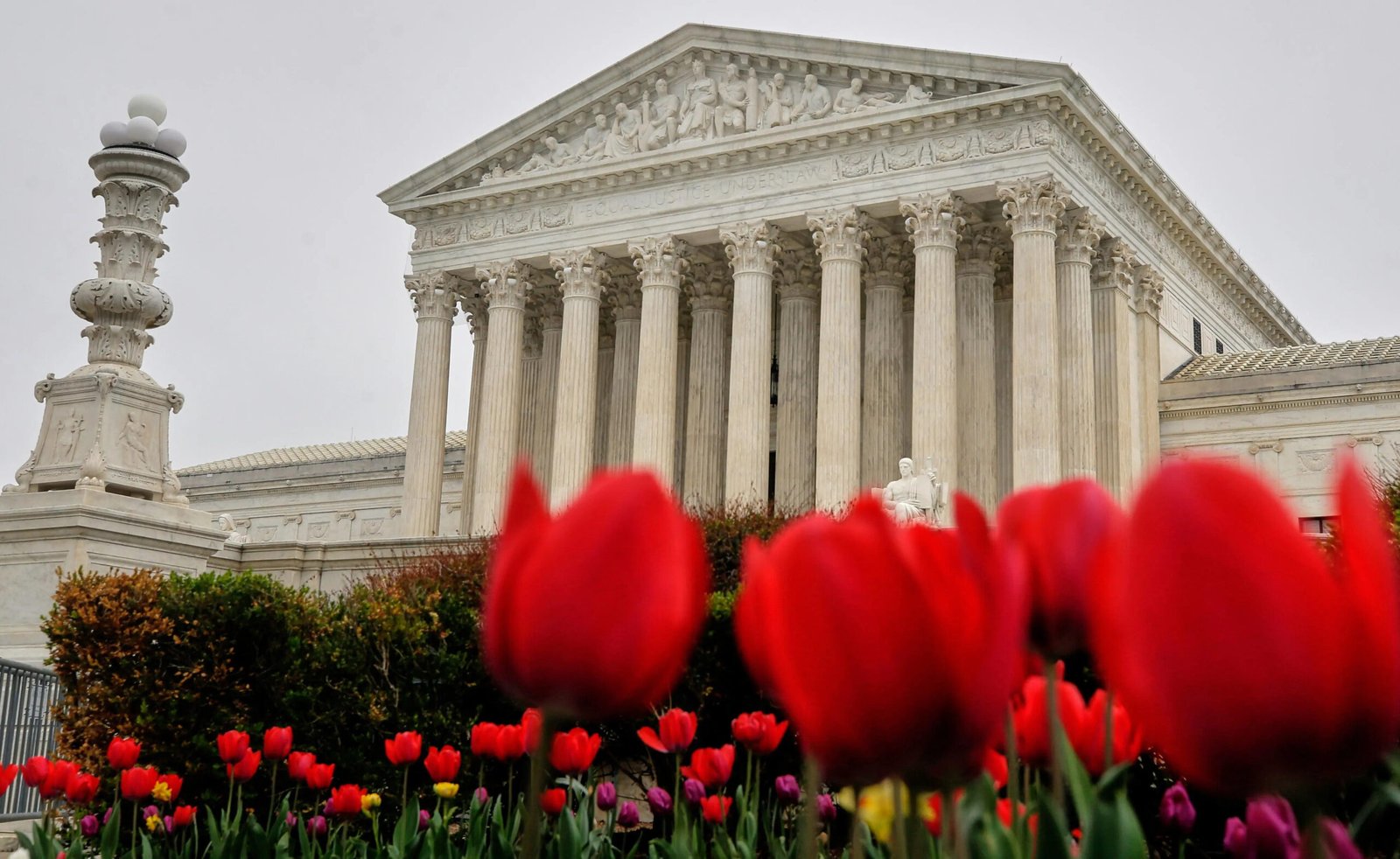
The United States Supreme Court has taken the unusual step of expediting the implementation of a major Voting Rights Act ruling, clearing the way for Louisiana to redraw its congressional maps ahead of the upcoming midterm elections. The move has intensified an already heated political and legal debate over election fairness, judicial neutrality, and the balance of power in American democracy.
At the centre of the controversy is a recent decision by the court involving the state of Louisiana, where the justices struck down the existing congressional map and significantly narrowed the scope of Section 2 of the Voting Rights Act. That provision has long been a key legal safeguard designed to prevent racial discrimination in voting systems and districting practices.
Ordinarily, Supreme Court judgments are not formally issued to lower courts for 32 days after a ruling, allowing time for administrative processing and potential reconsideration. However, Louisiana authorities petitioned the court to accelerate the timeline, arguing that urgent electoral deadlines made the standard procedure impractical. On Monday, the court agreed, effectively allowing the ruling to take immediate effect.

Writing for the majority, Justice Samuel Alito emphasised the practical constraints facing the state, noting that early voting deadlines had already passed and that general elections were scheduled within months. He argued that delaying implementation would create significant legal and logistical confusion for election administrators in Louisiana, particularly given that the congressional map had already been declared unconstitutional.
The decision has given Louisiana’s Republican-led legislature greater legal room to proceed with drawing new district boundaries before the midterm elections. State officials had already taken the extraordinary step of cancelling a scheduled congressional primary after mail-in ballots had been distributed to overseas voters, a move that has itself become the subject of separate litigation.
Supporters of the expedited ruling argue that it restores clarity to a chaotic electoral process and ensures that elections are conducted under legally valid district maps. They say that without immediate action, the state would face overlapping legal orders, conflicting timelines, and potential voter disenfranchisement.
However, the decision has triggered sharp criticism from the court’s liberal justices, particularly Ketanji Brown Jackson, who issued a strongly worded dissent accusing the majority of abandoning long-standing procedural norms. She noted that the court had only twice in the past 25 years chosen to expedite the issuance of a ruling in this manner, suggesting that the current decision marked a significant departure from established practice.
Jackson argued that the court should have maintained its usual procedural restraint to avoid the appearance of political influence in an ongoing and highly sensitive electoral dispute. She warned that by accelerating the ruling, the court was effectively shaping how the decision would be implemented on the ground, rather than simply interpreting the law.
In her dissent, Jackson wrote that the court’s actions risked undermining public confidence in judicial neutrality. She suggested that rather than taking an active role in influencing electoral timelines, the court should have remained on the sidelines and allowed lower courts and state officials to navigate the consequences of the ruling.
Her comments drew a forceful response from the conservative majority. Justice Alito, joined by Justices Clarence Thomas and Neil Gorsuch, described Jackson’s criticism as “baseless and insulting”, defending the court’s decision as a legitimate exercise of its procedural authority.
Alito argued that the court was fully within its rights to adjust procedural timelines when there is a compelling justification, particularly in cases involving imminent election deadlines. He rejected the suggestion that the decision was politically motivated, insisting instead that it was grounded in legal necessity and administrative urgency.
He further questioned whether it would be reasonable for the court to adhere rigidly to procedural timelines even when doing so could create confusion or disrupt scheduled elections. According to his opinion, the court’s responsibility includes ensuring that its rulings are implemented in a workable and timely manner, especially when state election processes are already in motion.
The underlying legal dispute is part of a broader national debate over voting rights, redistricting, and electoral representation in the United States. The Voting Rights Act, enacted in 1965, has historically served as a cornerstone of federal efforts to prevent racial discrimination in voting. Section 2 in particular has been used in numerous legal challenges to state electoral maps that allegedly dilute minority voting power.
Critics of the court’s recent decision argue that narrowing Section 2 could significantly weaken protections against racial gerrymandering, potentially allowing state legislatures greater freedom to redraw districts in ways that could influence electoral outcomes for years to come. Supporters, however, contend that the ruling restores balance between federal oversight and state authority in election administration.
The situation in Louisiana has become a focal point of this broader debate. The state’s decision to cancel an already scheduled primary election has added urgency to the legal proceedings, with both political parties closely monitoring how new district maps will be drawn and how they might affect representation in Congress.
Election experts have warned that rapid redistricting under compressed timelines increases the risk of legal challenges, voter confusion, and administrative errors. At the same time, state officials argue that clarity must be restored quickly to avoid deeper disruption during the election cycle.
The Supreme Court’s procedural decision has also reignited long-standing concerns about judicial influence over electoral processes. Critics of the court’s conservative majority argue that the expedited ruling reflects a broader willingness to intervene in politically sensitive cases in ways that may have real-world electoral consequences.

Supporters of the court’s approach counter that the judiciary must act decisively when legal deadlines intersect with constitutional rulings, particularly in cases where delay could itself undermine the integrity of an election.
The exchange between Jackson and Alito underscores the increasingly polarised nature of the Supreme Court’s internal dynamics, particularly in cases involving voting rights and electoral law. While the court remains bound by institutional norms of impartiality, its recent actions highlight the extent to which procedural decisions can carry significant political implications.
As Louisiana moves forward with redrawing its congressional districts, further legal challenges are expected, potentially escalating the dispute back through lower courts and possibly returning to the Supreme Court. The outcome will likely have implications not only for Louisiana but also for other states facing similar redistricting disputes ahead of the midterm elections.
For now, the court’s decision to accelerate its ruling has placed it at the centre of a national conversation about the role of the judiciary in shaping electoral processes. As tensions continue to rise, the intersection of law, politics, and timing in this case underscores how procedural choices in the highest court can reverberate far beyond the courtroom.
Related News:
 US National Guard Member Killed in DC Shooting
 Trump to pause migration from ‘third-world countries’
 Franklin Turtle, Sabrina Carpenter Slam US Social Media Use
 Trump officials continue false claims after Alex Pretti shooting
 Partial US Government Shutdown Hits Homeland Security Funding
 Thousands Protest ICE Operations in Nationwide US Day of Action
 Swalwell Faces Pressure to Quit Governor Race
 Harmeet Dhillon Faces Scrutiny in DOJ Role Debate
 Trump at Press Dinner Sparks Tension
 Judge Blocks Trump Bid for Arizona Voter Data
 US Court Weighs Fate of TPS for Migrants
 Florida Redistricting Map Sparks Major US Political Battle
 US Voting Rights Ruling Sparks Celebration and Outcry
 US Court Ruling Reshapes Voting Rights Landscape
 US states redraw maps after voting rights ruling
 Judge halts deportation of Yemeni refugees in US
 White House Security Case Sparks Political Firestorm
 Trump warns Iran as Middle East tensions surge again
 US Court Restores Abortion Pill Access Temporarily
 Immigration Judges Fear Pressure in Trump Era
 FDA Chaos Deepens as Trump Eyes Makary Exit
 US judge dismisses Kilmar Abrego Garcia indictment
 US green card applicants must apply from abroad, DHS says
 Tulsi Gabbard exits after turbulent intelligence tenure
 Trump’s Revenge Drive Deepens GOP Divide
 Former ICC prosecutor condemns US sanctions
 Gunman Killed After White House Security Shootout
 Prosecutor Proposes Law to Combat Election Deceit
 Trump Weighs Retreat from Controversial $1.8bn Slush Fund
 Mystery Grows Over Mitch McConnell’s Health
 Trump Refuses to Sign Housing Bill, But Law Takes Effect
 Trump Orders Signs Criticising Smithsonian Museum
 French Taxi Driver Cleared in David Lammy Theft Case After Fare Dispute
 Major Rent Reform Ends No-Fault Evictions in England
 Peers Flood Assisted Dying Bill with 942 Amendments
 US Justice Department Files Lawsuit Against California Over Partisan Voting Maps
 Trump Deploys DHS to Charlotte in Major Arrest Operation
 Peers Get Extra Time to Debate Assisted Dying Bill
 ICC to Rule on Duterte’s Provisional Release
 Australia grants Asio powers to designate hate groups under new laws
 Government Unveils Northern Powerhouse Rail Plans
 Trump press secretary attacks reporter over ICE question
 Kyrsten Sinema Faces High-Profile Lawsuit Over Marriage Interference
 Criticism of Netanyahu Risks Offence Under Australia Law
 Trump Fed bid heads to Supreme Court
 Tim Walz urges Trump to withdraw federal agents immediately
 Epstein Files Reveal Trump Officials’ Emails with Financier
 Sinema payment row deepens after $9,000 transfer claim
 Nurses’ families fear breakup under UK immigration crackdown
 California Democrats Vow Trump Reckoning
 Trump’s Surgeon General Pick Evades Vaccine Questions
 Adelaide University Faces Backlash Over Event Cancellation
 Proposed Law Leaves Gap for Children of Convicted Paedophiles
 Report Says Pezzullo Acted ‘Recklessly’ in Dealings
 Hungary election: Orbán faces biggest test amid scandal
 Suspected Plot Targets Pipeline Before Hungary Vote
 Trump Signals Hope for New Iran Talks as Ceasefire Fades
 US Catholics Caught Between President and the Pope
 GOP Senator Criticizes Trump’s Feud With Pope Leo XIV
 UK Stands Firm on Falklands Amid US Rift
 Crackdown Backfires on UK Climate Protesters
 Investigation Into Anti-Trump Motives After Gala Shooting
 Trump Defiant After Washington Hotel Shooting
 Identity Revealed: Suspected Washington Gunman Named
 Trump orders US troop pullout from Germany
 Trump approval plunges amid Iran war fears
 Ohio’s Battle for Trust: Democrats Vying to Flip the Buckeye State
 US ‘Narco Boat’ Strikes Draw Global Outcry
 Ohio Primaries Set Stage for Crucial Midterms
 Afghan Families Left in Limbo Face Risk of Deportation
 Florida Surgeon ‘Devastated’ Over Fatal Surgery Error
 Tensions Emerge in Netanyahu-Trump Alliance
 US Awaits Iran Reply on New Ceasefire Proposal
 Hormuz Talks Near Critical Stage
 DeSantis’s ‘Alligator Alcatraz’ Faces Final Shutdown
 House Curbs Trump’s War Powers in Rare Rebellion
 US Courts Back Trump on Park Signage Removals
 Trump’s Mount Rushmore Speech: A Divisive Anniversary
 Le Pen’s Popularity Holds Despite Conviction
 Houthis Strike Saudi Arabia as Middle East Tensions Rise