Published: 08 May 2026. The English Chronicle Desk. The English Chronicle Online.
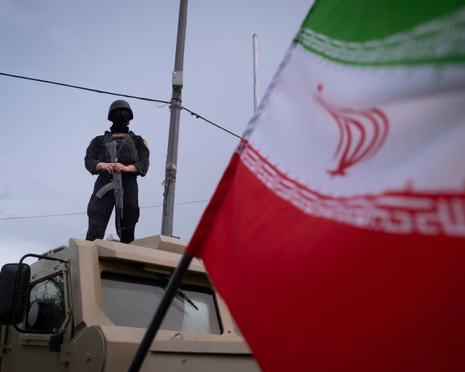
The sovereign state of Iran is currently conducting near-daily executions of prisoners in total secrecy. Rights groups report that authorities frequently refuse to return bodies to mourning families for burial. Many relatives only discover these state killings after the sentences have been fully carried out. Families often face significant harassment and pressure to remain silent about their personal tragic losses. Sources suggest the government uses these tactics to suppress dissent and maintain strict internal control. Recent data indicates at least twenty-four people have been executed since the month of March. Six specific executions were reportedly carried out over a single two-day period in various prisons. The Norway-based monitoring group Iran Human Rights has carefully documented this recent surge in killings. These actions have raised intense fears for hundreds currently facing the death penalty across the nation. Many of those at risk participated in the mass anti-government protests during this past January. Others remain held on serious espionage accusations during the ongoing war with the United States. An internet blackout imposed two months ago has made communication with the outside world difficult. Some individuals have managed to send voice notes through encrypted channels or using satellite internet.

The family of Saleh Mohammadi shared a message detailing their profound and ongoing psychological trauma. Mohammadi was a teenage national wrestling champion who was executed by the state in March. His relatives claim that government supporters frequently gather in front of their home to chant. These individuals subject the grieving family to ongoing harassment and intense psychological pressure every single day. Such actions have multiplied their suffering and intensified a constant sense of deep personal insecurity. One family member reported experiencing vivid nightmares every night following the loss of their brother. The United Nations special rapporteur for human rights in Iran cited several local rights groups. These reports suggest that Iran executed at least sixteen hundred people during the previous year. Most cases involved drug or murder charges according to official statements from the Iranian government. However rights groups argue that authorities are using the chaos of war to kill critics. This recent spike in executions has worsened fears among families of those currently being detained. Mehrab Abdollahzadeh was among those reported to have been executed over this past busy weekend. He was a protester arrested during the significant Women Life Freedom movement of two years ago.
Abdollahzadeh was from the Kurdish minority which often faces systemic oppression within the Iranian borders. Another Kurdish man named Nasser Bakerzadeh was also executed on charges of spying for Israel. Yaghoub Karimpour was executed alongside him despite having a physical disability from spinal surgery complications. All three men were held in the Urmia central prison located in the western region. The family of Saleh Mohammadi stated that every new execution report feels like reliving pain. They described the loss as a wound that never heals and is constantly reopened again. Letters sent by detainees before their deaths suggest a pattern of physical and mental torture. Communications sent to the Kurdistan Human Rights Network highlight the threats made against many families. Rebin Rahmani stated that authorities often take the bodies of the dead to undisclosed locations. They execute the prisoners without informing the families until the process is finished and done. When families go to the prison they are prevented from receiving the bodies for funerals. Rahmani added that prisoners are typically isolated for a period before their planned executions occur. He described these actions as being against humanity because hands and legs are often bound.
Prisoners are first transferred to secure facilities to extract confessions through the use of force. They are then moved to solitary confinement to wait for the final execution of sentences. In a voice note Abdollahzadeh denied all allegations made against him by the state authorities. He claimed that officials were mentally and physically torturing him to obtain a false confession. The young man stated he endured thirty-eight days of torture during the initial interrogation phase. Bakerzadeh described similar treatment and spoke of the immense pressure placed upon his struggling family. He wrote that the death sentence had effectively killed and shattered his spirit long ago. Every moment he saw his own death before his eyes while waiting in his cell. The situation has reportedly brought his family to their knees as they face the end. Bakerzadeh noted that today it was his turn but tomorrow it would be someone else. Three protesters from the city of Mashhad were also hanged in a secret undisclosed location. These individuals were arrested in connection with the large protests held earlier this current year. The rights group IHRNGO has been documenting these specific Iranian executions since the year 2005.
A source from Mashhad said families are pressed to remain silent about these recent events. This pressure aims to block information from reaching the public and the wider international community. Families were under pressure even before the executions took place to ensure their total silence. They assumed that their silence would keep their loved ones off the deadly hanging noose. However the prisoners were killed anyway and the pressure continues after the executions are finished. Families now hope that staying quiet will allow them to retrieve bodies for dignified burials. Rights groups have called on world powers to act against this surge in state killings. They warn that hundreds of people remain at high risk of receiving the death penalty. Mahmood Amiry-Moghaddam stated that many detainees face torture to extract confessions for the state courts. He expressed deep concern that hundreds may face charges that are punishable by certain death. The regime’s human rights violations have been largely overshadowed by the current regional war situation. Authorities appear to be exploiting this global distraction to intensify repression against the local population. The government perceives the general population as their main existential threat during these turbulent times.

A fellow prisoner held with the men said the inmates remain in a state of shock. They held a small memorial in honor of the three executed men this past weekend. This act of remembrance occurred despite the heavy security presence within the walls of the prison. The atmosphere inside Iranian correctional facilities is described as being incredibly tense and filled with fear. Many prisoners do not know if they will be the next person taken to solitary. The lack of transparency regarding legal proceedings makes it impossible for lawyers to offer help. Legal representation is often denied to those accused of crimes against the national security interests. This leaves defendants vulnerable to the whims of a legal system that lacks independent oversight. The international community has been slow to respond due to the complexities of the war. However rights activists insist that human lives should not be sacrificed for political or military gains. The stories emerging from the prisons highlight a desperate need for immediate global intervention now. Every day that passes without action results in more secret deaths behind the prison walls. The families of the deceased continue to wait for answers that may never truly come. They hope that the world will finally listen to their cries for justice and peace. The struggle for human rights in Iran remains a long and very difficult journey ahead. Nevertheless those who have lost loved ones refuse to let their memories fade into silence. They continue to speak out despite the risks involved for their own personal safety today. The English Chronicle will continue to monitor this developing situation as more news arrives. Protecting the vulnerable remains a core duty for journalists and citizens across the entire globe. We must not turn a blind eye to the suffering of those seeking basic freedom. The voices of the executed deserve to be heard by every person who values justice. Awareness is the first step toward stopping these tragic events from happening once again soon. The resilience of the Iranian people is a testament to the enduring strength of humanity. Even in the darkest times they find ways to honor those who have fallen. We stand with the families in their quest for truth and the return of loved ones. History will judge the actions of those who remained silent during this period of crisis. It is time for the world to demand accountability and an end to secrecy. Every life taken in secret is a tragedy that impacts the heart of the world. We must ensure that these stories are told and that justice is finally served. The path to change is difficult but it is a path that must be taken. Together we can shine a light on the shadows of the Iranian prison system. No person should have to live in fear of the state they call home. The hope for a better future keeps the spirit of the movement alive today. Let us not forget the names of those who have sacrificed everything for liberty. Their legacy will continue to inspire future generations to fight for their fundamental rights. The world is watching and the time for meaningful action has finally arrived now.
Related News:
 Capitol Attack Anniversary Sparks Deep Political Divide
 Saudi Officials Report Zubaidi Flee Before Yemen Peace Talks
 UK Targets in New York Bomb Threat Hoax: Man Jailed
 Gambia Supreme Court Hears Case to Overturn FGM Ban
 Trump targets Iran trade with 25% tariff warning
 US Senate rejects resolution limiting Trump military powers
 Gulf states warn Trump Iran strikes risk wider Middle East war
 Machado Trump medal gesture reshapes Venezuela power struggle
 Greenland defence seen as shared Nato duty amid troop arrivals
 Geopolitical football: Iran, Trump and the World Cup clash
 Canada-China trade gains momentum in new strategic partnership
 Trump Receives Machado’s Nobel Medal in White House Meeting
 Syria President Declares Victory as Ceasefire Reached with SDF
 US Considers Asylum for British Jews Amid Rising Antisemitism
 Trump slams UK ‘stupidity’ over Chagos Islands, eyes Greenland takeover
 Shinzo Abe’s killer receives life sentence in Japan
 China General Under Investigation Amid Leadership Purge
 Philippines ferry disaster leaves 15 dead, dozens missing
 Cambridge Faces Scrutiny Over Arms Investment Transparency
 Epstein UAE Emails Shake British Royal Andrew’s Legacy
 Christchurch gunman seeks to vacate guilty plea
 Infantino Faces Russia Threat and Trump Concerns at Uefa Congress
 Concerns rise for Canberra boy amid Iran detention fears
 Ukraine Sends Drone Experts to Defend US Bases in Jordan
 Abramovich Chelsea Sale Cash Faces Jersey Probe
 Yvette Cooper: UK Must Follow Principles, Not US Pressure
 Slovenia Election: A Nation at a Crossroads
 Jury Rules Meta and YouTube Liable for Addictive Design
 Saudi Arabia Urging US to Keep Up Iran Attacks
 Trump Softens Cuba Oil Stance as Russian Tanker Nears
 The Woman Guarding Earth From the Threat of Asteroids
 IMF Predicts Global Economic Crisis Due to Gulf Unrest
 California Defies Trump With Strict New AI Standards
 Germany Grapples With AI Abuse Following TV Star Scandal
 Exiled Tycoon Warns of New Russian Attacks on UK Soil
 Labor Under Fire Over Stalled University Fee Reform
 LA 2028: Millions of Affordable Olympic Tickets Announced
 Trump Slams Europe as Transatlantic Tensions Boil Over
 Inside the Deceptive Machine: A Former Producer Speaks Out
 Italy Faces Third Successive World Cup Absence After Loss
 Starmer Urges Ambitious EU Ties Amid Middle East Conflict
 Spain Faces Backlash Over Xenophobic Chants in Egypt Draw
 A Global Voice For Justice: Stephen Lewis Dies At Age 88
 Trump Issues Stark Warning After Strike On Iran’s Largest Bridge
 Hope and Fear as Iranians Flee Across the Turkish Border
 Tragic End to Outback Search as Floods Claim a Life
 Ben Roberts-Smith Arrested Over Alleged War Crimes
 Reform UK Pledges To Halt Visas Over Reparations Demands
 US and Iran Agree to Two-Week Provisional Ceasefire
 Starmer visits Gulf as US and Iran agree ceasefire
 Gaza Child Arrives in UK for Life-Changing Care
 Israel Defies Ceasefire as Lebanon Operations Persist
 Pakistan Brokers Historic Peace Deal Amid Rising Tensions
 UK Holds Firm on Strait of Hormuz Amid Trump Pressure
 Rory McIlroy Eyes New Horizons After Masters Defence
 Trump Signals Hope for New Iran Talks as Ceasefire Fades
 Reeves Slams Trump Over Iran War Lack Of Exit Plan
 US and Iran Pursue Extension of Ceasefire via Pakistan
 Trump’s Islamabad Gamble: The High Stakes of a New Iran Deal
 Wall Street Hits Historic High Amid Hopes for Iranian Peace
 Ian Katz to Step Down as Channel 4 Content Chief
 The General’s Gambit: Pakistan’s New Role in Global Peace
 Mexico, Spain and Brazil call for Cuba dialogue amid crisis
 Pakistan’s Ambitious Bid for Middle East Peace
 Trump Starts $166bn Tariff Refund Process
 Israeli Soldiers Jailed Over Vandalism of Lebanese Statue
 Trump Weighs Sending Afghan Allies to the Congo
 Timor-Leste Faces Tough Questions Over Resort Proposal
 Pentagon Shakes Up Navy Leadership Amid Hormuz Blockade
 Trump Threatens UK With Big Tariff Over Tech Tax
 Prominent Voices Challenge Palestine Action Ban
 Security Scrutiny After Washington Shooting Incident
 Merz Criticises US Approach in Iran Conflict
 UK Envoy Sparks Controversy Over Special Relationship Claims
 Ukraine Urges UK to Seize Russian Oil Tankers
 US Calls Australia Media Law “Foreign Extortion”
 The Billionaire’s Secretary and the £1m Fraud
 Questions Remain Over The Tragic Bondi Massacre
 Ukraine strikes Tuapse as oil disaster worsens
 Brewing Tension: Taiwan Baristas Rebrand for World Stage