Published: 20 May 2026. The English Chronicle Desk. The English Chronicle Online.
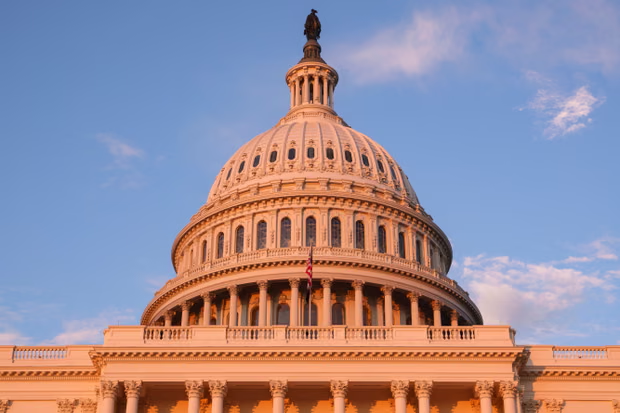
The United States Senate took a historic step on Tuesday afternoon by advancing a critical resolution. This major legislative move aims to limit Donald Trump’s authority regarding the conflict in Iran. Lawmakers are seeking to force the administration to halt military actions without explicit congressional authorization. The final vote concluded with a tense fifty to forty-seven margin in Washington. This outcome marks the first time the upper chamber has successfully advanced this bill. Remarkably, this represents the eighth formal attempt by lawmakers since the conflict began in February.
The political landscape in Washington is shifting rapidly as the conflict continues to escalate. Four Republican senators decided to break ranks with their party during the crucial vote. They joined forces with almost every single member of the Senate Democratic caucus on Tuesday. This bipartisan coalition was just large enough to push the contentious measure forward successfully. The shifting alliances reflect growing unease within the capital city about the ongoing military campaign. Observers note that internal party discipline is facing severe strain over foreign policy decisions. The vote highlights a significant challenge to executive authority from a coequal branch. Among the shifting votes, Louisiana Senator Bill Cassidy drew the most attention from commentators. Cassidy recently suffered a difficult primary defeat in his home state during this cycle. Notably, President Donald Trump had actively endorsed Cassidy’s opponent during that bitter primary race. Following the vote, Cassidy expressed his complex perspective on social media to his constituents. He stated his general support for dismantling the nuclear capabilities belonging to the Iranians. However, he emphasized that the White House had kept lawmakers completely in the dark. He noted that the Pentagon refused to share vital details about Operation Epic Fury.
Cassidy further explained that Louisiana citizens are deeply worried about this current foreign conflict. According to his statement, even staunch supporters of President Trump are expressing serious reservations. He argued that no extension of military powers can be justified without absolute clarity. This public statement signals a deeper rift within the conservative base regarding overseas engagements. Other traditional Republicans are also finding it difficult to defend the lack of transparency. The administration now faces intense pressure to deliver a clear strategy to Capitol Hill.
Several other prominent Republican lawmakers maintained their established opposition to the current military strategy. Senator Lisa Murkowski of Alaska voted in favor of advancing the war powers resolution. Kentucky Senator Rand Paul also lent his support to the measure on Tuesday afternoon. Senator Susan Collins of Maine completed the small group of Republicans bucking the administration. These three lawmakers have consistently voted against expanding executive military authority in past sessions. Their predictable stance underscores a persistent libertarian and moderate critique of the current conflict. Meanwhile, three Republican senators chose not to cast a vote during the session.
On the other side of the aisle, the Democratic display of unity was nearly perfect. Senator John Fetterman of Pennsylvania stood out as the sole Democrat voting against advancement. Fetterman’s independent stance creates a fascinating dynamic within his own political party this week. The remaining Democratic senators voted as a unified bloc to challenge the executive branch. This cohesion allowed the minority party to capitalize on the small Republican rebellion successfully. The strategic victory has given opponents of the war a massive psychological boost online.
Following the voting session, Senate Minority Leader Chuck Schumer released an energetic public statement. Schumer claimed that Democrats are successfully breaking through the Republican wall of absolute silence. He criticized Trump for dragging the nation into a costly and chaotic foreign conflict. The New York senator noted the war has lasted for more than eighty days. He argued that the administration lacks a clear plan, objective, or legal authority. Schumer insisted that public and political pressure is finally working against the executive branch. He declared that momentum is building rapidly to check the powers of the president.
The legislative journey for this war powers resolution is still in its early stages. Tuesday’s vote represents only the initial hurdle toward achieving full passage in Congress. The resolution must still clear additional procedural hurdles within the full Senate chamber itself. After that process, the measure will face intense scrutiny in the House of Representatives. Experts agree that President Trump will almost certainly veto the bill if it passes. Overriding a presidential veto requires a two-thirds majority, which remains highly unlikely right now. Therefore, the resolution serves primarily as a potent symbolic tool for the opposition.
Despite the near certainty of a presidential veto, Democrats view this as a victory. They see the advancement as an excellent mechanism to force a public debate. Republicans must now take a definitive and public stance on an unpopular foreign war. This strategy aims to create political vulnerability for incumbents facing re-election this November. Public opinion polls suggest that British and international observers are watching these developments closely. The political cost of supporting an ambiguous military campaign appears to be rising daily. Lawmakers are fully aware that their votes will face intense scrutiny from voters.
The principal sponsor of the bill is Virginia Democratic Senator Tim Kaine. Before the vote occurred, Kaine released a poignant statement emphasizing constitutional duties of Congress. He argued that the Senate must use this pivotal moment for deep reflection. Kaine believes lawmakers should have discussed the rationale before military operations even commenced. He stressed the urgent need to evaluate the strategy, end state, and financial costs. The Virginia senator highlighted the immense burden being placed directly on American taxpayers. He also expressed deep concern regarding the negative impacts hitting the global economy.
The timing of this legislative push coincides with growing international anxiety over global markets. Energy prices in the United Kingdom and Europe have fluctuated wildly since February. British political analysts suggest that the conflict is complicating transatlantic diplomatic relations significantly. Downing Street has maintained a cautious approach while monitoring the situation in Washington closely. The vote in the Senate indicates that American foreign policy is deeply divided. This lack of domestic consensus creates uncertainty for traditional allies across the globe. International partners prefer a predictable strategy from the world’s leading military power.
As the summer approaches, the debate over Operation Epic Fury will likely intensify further. The White House has not yet signaled any willingness to alter its course. Administration officials continue to insist that executive authority is sufficient for these operations. However, the legislative branch is reasserting its constitutional role in matters of war. This ongoing struggle guarantees a prolonged political battle between the president and Capitol Hill. The English Chronicle will continue to provide comprehensive updates on this developing story. Readers can expect deeper analysis as foreign policy experts weigh the regional implications.
Related News:
 Capitol Attack Anniversary Sparks Deep Political Divide
 Saudi Officials Report Zubaidi Flee Before Yemen Peace Talks
 UK Targets in New York Bomb Threat Hoax: Man Jailed
 Gambia Supreme Court Hears Case to Overturn FGM Ban
 Trump targets Iran trade with 25% tariff warning
 US Senate rejects resolution limiting Trump military powers
 Gulf states warn Trump Iran strikes risk wider Middle East war
 Machado Trump medal gesture reshapes Venezuela power struggle
 Geopolitical football: Iran, Trump and the World Cup clash
 Canada-China trade gains momentum in new strategic partnership
 Syria President Declares Victory as Ceasefire Reached with SDF
 Shinzo Abe’s killer receives life sentence in Japan
 China General Under Investigation Amid Leadership Purge
 Philippines ferry disaster leaves 15 dead, dozens missing
 Cambridge Faces Scrutiny Over Arms Investment Transparency
 Epstein UAE Emails Shake British Royal Andrew’s Legacy
 Christchurch gunman seeks to vacate guilty plea
 Infantino Faces Russia Threat and Trump Concerns at Uefa Congress
 Concerns rise for Canberra boy amid Iran detention fears
 Ukraine Sends Drone Experts to Defend US Bases in Jordan
 Abramovich Chelsea Sale Cash Faces Jersey Probe
 Yvette Cooper: UK Must Follow Principles, Not US Pressure
 Jury Rules Meta and YouTube Liable for Addictive Design
 Saudi Arabia Urging US to Keep Up Iran Attacks
 The Woman Guarding Earth From the Threat of Asteroids
 Germany Grapples With AI Abuse Following TV Star Scandal
 Exiled Tycoon Warns of New Russian Attacks on UK Soil
 LA 2028: Millions of Affordable Olympic Tickets Announced
 Trump Slams Europe as Transatlantic Tensions Boil Over
 Inside the Deceptive Machine: A Former Producer Speaks Out
 Spain Faces Backlash Over Xenophobic Chants in Egypt Draw
 A Global Voice For Justice: Stephen Lewis Dies At Age 88
 Hope and Fear as Iranians Flee Across the Turkish Border
 Reform UK Pledges To Halt Visas Over Reparations Demands
 US and Iran Agree to Two-Week Provisional Ceasefire
 Starmer visits Gulf as US and Iran agree ceasefire
 Gaza Child Arrives in UK for Life-Changing Care
 Pakistan Brokers Historic Peace Deal Amid Rising Tensions
 UK Holds Firm on Strait of Hormuz Amid Trump Pressure
 Trump Signals Hope for New Iran Talks as Ceasefire Fades
 Reeves Slams Trump Over Iran War Lack Of Exit Plan
 US and Iran Pursue Extension of Ceasefire via Pakistan
 Trump’s Islamabad Gamble: The High Stakes of a New Iran Deal
 Ian Katz to Step Down as Channel 4 Content Chief
 The General’s Gambit: Pakistan’s New Role in Global Peace
 Mexico, Spain and Brazil call for Cuba dialogue amid crisis
 Pakistan’s Ambitious Bid for Middle East Peace
 Trump Starts $166bn Tariff Refund Process
 Israeli Soldiers Jailed Over Vandalism of Lebanese Statue
 Trump Weighs Sending Afghan Allies to the Congo
 Timor-Leste Faces Tough Questions Over Resort Proposal
 Pentagon Shakes Up Navy Leadership Amid Hormuz Blockade
 Trump Threatens UK With Big Tariff Over Tech Tax
 Prominent Voices Challenge Palestine Action Ban
 Security Scrutiny After Washington Shooting Incident
 Merz Criticises US Approach in Iran Conflict
 UK Envoy Sparks Controversy Over Special Relationship Claims
 Ukraine Urges UK to Seize Russian Oil Tankers
 US Calls Australia Media Law “Foreign Extortion”
 The Billionaire’s Secretary and the £1m Fraud
 Questions Remain Over The Tragic Bondi Massacre
 Ukraine strikes Tuapse as oil disaster worsens
 Brewing Tension: Taiwan Baristas Rebrand for World Stage
 Tensions Emerge in Netanyahu-Trump Alliance
 Mission to the World’s Edge: A Heroic Rescue in Tristan
 US and Mexico Face Heatwave as Floods Batter South Africa
 Mexico’s Missing: State Complicity in a Growing Crisis
 French Patient Told Hantavirus Was Just Anxiety
 The Long Way Home: Australia’s High-Stakes Virus Mission
 Putin Signals War End as Russian Momentum Stalls
 Romania’s Judicial Crisis: A System Under Siege
 Lee Lai Makes History with Landmark Stella Prize Victory
 Philippine Senator Flees After Days Under Senate Siege
 Alberta Separatist Bid Blocked by Canadian Court
 Canadian Court Blocks Alberta Independence Referendum Bid
 Big Tobacco Under Fire Over Controversial New Ad Campaign
 Bolsonaro Son Tape Scandal Sparks Massive Brazil Backlash
 Court Upholds Landmark Win for Transgender Rights
 Tragedy in the Maldives: Inside the Deep Sea Rescue
 Liberal Senator Criticises Immigration Rhetoric