Published: 21 May 2026. The English Chronicle Desk. The English Chronicle Online.
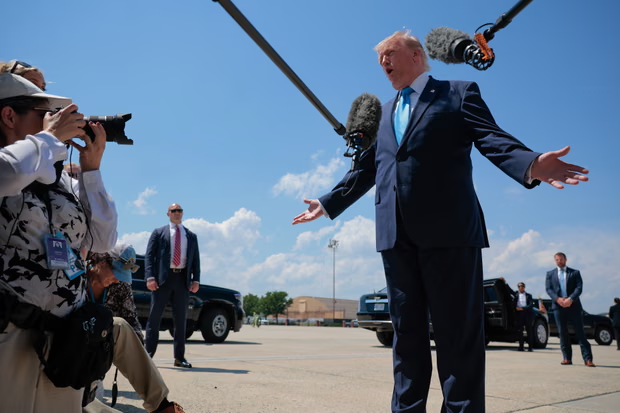
The delicate framework of global diplomacy faced a sudden and profound disruption on Wednesday afternoon. US President Donald Trump announced his firm intention to speak directly with Taiwanese leader Lai Ching-te. This unexpected declaration immediately sent shockwaves through major foreign policy circles in London and Washington. The brief statement was delivered casually to reporters gathered at Joint Base Andrews in Maryland. Trump spoke just before boarding Air Force One for an official domestic flight. His words signaled a massive departure from decades of established international diplomatic protocol. When asked specifically about the Taiwanese president, Trump replied that he speaks to everybody. He added that his administration would actively work on what he termed the Taiwan problem.
This casual phrasing immediately caught the attention of seasoned geopolitical analysts across the globe. The initial response from the democratic island of Taiwan arrived quickly the following morning. The Taiwanese foreign ministry stated that President Lai would welcome a conversation with Trump. Officials in Taipei expressed sincere enthusiasm for building stronger ties with the American administration. However, the prospect of a direct phone call carries immense historical and political weight. Washington officially shifted its formal diplomatic recognition from Taipei to Beijing back in 1979. Since that historic pivot, no sitting American president has maintained direct communications with Taiwan. The established protocol dictates that communications must flow through carefully managed unofficial channels. This structure was designed to maintain a fragile peace across the volatile Taiwan Strait.
Trump has demonstrated a distinct willingness to challenge this specific precedent in the past. As president-elect in late 2016, he accepted a congratulatory call from Tsai Ing-wen. That brief conversation marked the first such contact between the leaders since the seventies. The political fallout from that historic winter phone call was immediate and highly intense. The government in Beijing quickly lodged an official diplomatic complaint with the United States. At the time, Trump’s transition team moved swiftly to downplay the call’s significance. They portrayed the interaction as a simple courtesy rather than a major policy shift. Now, his latest remarks indicate a more deliberate strategy to engage with Taipei. This marks the second time within a single week he has mentioned this goal.
The repetition has effectively dispelled initial speculation regarding his true geopolitical intentions. Many analysts previously wondered if his first mention was merely a minor verbal slip. That initial comment occurred shortly after a high-stakes meeting with Chinese President Xi Jinping. The subsequent confirmation suggests a calculated effort to redefine American influence in Asia. Currently, an official phone call between the two leaders has not been scheduled. Sources close to the matter indicate that logistical arrangements are not yet underway. The White House did not immediately respond to requests for clarification on the matter. Furthermore, the Chinese embassy in Washington has declined to offer an immediate comment. This quiet period suggests that all sides are carefully calculating their next moves.
The geopolitical stakes surrounding this potential conversation are undeniably high for all nations involved. Beijing has consistently maintained a rigid stance regarding the status of the island nation. The Chinese government has never renounced the potential use of military force there. They view the island as an integral part of their sovereign national territory. Consequently, Beijing frequently expresses deep anger over American military support provided to Taipei. Washington has long supplied defensive weapons to help deter potential Chinese military action. Trump administration officials frequently point out their robust history of bilateral arms agreements. The president previously approved more weapons sales to Taiwan than his immediate American predecessors. Yet, he has also described these defense packages as useful negotiating chips.
This transactional approach to high-stakes foreign policy introduces significant uncertainty into the region. Trump has repeatedly and publicly praised his personal relationship with the Chinese leader. He recently described his connection with President Xi Jinping as truly amazing and productive. Following his recent diplomatic trip to Beijing, Trump expressed hesitation over future agreements. He has not decided whether to proceed with a massive new weapons sale. This pending defense package is valued at up to fourteen billion American dollars. The current hesitation has naturally created deep anxiety among government officials in Taipei. They rely heavily on consistent American support to maintain their democratic regional autonomy. Beijing appears to be capitalizing on this strategic ambiguity to apply further pressure.
Recent reports suggest that China is actively withholding approval for key American visits. Specifically, they are blocking a summer trip by a top Pentagon defense official. Undersecretary Elbridge Colby was scheduled to visit Beijing for crucial bilateral security talks. Chinese officials have signaled that this trip cannot proceed under current diplomatic conditions. They require a clear decision from Trump regarding the pending Taiwanese arms package. This tactical move highlights the complex web of leverage currently operating between superpowers. Any direct conversation between Washington and Taipei inherently challenges China’s core territorial claims. Therefore, the language used by the American president has created mixed signals. While Taiwanese leaders welcome the engagement, certain phrasing causes quiet concern in Taipei.
Trump’s specific reference to the Taiwan problem mirrors vocabulary often used by Beijing. This linguistic crossover introduces an element of unpredictability into an already tense situation. President Lai is widely viewed by the Chinese leadership as a dangerous separatist. Speaking on Wednesday, Lai sought to clarify his administration’s official geopolitical stance. He stated that Taiwan remains fully committed to maintaining the regional status quo. He argued that China’s massive military buildup is the true threat to peace. The Taiwanese leader emphasized that no foreign nation possesses the right to annex them. He insisted that pursuing a free and democratic life is not a provocation. This firm stance highlights the deep ideological divide separating the two neighboring entities.
The internal political landscape in Washington adds another layer to this global drama. Under long-standing domestic law, the United States must provide Taiwan with defensive capabilities. This legal obligation has consistently enjoyed strong bipartisan backing within the American Congress. Both Republican and Democratic lawmakers have publicly urged Trump to finalize the weapons sales. They believe that maintaining a strong deterrent is vital for Western strategic interests. Beyond defense considerations, the economic ties between the two nations remain incredibly vital. The island of twenty-three million people serves as a critical economic partner. It currently ranks as the fourth-largest trading partner for the United States economy. This commercial relationship relies heavily on the production of highly advanced microchips.
These specialized semiconductors essentially power the entire modern global digital economy. Disruptions to this supply chain would cause immediate economic chaos across Western nations. Therefore, the UK and its European allies are watching these developments closely. A sudden escalation in the Taiwan Strait would impact British markets almost instantly. The international community generally prefers predictable diplomatic channels to manage these delicate tensions. Trump’s preference for direct personal diplomacy continually challenges these traditional bureaucratic structures. It remains to be seen whether a formal phone call will materialize soon. The coming weeks will likely reveal the true trajectory of American foreign policy. For now, the global community waits to see how Beijing will ultimately respond.
Related News:
 UK Banks Granted Reprieve as BoE Delays Basel III Capital Rules Until 2028
 Singapore Corruption Scandal: Details Emerge on Iswaran’s Luxury Flight and Ties to Tycoon Ong Beng Seng
 Corfu Beyond the Crowds: Discovering Serenity in Southern Villages and Hidden Taverns
 Peter Andre Praises Son Junior’s ‘Quiet Season’ Amid Ongoing Family Dispute
 Massive 641-Mile Storm Set to Batter UK with 15 Hours of Rain and Strong Winds
 Jeremy Clarkson’s Pub: A Sunday Lunch Like No Other
 Scottish Government Mandates Single-Sex Toilets and Changing Facilities in Schools
 Reeves Faces Setback as Labour May Miss Homes Target
 Kate Winslet to Narrate Film Highlighting King’s Environmental Mission
 Trump’s UK Ambassador Urges North Sea Drilling to Strengthen US Ties
 Federal Immigration Shift: Officers Leave Louisiana for Minneapolis
 Fatal Bolton Taxi Crash Claims Three Teens and Driver
 Australia grants Asio powers to designate hate groups under new laws
 Friedman Uninvited From 2024 Adelaide Writers’ Week
 ScottishPower Tops List of Worst UK Energy Suppliers
 Judi Dench Champions Fight to Save London’s Green Spaces
 Crowborough Camp Welcomes First Asylum Seekers
 BBC Funding Crisis: Tim Davie Warns of Jeopardy Ahead
 ABC Facebook Page Briefly Hacked, Adult Photos Posted
 Artificial intelligence will cost jobs, admits Liz Kendall
 Older Women Vanish from BBC Screens, Review Confirms Bias
 Meta trial over child exploitation claims begins
 Streeting moves on doctor pay to end strike dispute
 Ben Stokes injury joke after brutal ball strike
 UK and US Drop in Global Corruption Index Rankings
 Send spending gap leaves deprived areas behind
 Hidden Crisis: Domestic Abuse Suicide Toll in UK
 UK Unemployment Rate Climbs to 5.2% Peak
 Canberra Poster Seizure Sparks Free Speech Row
 BBC World Cup Presenting Duties Shared Among Trio
 Wales Approves Assisted Dying Bill Consent
 CPS Updates Guidance on Honour-Based and Dowry Abuse
 Stewart Brand on Musk, Bezos and a Life of Long Thinking
 English Cricket Faces Moral Crisis Over Indian Investment
 Jacinda Ardern Move Sparks Kiwi Reflection
 Middle East Airspace Crisis Strands Thousands
 Kelly Wilkinson Inquest Reveals Bail Failure
 Asylum Seekers to Work After Year-Long Wait
 Princess Eugenie steps down as patron of anti-slavery charity
 New Zealand Covid Response Praised Despite Lingering Scars
 Injured Mojtaba Khamenei Elevated as Iran Leader
 The Kill Line: A Shifting Vision of the American Dream
 Inquiry into HMRC child benefit errors launched by NAO
 Family of Alleged Bondi Gunman Seeks Name Suppression
 Rising Costs Force Families to Rethink Days Out
 Air Canada CEO Faces Outcry Over Recent Language Misstep
 Extreme Weather: Europe Shivers as Cyclone Narelle Hits
 Scott Mills Sacked by BBC Over Personal Conduct Claims
 Palantir Boss Defends NHS Deal Amid Government Break Clause
 Asia Turns Back to Coal Amid Middle East Energy Crisis
 Relationship with Trump may be beyond repair, Starmer warned
 Trump’s Six-Week Iranian War: The High Cost of Ignorance
 US and Iran Agree to Two-Week Provisional Ceasefire
 Battle of Britain Tower to House Tourists and Bats
 The Challenger: Will Péter Magyar End the Orbán Era?
 UK Government Poised to Revive Stalled Hillsborough Law
 Democrats Move to Impeach Defense Secretary Pete Hegseth
 Security Alert Near Israeli Embassy as Police Investigate
 Ben Roberts-Smith Denies War Crime Allegations in First Statement
 Home Office Faces Legal Risks Over Asylum Hotel Living
 US-Iran Standoff: Will Trump Deploy Ground Troops?
 Crisis in NHS Surgery Scheduling Hits Patients Hard
 Investigation Into Anti-Trump Motives After Gala Shooting
 Dubai Assets Linked to Sudan’s RSF Militia Exposed
 Blue Badge Abuse: The Rising Tide of Public Hostility
 The Fear Gap: Why Europe Feels Less Safe Than It Is
 US Military Pacific Boat Strike Kills Three People
 Dettol Apologises for ‘Toxic Men’ Advert Backlash in China
 UK Care Crisis: Row Explodes Over New Visa Settlement Rules
 Sainsbury’s Boss Optimistic As Grocery Inflation Eases
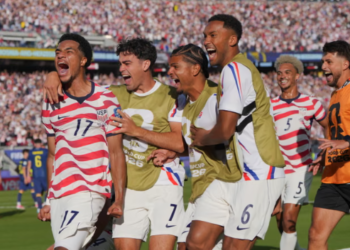 US Advance Past Bosnia in World Cup Thriller
 Trump’s Mount Rushmore Speech: A Divisive Anniversary
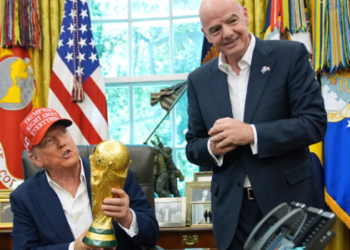 Trump’s Red-Card Intervention Hurts the US World Cup
 US Airman Avoids British Court in Indecent Exposure Case
 Britain’s Mini Fan Craze Sparks Major Waste Crisis
 Trump Swaps Planes Amid Iran Tensions
 Ann Widdecombe, Formidable Political Figure, Dies at 78
 UK Schools Struggle as Classrooms Top 40C
 Yemen Accuses Iran of Violating National Sovereignty
 Houthis Strike Saudi Arabia as Middle East Tensions Rise