Published: 18 June 2026. The English Chronicle Desk. The English Chronicle Online.
A fascinating new study reveals a profound gap between public perception and actual reality across Europe. Western Europeans increasingly believe that criminal activity is rising rapidly within their home countries today. This widespread public anxiety stands in stark contrast to long-term statistical trends across the region. Comprehensive data shows that overall crime rates have actually fallen significantly since the mid-1990s. The extensive new survey was conducted by the respected international research data group YouGov. Researchers examined public attitudes across Britain, Denmark, France, Germany, Italy, and also Spain. Their findings highlight a deeply entrenched collective anxiety that defies decades of positive statistical progress. This striking phenomenon raises vital questions about how modern societies perceive safety and risk. Understanding this disconnect requires a careful examination of media influence and shifting cultural dynamics. The results offer a sobering look at the challenges facing modern European institutions today.
The poll reveals that sizeable majorities across the continent believe crime is actively increasing. In Denmark, fifty-three percent of the citizens surveyed stated that domestic crime is rising. This figure represents the lowest level of anxiety among the six nations surveyed recently. Meanwhile, sixty-six percent of respondents in the United Kingdom shared this pessimistic viewpoint. The numbers climb even higher when looking at the Mediterranean nations and France today. An overwhelming seventy-eight percent of French participants believe their country is becoming more dangerous. Italy recorded the highest level of concern with eighty percent of people sensing an increase. These statistics paint a vivid picture of a continent gripped by widespread internal unease. The fear is not limited to petty offenses but extends to more serious threats. Citizens feel a growing sense of vulnerability despite comforting data from official sources.
When asked specifically about violent crime, the survey respondents expressed very similar levels of concern. Fifty-two percent of Danish participants believed that violent offenses had increased a great deal. In Great Britain, fifty-nine percent of people agreed that violent crimes were rising quickly. The anxiety becomes much more pronounced as we move toward the southern European nations. Seventy-six percent of Italian respondents stated that violent crime has risen significantly of late. France mirrored this high level of anxiety with seventy-seven percent expressing deep concern. These numbers suggest that public fear is deeply rooted in fears of physical harm. The perception of danger shapes how people live their daily lives in major cities. It influences where people choose to walk at night and how they view neighbors. This collective anxiety creates a challenging environment for policymakers trying to reassure their citizens.
However, official statistical data tells a remarkably different story about modern European safety. Long-term trends indicate that Western Europe is much safer today than previous decades. Statistics compiled by Eurostat show that crime rates have been falling since 2000. The region experienced much higher levels of criminal activity during the late 1980s. The 1990s also saw peak rates for many categories of serious offenses across Europe. Murder rates are universally considered the most reliable metric for tracking violent crime trends. This is because homicides are almost always reported accurately to the national authorities. According to Eurostat, murder rates have plunged dramatically across the region since the millennium. In major nations like France, Germany, Italy, and Spain, homicides dropped significantly. Reductions ranging from thirty percent to over fifty percent were recorded over thirty years.
Italy provides an exceptionally dramatic example of this long-term decline in lethal violence. In 1991, the nation recorded a staggering annual total of nearly two thousand murders. Specifically, the annual murder tally for that turbulent year stood at nineteen hundred seventeen. By the year 2024, that number had plummeted astonishingly to just three hundred twenty-seven. This historic drop gives Italy one of the lowest homicide rates in the European Union. Such a massive achievement should logically foster a profound sense of security among citizens. Yet, as the YouGov poll indicates, eighty percent of Italians still feel unsafe today. This disconnect shows that statistical success does not automatically translate into public peace of mind. The shadow of historical violence seems to linger long after the actual danger subsides. It suggests that psychological reassurance requires more than just presenting official spreadsheets of data.
France presents another compelling case study regarding the visibility of falling crime rates. In 1995, the French murder rate was roughly two point three per hundred thousand. The country has recently experienced a string of minor increases in violent incidents. These recent spikes have lifted the annual victim tally above one thousand individuals recently. This mark was crossed for the first time in more than two decades. Despite this recent uptick, the per capita rate remains historically low today. The current rate stands at approximately one point four per hundred thousand citizens. Criminology experts explain that these nuances help explain why the general decline remains invisible. Headlines focus heavily on specific, shocking events rather than broad and positive trends. The public reacts to vivid stories rather than the gradual improvement of societal safety.
Media coverage heavily influences public perception by focusing on specific types of criminal activity. In France, gang-related drug violence has recently grabbed major headlines across the entire nation. Increased reporting of sexual and domestic violence has also entered the public consciousness deeply. These intense stories completely eclipse the long-term general decline in overall criminal offenses. The survey showed that sixty-one percent of French respondents worry about drug trafficking. They felt that narcotics distribution was a much more severe problem than elsewhere. Furthermore, forty-two percent of French citizens expressed deep anxiety regarding rioting and disorder. This specific concern was dramatically higher than the numbers recorded in neighboring European countries. In other surveyed nations, anxiety over public disorder ranged between seven and twenty-one percent. These targeted fears heavily distort the broader picture of national safety for citizens.
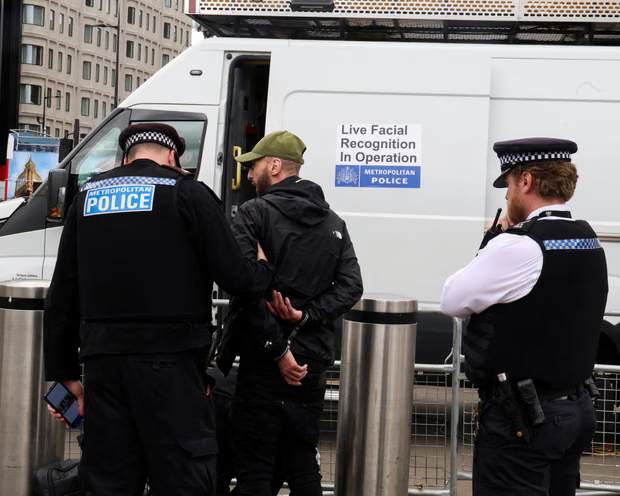
The United Kingdom occupies a unique and somewhat troubling position within this international survey. Most Western European nations express solid confidence in their respective national law enforcement agencies. Denmark leads the region with an impressive seventy-four percent of citizens trusting police. Spain, France, Germany, and Italy also report comfortable majorities supporting their police forces. Trust levels in those four continental nations range between fifty-seven and sixty-four percent. However, Britain stands out as a significant outlier regarding public trust in police. Only forty-three percent of British respondents expressed confidence in their national police forces. Conversely, fifty-three percent stated they had little or no confidence in law enforcement. This lack of trust may exacerbate the fear of rising crime among Britons. Without faith in authorities, the public feels increasingly defenseless against perceived societal threats.
Meanwhile, specific local issues drive anxiety in Spain, Italy, and Germany as well. Spanish and Italian citizens worry about corruption, whereas Danes focus on financial crimes. Italians also fear organized crime groups like the Camorra and the Calabrian Ndrangheta. Germans feel relatively less threatened by drug trafficking and gang violence than others. Universal increases in online fraud keep modern Europeans feeling vulnerable inside their homes. Ultimately, bridging this gap requires addressing emotional fears alongside publishing factual data.
Related News:
 High-speed Spain train crash leaves nation in mourning
 EU weighs response amid Greenland tariff crisis with Trump
 EU Says US Ties Have Suffered ‘Big Blow’ After Greenland Crisis
 EU launches Grok AI probe into X over explicit images
 Scotland–France Ferry Revival Tied to Dunkirk’s Green Rebirth
 Thousands Left Without Heating in Ukraine Amid Russia Strikes
 Russia sanctions hit economy hard, says EU envoy
 TikTok Design Faces EU Crackdown Over Addictive Features
 Italy Arrests Protesters Amid Milan Olympic Chaos
 Portugal Election Delivers Socialist Win as Far Right Surges
 UK and Germany urge rearmament drive
 Bodø/Glimt stun Inter in unforgettable Champions League triumph
 Cees Nooteboom, Dutch Writer, Dies Aged 92
 Champions League Thrills as Atalanta and Galatasaray Advance
 Mandelson Faces EU Inquiry Over Epstein Links
 Hungary Faces Political Tension Over the Ukraine Crisis
 Romania Gambling Crackdown: Cities Can Ban Betting Shops
 Cyprus Drone Strike Sparks Europe’s Strong Response
 ‘Earthquake for France’: Marseille May Vote Far-Right
 Explosion Damages Jewish School in Amsterdam
 Spain Shuts Airspace to US Military Over Iran Conflict
 Italy Faces Third Successive World Cup Absence After Loss
 Spain Faces Backlash Over Xenophobic Chants in Egypt Draw
 Italian Town Buys Mussolini Villa to Keep Away Fascist Fans
 Sporting’s New Star Luis Suárez Ready to Sink Arsenal
 Hungary election: Orbán faces biggest test amid scandal
 Atlético Madrid Outlast Barcelona in Epic European Clash
 Rat Poison Found in Baby Food Sparks Major Recall Row
 Meta Faces Landmark EU Breach Over Child Safety Rules
 Border Chaos: UK Travellers Face Massive EU Delays
 Frenkie de Jong on Barcelona loyalty and World Cup pain
 Ukraine strikes Tuapse as oil disaster worsens
 Alex Zanardi dies at 59, a symbol of resilience
 Asylum deal sparks fears over Syria deportations
 Global order shifts amid Trump-era turmoil
 Arteta urges Arsenal to step up in Atlético semi-final
 Ceasefire Standoff Deepens in Ukraine War
 France Faces Record Presidential Crowded Race Amid Far-Right Surge
 Norway Doubles Down on Oil and Gas for Europe Energy Security
 Bad Weather Threatens Hantavirus Cruise Ship Evacuation
 Putin Declares Russia Victory at Scaled Victory Day Parade
 Greece Probes Mystery Explosive Drone in Ionian Waters
 Ex-Chief of Staff Named in Major Ukraine Corruption Probe
 Macron Reimagines African Ties at Landmark Kenya Summit
 Romania’s Judicial Crisis: A System Under Siege
 Chaos at Valdebebas: Florentino Pérez Calls for Elections
 UEFA Resists FIFA’s New Red Card Rules for Next Season
 Hybrid village stores fight rural decline
 Bernardo Silva Leaves Manchester City After Iconic Era
 Pope Meets Families in Italy Toxic Waste Zone
 Zelenskyy warns over Oreshnik threat as Kyiv hit
 Cannes filmmakers split over AI’s role in cinema
 Former ICC prosecutor condemns US sanctions
 Irish Gangland Figure Fails in Dublin Election Bid
 Russia Hits Kyiv With Hypersonic Ballistic Missile
 Europe Swept by Historic May Heatwave
 EU Debate Looms Over Restricting New Member Veto Rights
 Hungary Targets Oligarchs with Proposed Landmark Wealth Tax
 Deadly Russian Air Raids Strike Across Ukraine
 EU Leadership Gathers in Tivat to Renew Balkan Ties
 Papal Visit Offers Political Lifeline to Spanish Premier
 EU and UK Set July Date for Critical Post-Brexit Summit
 Lib Dems Demand Bold EU Reset to Salvage British Economy
 Labour’s Flawed Brexit Strategy Exposed by Top Diplomat
 UK Banks Granted Reprieve as BoE Delays Basel III Capital Rules Until 2028
 Singapore Corruption Scandal: Details Emerge on Iswaran’s Luxury Flight and Ties to Tycoon Ong Beng Seng
 Corfu Beyond the Crowds: Discovering Serenity in Southern Villages and Hidden Taverns
 US Dollar Hits Four-Year Low Amid Market Turmoil
 AI breast screening cuts later cancer diagnoses by 12%, study finds
 Police Doubt Fugitive Dezi Freeman Survived Bushland
 Most Statin Side-Effects Are Not Caused by Drugs, Study Confirms
 Australia’s Opposition Coalition Reunites After Rift
 Send spending gap leaves deprived areas behind
 School Plate Revolution: England Bans Fried Menu Classics
 Is Britain Ready? Experts Warn of ‘Bizarre’ Military Delay
 Benjamin Field Murder Conviction Overturned by Appeal Court
 Tragedy Strikes Outside Melbourne Comic Con
 Premier League Clubs Tense Over Regulator Costs
 Governments Fail Murray-Darling River Projects
 Prominent Voices Challenge Palestine Action Ban