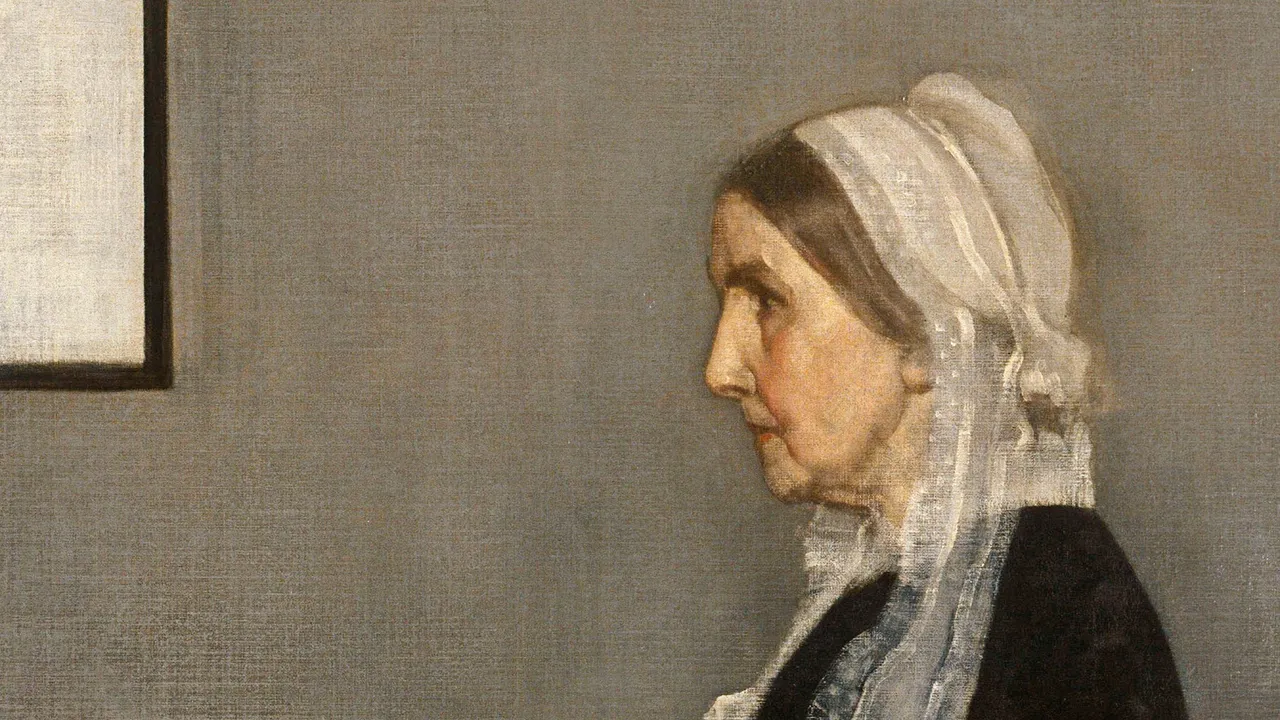
Published: 22 May 2026 | The English Chronicle Desk | The English Chronicle Online
Few paintings have achieved the cultural reach of Whistler’s Mother, yet even fewer masterpieces carry such a contradiction at their core: a work created by an artist who spent much of his career resisting interpretation, only for his most restrained image to become a global symbol of motherhood, mourning, and quiet dignity.
Now on display at Tate Britain as part of a major retrospective, the painting returns to the city where it was originally created, offering a renewed opportunity to reconsider how a private portrait from 1871 became one of the most reproduced images in modern visual culture—and why its creator, James Abbott McNeill Whistler, would likely have disliked almost everything about its fame.
Formally titled Arrangement in Grey and Black: Portrait of the Painter’s Mother, the work was never intended to function as a sentimental icon. Whistler’s artistic philosophy rejected narrative storytelling in favour of arrangement, tone, and aesthetic harmony. He often argued that painting should be appreciated in the same way as music—without needing a literal story attached.
Yet the public saw something very different.
From the moment it was exhibited at the Royal Academy in 1872, the painting began a long journey from critical confusion to global recognition. Victorian audiences, accustomed to artworks that told clear moral or historical stories, were unsettled by its minimal composition: a seated elderly woman in profile, rendered in subdued greys and blacks, occupying a sparse interior space that offers little context or drama.
Critics were initially dismissive. Some struggled to understand why such an ordinary domestic scene had been elevated to the status of fine art. Others were confused by Whistler’s refusal to provide a descriptive title that might anchor interpretation. Unlike traditional portraiture, which often emphasised status, wealth, or narrative identity, Whistler’s composition stripped away biography in favour of abstraction and mood.

Ironically, it is precisely this ambiguity that allowed the painting to escape its original context and become something far larger than its creator ever intended.
Over time, the image of Whistler’s seated mother evolved into a cultural shorthand for motherhood itself. Reproduced in prints, posters, advertisements, and even popular entertainment, it became detached from the artist’s aesthetic theories and reinterpreted as a universal symbol. Its reach extended into unexpected corners of popular culture, including animated parody in a The Simpsons episode and references in works such as Vladimir Nabokov’s novel Lolita, where it appears as part of a broader commentary on American cultural imagery. Even Disney’s Donald Duck universe has referenced the pose, reinforcing the painting’s status as an instantly recognisable visual template.
But Whistler himself would almost certainly have been uncomfortable with this legacy.
The artist was famously hostile to over-interpretation. He believed that attaching symbolic meaning to his work distorted its purpose. In his view, paintings were not moral lessons or narrative illustrations but carefully constructed arrangements of colour and form. The emotional response they evoked should arise naturally, without explanatory framing.
That philosophy helps explain why he deliberately avoided descriptive titles. Instead of naming works in ways that guided interpretation, he favoured abstract musical terms such as “nocturne” or “harmony.” For Whistler, language was a limitation; suggestion was more powerful than definition.
This belief system stands in stark contrast to the way Whistler’s Mother has been consumed by global culture. Far from resisting interpretation, audiences have continuously reinterpreted the image, projecting onto it shifting ideas of grief, dignity, femininity, and domestic virtue.
The painting’s journey to fame was neither immediate nor smooth. Its creation itself was almost accidental. In late 1871, Whistler intended to paint another model, but when she became unavailable, his mother Anna McNeill Whistler agreed to sit in her place. The resulting portrait was not initially conceived as a major statement but rather as a practical solution to a scheduling problem.
Even after completion, the painting narrowly avoided destruction. It survived a near-disastrous fire during transport by train, and later almost failed to gain acceptance at the Royal Academy exhibition, only being included after intervention by supportive colleagues. These early obstacles underscore how close the work came to disappearing entirely from public view.
Its eventual survival and exhibition in 1872 marked the beginning of its slow ascent into cultural prominence. Yet the transformation from contested artwork to global icon took decades, not days. As reproduction technologies improved in the late 19th and early 20th centuries, the painting was widely disseminated, often stripped of its original title and context. In this process, it gradually shifted from a specific portrait into an abstract emblem of maternal presence.
What makes this transformation particularly striking is how it diverges from Whistler’s artistic intentions. He resisted sentimentality in art, yet the painting became deeply sentimental in public imagination. He rejected narrative, yet it became a story in itself. He opposed symbolic reading, yet it became one of the most symbolically loaded images in Western visual culture.
Modern audiences encountering the work at Tate Britain often experience this tension firsthand. Within the gallery space, the painting appears almost subdued, even quiet, surrounded by other works that reflect Whistler’s broader experimentation with tone and composition. The retrospective highlights the extent of his output—more than 150 works—many of which are less familiar but arguably more aligned with his theoretical ambitions.
Yet none have achieved the cultural afterlife of Whistler’s Mother.
Part of its endurance lies in its simplicity. The composition is stripped of distraction, allowing viewers across different eras and cultures to project their own meanings onto it. Unlike more complex narrative paintings, it does not anchor itself in a specific historical moment or event. Instead, it occupies a visual space that feels open and adaptable, which may explain why it has been repeatedly reinterpreted across generations.

At the same time, its fame raises questions about artistic control. Once an artwork enters the public sphere, its meaning is no longer solely shaped by its creator. Reproduction, reinterpretation, and cultural reuse all contribute to its evolving identity. In Whistler’s case, that evolution ultimately ran counter to his philosophy.
The irony is difficult to ignore. An artist who rejected fame-seeking and resisted interpretation created an image that became both instantly recognisable and endlessly interpreted. A work intended as a quiet arrangement of form became a loud cultural symbol.
Today, Whistler’s Mother exists simultaneously as painting, icon, and meme-like image. Its presence in popular culture ensures its survival, but also distances it from the aesthetic discipline its creator valued most.
As visitors view the painting at Tate Britain, they are not just seeing a portrait of a 19th-century woman. They are witnessing the complex afterlife of an artwork that escaped its maker’s intentions and entered a global visual language of its own.
And in that sense, the success of Whistler’s Mother may be the greatest irony of all: a masterpiece that achieved immortality precisely by becoming something its creator never wanted it to be.
Related News:
 Exhibition Revisits Life of 18th-Century Black Court Figure
 Harry and Meghan’s Australia Visit Sparks Debate
 Disneyland Adds Facial Recognition at Entrances
 Sycamore Gap Artwork Chosen After Public Vote
 Cannes filmmakers split over AI’s role in cinema
 The Obamalisk: Inside the Controversial $850m Presidential Center
 Dreyfus Statue Finally Gets Permanent Paris Home
 Can Anyone Replace Graham Norton? Chat Show Challenge
 Prunella Scales: From Fawlty Towers Icon to Beloved Canal Explorer
 Charlie Kaufman: They told me Being John Malkovich would never get made
 Kate Winslet to Narrate Film Highlighting King’s Environmental Mission
 Top Christmas Books Reads: Classics to Cozy Romcoms
 Oprah enjoys Meghan’s jam on English muffins
 Pauline Collins, Beloved ‘Shirley Valentine’ Star, Dies at 85
 VAR Must Rein Its Neck In to Save Football’s Spirit
 From Lego to Pokémon: How Adults Are Driving UK Toy Market Growth
 Pop Stars Call on UK Government to Cap Resale Prices for Fans
 SS Rajamouli Announces ‘Varanasi,’ a Mythic Time-Travel Epic
 Tom Cruise Receives Honorary Oscar, Celebrates Cinema
 Eminem Takes Legal Aim at Australian ‘Swim Shady’ Brand
 The Lasting Legacy of Seven: Crime, Morality, and Urban Decay
 Director Michael Caton-Jones Reflects on Career and Beginnings
 Reggae Legend Jimmy Cliff Dies at 81
 Rosalía Inspires Young Listeners to Discover Classical Music
 Rusty Bond-Era Aston Martin Restored to £1m Glory
 Pavarotti statue frozen in Italian ice rink sparks backlash
 John Lithgow criticises Rowling stance in trans debate
 Draco Malfoy Emerges as Lunar New Year Icon in China
 Top 10 Must-See Films Arriving This February
 Last Weekend of Summer Brings Sparkle and Stars to Sydney
 UK Banks Maintain £100 Contactless Limit Despite FCA Rule Change
 Rising Costs Force Families to Rethink Days Out
 Ticketmaster Fees Rise Despite Recent US Junk Fee Crackdown
 Scott Mills Sacked by BBC Over Personal Conduct Claims
 Army Probes Apache Flyover at Kid Rock’s Nashville Estate
 M&S Demands Urgent Action on Rising Violent Retail Crime
 US Senators Slam Ticketmaster Over Sneaky New Fee Hikes
 Keir Starmer Expresses Concern Over Kanye West Wireless Festival Dates
 Melania Trump Epstein remarks spark survivor backlash
 TikTok effect draws younger crowds to Grand National
 Kezia Dugdale Warns of Possible Reversal of Equal Rights Gains
 Synagogue Arson Attempt Sparks Security Fears
 Rebel Wilson Accused of Orchestrating Smear Campaign
 Rebel Wilson Denies Role in Smear Campaign Trial
 Ukraine Urges UK to Seize Russian Oil Tankers
 Older Than Dinosaurs: Secrets of Mayfly Dance Revealed
 Unveiling Hidden Masters: Female Artists Take Centre Stage
 Stephen Fry Sues Tech Organisers For £100k Following Stage Fall
 John Terry Faces Backlash Over Political Posts
 Greens Face Internal Row Over Antisemitism Claims
 China Fireworks Factory Blast Kills 21 in Hunan
 The Burning Lens: An Iranian Artist’s Visual Resistance
 Florida Surgeon ‘Devastated’ Over Fatal Surgery Error
 Barrister Criticises Trial After Suicide Case Verdict
 Immigration Judges Fear Pressure in Trump Era
 Tractor Breakdown Tests Lincolnshire Farmers
 Lee Lai Makes History with Landmark Stella Prize Victory
 Pope Meets Families in Italy Toxic Waste Zone
 Mandalorian Movie Hits Record Disney Era Low at Box Office
 Starmer Leadership Under Pressure After Setbacks
 Thailand Tightens Visa Rules to Curb Tourist Misbehavior
 Saving the Scalloped Hammerhead: The Pacific Battle
 BBC Faces Backlash Over Ashley Cain Vetting Failures
 BBC Faces Backlash Over Ashley Cain Vetting Failures
 Trump’s Mount Rushmore Speech: A Divisive Anniversary
 Taylor Swift and Travis Kelce Marry at Madison Square Garden
 UK Nations Brace for Potential Breakup Amid Reform Surge
 Rotterdam Museum Honours Artist With Peanut Butter Floor
 Le Pen’s Popularity Holds Despite Conviction
 Bryne Backs Haaland Before England World Cup Clash
 Weight-Loss Drugs Transform Fashion Shopping Habits
 UK Schools Struggle as Classrooms Top 40C
 London Tube Heat Reaches Dangerous Levels
 Italy’s Beach Lunch Ban Sparks Holiday Backlash
 Dua Lipa Backs Albania’s Fight Against Kushner Resort
 Three-Quarters of England’s Riverbanks Still Off Limits
 Westminster Council Threatens Charing Cross Soup Kitchen
 BBC Warned About Missing Clothes of Murder Victim
 Weight-Loss Drugs Offer Food Savings Mainly to High Earners
 Gen Z turns to BirdTok for a gentler digital escape