Published: 25 May 2026. The English Chronicle Desk. The English Chronicle Online.
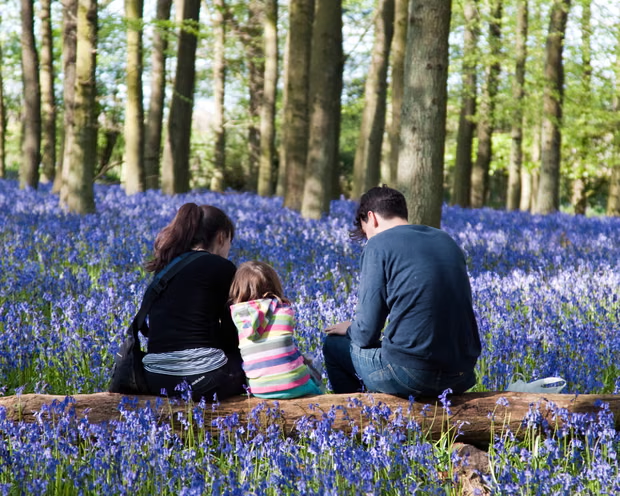
The scent of damp earth and the rustle of leaves often trigger powerful waves of nostalgia. For generations of British citizens, childhood was defined by the freedom of the great outdoors. They climbed tall trees, splashed through deep mud, and built secret dens in local woodlands. Even the less glamorous mishaps, like tumbling into fresh cowpats, are remembered with fond affection. These vivid moments formed the backdrop of youth for millions of people across the United Kingdom. A comprehensive new study has now laid bare our deep emotional connection to nature. The findings paint a beautifully warm picture of our collective past while raising serious contemporary concerns. Almost ninety percent of British adults harbor incredibly rosy memories of their childhood outdoor adventures. They recall an overwhelming sense of excitement and a profound feeling of complete personal freedom.
Yet, this widespread affection for the natural world stands in stark contrast to modern reality. The study reveals a shocking shift in how the public now spends its time. Nearly half of all UK adults spend under three hours each week in nature. This dwindling tally includes time spent in gardens, public parks, open fields, or woods. Even more alarming is the statistic for a significant minority of the population. For one in ten citizens, outdoor time has shriveled to under sixty minutes weekly. This dramatic lifestyle shift marks a massive departure from the habits of previous generations. The revealing poll of two thousand individuals was commissioned by the respected Wildlife Trusts. Their data shows that modern adult habits contrast sharply with the experiences of youth. Almost two-thirds of respondents spent more than half their childhood free time outside. This generational divide suggests a worrying trend toward an increasingly indoor, sedentary lifestyle today.
The medical community has long recognized the immense value of regular contact with nature. Spending consistent time outdoors is known to significantly benefit both physical and mental well-being. Immersing oneself in green surroundings lowers stress, reduces anxiety, and boosts overall mood levels. Previous scientific research has demonstrated the tangible economic impacts of these green health benefits. Regular access to local green spaces reduces general practitioner visits by twenty-eight percent. Such a significant drop in appointments could save the National Health Service billions. Specifically, analysts estimate an annual saving of around two billion pounds for taxpayers. Despite these clear advantages, modern societal structures seem to discourage regular outdoor activity. The daily grind and digital distractions keep millions of people firmly glued inside. Consequently, the British public is missing out on vital natural remedies for modern ailments.
Recognizing this growing crisis, the government has made several firm environmental commitments. Ministers promised to ensure everyone lives within a fifteen-minute walk of green space. However, current housing data reveals that one in five households lacks this access. This environmental inequality is particularly severe for families residing in economically deprived areas. Urban planning choices have historically neglected the inclusion of adequate parks in poorer neighborhoods. Dom Higgins holds the position of head of health and education at the Wildlife Trusts. He emphasizes that being outdoors in nature has so much joy to offer everyone. Nature provides us with fresh air, warm sunlight, soothing birdsong, and proven health benefits. Therefore, Higgins found it incredibly hard not to be alarmed by the new data. The sheer number of people spending so little time outdoors is truly frightening. However, we must acknowledge that not everyone has easy access to natural environments.
On a more positive note, town parks featured strongly in happy childhood memories. Higgins finds this particular revelation about urban green spaces to be incredibly reassuring today. Precious town parks offer vital access to nature alongside a strong community sense. They serve as essential shared spaces where urban residents can gather and unwind together. Unfortunately, public spending on these vital parks has plunged drastically over recent years. Council budgets across the nation have been stretched to their absolute breaking point. This financial starvation has left many urban parks neglected, overgrown, or entirely locked up. Without proper funding, these green oases cannot fulfill their crucial role in society. The lack of investment directly undermines efforts to get people back into nature. Local authorities face agonizing choices regarding which public services to cut or maintain.
Interestingly, the survey offers a glimmer of hope for reviving our outdoor habits. Two-thirds of participants stated that reflecting on childhood memories inspired them to change. Reminiscing made them significantly more likely to reconnect with the natural world around them. Higgins is now actively urging people to spend a few minutes recalling past adventures. He believes that remembering a childhood outdoor memory can spark a desire to return. People should then venture outdoors and experience the wonders of nature once more. Taking a moment to rewild yourself can be a remarkably simple daily act. It might involve stopping for a few deep breaths at your local park. Alternatively, you could lie on the ground looking up through green trees. Watching the birds above can restore a sense of calm to a busy mind.
To assist this national effort, various charitable campaigns have gained incredible momentum recently. The Wildlife Trusts run an annual initiative known as the Thirty Days Wild challenge. This popular program has been enthusiastically taken up by three million people lately. Over the past decade, it has encouraged citizens to perform daily wild acts. This year, the charity is providing free nature guides and children’s activity packs. These educational resources prominently feature the beloved television character named Bing to engage youth. Such campaigns are vital for fostering a love of nature in young minds. They bridge the gap between indoor entertainment and the wonders of the wild. By making nature accessible and fun, charities hope to reverse the indoor trend. These efforts represent a crucial step toward rebuilding Britain’s fractured relationship with nature.
The desire for outdoor play remains exceptionally high among the younger British generation. More than three-quarters of children stated they wanted to spend more time outside. This desire was captured in a comprehensive survey conducted by the National Trust. Sadly, two-thirds of parents faced severe restrictions when trying to fulfill this wish. They were only able to take their children to nature spaces weekly. For many families, these vital outings occurred even less frequently than once a week. Accessibility issues and transport limitations were cited as the primary barriers to entry. A truly shocking previous study suggested a heartbreaking comparison regarding British youth today. It found that three-quarters of UK children spent less time outdoors than prisoners. Inmates are legally guaranteed a minimum amount of outdoor exercise time each day. This comparison highlights the extreme nature of the modern British childhood indoor lockdown.
Julie Jones-Evans serves as chair of a key Local Government Association committee. She leads the dedicated culture, tourism, and sport division with a clear focus. Jones-Evans firmly believes that public parks and green spaces are vital to communities. They provide essential venues for exercise, relaxation, social interaction, and children’s play. However, she explained that local councils have faced unprecedented, severe financial pressures recently. This intense strain is driven by rising demand for legally required public services. Councils must prioritize funding for statutory social care for vulnerable adults and children. They also face escalating costs for supporting children with complex special educational needs. These legal obligations mean that discretionary services like parks become incredibly vulnerable today. This situation demonstrates why councils desperately require sufficient, sustainable, and long-term central funding. Without guaranteed support, local authorities cannot protect these important, health-giving community assets.
In response to these growing concerns, the central government defended its record. A spokesperson for the Department for Environment, Food and Rural Affairs issued a statement. They insisted this government is making sure that everyone has access to nature. Ministers are actively introducing or improving green spaces wherever citizens happen to live. The official plans include the creation of three massive new national forests soon. The first of these grand woodlands will stretch from Cotswolds to Mendips. Furthermore, the environmental strategy features nine brand new national river walks for walkers. One of these scenic river paths will be established in each English region. These grand infrastructure projects aim to bring nature closer to millions of homes. Whether these promises will suffice to cure Britain’s nature deficit remains to be seen. For now, the public is encouraged to step outside and rediscover the wild.
Related News:
 Traces of Glyphosate Found in UK Playground Tests
 Polycrisis Anxiety Leaves Many Feeling Trapped in the Present
 James Valentine Retires from ABC After Cancer Battle
 Chikungunya Spread in Europe Climbs as Climate Warms
 ‘Drinking from a Fetid Pond’: Superbug Genes in Lough Neagh
 Britain Must Break Its Long Addiction To Toxic Herbicides
 The Toxic Scent Destroying Life in a Lancashire Town
 Deadly H5 Bird Flu Reaches Australia’s East Coast
 UK Heatwaves Ignite Crisis of Sleep and Public Safety
 Europe Scorched as Record Heatwaves Grip the Continent
 Hospice Cuts Raise Alarm Across England Amid Funding Crisis
 Patients to Test Health at Home to Ease NHS Winter Pressure
 Shouting Works Best to Deter Gulls, UK Study Finds
 Reeves rejects £1bn plea for NHS redundancy payouts
 Senator John Fetterman Hospitalized After Fall from Heart Flare-Up, Keeps Sense of Humor
 New AI tool could cut wasted efforts in organ transplants
 Stroke Patient Mistaken for Drunk, Care Delayed
 ‘Traumatic Wait’: Northern Ireland Women Face Breast Cancer Delays
 Healthy Habits in Your 30s That Boost Life in Your 70s
 Scottish Families Take Legal Action Over School CO Leak
 Coffins Now Too Large to Cremate Amid Rising Obesity Crisis
 Vicki Fears Losing Motability Car
 Five-Year-Old Dies After Rare Tonsil Surgery Complication
 Fibromyalgia Patients Struggle as NHS Fails to Provide Care
 More Patients Now Contacting GPs Online, Data Shows
 ‘Extinct’ Antelope Returns to Sahara, Bringing Hope
 Kenya Signs $2.5bn Health Deal with US Amid Data Concerns
 UK Enforces Junk Food Ad Ban Before 9pm
 Patients Collapsing in NHS Corridors, Watchdog Warns
 Google Removes Some AI Health Summaries Over Safety Concerns
 Judi Dench Champions Fight to Save London’s Green Spaces
 Half the World’s Largest Cities Face Rising Water Stress
 Streeting moves on doctor pay to end strike dispute
 Autistic Girls Often Missed in Childhood Diagnoses, Study Finds
 UK reports baby formula toxin poisoning cases across the country
 Placenta Accreta Warning as Hunt Urges Action
 Ocean Warming Drives Massive Marine Life Loss, Study Warns
 Greenpeace $345m Ruling Sparks Appeal Battle
 Zorevunersen Breakthrough for Dravet Syndrome
 Cancer Death Rate in Britain Falls by Nearly a Third
 New Zealand Covid Response Praised Despite Lingering Scars
 Taking Multivitamins Daily Could Slightly Slow Ageing, Study Finds
 Welsh Water Faces £44.7m Enforcement Over Sewage Breaches
 Canada Plasma Deaths Raise Safety Concerns After Two Donors Die
 NHS Plans to Cut Overseas Workers Labeled Overambitious
 Extreme Weather: Europe Shivers as Cyclone Narelle Hits
 Middle East Deluge: Freak Storms Bangle Desert Nations
 Palantir Boss Defends NHS Deal Amid Government Break Clause
 Unions Raise Concerns Over Doctors’ Pay Dispute
 Blue Badge Surge Prompts Calls for Urgent Fraud Crackdown
 Private Profits From NHS Contracts Spark Urgent National Debate
 Medellín’s Green Revolution: A Global Climate Blueprint
 Crisis in NHS Surgery Scheduling Hits Patients Hard
 Britain’s Health Decline: A Growing National Concern
 Urban Flood Crisis: A Growing Threat to English Homes
 New AI Tool To Target Obesity Risk And Transform NHS Care
 WHO approves first malaria drug for babies
 EU Deal May Force UK Ban on Cancer-Linked Weedkiller
 Barrister Criticises Trial After Suicide Case Verdict
 UK Experts Urge Four-Day Week to Combat National Obesity
 Cruisers Face Perth Quarantine After Hantavirus Outbreak
 Wes Streeting faces narrow road to Labour members’ favour
 Britain’s Quest to Crown Its Ultimate Butterfly Superstar
 UK Faces Mass Water Shortages by 2055, Lords Warn
 Maldives Cave Diving Tragedy Raises Safety Alarm
 Pope Meets Families in Italy Toxic Waste Zone
 Ben Proud Defends Enhanced Games Participation
 Record Spending Highlights Growing Crisis In National Health Service
 NHS to Tell Minor A&E Patients to Return Later
 Clean Air Initiatives Spark Major Fall in London Hospital Admissions
 NHS Urges Investigation For Irregular Periods
 US Courts Back Trump on Park Signage Removals
 Britain’s Mini Fan Craze Sparks Major Waste Crisis
 US Chemical Accidents Rise as Protections Are Rolled Back
 Trump Immigration Cuts Threaten US Caregiver Stability
 Swift Nesting Crisis Sparks Outrage in South Tyneside
 UK Schools Struggle as Classrooms Top 40C
 London Tube Heat Reaches Dangerous Levels
 Japan Bear Hunt: Serial Fridge Raider Sparks Panic
 Thames Water Future Remains Uncertain Amid Funding Crunch