Published: 03 June 2026. The English Chronicle Desk. The English Chronicle Online.
A profound and unsettling wave of civil unrest has swept through the historic streets of Southampton this week. The violence erupted following the highly publicised sentencing of Vickrum Digwa for the tragic murder of Henry Nowak. Eighteen-year-old Henry Nowak was fatally stabbed on 3 December 2025 in an incident that shocked the local community. When police officers first arrived at the scene of the stabbing, Digwa claimed he was the victim. Digwa told the attending officers that he had been subjected to a vicious and unprovoked racist attack. The subsequent judicial proceedings concluded recently with Digwa receiving a lengthy prison sentence for his violent actions. However, the legal resolution has failed to bring peace to the coastal city of Southampton. Instead, the tragic case has become a volatile flashpoint for broader national arguments about race and policing.
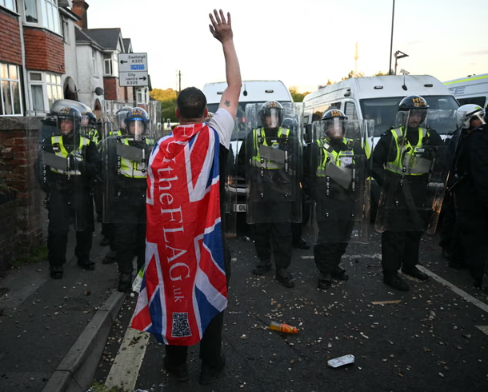
The tension reached a boiling point outside the Southampton central police station during a tense demonstration. The gathering was heavily publicised under the emotive banner of Justice for Henry Nowak. High-profile far-right activist Tommy Robinson was among the key speakers who addressed the angry crowd. The atmosphere quickly deteriorated as segments of the crowd clashed violently with lines of police officers. Hampshire police later confirmed that eleven officers and one police dog sustained injuries during the clashes. Two individuals were arrested during the overnight unrest for their alleged involvement in the violent disturbances. Crucially, the grieving family of Henry Nowak was not involved in organising the protest at all. The family explicitly stated they do not want Henry’s death used to inflame division or hostility.
The fallout from the Southampton violence has rapidly escalated into a major national political debate. Policing Minister Sarah Jones spoke out strongly to condemn the unacceptable violence directed at police officers. However, the minister also directed critical remarks towards controversial anti-discrimination guidance currently issued to police forces. This specific guidance suggests that black and white suspects should sometimes be treated differently by officers. Jones argued that such wording is deeply problematic because it ultimately gives the wrong impression. The minister insisted that protesters involved in overnight violence must not shape the response to the murder. Nevertheless, the government now faces intense pressure over police training from Reform UK and the Conservatives.
In response to the growing political pressure, the National Police Chiefs’ Council made a significant announcement. The policing body confirmed it will conduct a comprehensive review of its controversial anti-racism guidance. This guidance advises officers to consider different approaches for ethnic minorities to achieve better operational outcomes. Some political critics have openly blamed these specific guidelines for the initial actions of the arresting officers. Shadow Justice Secretary Nick Timothy expressed his deep concerns during a lively interview on BBC Breakfast. Timothy claimed that British law enforcement and the criminal justice system are being corrupted by political correctness. The senior Conservative politician argued that leftwing ideology has improperly influenced institutional practices across the United Kingdom.
Minister Sarah Jones firmly rejected Timothy’s broad assertions regarding the corruption of British justice. However, she still endorsed the decision by the National Police Chiefs’ Council to review their guidance. The minister clarified that the government does not believe the current language in the document is right. In its official anti-racism commitment, the police council defends its core strategy for tackling institutional bias. The organisation aims to achieve equality of policing outcomes for people from different ethnic groups. They argue this requires responding to individuals and communities according to their specific needs and experiences. The council maintains this necessary approach does not mean treating everyone the same or being colourblind.
Speaking further on the BBC Radio 4 Today programme, Jones reiterated her concerns about the text. She stated that the language is wrong and unfortunately gives a very misleading impression to the public. However, the minister clarified that she does not believe it negatively affects daily police training standards. She acknowledged that people are entirely right to ask serious questions after witnessing such a horrific incident. Later, during a separate interview on Times Radio, Jones emphasised the foundational principle of British justice. She stated clearly that everyone must be equal under the law in every single circumstance. Yet, she also noted that the government cannot shy away from historic and legitimate concerns about racism.
The unfolding situation has created deep anxiety among various civil rights groups and progressive political commentators. There are growing concerns that political forces on the right are using this tragedy strategically. Critics argue they want to set the scene for a major rollback of progressive policing practices. Many of these cultural changes were originally introduced following the landmark Macpherson report into British policing. That historic judicial inquiry investigated the institutional failures surrounding the racist murder of teenager Stephen Lawrence. The report fundamentally transformed how British police forces handle race relations and community engagement initiatives. Defenders of these reforms fear that decades of hard-fought progress could now be rapidly undone.
Meanwhile, Reform UK has maintained its intense political pressure following an intervention by Nigel Farage. On Tuesday, Farage stated that the public reaction to Nowak’s murder should be pure cold rage. Following those strong words, the party released an ambitious policy document detailing their immediate legislative plans. Reform UK pledged to enact a comprehensive equal treatment act within their first hundred days in government. This proposed legislation would completely prohibit the implementation of controversial police race action plans across the country. Furthermore, the act would eliminate diversity, equity, and inclusion practices within all public sector bodies. The sweeping proposals would also end the current legal exemption allowing Sikhs to carry large bladed knives.
Reform UK home affairs spokesperson Zia Yusuf made further provocative claims regarding the Southampton tragedy. Yusuf claimed that the untimely death of Henry Nowak was a direct result of police initiatives. He specifically targeted the Hampshire and Isle of Wight police race action plan in his public commentary. In response, Gavin Stephens, the chair of the National Police Chiefs’ Council, defended his organisation’s intent. Stephens stated that police leaders are listening closely to legitimate concerns about how commitments are worded. He affirmed that police chiefs can and will make necessary changes to the phrasing where needed. However, Stephens insisted that wording adjustments should not detract from the core intent to improve policing.
The political debate has been further amplified by comments from Conservative leader Kemi Badenoch. Badenoch authored a prominent article for the Daily Mail expressing her views on British social cohesion. The Tory leader argued that pernicious identity politics had directly led to the country going backwards. She claimed there is an urgent need to sweep out historic and incoherent nonsense from institutions. Badenoch stated this divisive material had been introduced over many years under the guise of anti-racism. As the political arguments intensify, the city of Southampton continues to recover from a night of damaging unrest. The difficult conversation surrounding equal treatment under the law seems destined to dominate British politics for months.
Related News:
 Green Party Surges Past Labour in Latest UK Poll
 Trump’s UK Ambassador Urges North Sea Drilling to Strengthen US Ties
 French Taxi Driver Cleared in David Lammy Theft Case After Fare Dispute
 Millionaires group urge Reeves to introduce wealth tax to ‘lift kids out of poverty’
 Starmer Faces Growing Dissent as Labour MPs Weigh Leadership Challenge
 Reeves rejects £1bn plea for NHS redundancy payouts
 PM Condemns Leaks, Vows Loyalty to Ministers and Stability
 Major Rent Reform Ends No-Fault Evictions in England
 Peers Flood Assisted Dying Bill with 942 Amendments
 Most Tories Expect to Support a Farage-Led Government
 Starmer Says Labour’s Economic Plan Needs Years to Deliver
 Culture secretary to review Telegraph takeover by Daily Mail owner
 UK Government Borrowing Drops to £11.6bn in December
 Labour Blocks Burnham as Party Rift Deepens Ahead of Polls
 Andy Burnham and the Labour Rift Over Power and Leadership
 Huge mistake: Labour blocks Burnham from byelection bid
 Artificial intelligence will cost jobs, admits Liz Kendall
 Labour targets Greens on drugs in Gorton Denton byelection
 Greens nominate Hannah Spencer for Gorton and Denton byelection
 Mandelson Faces Police Inquiry Over Epstein Leak
 Starmer Condemns ‘Depraved’ Russian Strikes on Ukraine
 Labour Thinktank Row Deepens Over Journalist Probe Claims
 Morgan McSweeney downfall shocks Labour leadership
 Labour Lord Doyle Apologises Over Paedophile Ties in Political Storm
 Cabinet Secretary Shake-Up Triggers Due Diligence Warning
 Starmer Faces Inquiry Calls Over Thinktank Probe
 Royal Mail Delivery Crisis Deepens Amid Weather Chaos
 UK shelves £110m border project amid trade strain
 Farage Unveils Reform UK Frontbench Team
 California Democrats Vow Trump Reckoning
 Trump Tariffs Threat Spark UK and EU Alarm
 Wales Approves Assisted Dying Bill Consent
 UK EU Trade Reset Gains Public Backing
 Your Party leadership fight nears dramatic end
 NHS Maternity Units Cover Up Harmful Childbirth Errors
 Green Party Stuns Labour in Gorton and Denton Byelection
 Corbyn Leads Your Party in Coordinated Left-Flank Strategy
 Labour Together scandal sparks clean break vow
 Asylum Seekers to Work After Year-Long Wait
 Starmer Row as Greens Demand Apology
 Proposed Law Leaves Gap for Children of Convicted Paedophiles
 Gordon Brown urges court for crimes against children
 Starmer Praised for Stance on Trump and Iran Conflict
 Inquiry into HMRC child benefit errors launched by NAO
 NHS Plans to Cut Overseas Workers Labeled Overambitious
 Farage Faces Backlash Over Crypto Cameo Endorsements
 Family Court Reform Promises New Era for UK Families
 Army Probes Apache Flyover at Kid Rock’s Nashville Estate
 Relationship with Trump may be beyond repair, Starmer warned
 Unions Raise Concerns Over Doctors’ Pay Dispute
 UK Government Poised to Revive Stalled Hillsborough Law
 Starmer Faces Commons Test Over Mandelson Scandal
 UK Stands Firm on Falklands Amid US Rift
 Crackdown Backfires on UK Climate Protesters
 Welsh Labour Faces Potential Historic Election Defeat
 Starmer Survives Mandelson Rebellion
 Silent Tracks: Rail Line Without Passengers
 Major test for Labour as polls open in Great Britain
 Labour Members Doubt Starmer Future as Burnham Leads Poll
 Reform UK Faces Crisis as Newly Elected Councillors Resign
 Keir Starmer Struggles to Secure His Grip on Downing Street
 Farage Faces Standards Probe Over Cash Property Purchase
 Secret Role of UK Security Services in Troubles Amnesty Law
 Farage and Reform UK Reshape British Politics
 Starmer Leadership Under Pressure After Setbacks
 The Hidden Crisis Eroding Trust in British Communities
 Deepfake Abuse on X Sparks Safety Concerns for Dissidents
 Modernising the Military: Carns Demands Urgent Procurement Reform
 UK Ministers Lobby Trump Over Under-16s Social Media Ban
 Starmer Resolves to Fight Burnham in Leadership Battle
 Starmer Resigns as Prime Minister Amid Internal Pressure
 MP Warning: Northern Rail Risks Repeating HS2 Failures
 Hollie Ridley to Step Down as Labour General Secretary
 New South Wales Premier Chris Minns Signals Tough Road Ahead for Labor
 Jarvis Urges Burnham to Secure 3.5% Defence Spending
 Farage Warns Sky News Following Financial Inquiry
 Reform UK Finances Face Deep NCA Probe
 Ann Widdecombe, Formidable Political Figure, Dies at 78
 Treasury Reform Urged After Tragic Loss
 Sadiq Khan Backs Call for Maximum UK Work Heat Limit