Published: 8 June 2026
The English Chronicle Desk
The English Chronicle Online
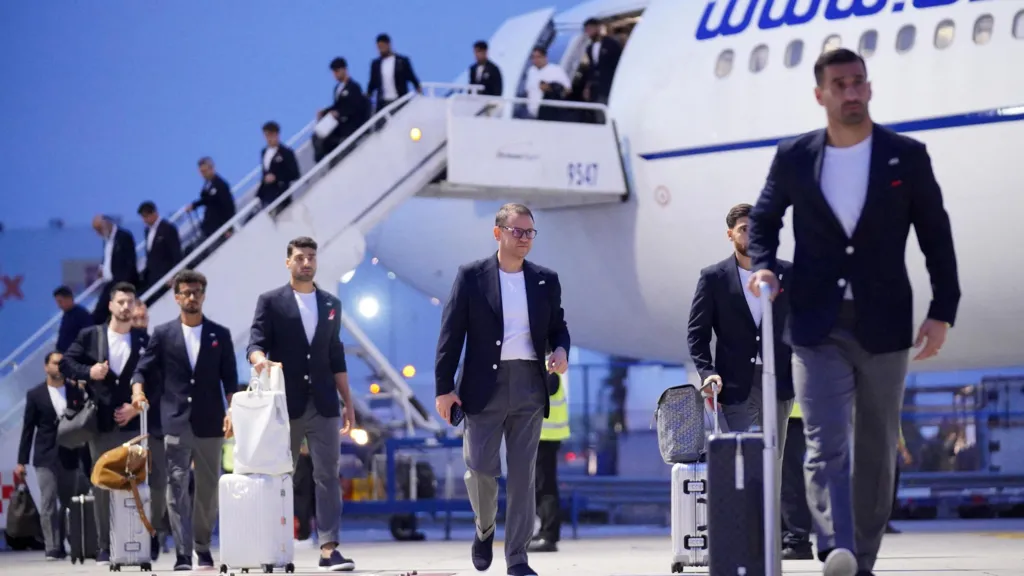
Iran’s national football team has arrived in Mexico ahead of the 2026 FIFA World Cup amid an escalating diplomatic dispute over United States visa restrictions affecting members of the Iranian delegation. The controversy has added a major political dimension to the tournament even before Iran plays its opening group-stage match.
The Iranian squad landed in the Mexican border city of Tijuana after completing a training camp in Turkey, where players had been preparing for the World Cup over the past several weeks. The team had originally planned to establish its tournament base in Tucson, Arizona, but officials were forced to change plans at the last moment due to uncertainty surrounding US entry permissions.

Iran will play all three of its group-stage matches inside the United States despite being based in Mexico throughout the tournament. The arrangement reflects growing tensions between Tehran and Washington following months of military confrontation and diplomatic hostility between the two countries.
According to Iranian football officials, although players and several senior coaches eventually received visas from US authorities, at least 15 support staff members and administrative officials were denied entry permits. Those reportedly affected include key federation figures and media personnel connected to the national team setup.
Iranian authorities strongly criticised the restrictions, describing them as political interference in international sport and accusing the United States of violating FIFA hosting responsibilities. Officials argued that preventing parts of the delegation from entering the host nation undermines fair tournament preparation and damages the spirit of global football competition.
The United States government has defended its position by stating that all essential players and necessary support staff were granted visas in accordance with international sporting obligations. American officials also stressed that national security screening remains in place for all foreign visitors entering the country.
The dispute has placed FIFA under pressure as questions grow over how major sporting events should operate during periods of geopolitical conflict. This year’s tournament marks the first time in World Cup history that a host nation is simultaneously involved in active military confrontation with one of the competing countries.
Reports from Iranian media suggested that players and staff may only be permitted to enter the United States on matchdays before returning immediately to Mexico after games. Iranian representatives claim the restrictions severely complicate travel, training schedules and recovery preparations during the tournament.
Iran coach Amir Ghalenoei criticised the logistical difficulties following the team’s arrival in Tijuana. He said the delayed visa process disrupted preparations and prevented players from properly adjusting to local conditions and time differences before the competition.
Iran’s captain, Ehsan Hajsafi, also voiced frustration regarding the handling of visas for team personnel. Players reportedly feared uncertainty over whether the full delegation would be allowed to participate normally in the tournament.
The situation has sparked strong reactions among football supporters and political commentators worldwide. Many analysts say the controversy demonstrates how international sport increasingly overlaps with diplomacy, sanctions and geopolitical rivalry.
On social media and online football forums, supporters expressed concern that political disputes could overshadow the sporting event itself. Some fans argued that no participating team should face unusual travel or administrative barriers during a FIFA competition.
Others defended the United States government’s security approach, particularly regarding officials allegedly linked to Iran’s Islamic Revolutionary Guard Corps, which Washington classifies as a terrorist organisation.
Mexico’s role in hosting Iran during the tournament has also attracted attention. Political observers described the arrangement as both a diplomatic compromise and a practical solution designed to keep the team close to match venues while reducing tensions linked to US immigration restrictions.
Iran qualified for the World Cup after topping its Asian qualifying group in 2025 and remains one of Asia’s strongest football nations. The team is scheduled to face New Zealand, Belgium and Egypt during the group stage, with matches set to take place in Los Angeles and Seattle.
Political tensions surrounding Iran’s participation have revived memories of previous World Cups in which Iranian players faced intense international attention over political symbolism and diplomatic disputes. During the 2022 tournament, Iranian players drew global headlines after declining to sing the national anthem during a period of domestic unrest inside Iran.
Security experts believe Iranian matches during this year’s World Cup could attract protests and heightened policing because of ongoing conflict in the Middle East and strained relations between Tehran and Western governments.
Despite the controversy, Iranian officials insist the team remains fully focused on football. Federation representatives said participation in the tournament demonstrates the country’s commitment to international sport despite difficult political circumstances.

FIFA has not yet publicly commented in detail on the dispute, though pressure is growing on organisers to clarify whether the visa restrictions comply with tournament regulations and hosting commitments.
The situation has already become one of the most politically sensitive issues surrounding the 2026 FIFA World Cup and is likely to remain under close international scrutiny as the tournament progresses.
Check Out Our Latest News At>>
Related News:
 Can World Cup Hosts Overcome Deep Divisions?
 Fans Angry Over US Visa Rules Before World Cup
 Inland Australia Town Turns Streets into a Beach for Volleyball Contest
 Iran, the US, and a World Cup That Starts in Three Months
 Australian GP Confident Amid Travel Disruption
 Watershed Moment as Russia’s Sporting Exile Ends
 Iranian Players Get Australian Visas After Anthem Protest
 Iranian Footballers Escape Team Hotel to Seek Asylum
 Iran Women Footballers Seek Asylum After Anthem Protest
 ‘Safe Haven’: Iranian Footballers Rebuild Lives in Australia Following Asylum Bid
 Rising World Cup Ticket Prices Spark Concern
 Nearly 50 Die of Thirst in Sahara Desert
 Rivalry That Changed Modern Football Forever
 Can Vinicius Win Over Brazil at Last?
 Fifa Faces Backlash Over Ticket Payment Demand
 Fans Bring Flags and Fire to World Cup Scenes
 11 EFL Stars Ready to Shine at World Cup
 Arsenal Trio Named on Player of the Year List
 Three Arsenal Stars Make Award Shortlist
 Fans Invited to Share Scotland World Cup Stories
 UK Must Act with Courage and Clarity on Israel-Palestine Conflict, Says Foreign Affairs Committee Report
 Hong Kong Summons UK and Australian Envoys Following Asylum Grants to Democracy Activists
 Is the UK Ready to Put Boots on the Ground in Ukraine? Assessing Military Capacity and Challenges
 Channel Crossings Surge: Over 1,000 People Arrive in the UK in Small Boats in a Single Day
 Yvette Cooper Signals Global Momentum Towards Gaza Peace Deal Amid Humanitarian Crisis
 Chaos at Ibrox as Martin’s Rangers Era Comes to an End
 Russia’s Latest Push to Win US Favors Shows Deep Desperation
 BBC to Apologise Over Edited Trump Speech Amid Backlash
 Britain deploys RAF specialists to assist Belgium with drone threats
 Trump Urges Herzog to Grant Netanyahu Full Pardon
 Indian authorities demolish Kashmir home linked to Red Fort blast
 Greene Pushes Epstein Files Amid Trump Fallout
 December Run-Off in Chile as Election Produces No Winner
 Shadow Fleet at Sea: Europe’s Battle Against Illicit Oil Shipping
 Tiny Curacao Makes History as Smallest Nation to Reach World Cup
 Australian Families Leave Syrian Camp for Home
 Starmer Weighs Fast-Tracking Defence Boost
 Nine Arrested in France Over Death of Far‑Right Student
 Australian PM Says Former Prince Andrew Has Suffered ‘Extraordinary Fall’ but That Won’t Prompt Republic Referendum
 Farage Chagos Islands Row Sparks Fury
 Storm Hernando: Edinburgh Airport Flights Cancelled in US Travel Chaos
 Ukraine Negotiator Reveals What It Feels Like Facing Russia
 Chad Shuts Border With Sudan in Bid to Stop Conflict Spreading
 Hilary Knight speaks out on Trump’s recent hockey remarks
 American Citizen Killed in Cuba Boat Shooting, U.S. Officials Say
 Iran’s Regime Still Intact — Coming Days Will Test Its Survival
 Herzog Asio meeting sparks security storm
 Finland Plans to Lift Decades‑Old Ban on Hosting Nuclear Weapons
 Minister Meets Crews Who Will ‘Take Out’ Iranian Drones
 Nine Days of Strikes Reshape the Middle East
 Trump Pressures Congress Over Save America Act
 Iran War Puts Trump at Political Risk Amid Rising Prices
 Queensland Protest Laws Spark Free Speech Backlash
 Trump Nato threats expose Iran strategy vacuum
 Trump’s Confidence Undimmed — But Every Iran Option Carries Risk
 Trump Facing Backlash from Epstein Survivors Over Files
 UK Forces Ready to Seize Russian Shadow Fleet Vessels
 Trump Considers Military Operation to Seize Iran’s Uranium
 Report Says Pezzullo Acted ‘Recklessly’ in Dealings
 Oil and Diplomacy: Russian Refineries Burn as Zelenskyy Secures Middle East Shield
 The Great Chokehold: Why the Strait of Hormuz is the Epicenter of the 2026 Crisis
 Moldova River Crisis Exposes War’s Hidden Cost
 The Fog of War and the Ticker Tape: Suspicious Trades Rile Washington
 Judicial Whiplash: Virginia Court Pauses Redistricting 24 Hours After Public Vote
 “Industrial-Scale Extraction”: White House Memo Accuses China of Mass AI Theft
 Beyond the Swoosh: Anta Sports Overtakes Rivals to Become Global Top Three
 “Three-Wheeled Triumph”: Mayor of Erewash Completes 2,000-Mile European Charity Run
 Capitalism ‘Suicidal’, Warns Petro at Climate Summit
 “An Endurance Test for the Mind”: British Couple Sentenced to 10 Years in Tehran
 Premier League drama defines crucial weekend
 “The Pivot to Pakistan”: Trump Pauses ‘Project Freedom’ in Hormuz Amid Iran Deal Hopes
 “The New Silk Road”: India and Vietnam Forge Strategic Maritime Alliance to Counter Regional Volatility
 “The Local Gavel”: Polls Open Across Hampshire and Isle of Wight in Delayed ‘Milestone’ Vote
 US Awaits Iran Reply on New Ceasefire Proposal
 “The End of the Towel War?”: How Hotels are ‘Clinically’ Stopping the Sunbed Dash
 Australia Welcomes the Iconic Michelin Guide
 Discontent grows around Putin amid war strain
 Israel, Lebanon Agree on Fragile Ceasefire Deal
 UK Faces Most Dangerous Era, Military Chief Warns
 Israel Strikes Iran After Missile Attack