Published: 11 June 2026. The English Chronicle Desk. The English Chronicle Online.
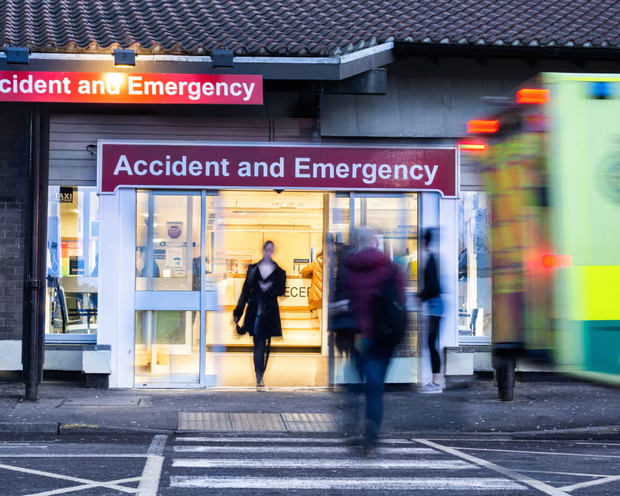
The National Health Service is planning a massive overhaul of its emergency departments across England. Patients arriving with minor illnesses may soon be asked to return at a later time. This strategy aims to prevent severe overcrowding and combat the traditional winter pressures on hospitals. Senior health officials believe this change will revolutionise how the public accesses urgent medical care. The new system intends to streamline hospital arrivals and modernise the traditional walk-in model.
Eighteen hospital trusts in England are already trialling this controversial digital triage assessment system. The technology allows emergency staff to categorise patients based on their immediate clinical need. Individuals who require life-saving interventions will still receive immediate treatment in the usual way. However, those with minor ailments might be asked to wait for a scheduled slot. They could be told to return later that day or even the next morning. Alternatively, staff might redirect these low-priority patients to a local community pharmacist or GP.
Jim Mackey, the chief executive of NHS England, has strongly defended these sweeping proposals. He recently addressed an audience of prominent healthcare leaders at the NHS ConfedExpo conference. This major annual health service event was held this week in the city of Manchester. Mackey urged every hospital trust in the country to adopt this high-tech concierge service. He stated that the British public should prepare for really big changes ahead very soon. The way urgent and emergency services operate will look entirely different in a few months.
The chief executive confessed that bookable appointments have become a major personal obsession for him. He believes that scheduled slots will bring much-needed order to chaotic emergency departments. Hospitals are frequently overwhelmed with unprecedented demand, particularly during the challenging winter months. Long delays have become a defining and frustrating feature of the modern NHS experience. This new system seeks to eliminate the traditional culture of waiting on uncomfortable plastic chairs. NHS England hopes that structured scheduling will create a safer environment for everyone involved.
The urgent necessity for radical reform has been highlighted by shocking new medical data. The Royal College of Emergency Medicine recently released a very stark report about hospital safety. Their data suggested that overcrowded emergency departments cause more than thirteen hundred deaths every month. This tragic statistic has put immense pressure on health officials to find immediate solutions. Doctors and nurses have frequently warned that overcrowded waiting rooms represent a significant clinical hazard. The proposed digital system is being framed as a direct answer to these safety concerns.
Under the new system, arriving patients must input their symptoms into an electronic kiosk. These digital screens will be positioned prominently at the entrance of emergency departments. The collected information helps clinical staff quickly assess the severity of each individual case. It allows medical teams to determine the most appropriate pathway for every single patient. The technology acts as a digital filter before patients ever see a triage nurse. This automated process is designed to save valuable time during the initial booking stage.
Early results from the current trial sites appear to show some very promising outcomes. The East Lancashire Teaching Hospitals NHS Trust has been monitoring the technology very closely. They found that the digital tool helped to almost halve their average waiting times. Patients previously waited an average of one hundred and seventy-eight minutes to be seen. Under the new digital system, that waiting time dropped significantly to ninety-four minutes. This dramatic reduction has been hailed as a major victory by hospital managers.
NHS England stated that the new approach is designed to end frustrating patient uncertainty. People will no longer face the agony of not knowing how long they must wait. The system ensures that emergency doctors can focus their energy on the most critical cases. Staff morale could also improve if waiting rooms become less congested during peak hours. The government is watching these local statistics closely as they plan the national rollout. Success in Lancashire could provide a blueprint for hospitals up and down the country.
Mackey has explicitly urged all remaining NHS trusts to follow this innovative digital lead. Patients who are redirected from A&E will not simply be turned away empty-handed. They might be given a confirmed, guaranteed appointment with a specialist hospital physiotherapist instead. Others could be referred directly to community mental health services for appropriate specialist support. Some patients will be directed to a same-day emergency care unit within the hospital. The ultimate goal is to connect patients with the right professional the first time.
The big prize for this coming winter is introducing many more scheduled appointments. A combination of booked slots and digital triage could have an enormous beneficial impact. Both patients and overstretched medical staff stand to gain from a more organised system. However, NHS England could not confirm exactly how many patients have been sent home. They lack specific data on the number of people told to return the next day. Despite this lack of figures, officials insist that patient feedback remains overwhelmingly positive.
A government source claimed that knowing when you will be seen is inherently reassuring. Getting booked into the correct service more quickly represents a major upgrade in care. The initial trials suggest that citizens appreciate having a clear and predictable schedule. However, independent patient groups are urging caution before this system is rolled out nationally. They worry that vulnerable individuals might struggle to navigate the new digital requirements. Not every patient arriving at a hospital is comfortable using advanced touchscreen technology.
Rachel Power, the chief executive of the Patients Association, has raised several valid concerns. She cautioned that digital triage assessment tools might not suit every single patient profile. As the system rolls out widely, it must work effectively for all members of society. The new model must not focus exclusively on the digitally confident younger generation. Older patients and those living with severe disabilities could face significant barriers to care. People with limited digital access must never be disadvantaged by these hospital kiosks.
Power emphasized that vulnerable individuals should not be forced to struggle with complex tablets. Furthermore, any patient who is redirected needs explicit and very easy-to-understand information. They must know exactly what to do if their medical condition suddenly deteriorates. Clear instructions must be provided regarding who to call and where to go next. Patients need to understand how quickly they should act if symptoms become worse. Without these essential safety nets, vulnerable people risk falling through the gaps of care.
The Patients Association agrees that the underlying ambition of the scheme is entirely right. However, they insist that actual patient experience must remain at the very centre of design. The public should help shape these reforms rather than just being passive beneficiaries. Healthcare delivery must always balance technological efficiency with genuine human compassion and accessibility. As the NHS prepares for another difficult winter, all eyes are on this digital experiment. Whether it solves the crisis or creates new hurdles remains to be seen.
Related News:
 Hospice Cuts Raise Alarm Across England Amid Funding Crisis
 Celebrities and Charities Demand UK Government Act on Child Poverty
 Patients to Test Health at Home to Ease NHS Winter Pressure
 Shouting Works Best to Deter Gulls, UK Study Finds
 Reeves rejects £1bn plea for NHS redundancy payouts
 Working-Class Men with Prostate Cancer Left Behind by NHS
 Senator John Fetterman Hospitalized After Fall from Heart Flare-Up, Keeps Sense of Humor
 New AI tool could cut wasted efforts in organ transplants
 Stroke Patient Mistaken for Drunk, Care Delayed
 ‘Traumatic Wait’: Northern Ireland Women Face Breast Cancer Delays
 Healthy Habits in Your 30s That Boost Life in Your 70s
 Scottish Families Take Legal Action Over School CO Leak
 Coffins Now Too Large to Cremate Amid Rising Obesity Crisis
 Vicki Fears Losing Motability Car
 Delhi’s Toxic Air Crisis Leaves Children Sick and Vulnerable
 Five-Year-Old Dies After Rare Tonsil Surgery Complication
 Fibromyalgia Patients Struggle as NHS Fails to Provide Care
 More Patients Now Contacting GPs Online, Data Shows
 Kenya Signs $2.5bn Health Deal with US Amid Data Concerns
 Children to Receive Home Vaccines as England Acts
 Childhood Hypertension Sparks Urgent UK Testing Calls
 UK Enforces Junk Food Ad Ban Before 9pm
 Patients Collapsing in NHS Corridors, Watchdog Warns
 Google Removes Some AI Health Summaries Over Safety Concerns
 Polycrisis Anxiety Leaves Many Feeling Trapped in the Present
 UK Mothers Overloaded: Mental Health Pressures Worsen
 Small risk warning raised over weight-loss jabs in UK review
 Streeting moves on doctor pay to end strike dispute
 Autistic Girls Often Missed in Childhood Diagnoses, Study Finds
 UK reports baby formula toxin poisoning cases across the country
 Most Statin Side-Effects Are Not Caused by Drugs, Study Confirms
 UK, US Medics Barred from Gaza Amid Rising Aid Concerns
 Chikungunya Spread in Europe Climbs as Climate Warms
 Placenta Accreta Warning as Hunt Urges Action
 Half of Britons Avoid GP When Ill, Survey Reveals Growing Concern
 The rise of rejection sensitive dysphoria: How it shapes lives
 Sudden Blindness 2,000 Miles from Home – Alone and Penniless
 NHS Maternity Units Cover Up Harmful Childbirth Errors
 Weight-loss drugs may transform heart attack recovery
 Zorevunersen Breakthrough for Dravet Syndrome
 Cancer Death Rate in Britain Falls by Nearly a Third
 New Zealand Covid Response Praised Despite Lingering Scars
 Taking Multivitamins Daily Could Slightly Slow Ageing, Study Finds
 Canada Plasma Deaths Raise Safety Concerns After Two Donors Die
 ‘Drinking from a Fetid Pond’: Superbug Genes in Lough Neagh
 UK Biobank Health Data Leaks Raise Privacy Concerns
 NHS Plans to Cut Overseas Workers Labeled Overambitious
 Palantir Boss Defends NHS Deal Amid Government Break Clause
 Reformer Pilates Boom Sparks Surge in Injuries, Experts Warn
 Unions Raise Concerns Over Doctors’ Pay Dispute
 Blue Badge Surge Prompts Calls for Urgent Fraud Crackdown
 Private Profits From NHS Contracts Spark Urgent National Debate
 Crisis in NHS Surgery Scheduling Hits Patients Hard
 Britain’s Health Decline: A Growing National Concern
 New Scan Offers Hope for Faster Endometriosis Diagnosis
 New AI Tool To Target Obesity Risk And Transform NHS Care
 WHO approves first malaria drug for babies
 Hantavirus Cruise: Britons Face 45-Day Isolation Order
 Barrister Criticises Trial After Suicide Case Verdict
 Crisis in the Canary Islands as Cruise Ship Evacuated
 UK Experts Urge Four-Day Week to Combat National Obesity
 Cruisers Face Perth Quarantine After Hantavirus Outbreak
 Wes Streeting faces narrow road to Labour members’ favour
 French Patient Told Hantavirus Was Just Anxiety
 Heavy Caring Burden Linked to Faster Mental Decline
 NHS Drug Deal Faces Legal Threat Over US Trade Agreement
 Maldives Cave Diving Tragedy Raises Safety Alarm
 Pope Meets Families in Italy Toxic Waste Zone
 Ben Proud Defends Enhanced Games Participation
 Record Spending Highlights Growing Crisis In National Health Service
 AI Medical Error: NHS Doctors Risk Facing Huge Lawsuits
 Clean Air Initiatives Spark Major Fall in London Hospital Admissions
 NHS Urges Investigation For Irregular Periods
 Deadly H5 Bird Flu Reaches Australia’s East Coast
 UK Heatwaves Ignite Crisis of Sleep and Public Safety
 Arizona Toddler Found Alive in Hospital Cold Room
 Trump Immigration Cuts Threaten US Caregiver Stability
 UK Schools Struggle as Classrooms Top 40C
 London Tube Heat Reaches Dangerous Levels
 Weight-Loss Drugs Offer Food Savings Mainly to High Earners