Published: 22 August 2025. The English Chronicle Desk
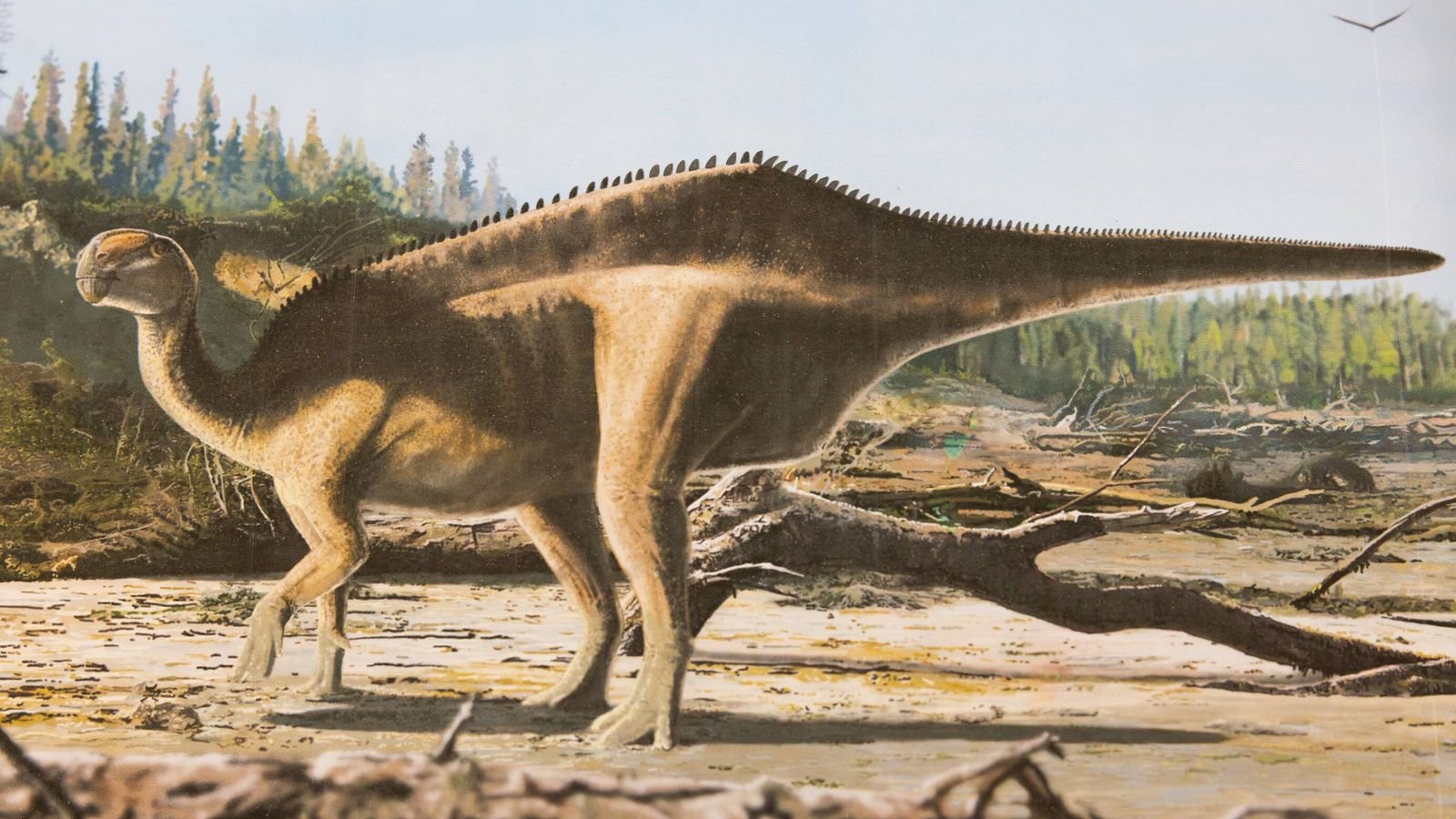
A newly-discovered dinosaur boasting a striking sail along its back and tail is set to be named in honour of Dame Ellen MacArthur, the record-breaking British yachtswoman. The species, Istiorachis macaruthurae, was identified by Jeremy Lockwood, a PhD student at the University of Portsmouth and the Natural History Museum, after meticulous analysis of fossils previously thought to belong to other known iguanodontian dinosaurs from the Isle of Wight.
The genus name Istiorachis, meaning “sail spine,” highlights the dinosaur’s eye-catching neural spines, while macaruthurae pays tribute to Dame Ellen, who gained international fame for setting the record for the fastest solo non-stop circumnavigation of the globe in 2005. The fossils, dating back approximately 125 million years, were found on the Isle of Wight, Dame Ellen’s birthplace, underscoring a local connection between prehistoric and contemporary feats of endurance and innovation.

Dr Lockwood explained that the fossilized spines were unusually long compared with other iguanodontians, suggesting the presence of a pronounced sail-like structure along the back. Published in the scientific journal Papers in Palaeontology, his study explores the functional purpose of such features, long debated in paleontology. While theories range from body temperature regulation to fat storage, researchers believe the sail of Istiorachis was most likely used for visual signalling, potentially as part of sexual display.
To reach these conclusions, Dr Lockwood’s team compared the fossils to a comprehensive database of similar dinosaur backbones, allowing them to trace the evolution of sail-like formations across related species. “These spines weren’t just tall—they were more exaggerated than usual for Iguanodon-like dinosaurs, exactly the type of trait you’d expect to evolve through sexual selection,” Dr Lockwood noted.
Professor Susannah Maidment of the Natural History Museum emphasised the significance of revisiting long-held fossil collections. “Jeremy’s careful study of specimens that have been preserved in museum collections for years has brought the iguanodontian dinosaurs of the Isle of Wight vividly to life. Collections like those at Dinosaur Isle play a crucial role in enabling new research and understanding of evolutionary history,” she said.
Over the past five years, Dr Lockwood has substantially expanded knowledge of smaller iguanodontians on the Isle of Wight, quadrupling the known diversity. Istiorachis macaruthurae represents a continuing testament to the rich Early Cretaceous ecosystems of the UK and highlights how persistent study of museum collections can yield groundbreaking discoveries decades after fossils were first unearthed.

This naming also symbolically links the pioneering spirit of Dame Ellen MacArthur with the remarkable adaptations of prehistoric creatures, creating a bridge between human and natural achievements rooted in the Isle of Wight.
Related News:
 NHS Trials £100 Blood Test That Could Revolutionise Alzheimer’s Diagnosis
 The diet that can significantly ease symptoms of IBS
 Mortgages and AI Set to Feature in English Schools
 No link found between paracetamol in pregnancy and autism
 Shouting Works Best to Deter Gulls, UK Study Finds
 Valve Opens the Door for Android Games on Steam
 UK Must Act with Courage and Clarity on Israel-Palestine Conflict, Says Foreign Affairs Committee Report
 The Ketamine Crisis in the UK is a Silent Epidemic Leaving Users with Lifelong Pain
 London Set to Honour Euro 2025 Champions as Lionesses Take Victory Parade Through the Capital
 Targeted Attack in Bury Sparks Murder Investigation as Community Awaits Justice
 Princess of Wales Launches Animated Video Series to Support Early Childhood Development
 Heartbreak in the New Forest as Shetland Ponies Vanish, Community on Edge
 Radioactive Leak at UK’s Nuclear Warhead Base Sparks Outcry Over Safety and Secrecy
 Fire Contained at Edinburgh’s Arthur’s Seat After Overnight Battle by Firefighters
 Premier League Supercomputer Predicts Tough Season for Man Utd Amid Three-Team Title Battle
 Mystery Wallaby Spotted on Norfolk-Suffolk Border Sparks Police Appeal
 UK Weather: Heat Alerts Extended as Temperatures Set to Reach 30°C This Weekend
 Terence Stamp, ’60s British Film Legend and Star of Superman, Dies at 87
 Chancellor Rachel Reeves Pushes for Sweeping Changes to Environmental Protections to Accelerate Development
 Inflation Latest: Cost of Living Expected to Rise Again in Key Figures Released Today
 Merseyside Police Helicopter Crew Cleared After Low-Altitude Pursuit of Suspect
 Is the UK Ready to Put Boots on the Ground in Ukraine? Assessing Military Capacity and Challenges
 Education Leaders Call for End to Compulsory GCSE Resits in English and Maths
 High Court Rules Against Noel Clarke in Libel Case Against Guardian Publisher
 Desperate Plea to ‘End This Tide of Misery’ as Children Struggle in the English Channel
 Grimsby Stun Manchester United in Dramatic Penalty Shootout
 Rachel Reeves’s Budget Advisor Proposes Sweeping Tax Hikes: What Could Hit Households Next
 Why E-Bikes and E-Scooters Are Making Streets a ‘Nightmare’ for Blind People
 Retail Sales See Uptick Amid Errors and Delays as ONS Faces Scrutiny
 Millions in the UK at Higher Risk of Heart Failure and Stroke Due to Air Pollution, Study Warns
 UK Launches Major Crackdown on Networks Profiting from Online Child Sexual Abuse
 UK Rejoining EU ‘Unlikely in My Lifetime,’ Says Starmer’s Europe Reset Negotiator
 Prime Suspect in Madeleine McCann Case Declines Metropolitan Police Interview Ahead of German Prison Release
 ‘Unite the Kingdom’ Rally Sparks Fears of Far-Right Normalisation Among Minority Britons
 Growing Crisis in UK Schools: One in Three Parents Seek Special Needs Assessments
 Thousands Gather in London to Protest Donald Trump’s Second UK State Visit
 Zarah Sultana Seeks Legal Action After Bitter Clash with Jeremy Corbyn Over Party Membership Funds
 Watchdog, Cornflakes and Courage: Remembering John Stapleton, a Broadcaster Who Did It All
 Top Andy Burnham Ally Launches Fierce Critique of Starmer Ahead of Labour Conference
 Mahmood Pledges Reform of Modern Slavery Laws After Court Blocks Deportation Appeal
 UK Government Backs Return of International Rail Travel to Kent Stations
 Arsenal VS Newcastle Hearts with Dramatic Late Turnaround at St James’ Park
 Ed Miliband Urges Labour to Confront Billionaire-Backed Opposition to Net Zero Goals
 A Third of EU Citizens in UK Report Discrimination by Public Bodies Post-Brexit
 Wetherspoon vows to keep prices low amid soaring energy and tax costs
 Teacher Permanently Banned After Slapping Pupil Over Classroom Incident
 Digital ID Plans Ignite Debate Over £600m Treasury Tax Boost and Privacy Concerns
 Millions in the UK at Risk of Cyber-Attacks as Microsoft Ends Windows 10 Updates, Warns Which?
 Public Trust in SNP Hits Historic Low Amid NHS Concerns
 Yvette Cooper Backs Digital ID Plan for UK Teens
 Strictly Celebs Starstruck as Cynthia Erivo Shines
 Ian Watkins Killed in Prison; Ex-Girlfriend Speaks Out
 Johnson Suggests Mandelson Linked to China Spy Controversy
 Ministry of Justice fails to file £11bn in spending receipts
 Rachel Reeves signals welfare reform ahead of key budget
 Reform UK candidate fined £19,000 after using AI-generated cases to challenge election
 Harry and Meghan join global AI leaders urging superintelligence ban
 William Steps Up Over Prince Andrew Palace Response
 Experts Warn Russia’s Burevestnik Missile Could Destabilise Arms Control
 Hospice Cuts Raise Alarm Across England Amid Funding Crisis
 Green Party Surges Past Labour in Latest UK Poll
 Zarah Sultana Launches Party to Change Politics
 Children to Learn Local History in Major Curriculum Overhaul
 Granit Xhaka Rescue Earns Everton Draw at Sunderland
 Prince William Plants Trees with Brazil’s Nature Heroes
 Just Stop Oil Protesters Convicted Amid Climate Defence Row
 King Charles to Lead Nation in Remembrance Sunday Service
 How to get help when a child goes missing – call 999 urgently
 Starmer Faces Growing Dissent as Labour MPs Weigh Leadership Challenge
 Son Reveals UK Couple in Iran Resort to Hunger Strike for Help
 Peers Flood Assisted Dying Bill with 942 Amendments
 Former Lion Heskey Warns of Shortage of England Strikers
 Mother Watches in Horror as Teen Daughter Dies on Tracks
 ‘Traumatic Wait’: Northern Ireland Women Face Breast Cancer Delays
 Serial Rapist and Former Cop Found Guilty Again
 Most Tories Expect to Support a Farage-Led Government
 Bill Murray Terrified Wes Anderson but Became His Closest Collaborator
 Karen Carney Stuns on Blackpool Week, Deserves Strictly Final
 Fibromyalgia Patients Struggle as NHS Fails to Provide Care
 Virgin Media Fined £23.8m Over Telecare Safety Failures