Published: July 10, 2026 | The English Chronicle Desk | The English Chronicle Online
There are football matches that are remembered for a single goal, a controversial decision or an individual moment of brilliance. Then there are matches that refuse to follow any script at all, where momentum changes almost every few minutes and every attack feels capable of rewriting history. One of the 2026 FIFA World Cup semi-finals delivered exactly that—a dramatic contest that players, coaches and supporters will remember as one of the tournament’s defining spectacles.
When the final whistle finally sounded after more than two hours of relentless football, one exhausted player summed up the experience perfectly: “The whole match was the tie-break.”
It was a fitting description of a contest that never truly belonged to either side for more than a few moments.
Rather than building toward a dramatic finale, the entire encounter felt like one extended deciding period, with both teams constantly responding to each other’s attacks, tactical adjustments and moments of individual inspiration.
From the opening whistle, the intensity reflected what was at stake.

Neither side approached the match cautiously despite knowing that victory would secure a place in the World Cup final.
Instead, both teams committed players forward, pressed aggressively and attempted to impose their own style rather than simply reacting to the opposition.
The result was an entertaining spectacle rarely seen in knockout football, where caution often replaces creativity.
Early chances arrived almost immediately.
Midfield battles developed into rapid counterattacks, while both goalkeepers were forced into important interventions before the match had settled into any recognizable rhythm.
Supporters inside the stadium barely had time to celebrate one dangerous attack before play switched rapidly to the opposite end.
The tactical battle proved equally fascinating.
Both coaches had spent days studying each other’s strengths and weaknesses, preparing detailed plans designed to exploit defensive vulnerabilities while protecting their own back line.
Yet as the match unfolded, those carefully prepared strategies required constant adjustment.
Every breakthrough prompted an immediate response from the opposing bench.
Substitutions arrived earlier than expected.
Formations shifted repeatedly.
Wide players exchanged positions, midfielders pushed forward and defenders occasionally found themselves joining attacks as both teams searched relentlessly for an advantage.
Rather than dominating possession, each side focused on exploiting moments of transition.
Whenever one attack broke down, the opposing team immediately launched forward, creating an almost continuous flow of dangerous opportunities.
Fitness became increasingly important as the contest progressed.
The relentless pace demanded extraordinary physical effort from every player on the pitch.
Even experienced international stars showed visible signs of fatigue, yet continued covering enormous distances in pursuit of a place in football’s biggest match.
Medical staff and conditioning coaches later praised the players’ physical preparation, describing the semi-final as one of the tournament’s most demanding encounters.
Despite growing exhaustion, technical quality rarely declined.
Players continued producing moments of remarkable skill under immense pressure.
Accurate passing, intelligent movement and composed finishing repeatedly demonstrated why both teams had reached the final four.
Defensively, neither side surrendered easily.
Goal-line clearances, perfectly timed tackles and courageous blocks prevented several seemingly certain goals.
Goalkeepers also produced performances worthy of the occasion.
Each made multiple crucial saves that preserved hope for their respective teams, illustrating once again how decisive elite goalkeeping becomes during major tournaments.
Psychological resilience ultimately became just as important as tactical planning.
Whenever one team appeared ready to seize complete control, the other immediately found a response.
Momentum shifted constantly throughout the contest.
Periods of dominance lasted only minutes before another dramatic twist altered the emotional balance.
Supporters experienced every possible emotion.
Celebration quickly gave way to anxiety, only for hope to return moments later.
Inside the stadium, every successful tackle, every clearance and every attacking move generated deafening reactions from thousands of emotionally invested spectators.
Television audiences around the world witnessed one of the tournament’s most captivating contests.
Social media platforms filled with reactions praising both teams’ commitment to attacking football despite the enormous pressure associated with a World Cup semi-final.
Former players described the encounter as a reminder of why knockout football continues captivating global audiences.
Analysts also highlighted the remarkable tactical intelligence displayed by both managers.
Rather than remaining committed to rigid game plans, they continually adapted as circumstances changed.
Those adjustments ensured the contest remained unpredictable until its closing moments.
Extra time further intensified the drama.
Normally, fatigue encourages greater caution during additional periods.
Instead, both teams continued searching for victory.
The possibility of a penalty shootout loomed increasingly large, yet neither side appeared willing to settle for that outcome.
Every attack carried genuine purpose.
Every defensive mistake threatened immediate punishment.
Players later admitted that concentration became increasingly difficult as physical exhaustion accumulated.
Simple decisions suddenly required enormous mental effort.
Yet remarkably few errors emerged despite the relentless pressure.
Perhaps that explains why one participant later remarked that “the whole match was the tie-break.”
Unlike many knockout fixtures where penalties ultimately decide evenly matched teams, this semi-final demanded penalty-level concentration from its opening minute.
Every pass, challenge and finish felt capable of determining the outcome.
In many respects, the psychological pressure usually reserved for shootouts existed throughout the entire contest.
When the decisive moment finally arrived, it reflected the fine margins separating elite international teams.
One perfectly executed move, one lapse in concentration or one outstanding piece of individual quality proved sufficient to settle an otherwise inseparable contest.
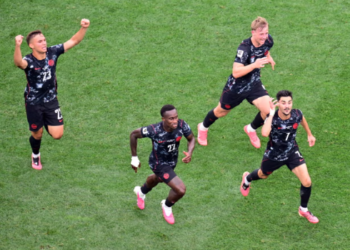
For the victorious side, celebrations reflected both joy and relief.
Reaching a World Cup final represents the pinnacle of international football, and players embraced one another knowing they had survived one of the tournament’s sternest examinations.
For the defeated team, heartbreak was equally visible.

Several players collapsed onto the pitch after the final whistle, aware that months of preparation and years of ambition had ended only one match short of football’s greatest occasion.
Opposition players and coaching staff offered immediate consolation, recognising the extraordinary effort both teams had invested.
Such mutual respect highlighted the quality of the contest as much as the final result itself.
Football often produces memorable finals, but many of the sport’s greatest matches occur one round earlier.
This semi-final deserved inclusion among them.
It combined tactical sophistication, technical excellence, emotional intensity and relentless competitiveness across every minute of play.
Regardless of which nation ultimately lifts the World Cup trophy, this extraordinary encounter has already secured its place among the tournament’s unforgettable moments.
For everyone fortunate enough to witness it, the description offered afterward remains the perfect summary.
The entire match truly felt like one long tie-break—unpredictable, emotionally exhausting and decided only by the smallest of margins.
Related News:
 Haaland Makes History as England Prepare for Biggest Test
 Golden Boot Battle Reaches World Cup Boiling Point
 Rising World Cup Ticket Prices Spark Concern
 Rivalry That Changed Modern Football Forever
 Can Vinicius Win Over Brazil at Last?
 Fifa Faces Backlash Over Ticket Payment Demand
 Fans Bring Flags and Fire to World Cup Scenes
 11 EFL Stars Ready to Shine at World Cup
 Arsenal Trio Named on Player of the Year List
 Three Arsenal Stars Make Award Shortlist
 Fans Invited to Share Scotland World Cup Stories
 Iran Team Arrives in Mexico Amid US Visa Dispute
 Scotland Branded “Unprofessional” in World Cup Fallout as England Build Momentum
 Chinese Football Fans Embrace Referee as Unexpected World Cup Figure
 Referee Controversy Raises Questions Over FIFA’s Control of the World Cup
 Nike Charges Fans Most for World Cup Replica Shirts
 Saka Playing Through Pain As England World Cup Campaign Looms
 England Cruise Past Costa Rica as World Cup Warm-Up Sharpens Tuchel’s Vision
 Football Hopes to Outshine World Cup Drama in Mexico
 ‘We all love him’: Henderson backs Bellingham for England success
 Can France Escape the Ghosts of their 2002 World Cup Nightmare?
 Deschamps Shields Mbappé From Fierce Political Storm
 Messi Equals World Cup Record In Masterclass Victory
 Erling Haaland Double Fires Norway To Victory On Debut
 Iran Files Official Fifa Complaint Over World Cup Travel
 Historic Victory for Canada as They Defeat Nine-Man Qatar
 Heartbreak for Canada as Koné Suffers Horrific Injury
 Declan Rice Facing Burnout as Tuchel Confronts Midfield Crisis
 Rodrygo Reflects On World Cup Pressure And Social Media
 How ‘Little Scotland’ Is Embracing the World Cup Spirit
 Cape Verde Hold Uruguay in Dramatic World Cup Clash
 World Cup 2026: Reclaiming the American Dream
 The Forgotten Hosts Making World Cup History Behind the Scenes
 Great Stories, Little Jeopardy – Does the New World Cup Format Really Work?
 Martinelli Strikes Late as Brazil Edge Past Brave Japan
 Paraguay Shock Germany in Historic Penalty Shootout
 Morocco Beat Dutch in Wild World Cup Penalty Drama
 England Fans Praised for ‘Excellent’ Behaviour During World Cup Campaign
 France Dominate Sweden as Deschamps’ New Era Takes Shape
 Haaland Heroics Send Norway Into Historic Last 16 Knockout
 Kane Saves Tuchel as England Survive Dramatic Exit
 Ramos Sends Portugal into the Last 16
 Swiss Star Manzambi Shines in World Cup Victory
 Trump Helps Clear Balogun for Belgium World Cup Clash
 Norway’s Stunning World Cup Victory Over Brazil
 England Triumph in Azteca World Cup Thriller
 Trump’s Red-Card Intervention Hurts the US World Cup
 Trump Intervenes in Fifa World Cup Balogun Ban
 Police Probe Claim of Missing £1.5m in Yes Scotland Campaign
 Trump Helps Clear Balogun for Belgium World Cup Clash
 England’s 10 Men Hold Firm in World Cup Thriller
 USA World Cup Heartbreak: Belgium Ends Their Dream
 Spanish Late Winner Sends Ronaldo Into Final Sunset
 Belgium Thrashes USA After Red Card Controversy
 Balogun Drama Overshadows USA’s World Cup Exit
 Mexico’s World Cup Run Brings Joy After ICE Raids
 Messi’s Tears and Triumph in Epic World Cup Escape
 Switzerland Advance in Penalty Thriller
 Egyptian Fury After Argentina World Cup Heartbreak
 World Cup 2026 Power Rankings: England on the Rise
 Mbappé Brilliance Leads France Into Semi-Finals
 Kane vs Haaland: Which Striker Would You Choose?
 Haaland’s Two Worlds Meet on Football’s Biggest Stage
 Belgium Draws Global Support Before Spain Showdown
 Tottenham Takes On Newcastle
 Chaos at Ibrox as Martin’s Rangers Era Comes to an End
 Arsenal Showcase Depth and Flexibility as Arteta Eyes Title Challenge
 Tiny Curacao Makes History as Smallest Nation to Reach World Cup
 Hilary Knight speaks out on Trump’s recent hockey remarks
 India T20 World Cup Triumph Seals Historic Title Defence
 Iranian Captain Departs Australia Amid Asylum Tension
 Iran World Cup Move Talks Raise Global Concerns
 Beyond the Swoosh: Anta Sports Overtakes Rivals to Become Global Top Three
 “Three-Wheeled Triumph”: Mayor of Erewash Completes 2,000-Mile European Charity Run
 Premier League drama defines crucial weekend
 Miami Upgrades Shake Up F1 Title Fight
 Chasing Glory: The Quest for a New World Cup Champion
 Football Regulator Contacts West Ham Over “Serious Allegations” Linked to Sullivan
 Tuchel’s England Mission Goes Beyond Football Success
 Canada Secure Historic Last 16 Spot with Late Goal