Published: 05 August 2026. The English Chronicle Desk. The English Chronicle Online
For much of its history, Trent Park was a place associated with wealth, art and refined English living. During the Second World War, however, the elegant north London estate became the setting for one of Britain’s more unusual intelligence operations, turning luxury and carefully constructed hospitality into weapons of espionage.
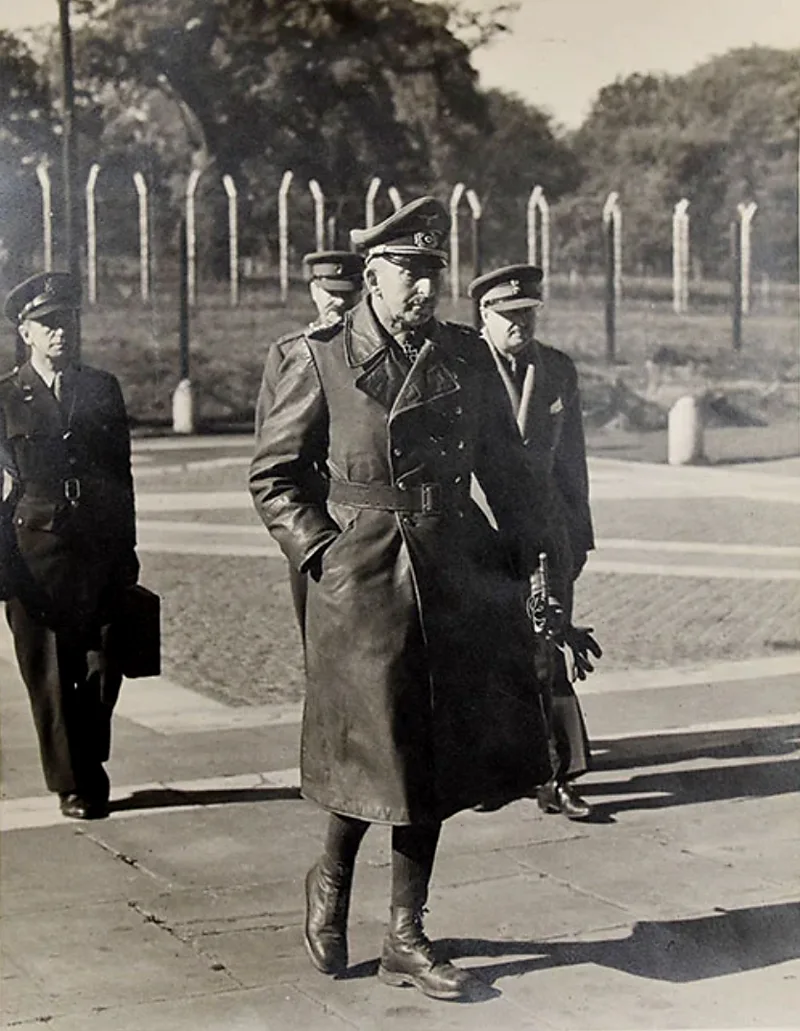
High-ranking German prisoners of war were brought to the house and allowed to live in surroundings that appeared remarkably comfortable for wartime captivity. They were given servants, access to a library, English lessons and, on occasion, opportunities to leave the estate under supervision. What they did not know was that almost every private conversation they held could be heard by British intelligence officers hidden below.
The operation relied on a deceptively simple principle: make prisoners feel safe, allow them to believe they were among people who understood them and trusted them, and they might eventually reveal information that they would never disclose during a formal interrogation.
Trent Park has now opened as a museum, allowing visitors to explore both sides of this extraordinary story. The recreated rooms upstairs reveal the luxurious environment used to lower the prisoners’ guard, while the basement exposes the concealed technology and the people who secretly listened to them.
The house was inherited by Sir Philip Sassoon, a politician, art collector and prominent society figure. After taking possession in 1912, Sassoon transformed Trent Park in the fashionable neo-Georgian style of the 1920s. Its interiors were designed to reflect sophistication rather than ostentation, with valuable antiques, Chinese wallpaper and portraits by celebrated artists including John Singer Sargent and Philip de László.

Sassoon died in 1939, shortly before Britain entered the war. The government subsequently requisitioned the property, and intelligence planners recognised that its distance from central London and spacious buildings made it suitable for handling high-ranking prisoners.
Thomas Kendrick, one of Britain’s senior intelligence figures, had already experimented with covertly listening to prisoners at the Tower of London. Trent Park offered an opportunity to develop the idea on a much larger scale.
The entire mansion and parts of the surrounding buildings were reportedly wired for sound. Microphones were concealed in objects and locations that would not attract suspicion, including plant pots, light fittings, furniture and even areas around the grounds. Hidden cables connected these devices to rooms in the basement where intelligence personnel could listen to conversations.
The prisoners were deliberately treated differently from ordinary prisoners of war. Many were senior officers from privileged backgrounds who were accustomed to authority and status. The British operation exploited that sense of importance.
Rather than making the generals feel constantly threatened, the environment encouraged them to believe that they were being treated as honoured guests. Their comfort was not an act of generosity. It was an intelligence-gathering strategy.
One of the most imaginative elements of the operation involved a fictional Scottish aristocrat known as Lord Aberfeldy. The character was played by a young British interrogation officer and was supposedly sympathetic to Hitler and secretly supportive of Germany.
His role was to encourage the prisoners to speak freely. Conversations that might otherwise have remained private could then be captured by the hidden microphones.
The effectiveness of the strategy was remarkable. German officers had been warned that Allied intelligence services might use listening devices, yet some became convinced that Trent Park was not being monitored.
Their confidence appears to have been partly responsible for the information they revealed.
As the operation developed, British authorities discovered that their original listeners did not always understand the nuances of German military language. Jargon, slang and regional expressions could make conversations difficult to interpret.
This led to the recruitment of German-speaking Jewish refugees who had escaped Nazi-controlled Europe.
Among them was Ernst Lederer, who had fled Czechoslovakia shortly before the outbreak of war. His granddaughter, actress and comedian Helen Lederer, later discovered the secret role her grandfather had played.
The work was so confidential that even family members were unaware of it. Lederer’s wife believed he was serving in the Home Guard, while he was actually spending long shifts listening to German officers at Trent Park.
Another striking connection involved Bletchley Park. Some of the information gathered at Trent Park was shared with the famous code-breaking centre, creating an intelligence partnership between two very different operations.
One important example concerned Knickebein, a German radio-navigation system that helped Luftwaffe bombers accurately target locations in Britain. Information overheard at Trent Park was corroborated by Bletchley Park code breakers and subsequently helped British authorities develop measures to disrupt the system.
The most consequential intelligence involved Germany’s V-weapons programme.
The V1 flying bomb and V2 rocket became some of the most feared weapons deployed against Britain. Conversations overheard at Trent Park provided information about German rocket development and testing.
Intelligence gathered through the operation contributed to the decision to attack the German rocket research centre at Peenemünde in 1943. The bombing caused significant disruption to Germany’s weapons programme and delayed the deployment of some of the weapons against Britain.
The V1 campaign eventually began in June 1944, shortly after the D-Day landings, while the first V2 reached London several months later.
The intelligence operation also exposed evidence of Nazi atrocities.
For Jewish refugees working as secret listeners, hearing German officers discuss mass killings must have been particularly traumatic. Some conversations reportedly contained disturbing accounts of murders committed by German forces.
One listener, Eric Mark, later recalled hearing German officers boast about the number of people they had killed. His own parents had been murdered at Treblinka.
Yet the intelligence gathered about Nazi atrocities created an unusual legal dilemma. The British government did not want to reveal the methods used to obtain the information, meaning some evidence could not simply be presented in post-war trials without exposing the secret operation.
This meant that information capable of contributing to accountability remained hidden.
Trent Park’s importance did not end with the defeat of Nazi Germany. The listening operation continued until November 1945, and intelligence gathered there also helped British officials understand the changing relationship between the Western Allies and the Soviet Union.
The operation therefore became an early component of the intelligence culture that would shape the Cold War.
Today, the significance of Trent Park lies not only in its dramatic stories of deception and espionage but also in the unusual combination of architecture, psychology, technology and human intelligence that made the operation possible.
The house’s luxurious rooms were part of the deception. The basement listening rooms represented the hidden machinery behind it. And the refugees who listened to Nazi officers brought their own personal histories into an operation whose consequences extended far beyond the walls of the estate.

Opening Trent Park to the public offers an opportunity to examine a largely hidden part of Britain’s wartime history. It also raises difficult questions about intelligence, justice and the compromises governments make during periods of extreme danger.
The Nazi generals believed they were enjoying comfort and privacy. In reality, their conversations were becoming intelligence reports.
The contrast between the elegant rooms above and the listening rooms below captures the essence of Trent Park’s wartime story: an apparently peaceful country house transformed into a sophisticated intelligence station, where the confidence of Germany’s military elite became one of Britain’s most valuable sources of information.
More than eight decades later, the secrets of Trent Park are finally being brought upstairs.
Related News:
 The Victorian aristocrat who became Britain’s first Muslim lord
 ‘We’ve Been Left Homeless After Our Builder Went Bust’
 Calls Grow to Remove Billboard Following Lyra McKee Graffiti
 Why Aren’t Our Dirtiest Roads Getting Cleaned?
 South East Water Faces £22m Fine for Supply Failures Affecting Hundreds of Thousands
 Murdered Student ‘Algasim’ Was ‘the Most Special Person’, Friends Say
 Sisters Who Could Not Swim Drowned While Paddling in Snowdonia, Inquest Hears
 Woman, 29, ‘Chucked’ Into Care Home 100 Miles Away
 Undercover officer deceived women with ‘grotesque and cruel’ lies, spycops inquiry told
 Rare Glimpse of Historic Bridge Thanks to Low Tide
 Edinburgh Mother Learns Husband Was Secret Sperm Donor
 Church Attendance Report Pulled After Fraudulent Responses
 Locked Away: The ‘Complete Nightmare’ Facing the Blair Mayne Archive
 ‘Significant and Poignant’: Families Gather for 35th Anniversary of IRA Musgrave Bombing
 Legacy of the Landscape: Vicar’s Gift Secures Future of South West Coast Path
 A Gentle Light Extinguished: Tributes Pour in for Sister Genevieve After Fatal Newport Collision
 The Hidden Hoard of 1692: Glencoe Massacre Coins to be Displayed at Folk Museum
 Dippy’s Sacred Sojourn: ‘Landmark’ Dinosaur Cast Arrives at Cathedral
 The Freedom Hub: Can a Former Women’s Jail Unlock This City’s Potential?
 Mediterranean Spirit in the Met: London’s Moroccan Jews Celebrate Mimouna
 Justice on Hold: Further Delay in Chloe Mitchell Murder Trial Sparks Local Frustration
 ‘The Last of the Greatest’: UK’s Oldest WWII Veteran Passes Away Aged 109
 ‘On Freedom’s Wings’: Final Touches for the ‘East Midlands’ Angel of the North’
 Black Forest Tragedy Remembered 90 Years On
 Walsall Rapist Jailed After Hate-Filled Online Trail
 Two Children Die in Wolverhampton House Fire Tragedy
 The Shadow of the Blitz: 1,200 Plymouth Homes Evacuated as “Very Large” WW2 Bomb Unearthed
 “A Tonic for the Nation” Reimagined: Southbank Centre Marks 75 Years of Artistic Rebellion
 “Walking in His Footsteps”: Son of WWII US Airman Pays Emotional Visit to IWM Duxford
 Barrister Criticises Trial After Suicide Case Verdict
 Man Arrested 22 Years After Leeds Teen Murder
 Forgotten Punjabi WWI Soldiers Finally Honoured
 Suzy Lamplugh Mystery Still Haunts Detectives
 Man Admits Taking Ambulance With Patient Inside
 Man Jailed After Noise Dispute Ends in Fish Killing
 Burnham Considers Inquiry Into Epstein UK Connections
 Cooper Vows Maternity Reform After Birth Care Failures
 Calls Grow to Ban Toxic Pet Flea Treatments
 Families Furious After Jailed Funeral Boss Apologises
 Harper Widow Fights Early Release of Killer’s
 Councils to Get Powers to Block New Vape Shops
 Muratov: Putin Can No Longer Claim Victory in Ukraine
 NHS Trust Adds Doctors to Speed Up Cancer Review
 Labour Utterly Humiliated by Straight-Talking Mum Who Cut Through Keir Starmer’s Insanity
 Renters Furious as Decent Homes Standard Delayed Until 2035
 Motorists Could Face ‘Mandatory’ Driving Ban for Road Offences Under Tougher Laws
 Snow and Rain Warnings as Cold Snap Continues in the UK
 ‘Every Day Feels Like a Month’: Iranians Describe Life Under ‘Constant’ US‑Israeli Strikes
 Father Dies by Suicide Weeks After Wedding in Clitheroe
 Teen Wins Payout After TRNSMT Crush Horror
 ‘Heating Oil Suppliers Are Holding Us to Ransom’ as Prices and Cancellations Surge
 Mandelson’s Phone Messages Requested in Files Release
 The High Cost of Survival: How the 2026 Fiscal Outlook is Redefining British Life
 US Lawmaker Demands Testimony Over Sarah Ferguson’s ‘Close Epstein Ties’
 ‘Eye in the Sky’ Blinded: Photos Reveal Destroyed US Radar Jet at Saudi Base
 Woman Deported from China Over Manx Passport Mix-Up
 ‘My Hatred of Dogs is Ruining My Love Life’
 ‘The Final Word’: Kathleen Stock’s Polemic Against Assisted Dying Reshapes the UK Debate
 Heartbreak in Bournemouth: The Tragic Death of James Blanch
 Paws on the Wheel: Driver Facing Fine After Dog Photographed on Lap
 The Miracle of Phoenix: ‘Half Dead’ Rescue Dog Defies the Odds in Worcestershire
 The Pre-School Lottery: Families Left in ‘Holding Pattern’ as Local Places Vanish
 The Waiting Ward: ‘Month of Worry’ as Doctor Strikes Trigger Seismic Surgery Delays
 “Jobs Will Go”: Rishi Sunak Warns AI is Already Eroding Entry-Level Opportunities
 “Three-Wheeled Triumph”: Mayor of Erewash Completes 2,000-Mile European Charity Run
 Reality Check on Reform: Minister Says Outright Abolition of Leasehold “Impossible”
 End of the “Beefeater” Era: Whitbread to Cut 3,800 Jobs in Radical Strategic Reset
 The “Dry” Life: Teens Trialing Social Media Bans Call Initial Disconnection “Boring” and “Dry”
 Widow Distressed by Nine-Month Delay to Husband’s Pension Payment
 Sinkhole Outside Chip Shop “Has Cut Trade in Half”, Owner Says
 Prince George Set to Begin Studies at Eton This September
 Former Employee Alleges Sexual Assault by Business Founder as Investigation Draws Attention
 London Tube Heat Reaches Dangerous Levels
 Police Rule Out Political Motive in Widdecombe Killing
 Jewish Students Describe Rising Antisemitism on UK Campuses
 Burnham Reaffirms Support for Ukraine During Zelensky Visit
 Two Held After Woman Found Dead in Liverpool Hotel
 Avalanche Claims Nepal’s Greatest Mountain Guides
 Tories Pledge Social Housing Ban for Foreign Nationals
 UK Economy Grows 0.4% as Growth Faces Fresh Challenges