Published: 15 August 2026.The English Chronicle Desk. The English Chronicle Online.
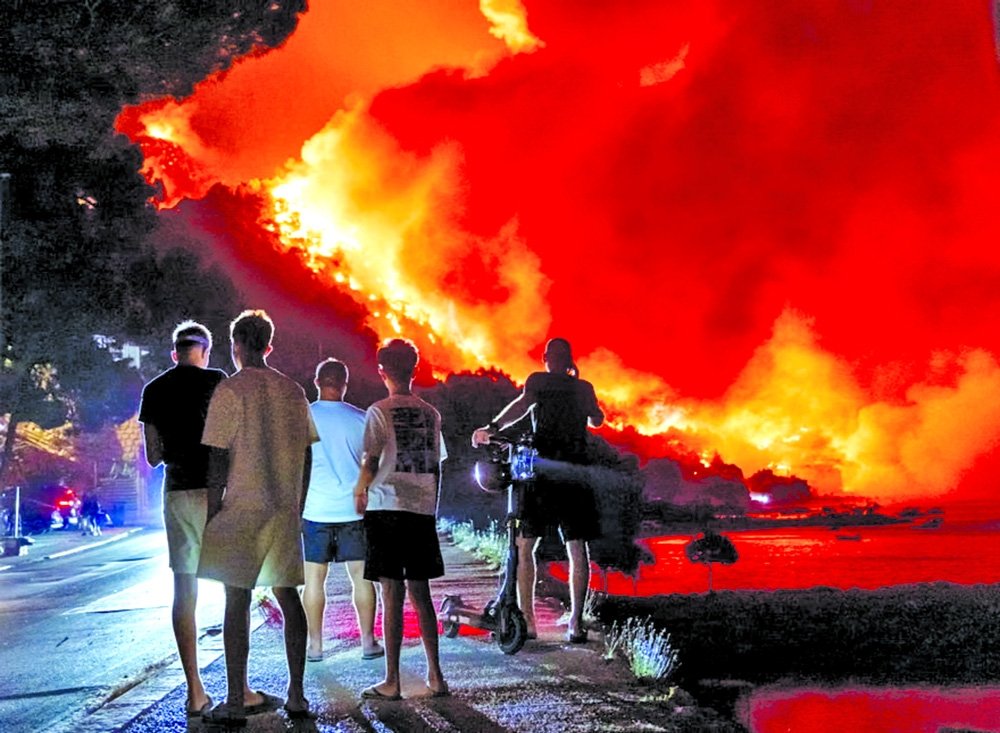
Almost 500 people have been arrested in France on suspicion of starting wildfires since the beginning of July as a relentless heatwave fuels dangerous blazes across Europe, forcing thousands of people from their homes and threatening communities, holiday resorts, forests and historic sites.
French authorities said 474 people, including 183 minors, had been detained over wildfires since 1 July. Around 70% are suspected of deliberately starting fires, while the remainder are believed to have caused fires accidentally. The arrests come as firefighters across France, Germany, Croatia, Spain, Greece and the UK battle flames intensified by extreme heat, dry vegetation and strong winds.
The latest emergency in France unfolded in the south-western Landes region, where authorities evacuated more than 525 people from the village of Luglon after a wildfire tore through almost 1,100 hectares of extremely dry pine forest in less than 24 hours.
Regional official Gilles Clavreul said the situation remained unfavourable and that the fire was still raging. Around 500 firefighters were deployed to fight the blaze, supported by six aircraft capable of dropping water on the flames. Roads leading into the village were closed as emergency services attempted to prevent the fire from spreading further.

The latest French arrests have added to growing concern over the role of human activity in the country’s wildfire crisis. Authorities are investigating both deliberate acts and accidental fires, while prosecutors in several regions have intensified efforts to identify those responsible for igniting blazes.
French media have reported that a 15-year-old boy was detained in connection with a wildfire near Bordeaux airport that killed two firefighters in July. The case has highlighted the dangers facing emergency crews as they attempt to contain increasingly unpredictable fires.
The current crisis follows devastating wildfires in the Arcachon Bay and Lège-Cap-Ferret areas in late July. Those fires destroyed more than 50,000 hectares and resulted in the evacuation of as many as 220,000 people, creating one of France’s most serious wildfire emergencies in years.
Scientists have increasingly linked the worsening fire conditions to climate change. Europe is warming at roughly twice the global average, while prolonged heat and drought are drying soils, forests and waterways. Such conditions allow fires to ignite more easily and spread more rapidly, particularly when accompanied by strong winds.
The European Union’s Copernicus climate monitoring service warned that “very extreme” wildfire conditions were affecting large areas of central and eastern Europe, with additional high-risk areas extending into southern Britain, Ireland, northern France and southern Sweden.
The scale of the heat was reflected in temperatures across the continent. Around three in five Europeans were expected to experience temperatures of at least 30C on Friday, while approximately 150 million people were facing temperatures of 35C or higher.
Western Europe’s average high temperature was forecast to reach 31.2C, around 8C above the average recorded between 1961 and 1990. Across Europe as a whole, temperatures were about 1.6C above that historical benchmark.
The combination of heat, dry conditions and strong winds has created a volatile environment in which even relatively small fires can quickly become major emergencies.
Germany was among the countries facing serious threats. In the western state of North Rhine-Westphalia, more than 2,000 people were evacuated from their homes after a wildfire in the Hürtgen forest moved to within several hundred metres of the village of Gey.
Residents were taken to a nearby primary school for shelter as firefighters struggled to reach parts of the forest. Unexploded second world war ammunition buried in the area created an additional danger, with explosions reportedly heard as old munitions detonated in the flames.
The presence of unexploded ordnance forced firefighters to maintain a safe distance from some areas, complicating efforts to contain the fire. German army tanks and helicopters were deployed to support emergency operations.
Deputy premier of North Rhine-Westphalia Mona Neubaur warned that the fire posed a serious threat to local communities as authorities worked to protect residents and prevent further spread.
Croatia also experienced a deadly wildfire emergency. A fire driven by strong winds swept through the tourist area of Lokva Rogoznica on the Dalmatian coast, destroying homes and forcing approximately 1,200 people to evacuate.
Police later discovered the body of one person while searching areas affected by the fire. Forty people were reported injured, while dozens required medical treatment in the nearby city of Split.
Emergency medical services treated 36 people, with 14 admitted to hospital and seven suffering life-threatening injuries. Temporary shelters were established in nearby towns as evacuated residents sought refuge from the flames.
Croatian Prime Minister Andrej Plenković described the fire as one of the worst in recent years. Although the blaze had weakened by Friday morning, authorities continued to monitor the situation because strong winds and dry vegetation could allow flames to flare up again.
Spain was confronting several major fires at the same time. In the north-east, a wildfire that began on Monday intensified after temperatures increased and strong winds spread flames across more than 9,000 hectares.
The fire threatened the historic San Juan de la Peña monastery in Aragón, prompting military personnel to remove the remains of three 11th-century Aragonese kings from the site. The historic remains were transported to a museum in nearby Huesca as a precaution.
Sixteen towns and villages were evacuated as authorities attempted to prevent the fire from reaching populated areas and historic buildings.
A much larger wildfire in southern Spain also worsened, with approximately 31,000 hectares burned in Huelva province and around 700 people forced to leave their homes.
In Greece, holidaymakers faced another dramatic evacuation as wildfires threatened popular resorts on the Halkidiki peninsula. Small boats were used to evacuate around 500 tourists and residents from beaches near Siviri and Fourka after flames approached the coastline.
The fire front stretched for around two miles, with flames reaching up to 30 metres high. Firefighters later brought the main blaze under control, although crews remained on alert for renewed outbreaks.
Two firefighters were injured and taken to hospital. Authorities issued the highest level of fire alert across large parts of mainland Greece, while local officials restricted access to densely forested areas of Halkidiki.
Strong winds, forecast to reach around 62mph, posed a continuing threat by potentially carrying burning embers over long distances and reigniting areas that had already been treated by firefighters.
The UK was also affected by the extreme conditions. Wildfires spread across parts of the West Midlands, destroying several homes and creating what regional fire authorities described as one of the most significant incidents they had faced.
The simultaneous emergencies have demonstrated the growing challenge facing European governments as extreme heat increasingly overlaps with drought and severe wildfire conditions.
Climate scientists have warned that rising temperatures can increase the dryness of vegetation and soil, creating conditions in which fires spread faster and become more difficult to control. Longer and hotter summers can also extend the period during which forests and grasslands remain highly vulnerable to ignition.
The human cost has extended beyond property damage. In France, firefighters have already lost colleagues during the summer’s major fires, while Croatia has recorded a death and multiple serious injuries. Across the continent, thousands of people have been forced to leave their homes, while emergency crews have worked for days in dangerous heat and smoke.

Authorities are also increasingly concerned about the potential for deliberate fire-setting during periods of extreme weather. France’s decision to detain hundreds of suspects reflects the scale of the investigations now under way, although officials continue to stress that not every wildfire is the result of criminal activity.
As the heatwave continues, European emergency services remain on high alert. The combination of unusually high temperatures, exceptionally dry landscapes and strong winds means that fires can develop rapidly and overwhelm local resources before reinforcements arrive.
The latest crisis has once again placed Europe’s growing exposure to extreme weather at the centre of attention. While firefighters continue to battle individual blazes, governments face a wider challenge of adapting communities, forests and emergency systems to a climate in which extreme heat and wildfire conditions are becoming increasingly difficult to treat as exceptional events.
Related News:
 Wildfires Force Mass Evacuations in France And Spain
 Evacuations Ordered as California Wildfires Spread Fast
 Queensland Braces for Potential Second Severe Cyclone Hit
 Capitalism ‘Suicidal’, Warns Petro at Climate Summit
 Ukraine strikes Tuapse as oil disaster worsens
 Norway Doubles Down on Oil and Gas for Europe Energy Security
 Pope Meets Families in Italy Toxic Waste Zone
 Venezuela Quake Death Toll Surpasses 4,000
 Powerful 7.7-Magnitude Earthquake Hits Eastern Indonesia
 ‘Extinct’ Antelope Returns to Sahara, Bringing Hope
 High-speed Spain train crash leaves nation in mourning
 Japan Prepares for Kashiwazaki Restart After Fukushima Legacy
 EU weighs response amid Greenland tariff crisis with Trump
 Half the World’s Largest Cities Face Rising Water Stress
 The Sound of Mayhem’: Terror and Loss at Mount Maunganui
 EU Says US Ties Have Suffered ‘Big Blow’ After Greenland Crisis
 Reindeer Deaths Rise as Finnish Herders Blame Border Wolves
 Thousands Left Without Heating in Ukraine Amid Russia Strikes
 Russia sanctions hit economy hard, says EU envoy
 Storm Leonardo Triggers Election Delay Calls in Iberia
 Portugal Election Delivers Socialist Win as Far Right Surges
 Scotland’s Climate Plans Face Scrutiny Over ‘Science Fiction’ Targets
 Ocean Warming Drives Massive Marine Life Loss, Study Warns
 Tropical Flowers Shift Blooming Due to Climate Crisis
 Greenpeace $345m Ruling Sparks Appeal Battle
 Hungary Faces Political Tension Over the Ukraine Crisis
 Cyprus Drone Strike Sparks Europe’s Strong Response
 Musk’s xAI Permit Sparks Fury Over Power Plant Expansion
 The Truth Behind Rising Energy Costs and Fossil Fuel Myths
 Extreme Weather: Europe Shivers as Cyclone Narelle Hits
 Trump to Deploy “God Squad” Over Gulf Wildlife Protections
 Italian Town Buys Mussolini Villa to Keep Away Fascist Fans
 UK Records Earliest Spring as Nature Awakens Fast
 Tragic End to Outback Search as Floods Claim a Life
 Hungary election: Orbán faces biggest test amid scandal
 Cyclone Vaianu Forces Mass Evacuations in New Zealand
 Chornobyl Still at Risk 40 Years After Disaster
 Escobar’s Hippos May Be Moved to India Zoo
 Coalition pushes fossil fuel phaseout plan
 Record May Heat to Cold Front in Eastern Australia
 Global order shifts amid Trump-era turmoil
 Ceasefire Standoff Deepens in Ukraine War
 France Faces Record Presidential Crowded Race Amid Far-Right Surge
 Bad Weather Threatens Hantavirus Cruise Ship Evacuation
 Doomsday Clock Nears Midnight Amid Global Crises
 Putin Declares Russia Victory at Scaled Victory Day Parade
 Ex-Chief of Staff Named in Major Ukraine Corruption Probe
 UN Faces Crucial Vote on Landmark ICJ Climate Ruling
 UK Faces Mass Water Shortages by 2055, Lords Warn
 Zelenskyy warns over Oreshnik threat as Kyiv hit
 Man killed in shark attack on Great Barrier Reef
 Hope for mountain bongos returns to Kenya
 Former ICC prosecutor condemns US sanctions
 Irish Gangland Figure Fails in Dublin Election Bid
 Europe Swept by Historic May Heatwave
 Deadly Russian Air Raids Strike Across Ukraine
 UN Issues Urgent Warning: Imminent Return of El Niño
 Papal Visit Offers Political Lifeline to Spanish Premier
 Germany Summons Chinese Envoy Over Russian Troop Training
 Sydney Records Hottest June Since 1859 as Expert Warns New High a ‘Signature’ of Global Warming
 UK Heatwaves Ignite Crisis of Sleep and Public Safety
 China Storms Claim Fifteen Lives in Tragic Surge
 Le Pen to Run for President Despite Embezzlement Conviction
 UK Seas Face Extreme Heatwave as Global Temperatures Surge
 Europe Scorched as Record Heatwaves Grip the Continent
 England and Norway Fans Turn Miami Into World Cup Carnival
 Olympus Awaits Unesco Heritage Recognition
 Three-Quarters of England’s Riverbanks Still Off Limits
 Irish Beach Tragedy: Irish Drown at Whitehaven Beach in Australia
 Judi Dench Champions Fight to Save London’s Green Spaces
 UK and US Drop in Global Corruption Index Rankings
 Canberra Poster Seizure Sparks Free Speech Row
 Jacinda Ardern Move Sparks Kiwi Reflection
 Middle East Airspace Crisis Strands Thousands
 Kelly Wilkinson Inquest Reveals Bail Failure
 Injured Mojtaba Khamenei Elevated as Iran Leader
 The Kill Line: A Shifting Vision of the American Dream
 Britain’s Crowning Butterfly Takes the Nation by Storm
 Fifa Official Under Investigation Over Hand Gesture Controversy
 Grief and Devotion Amidst the Rubble of Nabatieh