Published: 03 September 2026.The English Chronicle Desk. The English Chronicle Online.
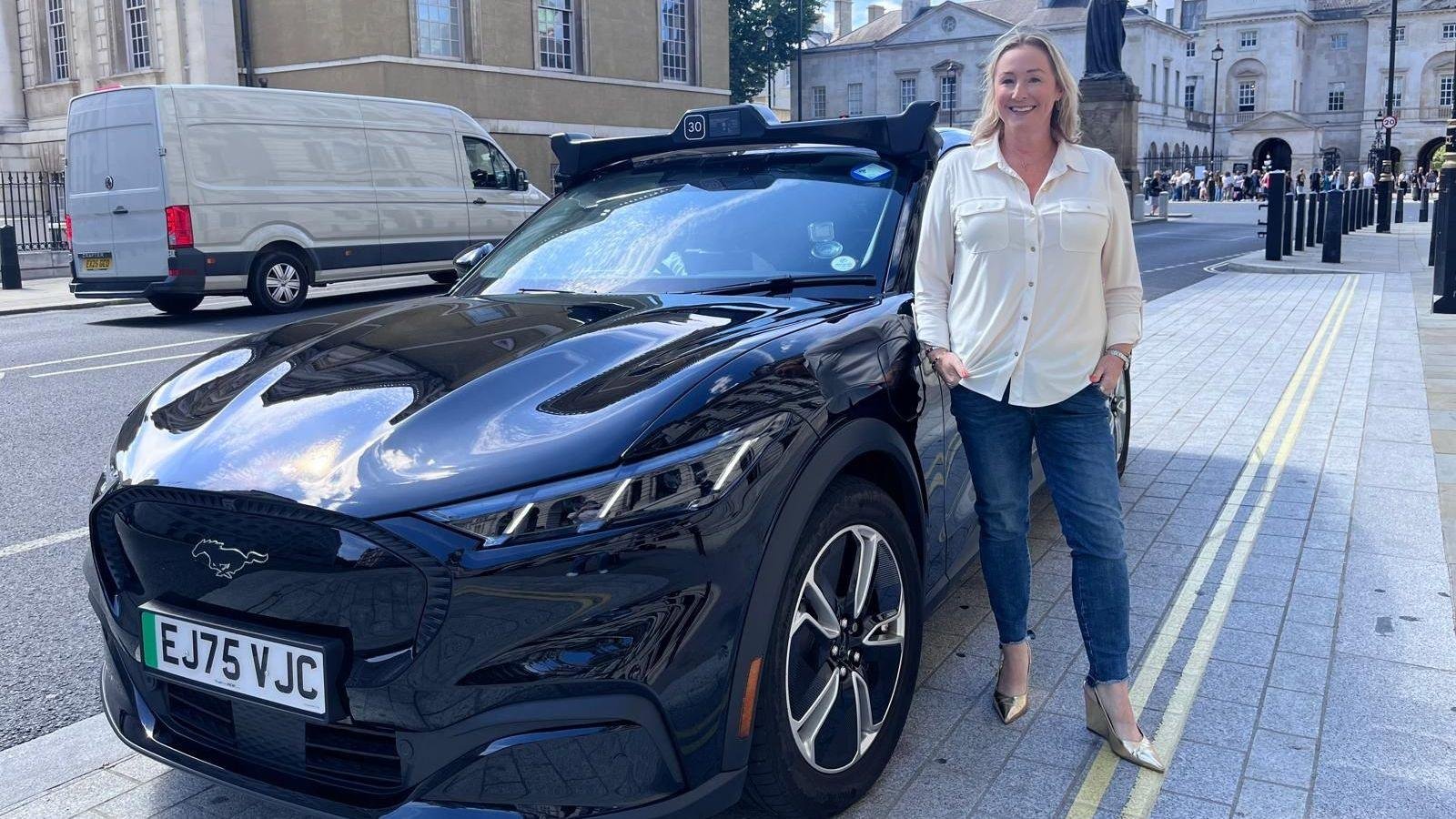
London has entered a new era of urban transport with the launch of its first commercially available self-driving taxis, allowing passengers to request autonomous vehicles through the Uber app. The initial service, powered by British technology company Wayve, marks an important step towards driverless transport becoming part of everyday life in the capital.
The launch is significant, but the service remains deliberately limited at this early stage. Only 15 autonomous vehicles have so far been licensed to operate as private hire vehicles, meaning the likelihood of a passenger immediately securing one remains relatively low. London has more than 100,000 private hire vehicles, highlighting the small scale of the initial robotaxi fleet compared with the city’s established taxi and ride-hailing network.
The vehicles are also not yet completely driverless. A licensed human safety driver will remain seated in the front of each car throughout the journey and will be able to take control if required. This arrangement reflects the current regulatory framework and allows passengers to experience autonomous driving while human supervision remains part of the service.
The introduction of the vehicles follows approval from Transport for London for modified Ford Mustang cars operated through a partnership involving Uber and Wayve. The vehicles have been authorised as private hire vehicles, but current conditions require a safety driver to supervise the autonomous system.

A separate regulatory process is required before vehicles can operate fully autonomously without a human safety driver. That process involves the Driver and Vehicle Standards Agency and remains a significant hurdle for the next stage of London’s robotaxi development. As a result, completely driverless commercial services are not expected to become a widespread reality in the capital immediately.
Nevertheless, the launch represents a major milestone for Wayve and Uber, as London is regarded as an important testing ground for autonomous vehicle technology in Europe. The capital’s dense streets, unpredictable traffic, cyclists, pedestrians, buses, narrow roads and complex junctions provide a particularly demanding environment for self-driving systems.
Wayve’s chief executive and co-founder, Alex Kendall, said the company was proud to introduce its artificial intelligence driving technology to the public in London. He described the capital as Wayve’s home city and one of the world’s most challenging driving environments.
Kendall acknowledged that the technology remains in development but said the company was working towards a future in which passengers could travel without a safety driver. He stopped short of providing a specific timetable for achieving fully autonomous operation, stressing that the company wanted to move as quickly as possible while ensuring the necessary safety and regulatory requirements were met.
Wayve’s approach differs from that of some of its major competitors. Rather than relying primarily on detailed mapping systems, the company’s technology uses an artificial intelligence learning model designed to interpret and respond to changing road conditions.
The system has already been tested on London’s streets, including central areas where vehicles must deal with complicated traffic patterns and frequent changes in road behaviour. During one recent test journey, the vehicle demonstrated its ability to respond to an unusual parking situation.
The car stopped near a set of gates while other vehicles attempted to pass through the area. It subsequently decided to move away and re-park in another position. The manoeuvre was seen by Wayve executives as an example of the vehicle responding to its surroundings in a manner similar to a human driver.
For passengers, the experience is designed to resemble a conventional Uber journey while introducing the autonomous technology gradually. Customers will use the Uber app to request and unlock the vehicle. A safety driver will initially introduce themselves and explain how the autonomous system works.
The driver will generally remain silent during the journey but will be available to take control if necessary. Passengers who feel uncomfortable with the autonomous system can request human intervention, providing an additional layer of reassurance during the early stages of the service.
The London launch also places Uber in a stronger position as competition increases among companies seeking to establish commercial autonomous transport networks. Uber has already participated in the launch of a robotaxi service in Zagreb, Croatia, where vehicles also operate with human drivers onboard.
Other major technology companies are pursuing similar ambitions in London. Google-owned Waymo and Chinese technology company Baidu have been testing autonomous vehicles in the capital, making London an increasingly important battleground for the future of driverless mobility.
For Uber, the long-term attraction of autonomous vehicles lies partly in the possibility of reducing operating costs while improving safety and accessibility. However, the company acknowledges that autonomous rides are not yet cheaper than journeys driven by human drivers.
Sarfraz Maredia, Uber’s head of autonomous mobility, said the potential long-term benefits for passengers could include safer and less expensive journeys. He also recognised that the economics of autonomous transport still need to develop before those advantages can become a reality.
The emergence of robotaxis has also raised concerns among professional drivers whose livelihoods depend on private hire and taxi work. Uber has sought to reassure drivers that autonomous vehicles will not immediately replace human drivers and has argued that both forms of transport can operate on its platform.
Maredia said Uber wanted its service to remain a platform where human drivers and autonomous vehicles could work alongside one another. He argued that the company’s continuing growth in London meant there should be demand for both types of service for many years.
However, trade unions have warned that the eventual expansion of driverless vehicles could have significant consequences for employment. David McMullen, a senior organiser at the GMB union, said authorities should approach the rollout carefully because hundreds of thousands of people depend on driving work.
The union’s concerns extend beyond individual employment. A rapid transition towards autonomous transport could affect household incomes, local economies and the wider structure of the UK’s transport workforce. The scale of any future disruption will depend heavily on how quickly autonomous vehicles become commercially viable and how governments regulate their deployment.
The British government has welcomed the technology as an example of domestic innovation. Transport Secretary Heidi Alexander described the launch as an important milestone for London’s transport future and said the development demonstrated the contribution of British technology to investment and economic growth.
For Londoners, however, the immediate impact is likely to be modest. With only a small number of licensed vehicles currently available and human safety drivers still required, robotaxis will initially be more of a limited public demonstration than a replacement for conventional private hire services.

The significance of the launch lies in what it could eventually represent. If Wayve can demonstrate that its technology can operate safely and reliably on London’s exceptionally complicated roads, the experience could provide an important foundation for wider deployment in Britain and other European cities.
The next stage will depend on several factors coming together, including further safety testing, regulatory approval, technological development and the production of vehicles specifically designed for autonomous operation. Wayve has indicated that it plans to move towards larger-scale production using Nissan Leaf vehicles equipped with its autonomous driving technology.
Until then, London’s first robotaxis will continue operating under human supervision, offering passengers an early glimpse of a transport system that could eventually look very different from today’s.
The arrival of self-driving taxis does not mean London’s traditional taxi and private hire industry is disappearing overnight. Instead, it signals the beginning of a transition whose pace and consequences remain uncertain. For passengers, technology companies, drivers and regulators alike, the coming years will determine whether autonomous vehicles become a practical part of everyday London life or remain a limited experiment for longer than expected.
Related News:
 Reform UK funding: mystery billionaire revealed
 UK firms accused of ‘AI washing’ boom
 UK Risks Falling Behind in AI Race
 North Sea oil workers must lose weight or face job loss
 UK Taskforce Unveils Plan to Streamline Nuclear Reactor Rules
 UK Car Sales Pass 2 Million as Chinese Brands Surge
 MPs warn AI financial risks threaten UK stability
 MPs warn AI financial risks threaten UK stability
 AI job losses UK: Britain faces sharper employment shock
 UK New Car Discounts Near £6,000 as Prices Are Slashed
 UK Pushes NHS and MoD to Buy British Tech
 UK Aviation Watchdog Clips Heathrow’s Fee Hike Wings
 OpenAI Halts Stargate UK Project Amid Energy Crisis
 Heavier SUVs Accelerate Britain’s Pothole Crisis
 Europe EV Demand Surges as Fuel Prices Rise
 Cambridge South Signals New Era for British Rail Travel
 UK rejects EV charging VAT cut amid Treasury clash
 Essex valley emerges as rising English wine hub
 EasyJet Takeover Sparks Fears Over Passengers’ Future
 How to Exit Your Broadband Contract Without Paying Exit Fees
 Jaguar Land Rover Extends Production Halt Following Cyber-Attack
 Reeves Faces Setback as Labour May Miss Homes Target
 Virgin Trains Moves Closer to Challenging Eurostar Monopoly
 Trump’s UK Ambassador Urges North Sea Drilling to Strengthen US Ties
 UK Bans Fake Numbers: Scammers Lose Their Trick
M&S Profits More Than Halve After Cyber-Attack
UK Bans Fake Numbers: Scammers Lose Their Trick
M&S Profits More Than Halve After Cyber-Attack
 Tony Blair think tank warns Rachel Reeves must cut taxes if manifesto broken
 Patients to Test Health at Home to Ease NHS Winter Pressure
 Millionaires group urge Reeves to introduce wealth tax to ‘lift kids out of poverty’
 Northern Lights may illuminate UK skies this week
 New laws to bolster UK’s defences against cyber attacks on NHS, transport and energy
 Global markets drop amid tech sell-off and China slowdown
 Coffins Now Too Large to Cremate Amid Rising Obesity Crisis
 Starmer Says Labour’s Economic Plan Needs Years to Deliver
 Virgin Media Fined £23.8m Over Telecare Safety Failures
 Rising Water Bills Lift Troubled Thames Back to Profit
 Starmer Faces Parliamentary Battles Over UK-EU ‘Reset’ Plan
 ScottishPower Tops List of Worst UK Energy Suppliers
 City & Guilds pay surge sparks backlash amid £22m cuts
 UK Government Borrowing Drops to £11.6bn in December
 Childnet Censorship Row Over Teen Safety Speeches
 BT Names New Openreach Chief Amid Major Fibre Expansion
 UK Unemployment Rate Climbs to 5.2% Peak
 UK shelves £110m border project amid trade strain
 Facial Recognition Error Leads to Wrongful Arrest in Milton Keynes
 Rolling Hills and Heritage: A Car-Free Break in Leicestershire
 Switching Energy Deal Can Save £200 as Price Cap Falls
 Rachel Reeves Faces Middle East Conflict Test
 Grocery Inflation Rises Amid War Fears
 BrewDog sold Highland estate for knockdown price after abandoning reforestation plans
 Cancer Death Rate in Britain Falls by Nearly a Third
 UK Energy Reform Could Cut Bills by £200
 Rising Costs Force Families to Rethink Days Out
 Artemis II Returns After Historic Moon Flyby
 Aegon Sells Historic UK Arm to Standard Life for £2bn
 Robots Outpace Humans in Beijing Half-Marathon
 UK Staycations Rise as Travel Fears Grow
 Silent Tracks: Rail Line Without Passengers
 DeepMind Staff Vote to Unionize Over US Military Contract
 Lotus Boss Pledges Future to Norfolk and Seeks State Support
 UK Firms Freeze Spending as Iran Conflict Bites
 Reeves to Fast-Track Clean Energy Amid Iran Crisis
 Belfast Approves Pilot Extension of Sunday Trading Hours
 Tube Strike Brings Capital to a Standstill Over Shift Disputes
 Tube Strike Brings Capital to a Standstill Over Shift Disputes
 BP Stands Firm on Amanda Blanc Amid Boardroom Storm
 Tech Trends and the Battle Against Exam Hall Cheating
 UK House Prices Drop For Third Month Due To War Fears
 Top Chefs Back Andy Burnham to Save UK Hospitality Sector
 Stolen Mobiles Could Soon Become Useless Bricks
 AI Scams Push UK Investment Fraud Past £220m
 UK Ministers Lobby Trump Over Under-16s Social Media Ban
 EU Slashes Steel Quotas But Grants UK Favourable Rates
 Sainsbury’s Boss Optimistic As Grocery Inflation Eases
 Trump Faces Backlash Over $2bn Earnings Since Return
 Burnham unveils £65m drought aid for farmers
 Gen Z turns to BirdTok for a gentler digital escape
 Unions Warn Labour Over Zero-Hours Contract Reforms
 Queue row erupts on Wales’ highest mountain
 AI Loss of Control Incidents Nearly Double