Published: 10 September 2026. The English Chronicle Desk. The English Chronicle Online.
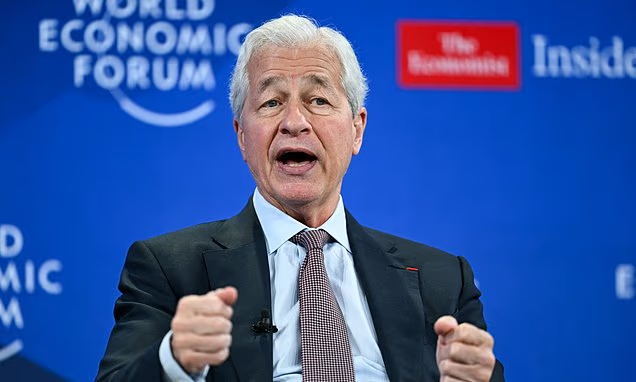
JPMorgan chief executive Jamie Dimon has warned senior UK politicians that increasing taxes on banks could put investment and employment at risk, as the government considers whether to introduce higher levies on the financial sector in its upcoming October budget.
Dimon, one of the most influential figures in global banking, met Andy Burnham and Chancellor John Healey on Wednesday and is understood to have used the meeting to raise concerns about any further increase in taxes on banks. The discussion comes ahead of the government’s budget on 28 October, when speculation is growing that ministers could introduce a windfall tax on banks and oil companies.
The meeting highlights the growing tension between the government’s efforts to raise additional revenue and the financial industry’s concerns that higher taxation could make the UK a less attractive destination for investment.
Dimon has repeatedly criticised additional taxes imposed on British banks and has argued that excessive taxation could eventually affect employment, investment decisions and the country’s competitiveness in global financial markets.
UK banks currently face a corporation tax rate of 28%, compared with the standard rate of 25% for other companies. Lenders are also subject to a separate banking surcharge based on their UK balance sheets. Any further levy would therefore come on top of an already higher tax burden for financial institutions.

Dimon has previously warned that another increase could have adverse consequences for Britain’s financial sector. During a telephone conversation with Healey in August, he reportedly argued that higher taxes could damage employment opportunities in the financial industry.
The JPMorgan chief executive pointed to developments in New York as an example of how tax policy can influence the location of financial-sector jobs. He has argued that higher taxation can contribute to companies and workers moving activities to jurisdictions offering more favourable business conditions.
The latest intervention is part of a longer campaign by Dimon and other banking executives to influence the UK’s approach to financial-sector taxation.
Last year, Dimon was among banking leaders who lobbied against proposals for higher taxes before the previous government’s budget. His engagement with senior British officials has continued as the current government considers additional measures to raise revenue.
The debate has become particularly important because Britain’s banking industry has generated substantial profits in recent years. The country’s four largest lenders, HSBC, NatWest, Barclays and Lloyds Banking Group, have collectively generated around £200 billion in pre-tax profits over the past five years.
Much of that profitability has been supported by higher interest rates, which increased the difference between what banks charge borrowers and what they pay savers. While interest-rate increases have helped financial institutions improve their earnings, they have also increased borrowing costs for households and businesses.
The government is under pressure to address the continuing cost-of-living challenges facing households. Supporters of a banking windfall tax argue that financial institutions that have benefited from higher interest rates should contribute more toward government efforts to ease pressure on consumers.
Trade union organisations and campaign groups have called for higher levies on banks. They argue that additional revenue could be used to support households facing increased costs and help finance measures aimed at reducing financial pressure on lower- and middle-income families.
Burnham, however, has not publicly committed to a specific proposal for a new bank tax. The lack of a confirmed policy means the financial sector is watching closely for signals about the government’s intentions before the October budget.
The issue is politically sensitive because the government must balance the desire for additional tax revenue against the need to maintain Britain’s position as one of the world’s leading financial centres.
The City of London remains an important contributor to the UK economy, providing employment and generating substantial tax revenues. Any policy that encourages major banks or financial firms to reduce their UK operations could therefore have consequences beyond the companies directly affected.
Dimon’s concerns are also connected to JPMorgan’s long-term investment plans in Britain. The bank has previously announced plans for a major new headquarters in London’s Canary Wharf district, representing a multibillion-pound investment.
The proposed building is expected to provide a major base for JPMorgan’s UK operations and could accommodate more than half of the bank’s approximately 23,000 UK employees.
Dimon has previously linked the future of the project to the UK’s broader business environment. Earlier this year, he indicated that JPMorgan could reconsider the plans if Britain were led by a government perceived as hostile to the banking sector.
The comments demonstrate the importance international banks attach to tax and regulatory policy when deciding where to invest billions of pounds.
For the British government, however, the banking industry is also viewed as a significant source of potential tax revenue. The UK’s financial institutions already contribute billions of pounds annually to the Treasury.
According to an estimate commissioned by the industry body UK Finance, British banks paid approximately £43.3 billion in tax during the financial year ending in March 2025.
The figure includes various forms of taxation and illustrates the substantial contribution made by the sector to public finances. Banking industry representatives argue that the existing tax burden should be considered before policymakers introduce additional charges.
Supporters of a windfall tax take a different view. They argue that the exceptional profits recorded by major banks in recent years justify a temporary additional contribution, particularly at a time when households are facing significant financial pressures.
The debate is therefore centred on competing priorities. The government wants to raise revenue and demonstrate that highly profitable businesses are contributing fairly, while the banking industry wants to protect investment incentives and maintain the UK’s competitiveness.
Dimon’s intervention adds considerable international weight to the banking industry’s opposition. As the chief executive of one of the world’s largest financial institutions, his comments are likely to be closely monitored by investors, banking executives and policymakers.
The meeting with Burnham and Healey also indicates that discussions between the government and major financial institutions are continuing behind the scenes before the budget.
The October budget will ultimately determine whether the government proceeds with a new bank levy, changes existing taxation arrangements or leaves the current system largely unchanged.

Whatever decision is taken, the consequences could extend beyond the immediate tax receipts. A significant increase could generate additional government revenue in the short term, but financial institutions may respond by reassessing investment, staffing and the location of certain operations.
Conversely, choosing not to increase taxes could disappoint campaigners and political groups that believe banks should make a larger contribution after years of strong profitability.
The government therefore faces a difficult balancing act as it prepares for the October budget. The challenge is to raise sufficient revenue to meet public spending demands without undermining the investment, employment and economic activity generated by Britain’s financial sector.
Dimon’s warning has ensured that the question of bank taxation will remain firmly on the political and economic agenda in the weeks leading up to the budget. For Britain’s banks, investors and policymakers, the central issue will be whether the government can increase revenues while preserving the country’s reputation as an attractive destination for global financial investment.
Related News:
 Billionaire Chris Rokos poised to leave UK
 Oil nears $100 as Saudi attacks shake markets
 EasyJet Takeover Sparks Fears Over Passengers’ Future
 Pubs and Hotels Face Business Rates Reform Review
 UK House Prices Fall as Mortgage Rates Rise
 Wealthy Britons Flee Gulf War but Avoid UK Taxes
 UK Wage Growth Slows as Jobs Market Holds Firm
 Oil and Gas Prices Surge Amid Iran-Israel Attacks on Gasfields
 Student Loan Interest May Rise Despite 6% Cap
 Europe EV Demand Surges as Fuel Prices Rise
 Carmakers Face £3bn Gap in UK Loan Payout Scandal
 BBC News Faces Deep Cuts in 2,000 Job Plan
 Spirit Airlines shuts down after 34 years amid crisis
 New UK advice scheme to boost savings and investing
 City & Guilds Faces Governance Crisis Over Sale
 Reeves Fights to Keep Treasury Role Amid Labour Turmoil
 UK rejects EV charging VAT cut amid Treasury clash
 UK firms accused of ‘AI washing’ boom
 Severn Trent CEO Reward Package Doubled Despite Public Anger
 Weight-Loss Drugs Transform Fashion Shopping Habits
 Shein targets $27bn valuation in Hong Kong debut
 Firms on both sides fear damage from US-Canada trade war
 UK Risks Falling Behind in AI Race
 Europe Faces Winter Gas Supply Anxiety
 UK Households Could Save £173 on Fixed Energy Deals
 Burnham Faces Mounting Budget Challenges
 Dutch Bank Moves 86 Tonnes of Gold to London
 UK Subsidence Claims Surge After Record-Breaking Summer
 Reform Faces Fresh Financial Controversy
 Ukraine Moves to Seize Water Company
 UK Cost Squeeze Deepens as Mortgages and Gas Rise
 Spire Healthcare Agrees £1bn Takeover by Toscafund
 UK retailers plan 100,000 placements for young people
 McLaren to Create 1,000 UK Jobs in £450m Investment
 Nats Boss Summoned as UK Flight Chaos Continues
 Reeves Faces Setback as Labour May Miss Homes Target
 Trump’s UK Ambassador Urges North Sea Drilling to Strengthen US Ties
 M&S Profits More Than Halve After Cyber-Attack
 Tony Blair think tank warns Rachel Reeves must cut taxes if manifesto broken
 Millionaires group urge Reeves to introduce wealth tax to ‘lift kids out of poverty’
 Global markets drop amid tech sell-off and China slowdown
 Starmer Says Labour’s Economic Plan Needs Years to Deliver
 Virgin Media Fined £23.8m Over Telecare Safety Failures
 Rising Water Bills Lift Troubled Thames Back to Profit
 Starmer Faces Parliamentary Battles Over UK-EU ‘Reset’ Plan
 ScottishPower Tops List of Worst UK Energy Suppliers
 City & Guilds pay surge sparks backlash amid £22m cuts
 UK Government Borrowing Drops to £11.6bn in December
 AI job losses UK: Britain faces sharper employment shock
 UK Unemployment Rate Climbs to 5.2% Peak
 UK shelves £110m border project amid trade strain
 Switching Energy Deal Can Save £200 as Price Cap Falls
 Rachel Reeves Faces Middle East Conflict Test
 Grocery Inflation Rises Amid War Fears
 BrewDog sold Highland estate for knockdown price after abandoning reforestation plans
 Farage Faces Backlash Over Crypto Cameo Endorsements
 UK Energy Reform Could Cut Bills by £200
 Rising Costs Force Families to Rethink Days Out
 Aegon Sells Historic UK Arm to Standard Life for £2bn
 UK Staycations Rise as Travel Fears Grow
 Albanese Rejects Gas Export Tax Push
 Silent Tracks: Rail Line Without Passengers
 US Awaits Iran Reply on New Ceasefire Proposal
 Lotus Boss Pledges Future to Norfolk and Seeks State Support
 UK Firms Freeze Spending as Iran Conflict Bites
 Reeves to Fast-Track Clean Energy Amid Iran Crisis
 Tube Strike Brings Capital to a Standstill Over Shift Disputes
 Tube Strike Brings Capital to a Standstill Over Shift Disputes
 BP Stands Firm on Amanda Blanc Amid Boardroom Storm
 UK House Prices Drop For Third Month Due To War Fears
 AI Scams Push UK Investment Fraud Past £220m
 EU Slashes Steel Quotas But Grants UK Favourable Rates
 Sainsbury’s Boss Optimistic As Grocery Inflation Eases
 Apollo Launches £5.7bn Bid for Aviation Giant easyJet
 Burnham unveils £65m drought aid for farmers
 Unions Warn Labour Over Zero-Hours Contract Reforms
 London Launches First Self-Driving Taxis
 Trump Hardens Canada Trade Stance as Talks Stall
 Swedish Mining Push Puts Sami Land Rights Under Pressure
 UK plans tougher Israel stance with settlement trade ban