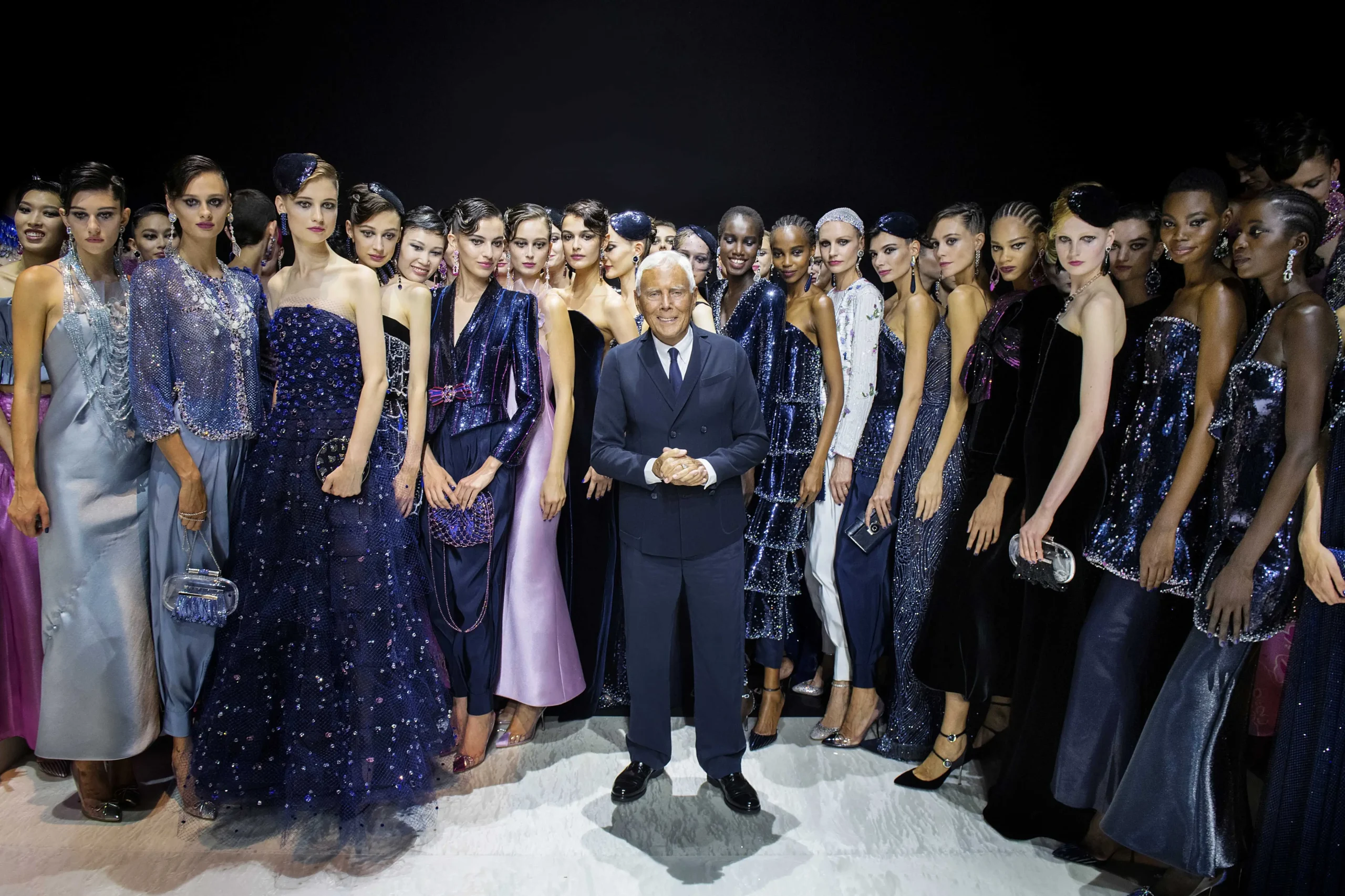
Published: 05 September. The English Chronicle Desk. The English Chronicle Online
Giorgio Armani, the legendary Italian designer who passed away at the age of 91, reshaped the very fabric of modern fashion in a way few have ever achieved. He was the first designer since Coco Chanel to create a lasting, profound change in the way people dress, leaving an indelible mark on both men’s and women’s wardrobes. Armani’s genius lay not just in clothing, but in anticipating and reflecting the social transformations of the 20th century, making style both an expression of individuality and a tool of empowerment.

Born on 11 July 1934 in Piacenza, northern Italy, Armani grew up in a middle-class household whose comfort was shattered by the Second World War. Hunger and hardship marked his earliest memories, and he experienced the brutality of conflict firsthand when an unexploded artillery shell exploded near him, severely injuring him and killing a close friend. “War taught me that not everything is glamorous,” he later reflected, a lesson that would quietly shape his restrained, elegant approach to fashion.
Initially drifting through life, Armani began a medicine degree in 1956 but dropped out after three years. A stint in the army proved equally uninspiring, and he eventually found his calling in Milan as a window dresser at La Rinascente. Unlike most designers who follow formal apprenticeships or attend fashion school, Armani’s education took place on the shop floor. He learned directly from customers about fabrics and styles, and he visited textile mills to understand how cloth was constructed. This hands-on experience laid the foundation for his mastery of tailoring and design.
By the 1960s, Armani was working for Nino Cerruti, an influential haute couture designer. His talent quickly earned him the responsibility to restructure the company’s approach, a role that foreshadowed his future revolutionary impact. At a time when middle-class consumers could not afford haute couture but longed for stylish, refined clothing, Armani’s knowledge of fine fabrics enabled him to design menswear with soft, elegant cuts that could be produced at scale, bringing luxury within reach.
In 1966, Armani met Sergio Galeotti, a young architect, who would become his lifelong partner both personally and professionally. Galeotti encouraged Armani to start his own label, managing the business side while Armani focused on design. Together, they began in a modest office where lighting was so poor that Armani removed lamp shades to see the fabrics clearly. Yet the designs produced there were transformative. Armani softened menswear and strengthened womenswear, making men’s suits more relaxed and sensual, while empowering women with tailored, elegant outfits suited for the workplace. His vision allowed women to project authority without sacrificing femininity, creating what would become known as the power suit.
Armani’s brand expanded rapidly. By 1978, a collaboration with clothes manufacturer GFT enabled him to produce luxury ready-to-wear collections in volume, while a landmark contract to dress Richard Gere in American Gigolo projected his vision through the global lens of Hollywood. He went on to dress celebrities on Oscar night and design costumes for film and television, including The Untouchables and the iconic 1980s series Miami Vice. Within a decade, Armani became the best-selling European designer in the United States, solidifying Milan’s status as a global fashion capital second only to Paris.
His empire extended beyond clothing. Armani Jeans, Emporio Armani, fragrances, eyewear, sportswear, cosmetics, and luxury accessories collectively embodied the “total look” concept, offering a complete lifestyle brand. Despite the death of Galeotti in 1985, Armani persevered, expanding his empire while maintaining full creative and financial control. His discipline, self-containedness, and relentless pursuit of perfection made him not only a global fashion icon but also a multi-billionaire.
Armani’s influence extended beyond commerce to culture and social consciousness. He pioneered the use of healthier models after the tragic death of Ana Carolina Reston from anorexia and introduced hotel design, notably the interiors of Dubai’s Burj Khalifa. He designed uniforms for Chelsea Football Club, the England squad, and Italy’s Olympic team, blending fashion with broader social and sporting life.

Even in his later years, Armani’s commitment to innovation never waned. His 2025 Milan show sought to envision harmony in a fractured world, a reflection of his enduring belief that fashion could inspire broader societal cohesion. His minimalist lifestyle, epitomized by a narrow, meticulously engineered swimming pool, mirrored the precision and purpose of his creative work.
For 65 years, Giorgio Armani dedicated himself to understanding and shaping the way people present themselves, combining aesthetic mastery with acute social awareness. His vision made style a reflection of both identity and aspiration, influencing generations of designers and consumers alike. By the end of his remarkable life, Forbes estimated his fortune at $13 billion, a testament not only to commercial success but to a lifelong pursuit of excellence. Armani once reflected on his relentless drive: “I’m never satisfied. In fact, as someone who is forever dissatisfied and obsessive in his search for perfection, I never give up until I’ve achieved the results I want.” His legacy endures not merely in garments but in the very way fashion empowers and transforms lives.
Related News:
 Post Office Scandal Compensation Tops £1 Billion as Victims Finally See Justice
 Breaking Free from Costly Contracts and How Britons Can End Broadband Deals Without Paying Exit Fees
 Wetherspoons Stops Accepting Scottish £20 and £50 Notes in Most English Pubs
 UK Retail Sales Rise in August, but Tax Concerns Loom Over Festive Period
 Starmer Urged to Champion Workers’ Rights Amid Low Public Awareness
 UK Wage Growth Remains High, But Cost of Living Pressures Bite
 Dagenham Left in Limbo After Smithfield and Billingsgate Market Relocation Cancelled
 Marks & Spencer Staff to Work on Boxing Day for First Time in Five Years Amid Cost-Cutting Measures
 UK Government Secures £122m Win Against Michelle Mone-Linked Firm Over Defective PPE
 Millions of households in England face looming water bill hikes amid regulatory scrutiny
Millions Face Higher Water Bills After Regulator Approves Hikes
Millions of households in England face looming water bill hikes amid regulatory scrutiny
Millions Face Higher Water Bills After Regulator Approves Hikes
 Pubs and Clubs Could Stay Open Until Early Hours to Boost UK Economy
 Real living wage set to rise nearly 7% for UK workers in 2026
 Lotto result jackpot draw halted due to technical glitch
 Derby Bounce Centre to Close Amid Car Park Dispute
 P.Louise Christmas Event Cancelled in Manchester
 150-Year-Old Arctic Beer to Be Reborn in Scotland
 Court Hears Challenge Over Water Bills Funding Sewage Fixes
 Oprah enjoys Meghan’s jam on English muffins
 Earl of Yarmouth Faces £1.3m Legal Bill Over Family Estate
 NHS Takes Over Nuffield Hospital in ‘Windfall’ for London Care
 North Sea oil workers must lose weight or face job loss
 From Lego to Pokémon: How Adults Are Driving UK Toy Market Growth
 UK toy market enjoys bumper year as ‘kidults’ fuel demand
 Skims Eyes Global Expansion After Reaching $5 Billion Value
 UK Energy Bills to Rise Slightly in January
 Virgin Media Fined £23.8m Over Telecare Safety Failures
 Tensions Unfold in Market Harborough as Asylum Seeker Hotel Sparks Divisive Protests
 The Ketamine Crisis in the UK is a Silent Epidemic Leaving Users with Lifelong Pain
 The Fight for Trans Safety Is a Fight for Everyone’s Safety — MPs Must Debate This Crucial Issue
 Heartbreak in the New Forest as Shetland Ponies Vanish, Community on Edge
 China’s crackdown on civil servant perks sparks economic concerns
 Chancellor Rachel Reeves Pushes for Sweeping Changes to Environmental Protections to Accelerate Development
 Inflation Latest: Cost of Living Expected to Rise Again in Key Figures Released Today
 Retail Sales See Uptick Amid Errors and Delays as ONS Faces Scrutiny
 Weatherwatch: From Astrology to Modern Meteorology
 UK Labour Market Shows Signs of Cooling as Wage Growth Slows and Redundancies Rise
 UK Doctors Guilty of Sexual Misconduct Continue Practising Amid Weak Sanctions, Research Finds
 Zarah Sultana Seeks Legal Action After Bitter Clash with Jeremy Corbyn Over Party Membership Funds
 Canadian Officials Find TikTok Fails to Adequately Protect Children’s Data
 UK Government Backs Return of International Rail Travel to Kent Stations
 GSK Chief Executive Emma Walmsley to Step Down After Eight Years at the Helm
 A Third of EU Citizens in UK Report Discrimination by Public Bodies Post-Brexit
 Senior Tories Condemn Badenoch’s Vow to Repeal Climate Change Act as Catastrophic
 Wetherspoon vows to keep prices low amid soaring energy and tax costs
 Beloved Actress Dame Patricia Routledge Dies Aged 96
 Jilly Cooper: The Bonkbuster Queen Who Redefined Romantic Fiction
 Capita Fined £14m for 2023 Cybersecurity Failures
 King urges faster action on climate change initiatives
 Pizza Hut to shut 68 sites after collapsing into administration
 One in 12 Secondary Pupils Sent to Isolation Weekly
 WW2 Pilot’s Long-Lost Crash Site Unearthed in Essex
 Hospice Cuts Raise Alarm Across England Amid Funding Crisis
 UK Woman Loses Child Benefit After Booking Flight She Never Took
 Mass Stabbing on Doncaster to London Train Leaves Ten Injured
 Children to Learn Local History in Major Curriculum Overhaul
 The Lowry Hotel: Manchester’s Iconic Five-Star Retreat
 Prince William Plants Trees with Brazil’s Nature Heroes
 Tony Blair think tank warns Rachel Reeves must cut taxes if manifesto broken
 How to get help when a child goes missing – call 999 urgently
 UK Faces Arctic Blast as Polar Vortex Disruption Brings Heavy Snow
 New laws to bolster UK’s defences against cyber attacks on NHS, transport and energy
 Son Reveals UK Couple in Iran Resort to Hunger Strike for Help
 Working-Class Men with Prostate Cancer Left Behind by NHS
 Global markets drop amid tech sell-off and China slowdown
 Mum Calls for New Licence Rules After Teen Road Death
 Mother Watches in Horror as Teen Daughter Dies on Tracks
 Seven Countries, One Winner: Europe’s Best Christmas Market
 ‘Traumatic Wait’: Northern Ireland Women Face Breast Cancer Delays
 Commuters warned as yellow snow and ice alert hits Northern Ireland
 Healthy Habits in Your 30s That Boost Life in Your 70s
 Mossmorran Plant Closure Hits Cowdenbeath Hard
 Coffins Now Too Large to Cremate Amid Rising Obesity Crisis
 Labour MP claims devolution bill is ‘blatant discrimination’ against Cornwall
 Vicki Fears Losing Motability Car
 Delhi’s Toxic Air Crisis Leaves Children Sick and Vulnerable
 Fibromyalgia Patients Struggle as NHS Fails to Provide Care
 Search underway for British man overboard off Tenerife
 Pavarotti statue frozen in Italian ice rink sparks backlash
 Rising Water Bills Lift Troubled Thames Back to Profit