Published: 11 November 2025. The English Chronicle Desk. The English Chronicle Online.
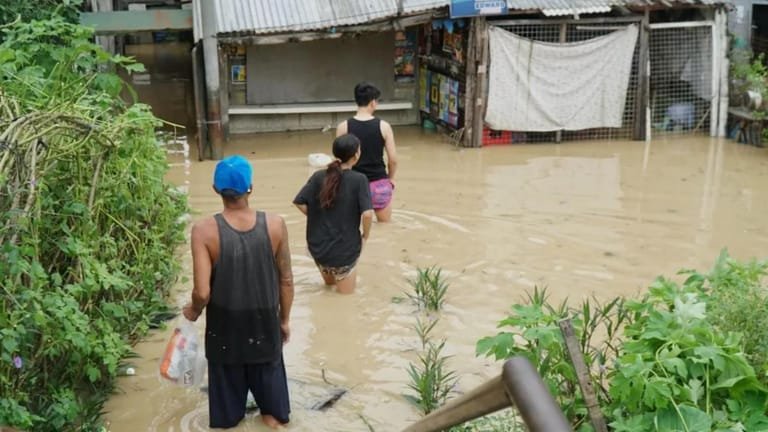
The Philippines is grappling with the aftermath of a devastating super typhoon, Fung-wong, which has claimed at least six lives, just days after another storm left more than 200 people dead. Fung-wong, known locally as Uwan, unleashed heavy rainfall, strong winds, and landslides, compounding the suffering of millions of residents still recovering from back-to-back natural disasters. The storm also caused widespread power outages across several provinces, further hampering relief and recovery efforts.
Fung-wong made landfall on Luzon’s Aurora province on Sunday night with sustained winds reaching approximately 185 km/h (115 mph) and gusts up to 230 km/h. Although the wind speeds were not record-breaking compared to the strongest typhoons in Philippine history, the storm’s torrential rains led to severe flooding and significant structural damage. Authorities reported that nearly 4,100 houses were either partially damaged or completely destroyed, displacing thousands of families.
The Philippine meteorological service had issued early warnings of “life-threatening” storm surges and extremely dangerous winds. In anticipation of the storm, over 1.4 million people were evacuated from vulnerable areas across the country. Evacuations were also implemented in Taiwan, where the typhoon is now moving, affecting more than 3,000 residents.

In the city of Cabanatuan, one of the hardest-hit areas, residents were seen scrambling to protect their homes and belongings. Streets were submerged in floodwaters, prompting families to pull out furniture, livestock, and personal belongings in a desperate attempt to salvage what they could. Mercidita Adriano, a resident of Cabanatuan, recounted how she and her family had prepared for the storm by trimming trees near their house last week. As the rains and winds intensified, ten family members huddled into a small room, praying that their home would withstand the typhoon. Despite their efforts, part of their roof was torn away by the heavy rain, leaving them exposed to the elements.
Across the affected regions, rescue operations are ongoing as local authorities and aid organizations work to reach stranded families and provide emergency relief. Flooded roads and downed power lines have complicated transportation and communication, making it difficult for emergency teams to access certain remote areas. Hospitals and medical centers have been operating under strained conditions, treating injuries sustained during the storm and addressing health concerns arising from prolonged flooding.
The Philippines has been hit by 21 typhoons this year alone, reflecting a growing trend of extreme weather events in Southeast Asia. Many communities are struggling to recover from consecutive storms, with crops, infrastructure, and homes repeatedly damaged. The repeated impact of these typhoons has placed enormous strain on both the population and the government, which has been coordinating large-scale evacuation efforts, relief distribution, and disaster management initiatives.
For families like the Adrianos, the destruction is both immediate and long-term. Loss of property, damage to homes, and displacement contribute to the economic and emotional burden that families must bear. For many, rebuilding after the previous storm was still in progress when Fung-wong struck, erasing months of recovery work and forcing families to restart from scratch. Local officials have warned that relief and reconstruction efforts will require significant resources and community support to ensure that displaced families can return to safe living conditions.
The international community has expressed concern over the human and economic toll of the storm. Humanitarian organizations are mobilizing resources to provide food, clean water, medical supplies, and temporary shelter to affected communities. In addition to immediate relief, discussions are underway to improve long-term disaster preparedness, including more robust flood management systems, early warning mechanisms, and resilient infrastructure to withstand future typhoons.
The typhoon’s movement toward Taiwan also raises concerns about additional damage and potential casualties in the region. Taiwanese authorities have implemented precautionary measures, including evacuation of residents from coastal and low-lying areas, reinforcing buildings, and suspending certain services to reduce risks to human life. Monitoring of the storm’s path continues as meteorologists track changes in wind intensity, rainfall, and potential storm surges.
Fung-wong’s impact serves as a stark reminder of the vulnerability of Southeast Asian nations to extreme weather events. Climate experts warn that rising sea levels, changing weather patterns, and increased storm intensity are likely to exacerbate the risks faced by millions of people living in coastal and flood-prone areas. In the Philippines, where communities are already dealing with infrastructural challenges, poverty, and population density, these storms have devastating consequences for livelihoods and public safety.
Despite the destruction, stories of resilience and solidarity are emerging. Volunteers, local authorities, and relief organizations have worked tirelessly to provide immediate assistance, rescue trapped residents, and distribute essentials to those affected. Social networks and community groups have coordinated relief efforts, ensuring that vulnerable populations receive timely support. In many towns and cities, neighbours have opened their homes to displaced families, and local businesses have contributed resources to aid recovery.

As floodwaters begin to recede, the focus will shift to longer-term recovery and rebuilding. Government agencies, NGOs, and international aid organizations will face the challenge of repairing damaged infrastructure, restoring power, rebuilding homes, and ensuring access to clean water and sanitation. Authorities have urged citizens to remain vigilant as the typhoon moves away, warning of potential secondary hazards such as landslides, residual flooding, and weakened structures.
For millions of Filipinos, the impact of Fung-wong reinforces the importance of early warning systems, preparedness measures, and community resilience. While the immediate threat of the storm may be passing, the path to recovery is long and arduous. Families, local authorities, and humanitarian agencies must work together to restore normalcy and strengthen resilience against future natural disasters.
The events surrounding Fung-wong also highlight the broader challenge faced by countries frequently impacted by severe weather: balancing immediate emergency response with long-term strategies to mitigate damage and protect lives. As climate change continues to influence the intensity and frequency of typhoons, governments and communities must adapt proactively to safeguard their populations.
The recent back-to-back storms have left an indelible mark on the Philippines, with destruction, loss, and displacement testing the resilience of communities across the nation. As recovery efforts unfold, the stories of affected families and their courage in the face of natural disasters remind the world of the human cost of climate-induced extreme weather and the collective effort required to rebuild and recover.
Related News:
 US Super-Rich Are Draining Planet’s Safe Climate Space
 UK Charters Emergency Flights to Evacuate Britons from Jamaica
 Mikie Sherrill Elected New Jersey’s Governor in Key Win
 Britain deploys RAF specialists to assist Belgium with drone threats
 US Senate Passes Funding Bill to End Historic Shutdown
 BBC’s Tim Davie to Address Staff Amid Trump $1bn Threat
 Thailand Suspends Cambodia Border Peace Deal Amid Tensions
 Fog Aids Russian Forces in Deep Push into Pokrovsk
 Hitler’s DNA Confirms He Truly Had Only One Testicle
 Meny Godard Identified as Israeli Hostage Body Returned by Hamas
 US Justice Department Files Lawsuit Against California Over Partisan Voting Maps
 Switzerland Rolls Out Charm Offensive to Cut Trump’s 39% Tariffs
 Bataclan Anniversary: France Remembers but Jihadist Danger Lingers
 Israel Confirms Returned Hostage as Meny Godard
 December Run-Off in Chile as Election Produces No Winner
 Zelenskyy Signs Fighter Jet Deal Amid Russian Drone Attacks
 Orban Says Ukraine Has ‘No Chance’ as EU Support Continues
 UN Security Council Approves Trump’s Gaza Peace Plan
 Cardiff Nights Could Propel Wales to World Cup Glory
 Israeli Strike Kills 13 Near Palestinian Camp in Lebanon
 Zelensky Meets US Envoy in Turkey to Push Ukraine Peace Talks
 Congress Approves Release of Epstein Files, Trump Expected to Sign
 Cristiano Ronaldo Joins Trump, Bin Salman at State Dinner
 Shadow Fleet at Sea: Europe’s Battle Against Illicit Oil Shipping
 Haiti Qualifies for World Cup Despite Coach Never Visiting Country
 Deadly Russian Strikes Hit Western Ukraine, 20 Killed in Ternopil
 Rama Rebukes Mahmood for Targeting Albanian Families
 Russian Vessel Used Lasers on RAF Pilots, UK Claims
 Scotland Fans Celebrate Historic World Cup Qualification
 Pentagon Officials in Ukraine to Discuss War End
 Ukraine Peace Plan: Zelensky Ready for Dialogue
 Vietnam Battles Deadly Floods as Rains Continue
 UPS Plane Engine Detaches Before Deadly Crash
 WhatsApp Messages Expose Nathan Gill’s Bribery
 South African Women Call Purple Protest Over Gender Violence
 Miss Mexico Wins Miss Universe After Walkout Drama
 Venezuela Threatens Nobel Winner Machado with Fugitive Status
 At Least Three Dead in Bangladesh Earthquake
 Texas Governor Faces Lawsuit From CAIR
 Israel Confirms Hamas Returned Dror Or’s Body
 Trump Envoy to Discuss Ukraine Peace at Kremlin
 Twenty-Four Nigerian Schoolgirls Freed After Abduction
 India, Pakistan to Clash in T20 World Cup 2026 Group Match
 US Suspends Afghan Immigration After White House Shooting
 Two National Guard Soldiers Critically Injured Near White House
 Pope Leo XIV Begins Historic Trip to Turkey and Lebanon
 Georgians Defy Government Crackdown After Year of Protests
 Mbappe Scores 4 as Real Madrid Edge Olympiakos
 Man City Lose, Champions League Risk
 Israel Expands Gaza Strikes Beyond Ceasefire Line
 Putin Intensifies Territorial Demands Before US Talks
 Sri Lanka Floods Leave 56 Dead, Dozens Missing
 India’s Labour Law Overhaul Sparks Fierce Debate
 Video shows Israeli troops kill Palestinians after surrender
 Trump to Recheck Green Cards from 19 Nations After DC Attack
 Chinese & Japanese Boats Clash Near Disputed Islands
 Putin Meets US Envoy Amid Key Ukraine Peace Talks
 UK Criticises Gaza Aid Delays as Tents Arrive After Year
 Kremlin Talks With US Yield No Ukraine Peace Breakthrough
 Indonesia to Repatriate Two Dutch Drug Convicts
 Macron Phones Trump Over Traffic Jam in New York
 Comey Indictment Deepens Fears of Political Retribution Under Trump
 “It Was Very Tough, But I Love Life”: Former Israeli Hostage Rebuilds Life After Family Killed by Hamas
 Chaos at Ibrox as Martin’s Rangers Era Comes to an End
 Trump Claims Modi Has Agreed to Halt Russian Oil Imports Amid Heightened US Pressure
 BBC to Apologise Over Edited Trump Speech Amid Backlash
 Palace May Restore Hyphen to Andrew Mountbatten-Windsor’s Name
 Mary Earps’s Manchester United Return Faces Mixed Reception
 Son Reveals UK Couple in Iran Resort to Hunger Strike for Help
 Former Lion Heskey Warns of Shortage of England Strikers
 Trump Deploys DHS to Charlotte in Major Arrest Operation
 Mother Watches in Horror as Teen Daughter Dies on Tracks
 Seven Countries, One Winner: Europe’s Best Christmas Market
 Serial Rapist and Former Cop Found Guilty Again
 Scottish Families Take Legal Action Over School CO Leak
 Vicki Fears Losing Motability Car
 Millions Face Higher Taxes Under Reeves New Budget
 Southern Lebanon reels as Israeli strikes shatter communities
 Jordan Bardella: France’s Young Presidential Contender
 Pavarotti statue frozen in Italian ice rink sparks backlash