Published: 24 November 2025. The English Chronicle Desk. The English Chronicle Online.
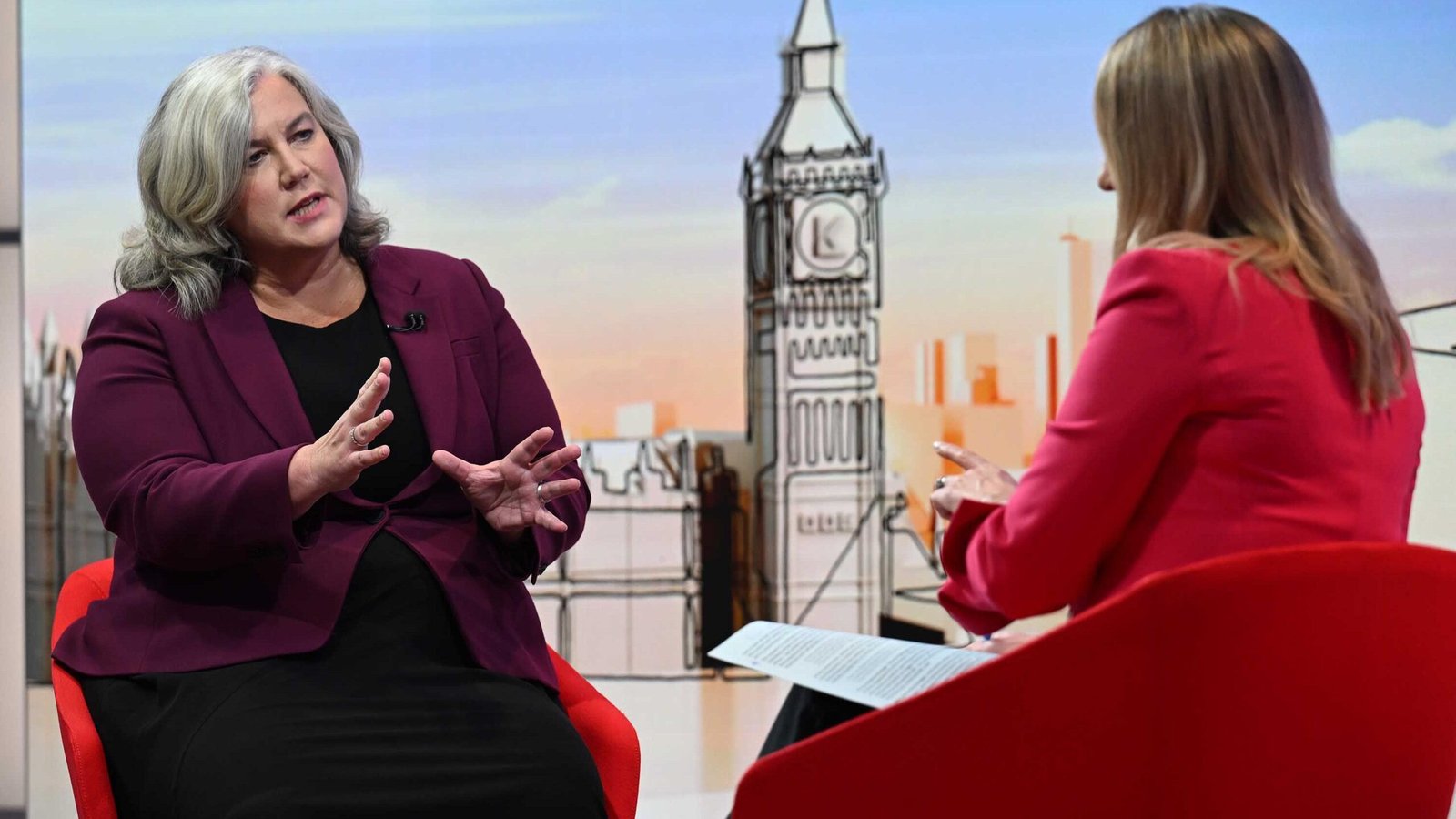
Transport Secretary Heidi Alexander has firmly denied that recent leaks ahead of the Budget have harmed the economy. Concerns have grown after criticism that ongoing speculation has created paralysis among businesses and consumers, affecting decision-making and confidence.
In recent months, the media has widely reported on potential tax increases, exploring various measures the government could adopt to balance spending plans. This coverage has intensified scrutiny on economic growth, with experts debating whether such speculation has played a substantial role in slowing progress.

Former Bank of England chief economist Andy Haldane told the BBC’s Sunday with Laura Kuenssberg programme that the uncertainty surrounding potential tax changes was “the single biggest reason why growth has flatlined,” highlighting the broader implications of early leaks.
Responding to these claims, Alexander emphasised that speculation is common ahead of every Budget, arguing that the Chancellor has consistently communicated her key priorities. She noted that media conjecture rarely reflects final government decisions and insisted that the economy remains resilient despite public debate.
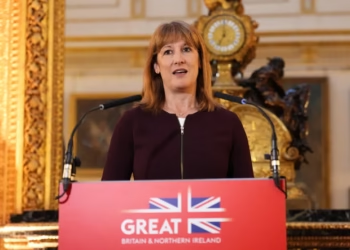
Chancellor Rachel Reeves is widely anticipated to announce tax changes in her upcoming Budget on Wednesday, aiming to address a multibillion-pound gap in planned government spending. Many observers expect adjustments to income tax rates, although the final decisions remain uncertain.
In previous months, ministers had strongly indicated intentions to raise income tax, causing concern among households and business owners who had anticipated a different fiscal approach. Speculation intensified following anonymous briefings suggesting Reeves was considering measures that would contradict Labour’s election promise not to raise the basic, higher, or additional income tax rates.
However, last week, government insiders revealed that Reeves had decided against altering income tax rates after receiving better-than-expected economic forecasts, reflecting a cautious approach to policy implementation amid public scrutiny.
Budget leaks are not uncommon, as governments often disclose partial plans to gauge public reaction or prepare financial markets for significant changes. Such strategies aim to avoid sudden shocks that could destabilise investor confidence, consumer spending, or political support.
Despite the controversy, Alexander maintained that no evidence suggests leaks have caused long-term economic damage. She reinforced that ongoing analysis shows business and consumer activity continues, and that confidence remains broadly intact.
Analysts agree that while speculation can create short-term uncertainty, the broader economy typically responds to confirmed policy announcements rather than rumours. The government’s measured handling of the Budget, Alexander argued, demonstrates a commitment to transparency and economic stability despite temporary media speculation.
As the Budget announcement approaches, attention is likely to intensify, with financial institutions, businesses, and citizens closely monitoring potential changes. Alexander stressed that the Chancellor’s focus is on delivering sustainable economic growth, rather than reacting to unfounded concerns.

Observers have noted that balancing public communication with policy implementation is a delicate task, particularly when fiscal adjustments carry both political and economic implications. Governments often face scrutiny for leaks, whether intentional or accidental, reflecting the challenging dynamics of modern media coverage.
Ultimately, Alexander reiterated that speculation alone does not define economic performance, urging the public and investors to focus on confirmed data and policy outcomes. She concluded that the government remains committed to prudent fiscal management and supporting long-term economic resilience.
Related News:
 UK Small Business Owner to Challenge L’Oréal in Tribunal
 Court Hears Challenge Over Water Bills Funding Sewage Fixes
 Thinktanks Urge Rachel Reeves to Reform UK Tax System
 Tony Blair think tank warns Rachel Reeves must cut taxes if manifesto broken
MPs Press Rachel Reeves to Hike Gambling Taxes
Tony Blair think tank warns Rachel Reeves must cut taxes if manifesto broken
MPs Press Rachel Reeves to Hike Gambling Taxes
 Warning as Britons prepare to spend £4 billion this Black Friday
 Troubled drinks giant Diageo names former Tesco boss to lead turnaround push
 Global markets drop amid tech sell-off and China slowdown
 UK Government Borrowing Higher Than Expected
 Budget 2025: Reeves Drops Economic Growth Reference
 Expanded Version – Black Friday Shoppers Warned Over ‘Dud Deals’
 Black Friday Footfall Falls as UK Shoppers Hold Back Amid Economic Concerns
 Rising Water Bills Lift Troubled Thames Back to Profit
 Bank of England Poised to Cut Interest Rates Amid Rising Unemployment and Global Trade Pressures
 Non-Dom Tax Crackdown Risks Backfiring as Exodus Threatens UK Revenue and Investment
 Inflation Latest: Cost of Living Expected to Rise Again in Key Figures Released Today
 Energy Users Could Save £5bn Annually if Gas Power Plants Are Removed from Market
 Retail Sales See Uptick Amid Errors and Delays as ONS Faces Scrutiny
 UK House Prices Hit Record £299,331 as Market Shows Steady Growth
Shein UK Faces Allegations of Shifting Majority of Profits to Singapore to Reduce UK Tax
UK House Prices Hit Record £299,331 as Market Shows Steady Growth
Shein UK Faces Allegations of Shifting Majority of Profits to Singapore to Reduce UK Tax
 UK Retail Sales Rise in August, but Tax Concerns Loom Over Festive Period
 Vodafone Faces Fourth Probe into Franchising Division Amid £120m Legal Battle
 John Lewis Partnership Posts £88m Loss as Costs and Restructuring Bite
 UK Economy Flatlines in July, Raising Pressure on Rachel Reeves Ahead of Autumn Budget
Business Rates Hike Could Threaten Hundreds of UK Retailers, Putting 100,000 Jobs at Risk
UK Economy Flatlines in July, Raising Pressure on Rachel Reeves Ahead of Autumn Budget
Business Rates Hike Could Threaten Hundreds of UK Retailers, Putting 100,000 Jobs at Risk
 Rachel Reeves Hosts Top UK and US Financial Executives as Trump’s State Visit Begins
 UK Labour Market Shows Signs of Cooling as Wage Growth Slows and Redundancies Rise
 UK Wage Growth Remains High, But Cost of Living Pressures Bite
UK Inflation Holds Steady at 3.8% as Rising Fuel Costs Offset Falling Air Fares
UK Wage Growth Remains High, But Cost of Living Pressures Bite
UK Inflation Holds Steady at 3.8% as Rising Fuel Costs Offset Falling Air Fares
 Ben & Jerry’s Co-Founder Resigns, Accusing Unilever of Silencing Brand’s Social Mission
 UK Borrowing Surges to £18bn in August, Exceeding Forecasts
 Farage’s Reform UK Receives £100,000 from Design Firm with Past Tax Issues
Rachel Reeves Faces Criticism Over Appearance at Gambling Industry Event Amid Tax Review
Farage’s Reform UK Receives £100,000 from Design Firm with Past Tax Issues
Rachel Reeves Faces Criticism Over Appearance at Gambling Industry Event Amid Tax Review
 Dagenham Left in Limbo After Smithfield and Billingsgate Market Relocation Cancelled
 Gatwick Secures Approval for £2.2bn Second Runway Expansion
 Retailers Warn Tax Rises Could Prolong Inflation as Shop Prices Climb
UK Housing Market Returns to Growth Amid Signs of Stability and Regional Variation
Retailers Warn Tax Rises Could Prolong Inflation as Shop Prices Climb
UK Housing Market Returns to Growth Amid Signs of Stability and Regional Variation
 Richard Desmond Begins High Court Battle Over National Lottery Licence
 Delivery Apps Could Double the Cost of Your Groceries, Warns Consumer Watchdog
 Jaguar Land Rover to Resume Production After Cyber-Attack, Launches Supplier Support Scheme
 Kemi Badenoch Unveils ‘Golden Rule’ to Halve Spending Cuts for Deficit Reduction at Tory Conference
 Gold Hits Historic $4,000 Amid Global Uncertainty
 UK GDP edges up 0.1% in August as Reeves faces budget pressure
 Rachel Reeves urged to consider welfare cuts to boost fiscal credibility
 UK inflation update: New rate expected as Budget approaches
 Real living wage set to rise nearly 7% for UK workers in 2026
 Co-op Urged Staff to Promote Vapes After Cyber-Attack Hit Sales
 Rachel Reeves to lead UK trade push in Saudi Arabia amid rights debate
 Aston Martin cuts £300m investment as Trump tariffs and weak China demand hit profits.
 Trump’s UK Ambassador Urges North Sea Drilling to Strengthen US Ties
 Millions of Brits Adjust Lifestyle to Afford Essentials
Rachel Reeves Set to Break Labour Pledge and Raise Income Tax
Millions of Brits Adjust Lifestyle to Afford Essentials
Rachel Reeves Set to Break Labour Pledge and Raise Income Tax
 Gopichand Hinduja, UK’s Wealthiest Business Leader, Dies
 M&S Profits More Than Halve After Cyber-Attack
 Labour Urged to Honour Tax Pledges Ahead of Budget
 Cuts to home insulation funding threaten UK climate goals
 Millionaires group urge Reeves to introduce wealth tax to ‘lift kids out of poverty’
 Taylor Wimpey Sales Drop Amid Budget Uncertainty
 Reeves’s Tax U-Turn Triggers Fresh Jitters in UK Markets
 PM Highlights UK Business at G20 in South Africa
 Eurotunnel Investment Halted as UK Rates Soar
 Mossmorran Plant Closure Hits Cowdenbeath Hard
 UK Energy Bills to Rise Slightly in January
 Steel billionaire Lakshmi Mittal reportedly leaves UK
 Starmer Says Labour’s Economic Plan Needs Years to Deliver
 China’s crackdown on civil servant perks sparks economic concerns
 Vodafone Franchisees Sound Alarm: Mental Health Toll of Commission Cuts Revealed Years Before £120m Court Battle
 UK Government Backs Return of International Rail Travel to Kent Stations
 GSK Chief Executive Emma Walmsley to Step Down After Eight Years at the Helm
 Marks & Spencer Staff to Work on Boxing Day for First Time in Five Years Amid Cost-Cutting Measures
 UK households brace for October benefit payments and rising energy costs amid cost-of-living pressures
Reeves Faces Setback as Labour May Miss Homes Target
UK households brace for October benefit payments and rising energy costs amid cost-of-living pressures
Reeves Faces Setback as Labour May Miss Homes Target
 Virgin Trains Moves Closer to Challenging Eurostar Monopoly
 Green Party Surges Past Labour in Latest UK Poll
 Celebrities and Charities Demand UK Government Act on Child Poverty
 Ryanair Chief UK Economy ‘Doomed’ Under Labour
 ABF May Split Primark from Food Division Amid Tough Market
 Skims Eyes Global Expansion After Reaching $5 Billion Value
 India’s Labour Law Overhaul Sparks Fierce Debate
 Virgin Media Fined £23.8m Over Telecare Safety Failures