Published: 27 April 2026. The English Chronicle Desk. The English Chronicle Online.
Former Australian Prime Minister Kevin Rudd recently delivered a very stark warning regarding green energy. He suggested that Australians will inevitably call the transition bullshit if benefits remain invisible. His comments arrived shortly after he concluded his high profile role as the Australian ambassador. Rudd addressed an audience in Melbourne while promoting a new book by Thom Woodroofe today. The former leader emphasized that climate policies must demonstrate tangible improvements for everyday working families. He argued that policy continuity relies entirely on delivering affordable prices and reliable energy supplies. These outcomes must be felt directly within the daily experiences of ordinary Australian citizens now. If the transition fails to produce these specific results, the public will surely reject it. Rudd stressed that people need to touch and see new industries and secure jobs everywhere. Without such visible proof, the entire climate agenda will be perceived as a hollow political exercise. The message was clear that leaders must justify these major shifts through genuine economic improvements.
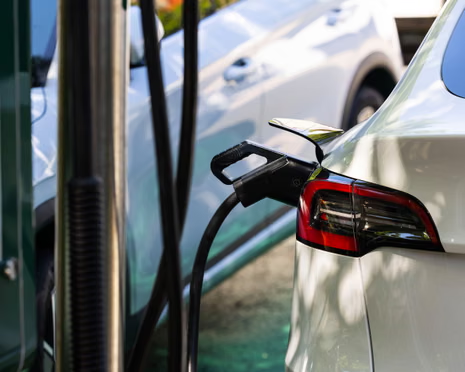
Rudd currently serves as the leader of the New York based Asia Society think tank. He suggested that Australia should seize opportunities presented by recent geopolitical tensions in the Gulf. He highlighted the shock that working people experience due to ongoing global hydrocarbon supply dependency. Citizens are currently facing the physical terror of insecurity regarding fuel for their daily commutes. Rudd noted that those driving electric vehicles are significantly less dependent on volatile Gulf politics. This shift away from fossil fuels offers a unique security advantage for many modern families. He maintained that Australia possesses an enormous comparative advantage in green iron and steel manufacturing. This potential stems from the country’s vast land mass and its abundant solar energy. Furthermore, Australia enjoys ideal proximity to key export markets throughout the wider Asian region. These factors position the nation perfectly to lead in a rapidly changing global energy market.
Malcolm Turnbull also spoke at the event to support the move toward renewable energy solutions. The former Liberal prime minister stated that citizens can now enjoy cheaper and reliable power. He pointed out that nobody is currently building new coal power stations within the country. This shift proves that the economic argument for renewables has finally won over the market. Turnbull expressed strong frustration regarding the Liberal party’s decision to preference the One Nation party. He described this political alliance as a retrograde move for the future of national policy. He noted that One Nation remains firmly committed to the business of climate change denial. Such positions do not reflect the current reality of the modern global energy transition process. The contrast between these two former leaders highlighted a significant divide in current Australian politics.
Rudd discussed how the American administration attempted to balance industrial growth with green policy goals. The Inflation Reduction Act was designed to create green jobs while supporting struggling working families. Biden aimed to drive this message deeply into red states to ensure long term durability. The strategy focused on creating local jobs that would be difficult to dismantle later on. Rudd admitted that some of these policies have been pulled back by the current administration. However, he noted that many states have fought back to protect their local investment projects. This suggests that the roots of the green transition have grown deep in American soil. There remains an enormous attachment to these investments across various states in the deep south. This resistance shows that market forces often trump short term political changes in the United States.
The core challenge for Australian leaders is to ensure policies deliver for all local communities. Rudd emphasized that energy transitions must satisfy the head, the heart, and the wallet simultaneously. If families do not see real money in their pocketbooks, the political project will fail. He urged the government to focus on practical outcomes rather than just clever political messaging. The transition must be grounded in the reality of what people need to survive today. This perspective serves as a crucial reminder for policymakers who are managing these complex changes. Australia stands at a major crossroads regarding its future role in the global economy. How it navigates these challenges will determine the prosperity of the next several generations.
Rudd was a very vocal critic of Donald Trump prior to his diplomatic appointment overseas. He previously described the president as the most destructive leader in modern historical political records. Despite this history, he remains focused on the pragmatic realities of the current international climate. He clearly understands that policy must evolve to survive the shifting tides of global geopolitics. His experience as an ambassador has provided him with a unique view of the world. The lesson he brings back to Australia is one of caution and deep focus. Policymakers must listen closely to the concerns of the public to maintain political stability. Without public support, the grandest environmental visions will ultimately wither away into nothingness.
The debate over energy is essentially a debate about the future of national economic security. Every government must now balance environmental goals against the immediate needs of their local citizens. This is the delicate tightrope that leaders must walk in an increasingly volatile world. Australia has the tools, the sun, and the land to succeed in this difficult transition. Whether it has the political courage to follow through remains the most important question. The focus must remain on delivering tangible benefits that citizens can feel in their lives. Only then will the transition move from a contentious debate to a widely accepted reality. The path forward requires patience, investment, and a firm commitment to the needs of families. Australians are watching closely to see if their leaders can truly deliver on these promises. The future of the nation depends on getting this specific policy challenge absolutely right now.
Related News:
 Army Officers Orders to Cut Ties with Men-Only Clubs
 Trump’s UK Ambassador Urges North Sea Drilling to Strengthen US Ties
 French Taxi Driver Cleared in David Lammy Theft Case After Fare Dispute
BBC to Apologise Over Edited Trump Speech Amid Backlash
French Taxi Driver Cleared in David Lammy Theft Case After Fare Dispute
BBC to Apologise Over Edited Trump Speech Amid Backlash
 Britain deploys RAF specialists to assist Belgium with drone threats
 Millionaires group urge Reeves to introduce wealth tax to ‘lift kids out of poverty’
 Reeves rejects £1bn plea for NHS redundancy payouts
 PM Condemns Leaks, Vows Loyalty to Ministers and Stability
 Major Rent Reform Ends No-Fault Evictions in England
 Senator John Fetterman Hospitalized After Fall from Heart Flare-Up, Keeps Sense of Humor
 Greene Pushes Epstein Files Amid Trump Fallout
 December Run-Off in Chile as Election Produces No Winner
 Canada Passes Carney’s First Budget in Tight Parliamentary Vote
 Shadow Fleet at Sea: Europe’s Battle Against Illicit Oil Shipping
 Georgians Defy Government Crackdown After Year of Protests
 US National Guard Member Killed in DC Shooting
 ICC to Rule on Duterte’s Provisional Release
 Starmer Says Labour’s Economic Plan Needs Years to Deliver
 Australia grants Asio powers to designate hate groups under new laws
 Trump press secretary attacks reporter over ICE question
 Spoof “Make America Go Away” Caps Rally Denmark Over Greenland
 Trump Fed bid heads to Supreme Court
 Pentagon Signals Reduced Role in Deterring North Korea
 Artificial intelligence will cost jobs, admits Liz Kendall
 Partial US Government Shutdown Hits Homeland Security Funding
 Mandelson Faces Police Inquiry Over Epstein Leak
 Morgan McSweeney downfall shocks Labour leadership
 UK and US Drop in Global Corruption Index Rankings
 Farage Unveils Reform UK Frontbench Team
 Canberra Poster Seizure Sparks Free Speech Row
 Evo Morales Returns After Mysterious Absence
 Wales Approves Assisted Dying Bill Consent
 Jacinda Ardern Moves To Australia Following Her US Fellowships
 Jacinda Ardern Move Sparks Kiwi Reflection
 Corbyn Leads Your Party in Coordinated Left-Flank Strategy
 Nick Greiner Warns Over Election Review Fallout
 Asylum Seekers to Work After Year-Long Wait
 Starmer Row as Greens Demand Apology
 New Zealand Covid Response Praised Despite Lingering Scars
 Injured Mojtaba Khamenei Elevated as Iran Leader
 Gordon Brown urges court for crimes against children
 Inquiry into HMRC child benefit errors launched by NAO
 Pakistan Targets Militant Hideouts in Afghanistan
 Farage Faces Backlash Over Crypto Cameo Endorsements
 Air Canada CEO Faces Outcry Over Recent Language Misstep
 Relationship with Trump may be beyond repair, Starmer warned
 Unions Raise Concerns Over Doctors’ Pay Dispute
 Reform UK Pledges To Halt Visas Over Reparations Demands
 UK Government Poised to Revive Stalled Hillsborough Law
 Trump Signals Hope for New Iran Talks as Ceasefire Fades
 Democrats Move to Impeach Defense Secretary Pete Hegseth
 Trump Brokers Landmark Lebanon Ceasefire Amid Regional Hopes
 Investigation Into Anti-Trump Motives After Gala Shooting
 Royal Diplomacy: King Charles Wins Over US Congress
 Starmer Survives Mandelson Rebellion
 Trump approval plunges amid Iran war fears
 Ohio’s Battle for Trust: Democrats Vying to Flip the Buckeye State
 Tough Fiscal Realities Await Next Scottish Government
 US ‘Narco Boat’ Strikes Draw Global Outcry
 One Nation Candidate’s Surprising Ties to Independents
 Labour Members Doubt Starmer Future as Burnham Leads Poll
 US Awaits Iran Reply on New Ceasefire Proposal
 Reform UK Faces Crisis as Newly Elected Councillors Resign
 Farage Faces New Questions Over Private Helicopter Use
 Green Party Makerfield Candidate Resigns Over Posts
 Tony Abbott Returns as New Liberal Party President
 US green card applicants must apply from abroad, DHS says
 Discontent grows around Putin amid war strain
 DeSantis’s ‘Alligator Alcatraz’ Faces Final Shutdown
 Secret Role of UK Security Services in Troubles Amnesty Law
 The Hidden Crisis Eroding Trust in British Communities
 Deepfake Abuse on X Sparks Safety Concerns for Dissidents
 US Courts Back Trump on Park Signage Removals
 Trump’s Mount Rushmore Speech: A Divisive Anniversary
 Trump’s Red-Card Intervention Hurts the US World Cup
 Farage Warns Sky News Following Financial Inquiry
 Trump Swaps Planes Amid Iran Tensions
 Ann Widdecombe, Formidable Political Figure, Dies at 78
 Houthis Strike Saudi Arabia as Middle East Tensions Rise
 Former Diplomats Urge UK and France to Act on Palestine