Published: 04 May 2026. The English Chronicle Desk. The English Chronicle Online.
The promise of universal healthcare was supposed to be a cornerstone of a new Kenya. President William Ruto stood before hopeful crowds in Kericho during his 2023 campaign and pledged that no citizen would be left behind. His vision was bold and relied on the power of modern technology to fix old problems. He launched a new healthcare system in October 2024 to replace the national insurance system. This ambitious project aimed to reach the vast informal economy that powers eighty-three percent of the nation. It targeted day labourers, hawkers, and farmers who had long been excluded from formal social safety nets. The government described the move as a crucial step toward accelerating digital transformation for every citizen. However, the reality on the ground has shifted from a digital dream into a financial nightmare. A detailed investigation has found that the AI system is driving up costs for the poor.
The shift was intended to create a fair way to fund public medical services. Instead, it has sparked widespread protests and deep anger across the many diverse Kenyan communities. Contributions for millions of people are now calculated by a secretive and highly flawed formula. While the government calls it AI-powered, it does not use advanced generative artificial intelligence models. It relies on a predictive machine learning algorithm designed to estimate what a household can afford. This process, known as means-testing, determines the monthly fees required for access to any public care. A collaboration between Africa Uncensored, Lighthouse Reports, and the Guardian has finally audited the hidden system. Their findings reveal a systemic bias that overcharges the poorest while actually undercharging the wealthiest citizens. The algorithm is failing the very people it was originally marketed to protect and support.

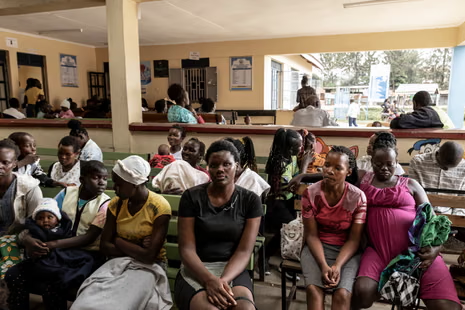
Grace Amani travels through the capital of Nairobi every day to register local families. She works as a volunteer for the Social Health Authority to collect household data points. Her digital questionnaire asks intrusive questions about the daily lives of the city’s most vulnerable. She asks about the materials used for roofs and the type of toilets available. These answers are fed into the algorithm to predict a family’s annual income level. Amani says the people she visits are often confused and very fearful of investigation. Once the form is submitted, the system returns a number that many simply cannot pay. She has watched families struggle to find food while facing these new medical premiums. Some households are being asked to pay nearly twenty percent of their tiny monthly earnings. The human cost of these digital errors is becoming increasingly apparent in local hospitals.
Amani has seen critically ill patients who are being turned away from vital treatment. They cannot access care because they have not paid the amount the AI requires. People are dying at home because they cannot afford the mandatory health insurance fees. This is a tragic outcome for a system meant to ensure that everyone is covered. The Social Health Authority has faced a massive barrage of criticism since its recent launch. Many people have been misclassified by the algorithm, leading to incomprehensible or entirely unaffordable premiums. Kenyans who do not have private insurance now face incredibly steep and unexpected hospital bills. On social media, the outcry is constant as citizens share their stories of financial ruin. One single mother reported her monthly bill jumped to more than three thousand Kenyan shillings. Many are now forced to choose between buying basic food or paying for healthcare.
The flaws in the formula were not a secret to those within the government. David Khaoya, a health economist who advised the ministry, recently spoke about the difficult choices. He explained that the system faced a significant constraint during its initial design phase. It could either correctly assess the poor or correctly assess the wealthy, but not both. The government reportedly chose to prioritise the accuracy of evaluations for the rich and powerful. This ensures the wealthy pay their share, but it leads to massive overcharging of others. If a rich person is undercharged, they are unlikely to report the error themselves. However, the poor have no way to contest the inflated figures the algorithm produces. This decision has placed the heaviest burden on the people with the least resources. The lack of transparency in the calculation makes it impossible for citizens to complain.
The system is based on a concept known as proxy means testing or PMT. This is a decades-old method used by the World Bank in many developing nations. It estimates income based on physical possessions rather than documented bank statements or tax returns. PMT has been deployed across Africa and Asia as a condition for international loans. In Kenya, this means using livestock and roofing materials to guess a family’s wealth. Development economists like Stephen Kidd argue that these systems are fundamentally broken and inaccurate. They attempt to categorise a fluid and complex population into rigid and simple boxes. The investigative audit tested the system against thousands of real Kenyan households with striking results. It found the algorithm consistently overestimated the means of the most impoverished rural farmers. In some cases, the predicted income was twice the amount the family actually earned.
These algorithmic systems are spreading rapidly around the globe due to international donor pressure. They are popular because they promise to count the uncounted workers in informal economies. But research shows that these systems often exclude the very people they should help. One similar scheme in Indonesia failed to identify over eighty percent of its target population. In Rwanda, a similar means-testing project saw an error rate of nearly ninety percent. The Kenyan system appears to overcharge more than half of all the poor households. Meanwhile, the incomes of the wealthy are being underestimated by the same flawed digital tool. There is no single reason for these inaccuracies, as poverty is inherently difficult to measure. Using a pit toilet or an iron roof is an imprecise way to judge wealth. These tools reduce faith in the government and make healthcare feel like a lottery.
 The government was warned about these specific issues long before the system was launched. A report from the consultancy IDinsight found the system was both inequitable and deeply flawed. It noted that the data used was out of date with current economic conditions. Kenya has faced multiple economic shocks that have changed the financial reality for millions. Despite these warnings, the government decided to proceed with the rollout of the program. Today, only five million out of twenty million registered people are paying their premiums. This has led to a massive financial deficit for hospitals across the entire country. Many facilities have stopped receiving the promised reimbursements from the Social Health Authority. Some political leaders have already predicted that the entire system will soon collapse. They argue that the experiment has failed to meet its most basic human goals.
Dr. Brian Lishenga has become one of the most vocal critics of the reforms. He represents a large association of private hospitals and monitors the system closely. He believes the tool allows the government to avoid its basic social responsibilities. By blaming an algorithm, officials can distance themselves from the suffering of the poor. It creates a barrier between the citizen and the state that is hard to break. The use of technology has not brought the efficiency or the fairness promised. Instead, it has created a digital wall that prevents the sick from getting help. The situation in Kenya serves as a warning for other nations adopting similar tools. Technology cannot solve the problem of poverty if it is built on flawed assumptions. For Grace Amani and her neighbours, the digital transformation has been a heavy burden. They are still waiting for the day that no Kenyan is left behind.
Related News:
 Reeves Faces Setback as Labour May Miss Homes Target
 Kate Winslet to Narrate Film Highlighting King’s Environmental Mission
 Trump’s UK Ambassador Urges North Sea Drilling to Strengthen US Ties
 UK Bans Fake Numbers: Scammers Lose Their Trick
 Vibe coding’ named Collins dictionary’s word of the year
BBC to Apologise Over Edited Trump Speech Amid Backlash
Vibe coding’ named Collins dictionary’s word of the year
BBC to Apologise Over Edited Trump Speech Amid Backlash
 Millionaires group urge Reeves to introduce wealth tax to ‘lift kids out of poverty’
 Reeves rejects £1bn plea for NHS redundancy payouts
 PM Condemns Leaks, Vows Loyalty to Ministers and Stability
 Phillipson Accused of Appeasing Unions by Diluting EBacc
 Saka Solidifies Role as Tuchel’s Key England Lieutenant
 Greene Pushes Epstein Files Amid Trump Fallout
 Zelenskyy Signs Fighter Jet Deal Amid Russian Drone Attacks
 Sundar Pichai Cautions on AI Hype and Market Risks
 Shadow Fleet at Sea: Europe’s Battle Against Illicit Oil Shipping
 Snow and Ice Cause Travel Chaos in North Yorkshire
 Director Michael Caton-Jones Reflects on Career and Beginnings
 Inside the Helpline Protecting Missing Children in the UK
 PlayStation PS5 Deals Hit Lowest Prices Ahead of Black Friday
 US Suspends Afghan Immigration After White House Shooting
 Five-Year-Old Dies After Rare Tonsil Surgery Complication
 Starmer Says Labour’s Economic Plan Needs Years to Deliver
 ‘Extinct’ Antelope Returns to Sahara, Bringing Hope
 IndiGo Cancels Hundreds of Flights Amid Pilot Shortages
 Young Britons Face Heaviest Burden from Ageing Population, Lords Warn
 U‑Turn on Farmers’ Inheritance Tax Sparks Political Firestorm
 Aston Villa Remain Arsenal’s Key Obstacle in Title Pursuit
 Irish Beach Tragedy: Irish Drown at Whitehaven Beach in Australia
 Starmer Faces Parliamentary Battles Over UK-EU ‘Reset’ Plan
 Met Police Vetting Failures Let Serial Rapists Remain
 Federal Immigration Shift: Officers Leave Louisiana for Minneapolis
 Fatal Bolton Taxi Crash Claims Three Teens and Driver
 Australia grants Asio powers to designate hate groups under new laws
 Friedman Uninvited From 2024 Adelaide Writers’ Week
 US and Iran Agree to Two-Week Provisional Ceasefire
 Battle of Britain Tower to House Tourists and Bats
 The Challenger: Will Péter Magyar End the Orbán Era?
 UK Government Poised to Revive Stalled Hillsborough Law
 Democrats Move to Impeach Defense Secretary Pete Hegseth
 Security Alert Near Israeli Embassy as Police Investigate
 Ben Roberts-Smith Denies War Crime Allegations in First Statement
 Home Office Faces Legal Risks Over Asylum Hotel Living
 US-Iran Standoff: Will Trump Deploy Ground Troops?
 Crisis in NHS Surgery Scheduling Hits Patients Hard
 Investigation Into Anti-Trump Motives After Gala Shooting
 Dubai Assets Linked to Sudan’s RSF Militia Exposed
 Blue Badge Abuse: The Rising Tide of Public Hostility
 Tragedy Strikes at Parafield Airport
 Scott Parker Leaves Burnley After Premier League Drop
 Silent Tracks: Rail Line Without Passengers
 Arteta urges Arsenal to step up in Atlético semi-final
 RFU Backs Borthwick Despite England’s Poor Six Nations
 Met Officers Probed Over Al Fayed Abuse Allegations
 One Nation Candidate’s Surprising Ties to Independents
 Aramco Surges as East-West Pipeline Counters Gulf Tensions
 Reform UK Faces Crisis as Newly Elected Councillors Resign
 Starmer Strikes Back as 100 MPs Sign Support Pledge
 Scepticism and tight security as Beijing braces for Trump
 Tensions Flare as Israeli Nationalists March in Jerusalem
 UK Firms Freeze Spending as Iran Conflict Bites
 UK Job Market Squeezed as Iran War Drives Jobless Rate to 5%
 Reeves to Fast-Track Clean Energy Amid Iran Crisis
 The Battle for Wembley Sparking Unprecedented Legal Warfare
 Tony Abbott Returns as New Liberal Party President
 Pope Meets Families in Italy Toxic Waste Zone
 Royal Ascot Allegation Sparks Wider Police Inquiry
 Secret Role of UK Security Services in Troubles Amnesty Law
 Tube Strike Brings Capital to a Standstill Over Shift Disputes
 Teaching Machines Right From Wrong in the Digital Age
 Is Ollie Robinson the Chaos English Cricket Needs Today?
 The Hidden Crisis Eroding Trust in British Communities
 Saving the Scalloped Hammerhead: The Pacific Battle
 Stolen Mobiles Could Soon Become Useless Bricks
 Clean Air Initiatives Spark Major Fall in London Hospital Admissions
 Fearless Pioneer of Investigative Journalism Dies Aged 83
 Trump Urged to Condemn UFC Fighter Over Obama Slurs
 The Fear Gap: Why Europe Feels Less Safe Than It Is
 US Military Pacific Boat Strike Kills Three People
 Dettol Apologises for ‘Toxic Men’ Advert Backlash in China
 UK Care Crisis: Row Explodes Over New Visa Settlement Rules